

Valencia Street has long been a go-to place for San Franciscans seeking shops, music venues, restaurants, and bars — and it’s a hot real-estate location for businesses wanting to capitalize on that foot traffic.
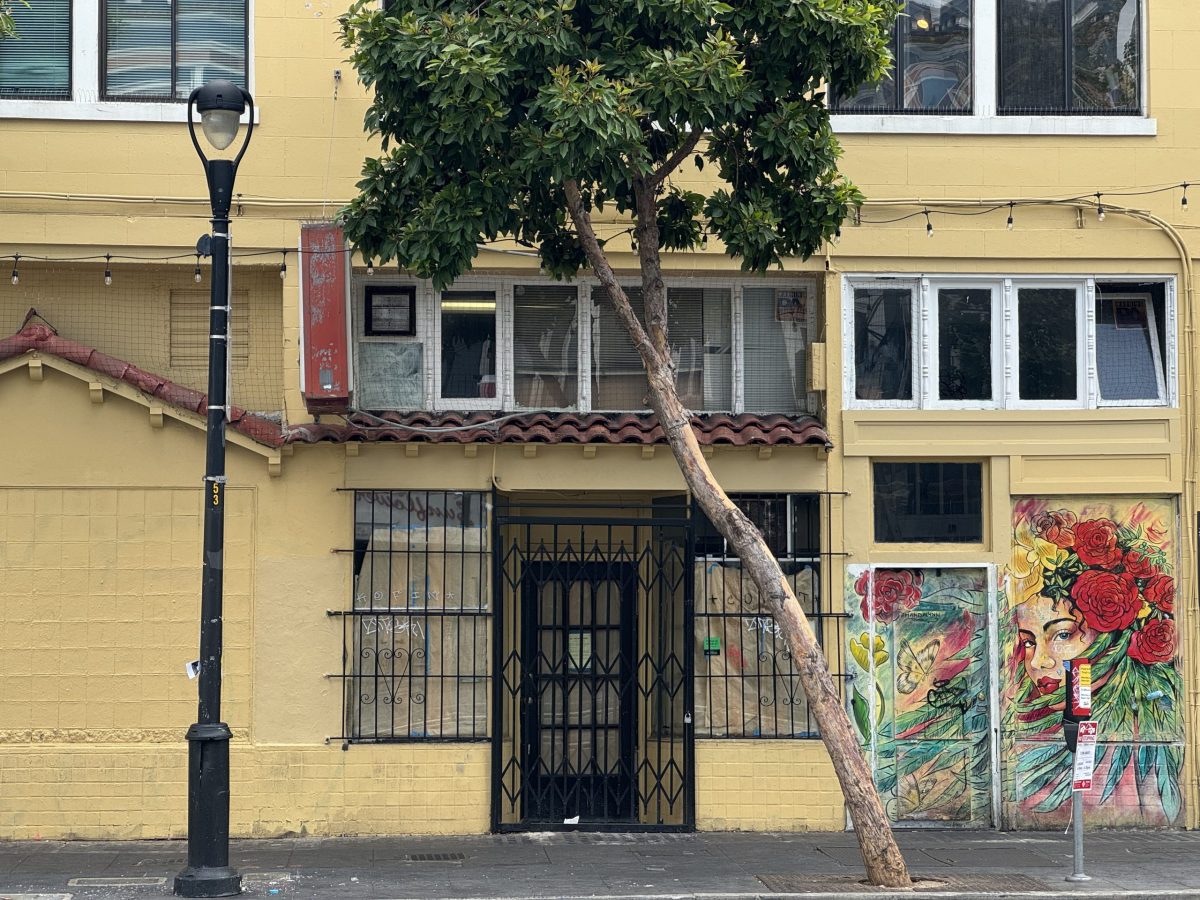
Yet there’s one block of Valencia, between 16th and 17th streets, where six storefronts sit empty, a spot of blight in an otherwise boisterous stretch. A couple of sites have been vacant for months; others, for years.
The former Blu Dot at 560 Valencia St. has been empty since the summer of 2022, and Chezchez at 584 Valencia St. since early 2023. Arinell Pizza at 509 Valencia St. has been shuttered since late 2022, and West of Pecos at 550 Valencia St. since late 2023.
There’s also Five and Diamond’s space at 510 Valencia St., empty since January, and former Los Amigos’ space at 530 Valencia St., empty since June.
“It’s the block that we are focusing the most on right now. It’s the block I am putting most of my time and energy in, as president,” said Manny Yekutiel, the head of the Valencia Merchants Association, whose namesake cafe is at 16th and Valencia. “It’s also a block that I feel pretty optimistic about. It’s got a lot of amazing bones.”
While the area has gone through a rough patch, its future looks bright: Mission Local has learned that several new storefronts will be opening on the block in the coming months.
The former West of Pecos space will become a northern Indian restaurant as soon as this week. The name of the restaurant: Apna Chulha, the phrase for “clay oven” in Urdu.
Down the block at 584 Valencia, near 17th Street, Slanted Door will make a return home after more than two decades away from its birthplace.
“We called it the Slanted Door because the door at 584 Valencia was actually slanted,” said Anh Duong, a marketing representative for the restaurant. “Excited to go back to our original location. That’s where executive chef and founder Charles Phan maxed out all of his family’s credit cards to open his first restaurant.”
The San Francisco Standard was first to report the reopening. Slanted Door is expected to open next spring. That building, along with 582 and 580 Valencia, is still owned by the Phan family.
Near 16th Street, the former Arinell Pizza will be taken over by Panchitas, the popular Salvadoran late-night spot around the corner at 3091 16th St., according to a building permit filed on June 3. The permit notes the creation of an “accessible path of travel” between the two locations, but the exact plans are unclear.
At 560 Valencia St., meanwhile, the owner of the old Blu Dot’s space is looking for pop-ups to come in, before a cannabis dispensary already approved at the location opens next year.
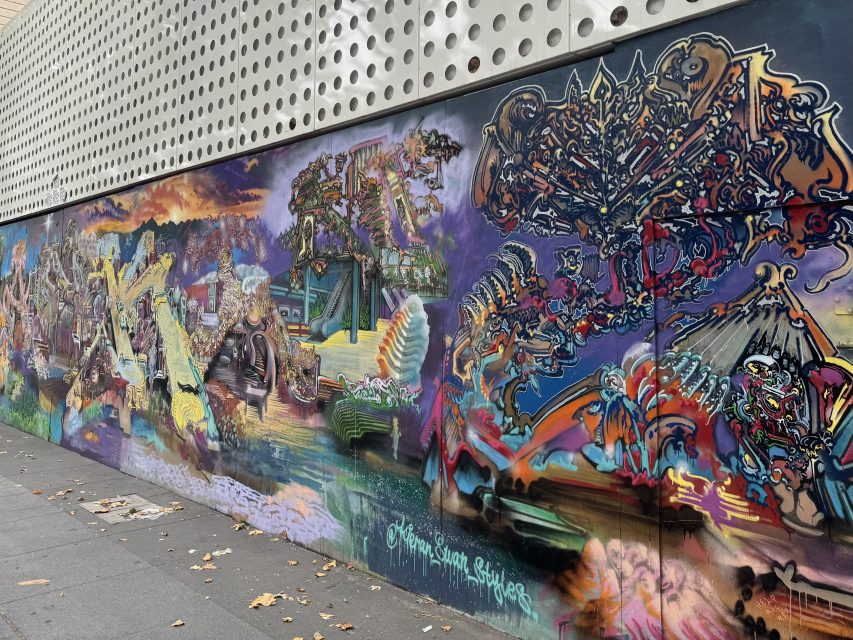
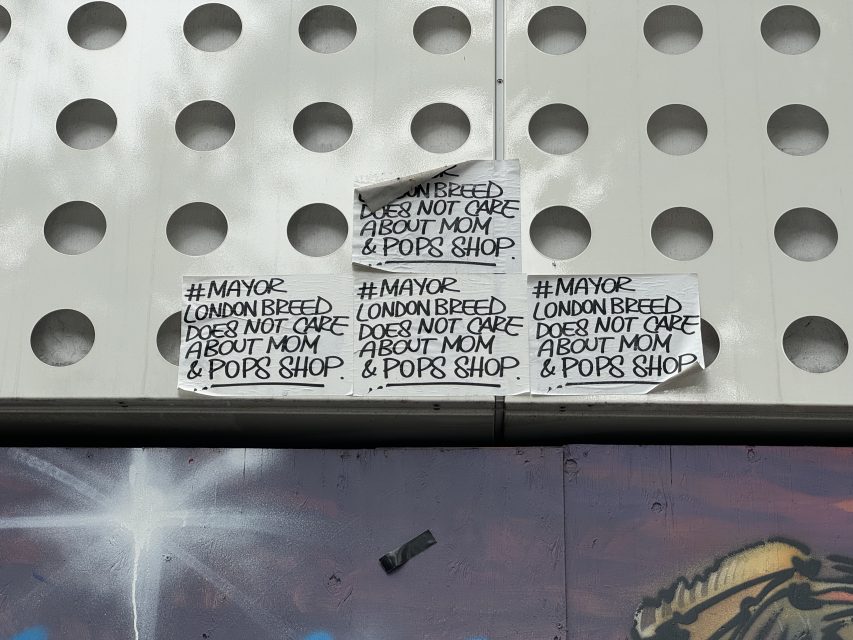
Finally, Raw Sugar Factory, which also operates Krua Thai at the same location at 525 Valencia St., will be fully relocating across the street to 530 Valencia St. — formerly Los Amigos — by the end of next month.
Still, for all the good news, Yekutiel said that a post-pandemic drop in tourism is hitting Valencia harder than most commercial corridors.
“Valencia, statistically, is one of the corridors that has recovered slowest,” Yekutiel said.
Ted Egan, the city’s chief economist, confirmed the slow recovery last June. At the time, he said it was the corridor’s focus on family apparel, which he called the “single weakest” industry in the city. That, plus an exodus of young people who drink and dine out and are often the lifeblood of the street.
Those trends, Yekutiel said, have caused “the heart and soul of Valencia Street” to experience more empty storefronts than would be ideal.
Mission Local spoke to employees, managers, brokers and city representatives about what may have caused the spaces to sit empty. The reasons they offer are more numerous than the number of vacant businesses.
To a large degree, Valencia Street’s situation mirrors San Francisco’s as a whole. “There’s a scarcity of tenants in San Francisco. That’s the problem,” said David Noravian, an investment sales broker and the founder of Beckett Capital.
Noravian said San Francisco’s street conditions have received hypercritical press, especially during the pandemic, which may have hurt the ability of corridors like Valencia to draw new merchants.
Danielle Benoit, an employee at Therapy Stores at 545 Valencia St., agreed that a decrease in tourists is hurting business. This year, however, Benoit said more people have been out and about, and sales are reflecting that.
“Some feel a little lost with their business right now,” said Benoit. “But people are coming back. It’s so important to support small businesses. It means so much to us.”
Michelle Reynolds, the spokesperson for the Office of Small Business, said leasing activity throughout the city is reaching pre-pandemic levels.
So far, in the first two quarters of this year, there have been a total of 262 retail, industrial and flex leases — those that can be shorter than a year — across the city. In comparison, there were 316 during the same period in 2018, and 254 in 2019.
For Scotty McDade, the bartender at Casanova, at 527 Valencia St., the area’s problems come down to the bike lane. The center-running lane, which was installed last summer and has become the bête noire of Valencia merchants, has made traffic on the street “a nightmare,” he said.
“The traffic build-up on 16th and Valencia is awful,” he said. “Any car turning east on 16th Street has to wait for all foot traffic, and that’s usually the first car in line. So only one or two cars get through per light cycle.”
Since its inception in summer 2023, the center bike lane pilot program has been a sore spot, with at least seven merchants filing claims against the city in the first quarter of the year. At the time, the owners said business was down 30 to 50 percent.
Data released by the San Francisco controller’s office last December showed a drop of six percent in sales-tax receipts in the second quarter of 2023, just a month into the construction of the bike lane. The office released numbers early this year that showed sales-tax revenue from the stretch between 15th and 23th streets — where the bike lane runs — was up by 3.2 percent, compared to the same period in 2022.
Diana Portillo has been working in the area for three years, most recently at Often Wander at 593 Valencia St. She has seen many places go out of business, and thinks the bike lane is a scapegoat.
“It’s easy to blame the bike lane, because it’s new,” said Portillo. “I’ve heard the rent is really expensive here, so it could also be the economy that we’re in right now.”
Evidently, however, it’s not scaring off newcomers. The corridor saw the addition of Italian restaurant Barberio at 557 Valencia St. last September, just six months after the previous occupant, Ancora, shut down. Stonemill Matcha also reopened late last year at 561 Valencia St., barely four months after initially closing its doors.
This recovery in the block is something that Yekutiel celebrates.
“I’m not concerned about the long-term economic health of Valencia Street,” he said. “Valencia Street will continue to be strong.”
From the looks of it – not just quasi ghost kitchens. Let’s hope they’ll keep double parking dashers in check.
It was ridiculous to try to drive and park around Valencia long before the new bike lane, and it’s ridiculous to try to drive and park around Valencia now.
The vendors constantly howling about the bike lane are either quite misguided about where their customers have been coming from, or hiding the real reason for their contempt – i.e. it’s now harder for delivery drivers, and the owners personally, to illegally double park in the bike lane.
I used to treat myself to veggie noodle soup at Slanted Door on Valencia on rainy days. Debbie Phan would often gift me a free dessert. It will be nice to have them back in the neighborhood.
I don’t like the center bike lane because I think it’s unsafe, but I seriously doubt that it is affecting the number of visitors.
It causes other problems for businesses, notably that there’s nowhere for delivery trucks to stop now.
But even if driving on Valencia is more challenging, it’s possible to drive easily on Guerrero or Van Ness, and street parking is more available in the neighborhood than it has been in years. We are missing a few street spots on Valencia, but not for the bike lane: for outdoor dining, which IMHO is a big plus for the neighborhood.
Upshot: Yeah, change the bike lane to make bicycling safer, but not to improve the business climate, because it won’t.
I definitely think it’s a bit of a scapegoat, but a proper (side-running) protected bike lane would be better for business, too.
When bike infra is successful, it doesn’t just improve safety, it also gets MORE people biking. That didn’t happen with the center bikeway (a statistically insignificant 3% increase, by SFMTA’s numbers). And it specifically makes it hard to exit the bikeway to patronize a local business, so bikers are more likely to ride straight through, and not stop and shop. Finally, seating in parklets and on the sidewalk is now five feet closer to tailpipes, so you’re breathing stinkier air and the noise is louder while you dine, compared to before, with the bike lane between you and traffic.
We can make all of this better AND improve safety by switching to side-running protected bike lanes. I’m glad SFMTA now plans to do that. I wish they were doing it now instead of waiting until 2025.
Daily bicyclist of that corridor for more than a decade here! I’m sick and tired of business owners scapegoating the bike lane! The bike lane has made biking so much safer and convenient. I think one thing that would make it amenable to the merchants us to have mid block crossing islands for pedestrians. This would make it safer for pedestrians and make exit zones for cyclists to access mid block businesses.
Look the real reason businesses aren’t doing well there is their prices are too high for a post pandemic recovery.
This is great news. I’m especially happy to see the Slanted Door’s return!
Good luck! Hard to see past the increasing lawlessness and neglect taking over this area.
Excellent writing, Oscar!
I’ve lived in the area for over 50 years, and have watched these transformations come and go many times. It’s much better now than ever; keep up the good work! We don’t need tourist traffic to keep Valencia alive; we just need locals to come back to us.
Now that the pandemic is, more or less, “over”, people are coming back out, because businesses are reopening, spaces are getting rented, and people feel more secure about being out and about. San Francisco is still the wonderful city to which I moved from New York and Boston all those years ago. Like any city, it has beauty and tragedy. It’s how you make everything work together that makes us strong!
Best,
Meg Oldman
I knew this would happen (vacant store fronts), when the haughty citizens of San Francisco decreed that “chain” businesses would not be good enough for them. The business allowed, had to only be one off custom crafted luxury businesses that spoke to the SF citizens “specialness”. They could not be common businesses. That is only acceptable for “lessor” populations… like Oakland or Antioch or Fresno.
“I’m not concerned about the long-term economic health of Valencia Street”
Isn’t this exactly what this dude should be concerned with?