

Since the late 1860s, Taishanese (also known as Toisanese or Hoisanwa) has been one of the most common languages spoken in San Francisco.
But since then, virtually the only way to learn Taishanese in San Francisco was to be born into a family that spoke it. Even that was no guarantee;Taishanese-speaking families often pressured younger generations to learn more widely spoken Chinese dialects like Mandarin.
City College of San Francisco aims to change that. Conversational Taishanese 101, a six-session course starting in October at the Chinatown/North Beach campus, filled up almost immediately after it was first posted.
Though all 17 spots in the class, which is through the City Extension program, are taken and a wait list is underway, the program is considering adding a second section of the course if demand continues, according to Stephanie Chenard, interim dean for City Extension.
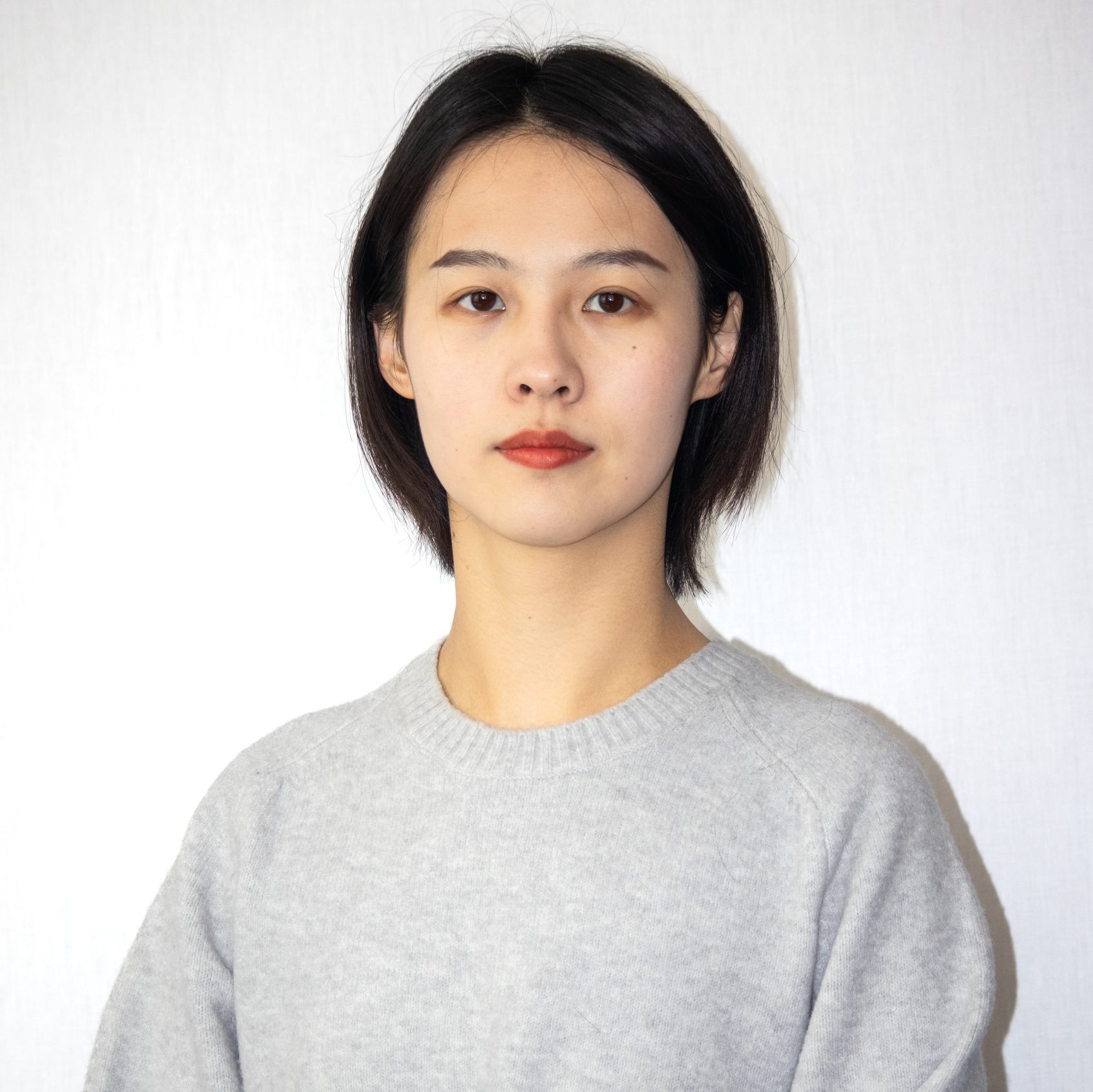
“This is a movement that is just getting started,” said instructor Crystal Chan, a 24-year-old marketing professional who grew up near Chinatown’s Portsmouth Square Park with her grandparents and parents.
As a child, Chan naturally picked up the Taishanese and Cantonese spoken around her. But in school, she said, neither language was part of the curriculum.
At both Lowell High School and Yale University, Chan said, the only Chinese language class available to her was Mandarin, which is less common in many U.S.-based Chinatowns, but is widely spoken internationally. (After English, Mandarin is ranked as one of the most useful languages to learn, largely for this reason.)
“It was just always very saddening that these languages aren’t taught in a standardized school curriculum,” Chan said. It “felt like our language didn’t matter.”
The city and county of Taishan, in Guangdong province, had high poverty, poor farmland, and ready access to the South China Sea in the 1800s and early 1900s.
All of that led to wave after wave migration from there to the Bay Area between 1869, when the first transcontinental railroad was completed, to 1965, when the Hart-Cellar Act opened up the United States to many more immigrants from other regions of Asia, including Hong Kong and other parts of mainland China, said Laura Ng, an assistant professor of anthropology at Grinnell College.
Today, some half a million Chinese Americans are of Taishanese descent. And the San Francisco Bay Area has been the home for a much higher percentage of them, because for a long time, San Francisco served as the first stop for those who entered the country, said Ng.
From then on, they’ve built various family associations locally, such as the Ning Yung Benevolent Association, to look out for each other.
Ng, a child of Taishenese immigrants, is one of a handful of scholars studying the Taishanese diaspora in the United States.
Precise data on this group is scarce, she noted, because Taishanese immigrants didn’t leave much in the way of records in their wake. They often took up jobs that don’t require much English, working in construction, or the garment industry, or in the kitchens of Chinese restaurants.
Many younger members of Taishanese-speaking families ultimately adapt to Cantonese, said Joy Zhan, who immigrated to the United States from Taishan with her parents in 2005, and is now acting director of the San Francisco Youth Commission.
Cantonese is the most widely spoken language in Hong Kong and the broader Canton area. While it, too, is rarely taught in local schools, it has become more accessible to descendants of immigrant Chinese communities in the United States.
In part, that’s because of the popularity of Cantonese-language news channels like KTSF or TV dramas from TVB, the Hong Kong television network.
While it takes some practice for Cantonese speakers to understand Taishanese, the languages are similar enough that limited communication between speakers of the two languages is possible.
Many words in Taishanese are completely different from Cantonese. But one rule of thumb is to drop the first D in any Cantonese word, said Ng. The Cantonese word for big, “daai,” for example, is “ai” in Taishanese.
Growing up, Zhan remembers some of her friends responding in Cantonese to Taishanese-speaking grandparents with mixed results. While the grandparents often understood what the kids were saying, the grandchildren could only understand “bits and pieces” of what their grandparents were trying to communicate.
On a recent trip back to Taishan, Zhan heard from family that nowadays kids in the area don’t speak Taishenese at home anymore. They speak Mandarin instead.
“That makes me so sad,” said Zhan, “what if my nephew and nieces actually lose our dialect?”
In her work with the Youth Commission and other local organizations, she said, she loves being able to speak to elders in their own language.
“The grandparents who speak Taishanese, a lot of times they’re the ones who need the most help navigating all the different services,” said Zhan.
Taishanese is widely spoken at food lines and among recipients of Medi-Cal and food-stamp benefits. In local politics, Cantonese language skills are a valuable asset for people working at City Hall, and the same is true of Taishanese, particularly because most of San Francisco’s city services only cover Cantonese and Mandarin.
With that in mind, Conversational Taishanese 101 has practical, rather than academic, goals.
The class, which will not be graded, will teach skills directly applicable to everyday conversation, including tones and phonetics, greetings, ordering food, and offering help to elders.
Chan hopes the class will be “more of a community space” that will help students connect to their roots and culture. No knowledge of Chinese is required, she said, and she will tailor the instruction to the background and skill level of the participants.
The goals for the class are similarly practical. Maybe a student will be able to help a senior who is struggling to communicate with a bus driver. Maybe they will be able to ask “What are you looking for?” when they see seniors rummaging through the trash for recyclables, for example, and offer them some help, said Chan.
Mostly, she hopes her future students will “ serve as a bridge,” said Chan.
Update: CCSF’s City Extension program has added a second session of Conversational Taishanese 101. Here is the link.
Wish they could offer the course online for all the folks not in SF. I’d be willing to pay a course fee for it. My niece and nephew would finally be able to communicate with their non-English speaking grandmother before she passes on. It would bring her so much joy.
Thanks Jujie for your article. It was extremely informative! I could relate to so much of the information you shared. I am grateful! Unfortunately, I live in the East Bay Area. In the future, maybe this class can be taught on-line. My kids would appreciate this class so that they can converse with their grandparents more in Toisan than in English. Thanks again!😃Veda
Why call the class “Taishanese” (Mandarin) rather than what it is: “Toisanwa” (Cantonese pronunciation) or “Hoisanwa.”
Like Spanish, French, Japanese or German, Taishanese is an anglicization