
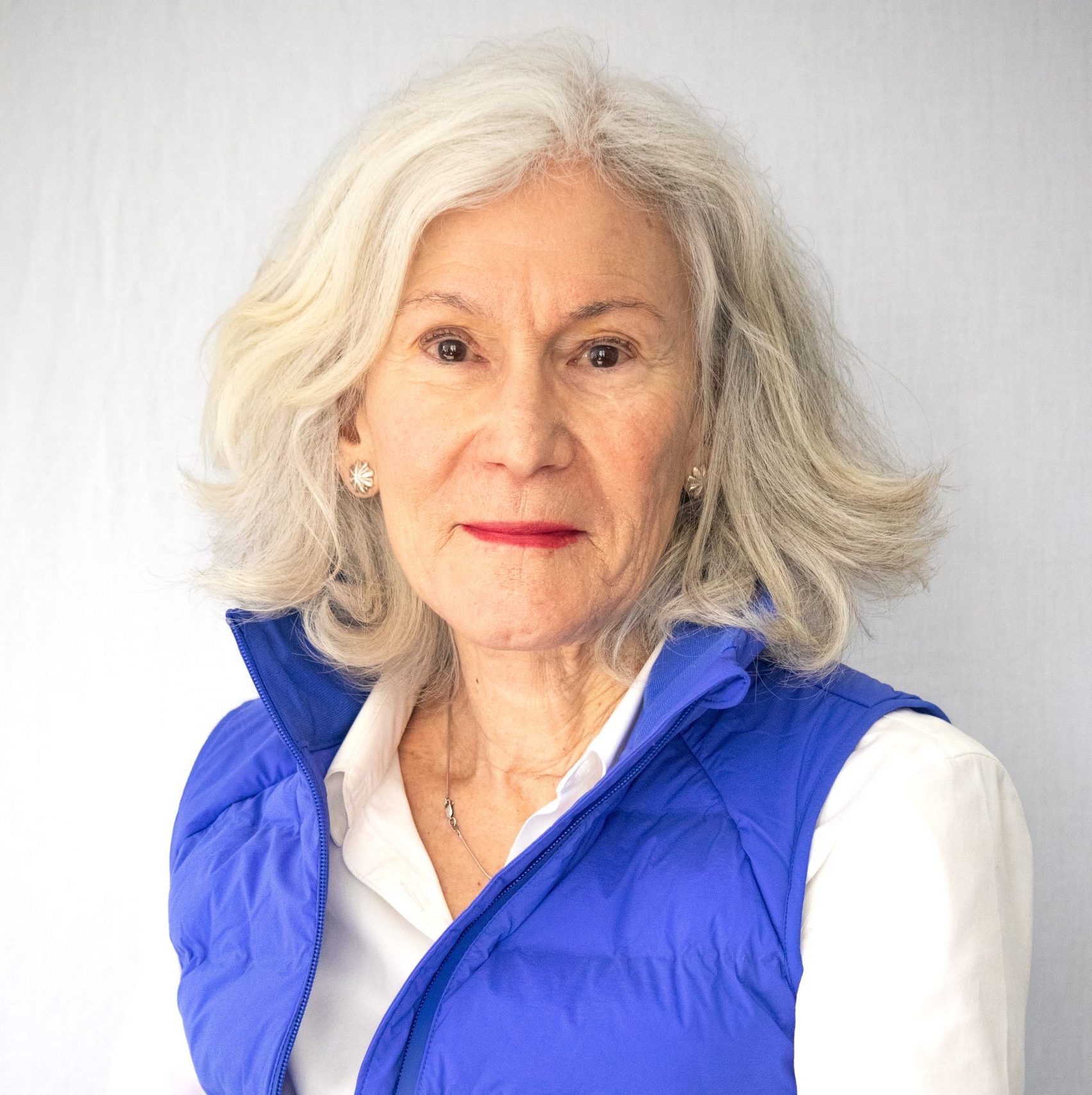

“The heart just insists on it,” says longtime Mission resident Elizabeth “Betita” Martinez when asked to explain why she has devoted most of her 85 years to the struggle for social justice.
Betita grew up feeling like an outsider in Washington, D. C.’s segregated suburbs in the 1920s and 30s. As the daughter of a dark-skinned immigrant from Mexico City, and a blue-eyed North American, she felt racism in the air, “but I did not have words for it then.”
Her father Manuel Guillermo Martinez, as a young man had witnessed the Mexican Revolution. He worked his way up from a clerk in the Mexican Embassy to professor of Spanish literature at Georgetown, while her mother, Ruth Sutherland Phillips, got a master’s degree from George Washington and taught advanced high school Spanish.
Soon Betita was emulating her parents and climbing the ladder to success: she became the first Chicana to graduate from Swarthmore in 1946, followed by upwardly mobile jobs as a researcher at the United Nations and an editor at prestigious Simon & Schuster. In the 1950s, as Edward Steichen’s assistant in New York’s MOMA, she hobnobbed with cutting edge artists and literati, and married one, the writer-activist Hans Koning.
Then in her mid-30s, she gave up a sure-thing life of privilege for long hours and low pay in the Movement. As Liz Sutherland, she joined the civil rights struggle and worked for the Student Nonviolent Coordinating Committee (SNCC) in New York in the 1960s. “I did not grapple with my particular identity then, with being half Mexican and half white,” she recalls. “The work said who I was.”
A few years later, two pivotal events affected Betita’s political development. First, SNCC had, in her words, “an identity crisis” and decided that it “should and would be an all-black organization.” Secondly, a trip to Cuba in 1967 connected her with an inspirational gathering of Latin American revolutionaries that triggered her own identity crisis. “The ground of my life was shifting, stretching,” she said.
Martinez took off for New Mexico in 1968, where she founded a Chicano movement newspaper, El Grito del Norte, and organized a communications center. “A voice inside me said, ‘You can be Betita Martinez here. It feels like home!’”
It felt like home until the mid-1970s, when Betita left New Mexico and joined a leftist organization in San Francisco, hoping to be part of a movement that would go beyond identity politics. Ten years later, after the Marxist left self-destructed, she returned to grassroots work, searching for ways to bring communities of color together, speaking out fiercely against racism, sexism, and war – saying “no” to “any definition of social justice that does not affirm our human oneness.”
Until illness limited her mobility, you could count on Betita to show up for marches and pack several meetings into her day. And she kept on writing, as she’s done all her life. Without a university base or philanthropic support, she has accomplished what most academics never do in a lifetime. She’s written several books that have left a deep impact on readers searching for socially relevant, thoroughly researched, and thoughtful history and commentary. Among her lasting contributions are Letters From Mississippi (1964), The Youngest Revolution: A Personal Report on Cuba (1969), 500 Years of Chicano History (1976), and 500 Years of Chicana Women’s History (2008), not to mention hundreds of journalistic essays.
For her work on behalf of social justice, Swarthmore honored Betita with an honorary doctorate in 2000. But unlike most professionals of her generation, she does not have the benefit of a private pension system or home ownership. She has devoted her knowledge and expertise to the struggles of working people, often at the expense of her own personal needs.
Now we have an opportunity to let her know how much we appreciate what she has done for and with us all.
Please join us to celebrate the 85th birthday of Elizabeth Betita Martinez on Saturday, December 11 from 2 p.m. to 4:30 p.m. at the Mission Campus of the City College of San Francisco, Salon 109, 1125 Valencia Street. Donation of $25 (or what you can afford) requested.
Tony Platt is a retired professor from Sacramento State University. His latest book, “Grave Matters: Excavating California’s Buried History,” will be published by Heyday in 2011.

Thanks for such a thoughtful piece. Such a rich life is a challenge to grasp in a few paragraphs but you did it. And congratulations to Betita for the creativity and passion in which she has lived.
a true inspiration
Bravo for Betita! One of many brilliant souls that have blessed our community. Thanks for the story.