
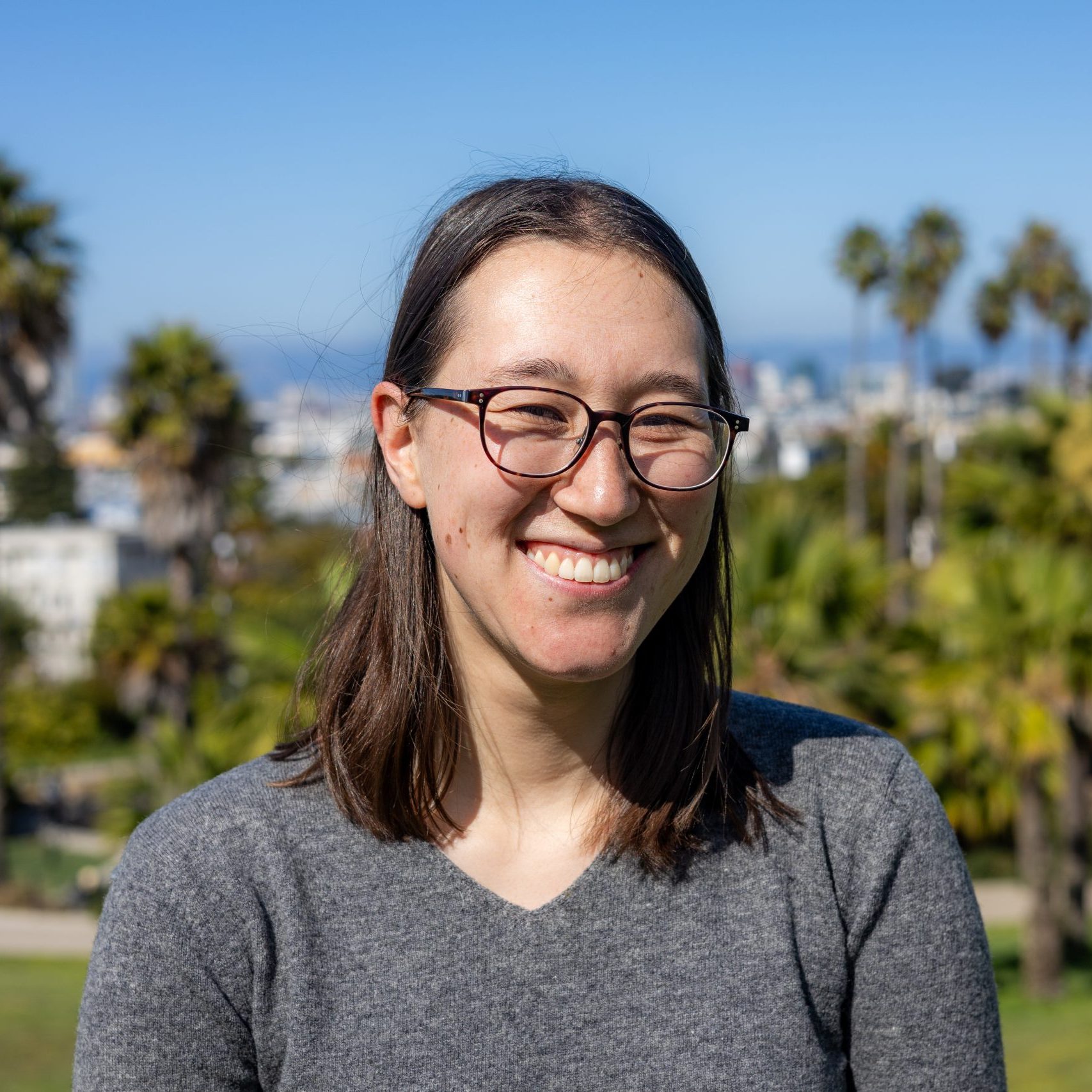

On Nov. 9, 2020, Connie Chan stood near the corner of Sixth Avenue and Clement Street in the Richmond, joined by several current and former supervisors. She had just declared victory in the District 1 supervisor race, which she won by just 125 votes. It was her first time gaining elected office.
By then, Scott Wiener had been in office for a decade, with a roster of accomplishments. He had made San Francisco the first city in the country to require fully paid parental leave, passed laws to speed up housing approvals and required health plans to cover mental health care, among other feats.
And he had his sights set even higher. “He planned for a long political career,” said David Latterman, a former Wiener strategist.
A few years later, in 2023, Wiener would open up an account to begin fundraising to succeed Speaker Emerita Nancy Pelosi, who had been San Francisco’s congressional representative for nearly 40 years.
His head start paid off. On Nov. 3, Wiener won 53.3% of the vote, beating Chan to succeed Pelosi in Congress.
Chan, by contrast, only began considering a run after Pelosi announced her retirement in late 2025. Moreover, she counted only six years of experience as a legislator.
No matter the dearth of experience, Chan was encouraged to run for Pelosi’s seat partly by city labor leaders, who had backed her earlier runs for supervisor with more than $1 million. They held out hope that Chan could win and grow into their next Pelosi, who has been a strong ally of organized labor in D.C. “Otherwise we would have been completely shut out of this election. Scott would have just rolled in,” said Mike Casey, president of the San Francisco Labor Council.
But Wiener was a formidable opponent, with more of just about everything that mattered for winning. He had more political experience, more name recognition among voters, more concrete accomplishments he could point to. And he had more money.
Thanks to his head start with fundraising and his connections to the Bay Area’s wealthy tech circles, he had $2.3 million in the bank at the end of 2025 when Chan was just launching her campaign. In the end, including outside spending, at least $18 million was spent to back Wiener compared to $5 million behind Chan.
Still, Chan and her advisors saw a path to victory, albeit a narrow one. “Connie was a person whose story and values and mission all come together,” said Chan’s consultant Julie Edwards who saw this as a profile that could appeal to half of San Francisco.
Chan could try to turn Wiener’s connections to tech and other wealthy interests into a liability, allowing her to win the working- and middle-class vote. She’d also count on support from the Asian community, progressives, and Westside voters in the Richmond and Sunset.
Moreover, she was well positioned to get the most valuable endorsement of the election: Speaker Emerita Nancy Pelosi’s. Their relationship dates back to 2021 and has evolved at every key juncture of Chan’s career.
Even before she joined the race, their shared labor allies told her that Pelosi “thinks you would be a good candidate,” Chan recalled in an interview after Election Day.
But in the end, she would not win.
“People know who Scott is, they know what he’s done,” said Maggie Muir, Wiener’s lead consultant, who said their campaign showed voters Wiener had a long track record of achieving results for San Franciscans. His main slogan? “Scott gets shit done.”
Messaging and other strategies
The sharp differences in experience versus promises became clear on Oct. 13 at their final debate when the candidates were asked, “Do you think your opponent is truly a progressive?”
Chan responded with her campaign message: “Corporate Democrats that say that they want the billionaires and corporations to pay their fair share and be held accountable. But when the time comes, they always say no,” Chan said. “They always go for a watered-down bill.”
Wiener responded with evidence of what he had actually done as a legislator.
“This race is between a Democrat who has actually taken on and beaten the most powerful corporations in the world, and a Democrat who just talks about it,” Wiener said, pointing to instances where he “took on” the Big Tech, the health insurance industry, the oil industry and others.
Even the AI issue fell short for Chan.
Her campaign often touted her support for a data center moratorium, for instance, and attacked Wiener for opposing it. He justified his position by arguing that data centers should not be allowed in inappropriate locations or to raise electric bills, but a blanket moratorium would cause AI companies to move the centers overseas, removing a point of leverage during negotiations.
When Chan accused him of being too cozy with tech companies — his coalition received large donations from people and groups related to the AI industry — Wiener resisted the characterization, pointing to instances when he confronted Big Tech. He was, he often said, the first to pass AI regulations over the opposition of most AI companies.
Chan accused that law of being “watered-down,” but it was Gov. Gavin Newsom who vetoed a stronger bill.
Wiener’s campaign said Chan’s attack failed to stick because of the mismatch between the rhetoric and Wiener’s record. “Ultimately,” said Muir, the Wiener strategist, voters “didn’t believe it.”
Wiener’s campaign focused on four main pillars: affordability, fighting Trump, regulating tech and keeping San Francisco thriving.
For each of these buckets, Wiener had passed many bills the campaign could point to as evidence. On affordability, he passed numerous bills to make it easier to build housing. On Trump, he wrote a bill allowing people to sue Immigration and Customs Enforcement for violating their civil rights. On tech, he passed the nation’s first law regulating AI. And on a thriving San Francisco, he had worked on legislation that allowed cities to designate areas where people could drink on the street.
Muir said their message built on an existing perception that Wiener was extremely effective — in polls, voters consistently rated him highly on that attribute. The campaign’s job, then, was not to convince voters as much as it was to amplify that understanding.
“If you have to change people’s minds about a person, that is really difficult,” Muir said. “But people already knew that Scott was a hard-working leader who delivered results.”
The breadth of his work made their lives easier, too. Even if one voter wasn’t so enthused with Wiener’s YIMBY reforms or his stances on tax raises, there was always some other accomplishment the campaign could direct voters to — he wrote San Francisco’s paid parental leave policy, for instance, and also secured funding for public transit and passed laws expanding LGBTQ rights.
Wiener’s team felt that Chan’s record was sparse by comparison, allowing them to create a contrast. “In our estimation, Supervisor Chan did not have that long record of delivering real, tangible results,” Muir said. The campaign would go on to try and define her as a candidate who often opposed other people’s priorities — but rarely passed legislation to implement her own.

Chan’s biggest accomplishment in six years of service was serving as budget chair for four years in a city with a budget larger than some states.
But why that experience was impressive required explaining — San Francisco’s budget is gargantuan, and balancing it year after year is complicated and politically fraught. Plus, Chan had used the role to stave off city layoffs, and secure funding for nonprofits, such as ones that provided legal aid to tenants. Getting voters to make these connections was more complicated than pointing to one, or 20, signature pieces of legislation.
The fact that much of the campaign messaging ended up focusing on the two candidates’ local stances and achievements was an oddity for a federal race. It may have partially been because it had been almost 40 years since San Francisco had a local race for Congress, so there was no “muscle memory” for what that type of race should look like, as Muir put it.
A race more focused on national issues might have been less fraught for Chan. When it came to local issues, “she was a little bit cornered by the nature of her support being coming both from the moderate west side and Chinese community and the progressive east side,” said Jim Stearns, a political consultant hired by a pro-Chan super PAC. Those group’s local positions are often politically inconsistent.
Proposition G, which would have reopened the Great Highway to cars, offered a case in point. Some blamed Chan’s continued support — albeit quiet support — for the pro-Great Highway constituencies as a reason she did not win many of the precincts that typically vote progressive.
On the other hand, it may have helped her win every precinct in the Outer Sunset, even though those voters often lean towards more moderate politicians like Wiener. In the end, Chan’s deputy campaign director Graham Isom said, the issue was “a net neutral.”
Near 4-to-1 spending advantage
With their messages set, the task for the campaigns was to disseminate them as widely as possible. And with that, Wiener’s coalition had a clear leg up, outspending Chan nearly four to one.
From the primary through the conclusion, Wiener’s campaigns and the political action committees supporting him spent at least $18 million, compared with Chan’s $5 million, according to the most recent filings.
Wiener’s money advantage meant that he sent out many more mailers and took out many more online and TV advertisements than Chan. This was particularly pronounced in the month before Election Day. Pro-Wiener outside groups spent at least $4.9 million between Oct. 15 and Oct. 31, and $2 million between Oct. 1 and Oct. 14. Pro-Chan outside groups spent far less: $800,000 and $240,000.
The $18 million created enough “noise” in the race that “it almost is immaterial what that noise is comprised of,” Julie Edwards said. “If you are playing the radio at top volume, does it really matter what song is playing? The point is that you can’t hear anything else.”
Chan’s primary backers, local labor unions, went all in for her to the exclusion of nearly any other local race. But in congressional races, most union backing comes from federal labor unions, which saw other congressional, statewide, and regional races as a higher priority compared to a Democrat-on-Democrat race.
Labor’s total contribution of around $2 million to Chan’s coalition was too meager to counter Wiener’s war chest.
“There was always a narrow path to victory for Connie,” said Kim Tavaglione, executive director of the San Francisco Labor Council. Still, she added, “Sometimes you just have to do the right thing, even though it’s going to be hard.”
Wiener’s coalition, for instance, had the money to tailor the message narrowly at the doors for niche groups of voters. Among Asian voters — Chan’s base — Wiener had a strategy. His consultants conducted a poll of Asian voters in the city to figure out which of his accomplishments they would be most receptive to. The results allowed them to tailor messaging based on the age and primary language of the Asian voters they spoke with.
For English-speaking Asian voters under the age of 50, the doorknockers would emphasize Wiener’s support for transit, housing and entertainment zones (where people can drink alcohol outdoors legally). Monolingual Canotnese speakers over the age of 50, meanwhile, would first be told about what Wiener had delivered for the Chinese community, such as securing funding to fight anti-Asian hate and for Asian cultural institutions. They would also be more responsive to Wiener’s record on public safety.
Chan still won most precincts with large Asian populations, but the margin being wider could have helped compensate for Wiener’s strength in other places.
The end
Particularly ruinous for Chan was losing District 5, which includes the Haight, Tenderloin, Western Addition and Hayes Valley. That area of the city is typically progressive-leaning — it voted overwhelmingly, for instance, for the statewide billionaire tax and for Proposition I, another progressive tax measure that also failed.
“There’s no way the progressive candidate can win citywide while losing District 5,” Stearns said.
With Wiener fighting Chan to a draw in the progressive areas of the city, his overwhelmingly margins in many other places — Noe Valley, the Castro, Pacific Heights and SoMa — were enough to overcome her winning the Outer Sunset, Outer Richmond and Chinatown.
Wiener has already been whisked away to D.C. where he is meeting other Congress members, picking out his office, joining political caucuses and collaborating with Pelosi for a smooth handover.
“It has a little bit of a first day of school vibe,” he says in a social media update, the Capitol visible behind him as he walks across a lawn. “But I’ll tell you, the stakes are way, way, way higher than the first day of school,” he adds, smiling shyly, before listing out a litany of things he wants to get done.
Chan, meanwhile, is still in San Francisco. She has no plans to disappear.
She will spend the next two years “to expand the working people’s coalition in San Francisco,” she told Mission Local.
“I’m constantly being underestimated. I have the next two years as a member of the San Francisco Board of Supervisors. I’m here to stay,” she said. “Watch me.”