


Supervisor Connie Chan has always been labor’s kind of candidate.
She has walked picket lines as a San Francisco supervisor, and fought against cutting union jobs at City Hall as budget chair.
She’s pushed to increase the minimum wage several times, and has become known among unions as valuing labor unity instead of exploiting its division for political gain.
Her run for Congress has earned her a broad coalition of support from city unions, as well as umbrella groups like the San Francisco Labor Council, the San Francisco Building & Construction Trades Council and the California Federation of Labor Unions. She touts 35 union seals on her campaign endorsement page.
But labor unions may be a day late and a dollar short in spending for their avowed champion, and Chan finds herself losing the money race.
Unlike her rival Saikat Chakrabarti, who has pledged to spend as much of his own money as needed, Chan is not worth more than $100 million. And, unlike her opponent Scott Wiener, she does not have a wide donor base or third-party support from tech executives, who have spent heavily on a pro-Wiener political action committee.
Chan has pledged to reject corporate money, and to tax the billionaires who might otherwise fund her. Labor is the only realistic source of big money for her campaign.
But unions have yet to shell out large sums, and have only started to spend recently. Chan is backed by at least $1.1 million, according to campaign filings and labor consultant David Ho, who said on May 11 that about $650,000 of that was raised for a pro-Chan PAC, almost all from unions.
The other $459,000 comes from largely individual donors directly to Chan’s campaign, and is likely an undercount; filings were current as of March 31.
It’s a lot of money, but less than others have raised. Chakrabarti has self-funded his campaign to the tune of at least $4.8 million as of March 31, and had fundraised another $360,000 then. Both numbers are likely up since.
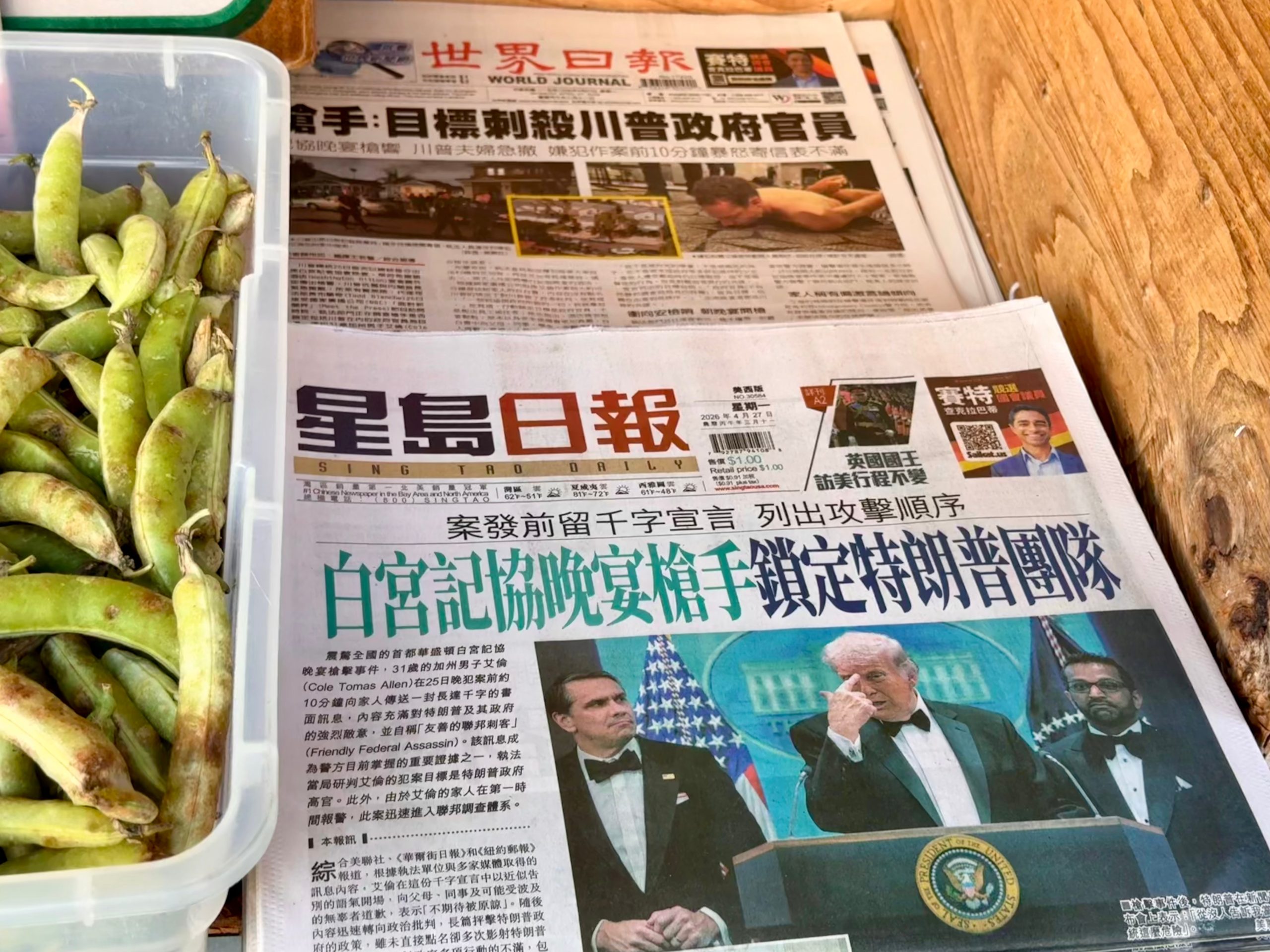
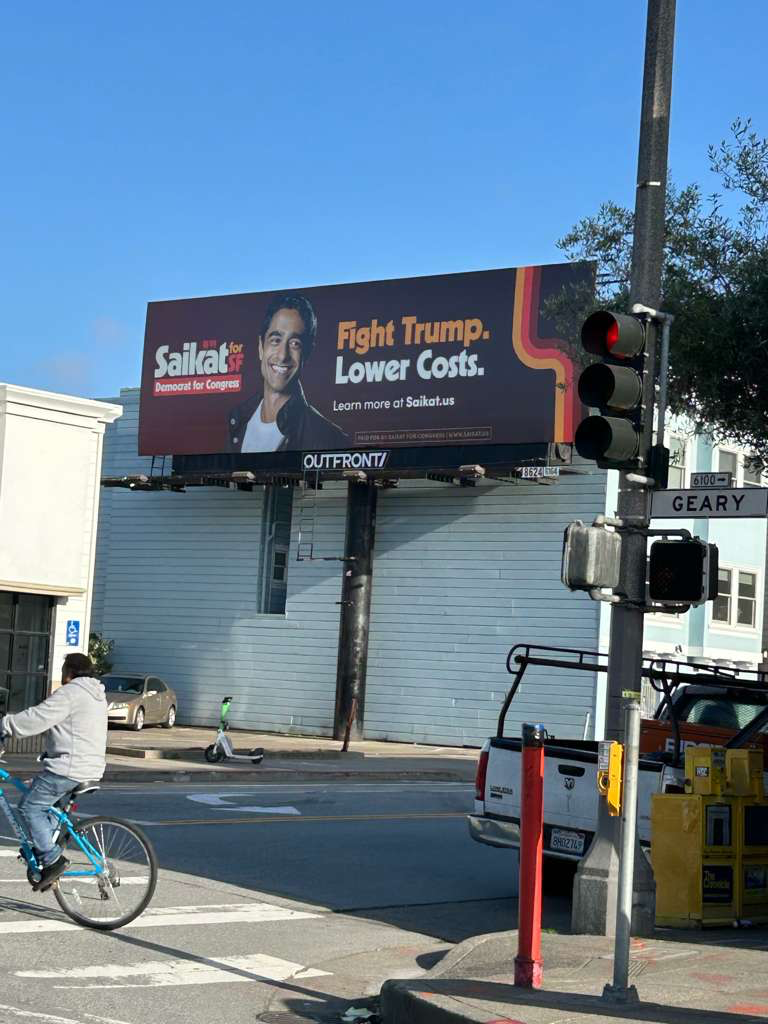
Chakrabarti has used his millions to run a 200-person paid canvassing operation and plaster his face across San Francisco — on Chinese-language newspapers, ubiquitous online ads, and even a billboard.
Sen. Scott Wiener is benefitting from $3.5 million in direct fundraising as of March 31, and two PACs have collectively spent at least $600,000 on advertising for the state senator. Wiener is also bolstered by another half-million in an anti-Chakrabarti PAC funded by his allies.
Labor’s contributions were slow to come. Unions had contributed just a bit over $200,000 as of the end of March, when Chan’s rivals had millions each and Chakrabarti, whom Chan must contend with to secure a No. 2 spot in June and advance to November, was advertising widely.
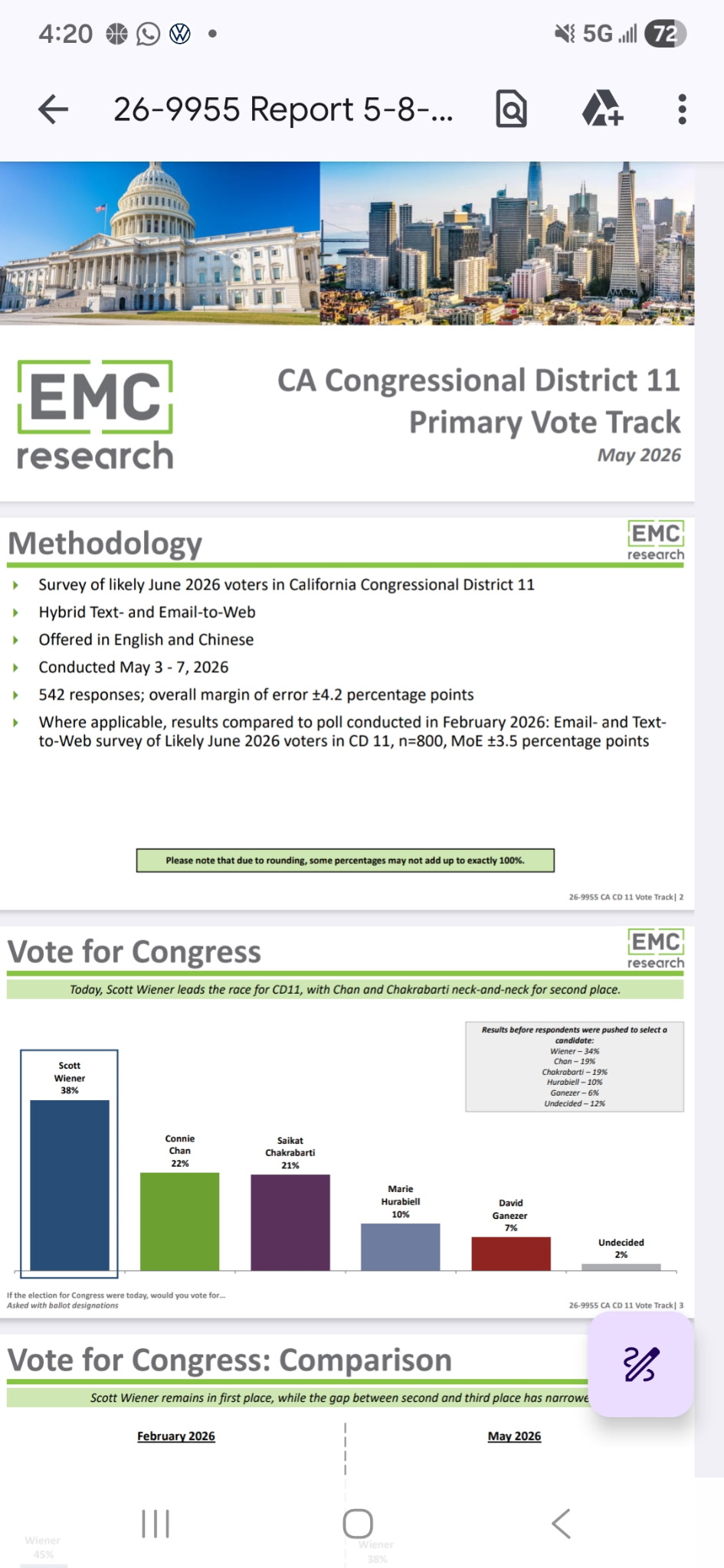
Perhaps as a result of the lackluster spending, Chan tanked in the polls for the month before voters started to receive ballots in early May, though according to recent polling she’s currently tied for second place with Chakrabarti. For a while, city politicos even began to whisper that Chan’s campaign was “inactive.”
Labor consultants defended Chan’s fundraising. “You can’t compare unions to corporations and AI. We represent cooks, dishwashers and room cleaners,” said Mike Casey, president of the San Francisco Labor Council, who is also working on the pro-Chan independent expenditure committee.
Chan also began preparing for, and officially entered, the race later than her major competitors. Both Wiener and Chakrabarti had put in years of effort. It takes time for labor money to come in.
“Contributing to congressional campaigns involves a significantly more complex legal and compliance process than local or state races,” said former supervisor Gordon Mar, who has a long history of working with labor unions.
Chan, it seems, has been hampered by a confluence of factors: Campaign-finance rules that prohibit local unions from easily donating to federal candidates, a loaded ballot stretching labor’s political budget thin and, perhaps most significantly, the fact that local unions benefit by having Chan in local government.

Losing Chan to Congress means losing pro-labor vote at City Hall
Chan’s longtime labor funders may be worse off if she leaves local government, even if she gains a national perch, and they may be donating accordingly, according to political insiders.
“I don’t know to what extent labor in San Francisco sees Connie as more useful for them — in the Board of Supervisors or the U.S. Congress,” said political consultant James Stearns. It could be “just out of loyalty,” he said, that the unions contribute, “but you know, these are tough times for everybody, money-wise.”
A four-year chair of San Francisco’s budget committee, Chan has been a reliable ally to labor. Her departure from the board would have a tangible and direct impact on city unions and their members’ jobs: City unions feel they need Chan at City Hall more than ever.
Mayor Daniel Lurie recently proposed to eliminate 500 City Hall jobs, and is pursuing a ballot measure to quadruple the number of signatures required for ballot measures, which would make union ballot-box policymaking harder and more expensive.
“Are you going to have somebody on the Board of Supervisors who is going to embrace the Lurie anti-worker agenda, which results in 500 layoffs and nonunion contracting?” asked a longtime Chan ally. “I think [unions] also see more draconian anti-labor moves coming from Lurie that they are saving their resources for.”
If Chan were elected to Congress, Mayor Lurie would also fill her seat, likely with a moderate appointee. That would reduce the number of progressive, pro-labor votes on the board.
“Daniel Lurie should endorse her,” quipped Rudy Gonzalez, secretary-treasurer of the San Francisco Building & Construction Trades Council, who is assisting with Chan’s campaign. “He gets to appoint a replacement!”
Labor’s contributions to Chan’s congressional race are even lower, at least so far, than their backing of her for a city position: In 2024, labor spent more than $1 million to help Chan win re-election to the Board of Supervisors and retain her position as budget chair.

Unions stretched thin across country, state and city
Local labor leaders told Mission Local that they see in Chan someone they want to follow for the next two decades. Many hold out hope that Chan will grow into their next Nancy Pelosi, who has been a strong ally of organized labor in D.C.
But national unions do not know Chan well, and their local chapters cannot easily contribute directly to congressional candidates. Most must rely on their parent unions’ federal PACs for federal races.
“Most local unions don’t have that,” said Anand Singh, former president of UNITE HERE Local 2, the hotel workers’ union and treasurer for the pro-Chan independent expenditure.
In order to put money toward Chan, local chapters must convince their parent unions to spend considerable sums on a candidate who is not well known to their national counterparts.
Local 2’s New York-based international, for example, donated $200,000 to the pro-Chan independent expenditure only after the local made the case that Chan is “a generational leader that would be critical to have not just in San Francisco, but really to lead for working people in Washington D.C,” Singh said.
But other local unions seem to have had a harder time succeeding with that pitch: Unfortunately for Chan, her victory over Wiener or Chakrabarti does not appear to be a high priority for labor nationally.
Longtime city political observers note that, from a Washington, D.C. perspective, any San Francisco Democrat is perceived as acceptably pro-labor.
National unions are also stretched thin by a number of competing campaigns this year that may ultimately help Democrats regain control of Congress.
“I mean, look at what’s going on in this country right now, and the campaigns and the struggles that we’re up against,” said Mike Casey, president of the San Francisco Labor Council.
Even within California, there’s competition for labor money among congressional candidates. “More PACs are solely focused on flipping red to blue in California,” said Gonzalez. Chan’s congressional district will remain blue no matter what.
And in San Francisco, unions have to prepare for two elections in six months.
They must spread resources across several supervisor races, and address a top priority: June’s Proposition D, the “Overpaid CEO” tax, which they argue would “provide a lifeline for San Francisco” by asking “the largest corporations to pay their fair share” — and potentially reduce layoffs during budget cuts.

Chan must ‘work twice as hard’ to convince federal unions
It is a common challenge local officials face when running for state office: They must win support from those with a state-level agenda, rather than continue to rely on city-focused allies. Chan, who is attempting a huge leap from city supervisor to Congress, needs allies who are focused on the federal level.
Chan is better positioned than most to tackle the challenge, as she has built a broad coalition across different factions of the labor world, including those often at odds, said Casey from the Labor Council.
Still, Gonzalez said, “I can see how Connie has to work twice as hard because even some of her most trusted allies and strongest, ardent supporters have not been geared toward congressional races for some time.”
The pro-Chan PAC, Working Families for San Francisco, is seeking help elsewhere. Rather than relying solely on the public sector unions, it is turning to other labor sources.
“You’re going to see more of the private sector unions … weighing in substantially,” said Gonzalez. That would be a coalition of hotel workers, nurses, electrical workers, teachers and pipefitters, according to Ho, the PAC’s strategist. Notably missing from that list is SEIU California, which solely endorses Chan after un-endorsing Wiener in April.
Still, the labor allies who have opened up their wallets for Chan have a practical pitch to encourage others: Whoever replaces Pelosi may keep the seat for decades, and an early investment will pay off in spades.
Some are using their general funds (which are not reflected in filings) to communicate their preferences with their members. Unions have established trust with tens of thousands of workers and their families, and are known for effectively mobilizing volunteers and getting out the vote in the weeks before Election Day.
“The Building Trades were for Nancy in the very beginning … She never forgot it,” said Gonzalez. “She was always loyal to the Building Trades unions and to all of our unions. That’s the kind of commitment, loyalty that our members really value in a candidate.”

Once again, ML betrays their ignorance of “labor” and shows no understanding of the labor “movement” and how endorsements work.
Scott Wiener has been endorsed by unions representing tens of thousands of San Francisco workers, including the largest construction unions, UFCW, health care workers, school employees, and building service workers (an SEIU local no less).
This isn’t actually hard to find information.
Labor is not a monolith, The labor council and trades do not speak for all of labor, and have no ability to direct their affiliates to do anything.
Connie has admirable union support, most based in the public sector. Good for her. But it’s time to stop reporting on this race as if all of labor is backing Connie. Cause it’s just not true.
I like Connie Chan, but I don’t think she is the right person to represent San Francisco in Congress… yet. I look forward to seeing her in the future.
It is ethically corrupt for public sector labor to spend on electing candidates who will favor the interests of public sector labor, ostensibly over the interests of their constituents.
Labor should spend its money lobbying whomever the voters elect and organizing constituents to support them in that instead of leapfrogging over voters, marginalizing us, to serve their own interests.
The purpose of the electoral politics exercise is to devise and execute policies that are in the voters’ expressed interests, not to hook up private entities to public revenue streams.
Those who benefit directly from those policies, public sector labor and private contractors, both for- and non-profit, have no ethical business in electoral politics.
We can’t support that politician because they are funded by billionaires/corporations, and will vote in their interest.
But also, we need to support that politician because they are funded by labor unions, and will vote in their interest and approve their labor contracts.
“The people united will never be defeated!”
I hadn’t always believed so, but am convinced today– especially after having observed numerous local hotel worker strikes over the years– that today’s unions have long ceased being worker organizations in any meaningful sense.
Chiefly by isolating workers from each other, by limiting strikes to opportunities for workers to let off steam, by keeping contract negotiations secret, by hastening votes, and by misrepresenting meager outcomes as victories– union bureaucrats have made the achievement of “labor peace” an art form.
The late Spring city budget dance is a perennial event in San Francisco which always ends with sighs and promises to do better, next time. But see how the ruling class is hardening.
In Billionaire City, Mayor Lurie’s base, in essence, declares: “there is no money!”
It is the union bureaucrats, with the Democratic Party, who are most responsible for keeping workers from comprehending how and why their fates are irreconcilably opposed to capitalism.
As the US celebrates its 250th birthday, it is they who are most responsible for ceding power to a president who is guilty of the same crimes of King George III.
That the quality of life for the majority of workers inexorably worsens is hardly recognized in polite society. Workers, unable to live in San Francisco, eventually move away. They are easily replaced by newcomers entranced by the novelty of chants about “speaking truth to power.”
The piece of the American dream they are promised is a lie.
For workers lives to truly improve, they must learn to organize independently of the capitalist parties and trade union bureaucracies that keep them hamstrung. They must recognize how they have been kept divided.
The crisis of capitalism in the US has reached such an advanced state that even the wealth generated from union dues has less and less impact on influencing elections.
It would be a waste, would it not, to throw it away on a lost cause like Connie Chan’s? Better to save it for tomorrow’s big fight– a fight that will never come.
How are union dues to compete with the wealth possessed by our oligarchs and Wall Street?
Perhaps our local leaders, if they hope to protect their perches, should learn from Shawn Fain of the UAW, or Teamsters boss Sean O’Brien, and learn to curry favor with the fascists.
Don’t really understand how my completely fact based comment from this morning must still be in the “moderation” queue.
Sir or madam —
Respectfully, I was busy. Somehow, the world continued spinning.
Best,
JE