
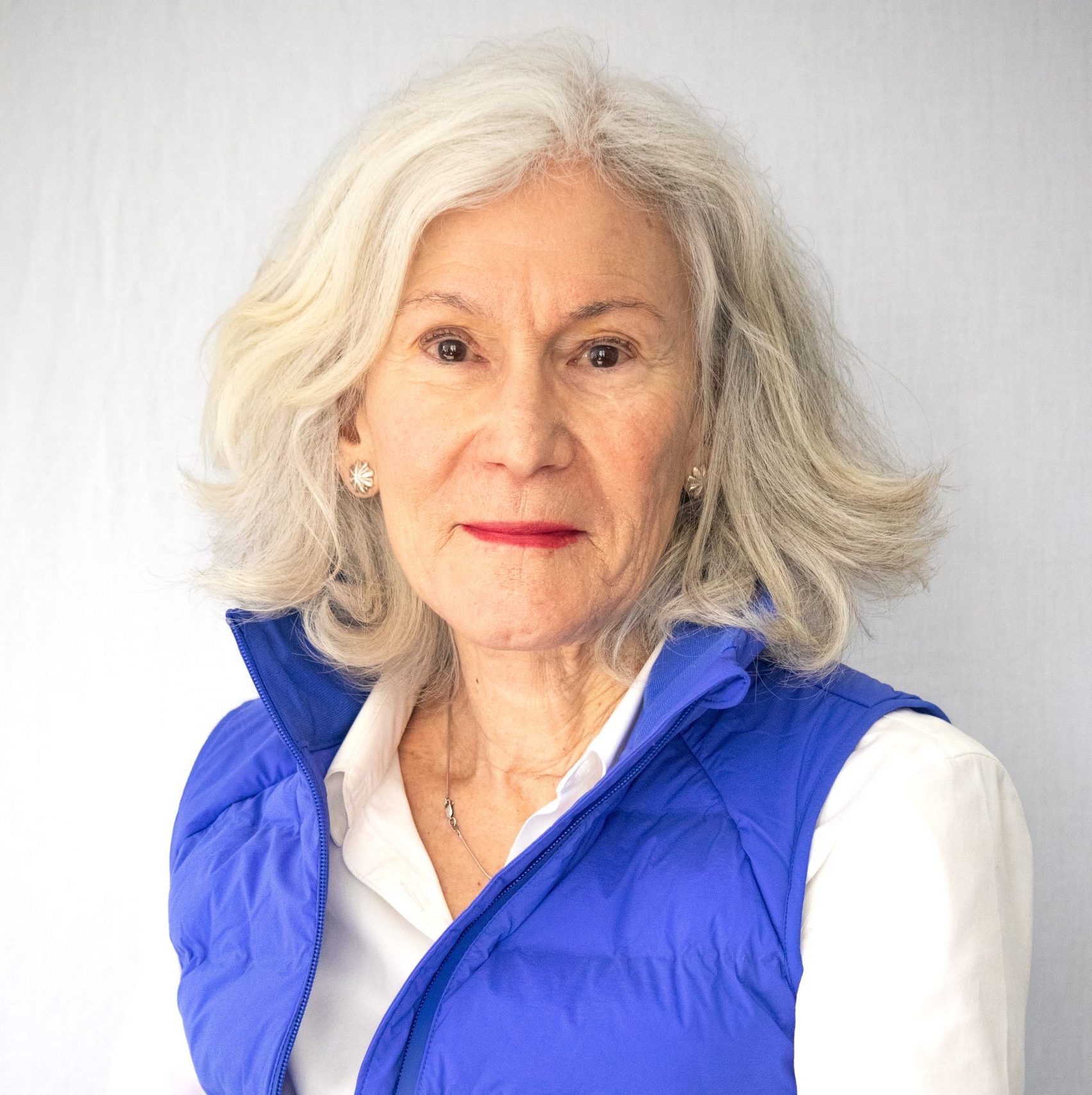

Carly Schwartz, the author of “I’ll try Anything Twice: Misadventures of a Self-Medicated Life,” had lived a full enough life by her late 30s to merit writing a memoir.
That she’s adventurous and accomplished is unquestionable. By the time Schwartz was 30, she had founded HuffPost SF and worked as its deputy national editor in New York. She then decided to pivot to a micro-finance fellowship in Mexico, and here is where the memoir begins.
Schwartz’s lifelong battle with depression had been kept in check with medication, but it became unmanageable soon after the fellowship ended and Schwartz embarked on an adventure to establish a journalism program in the middle of a jungle in Panama.
The memoir is as fast-paced as her life, but slows down when Schwartz returns to San Francisco and grapples with her demons. She writes with clarity about recovery.
The Mission District morphs from being a party base to a neighborhood where she makes unlikely connections and figures out how to live a full life without self-medicating. I talked to her about the memoir and her life in the Mission District.
Lydia Chávez: I want to ask you about the Panama adventure to create journalism seminars and eventually a school in the middle of the jungle. When you accept the offer, you tell Coco (the visionary behind the project), who will be your boss, “ Let’s build a media empire together.” But in the book, it all seems pretty precarious from the beginning.
Did you really believe you were starting out to build a media empire together?
Carly Schwartz: Yeah. I mean, you and my mother both. She’s like, “this sounds like bullshit.” You can totally quote me on that. It’s really exceptional, the tricks that your mind can play on you. And when I saw this idyllic jungle setting that was so different from my fast-paced life that had been tethered to a computer for my entire working career, I really wanted to believe that I could take these raw resources and build what I envisioned. And I envisioned something real, that I think could be very cool with the right resources and in the right context.
It was so abundantly clear that this was not that, but I think my mind was trying to retrofit it to make it that. I wanted to believe that this jungle community — I mean, you can even call it a cult — I really wanted to believe that this community had enough fodder that I would be able to teach these storytelling principles in this setting, especially focused on sustainability.
And my first curriculum was pretty good. I mean, it was so overshadowed by how deeply unwell I was, but I was really proud of the curriculum that I managed to design in the midst of all of that. The one interesting thing that did come out of my time in Panama is that it showed me that I really do love teaching, and I really do love mentoring students.
How do you compare that to the experience you had beforehand in Mexico with the microfinance fellowship program?
Mexico was one of the most formative experiences I’ve ever had. I became fluent in Spanish, which was a pursuit that I had my whole life that I had never officially mastered. Just being there and connecting with the indigenous farmers in such an organic way.
The woman I write about, Dominika, I’m still pretty close to her. Every time I go to Mexico, I’ll take the two hour trip by bus to see her family.
There’s a healthy way to go about adventure, which is making sure that your mental health comes first and foremost, and that you’re traveling in a way that aligns with your own values and integrity. And then there’s the kind of adventure where you’re just running away to a jungle doing all the drugs you can get your hands on and diluting yourself with a vision that will never come to fruition.
LC: I noticed that you are doing writing workshops. Have you applied any of the workshop strategies that you developed in Panama?
CS: Yeah. I actually have. I do this experiential exercise where, in a storytelling workshop, I’ll have people just describe what’s around them in the most literal, detail oriented way possible. I also started leading circles of just sitting in a group with people with notebooks open, giving them different writing prompts, and having them write in community and then share their work aloud.
The first time I used this, I was sitting in a circle with a bunch of students in Panama, in the jungle, outside, under a palapa while it was drizzling rain and saying, “here are five different prompts. I’m going to set a timer for 15 minutes. Let’s all write according to one of those prompts, and then let’s read what we’ve written aloud.” It was the first time I witnessed the sort of intimacy and power of reading words aloud in a small group.
That very simple but pretty profound format has served as the basis for a workshop series I facilitated month after month in the communal house I was living in San Francisco. I’ve taken versions of that and facilitated those in corporate settings.
LC: Another thing that struck me in the book is your attraction to communal living. Are you still living at the Avalon (name used in the book) in the Mission?
CS: No, but with someone I met there. I’ve thought a lot about this because, [as] I tried to convey in the book, the power of authentic community is really what helps to keep me well. But until I really connected with what was inside of myself, I couldn’t fully show up in those spaces.
I have always loved groups since I was a kid. I mean, I went to summer camp and we had all these funny traditions and songs … and I went to [an] all girls boarding school where it was the same deal, and we had like a secret language.
I guess it’s fair to say I’ve always been attracted to culty-adjacent living: a sorority in college where we had our secret handshake … and then this Panama stuff, or even early HuffPost was kind of like that. Just this group of wild, hungry journalists learning how to make sense of the internet.
I really like coming together with other people who value like-minded traditions and feeling that sense of belonging. I ended up leaving the Avalon because I just got really sick of my living situation being such a time intensive extracurricular activity in my life.
By the time I moved out, I had been the leaseholder. I had taken on every role possible, from taking out the trash every week to running our recruitment efforts to running our financial systems.
I wanted to make space to do other things, but I also knew I didn’t want children, I wasn’t in a conventional, monogamous nuclear relationship with a romantic partner to nest with, and I knew that I didn’t want to live alone.
And so I started thinking about how I could create … kind of a living community on my terms that still satisfied my inherent need to connect but wasn’t so grand. And so Topher [my housemate] and I just found this sort of intellectual and domestic compatibility. We moved from the Mission Dolores side to the 24th corridor side [of the Mission].
I just fell in love with it immediately. I love being able to run my errands in Spanish. I love the work I’ve been able to do with Roberto (Hernandez, a community leader who ran for District 9 supervisor in 2024 ) on community organizing.
I love just feeling plugged into the sort of lively, vivacious community feel … as someone who’s never wanted children and who’s never envisioned this sort of white picket fence life for myself, like, I love the fact that that doesn’t mean I’m sentenced to a life of living alone. I like that there are new ways to design what family means that aren’t, you know, necessarily what society told you it would be when you were a kid.
LC: For someone wanting to stay sober, it seemed counter-intuitive to move into a communal living situation where parties had been the norm.
CS: Yes, I remember being in rehab thinking, like, how am I going to go back to my big party house? And then I realized when I got back that I was actually living in a very beautiful, calm and quiet communal setting. And I was the one who had been instigating all the parties.
So it became much more of a place for coffee on the roof every morning … or, like, intentional walks with my housemates. I had one housemate in particular where we’d go on a walk every few weeks to talk about our dreams. And that was so cool. I mean, he’s still such a huge part of why I was able to do this book.
I wrote the book in the house, survived the pandemic in the house, and got my dog while I lived in the house. Just so many pivotal life moments happened there. And, and within the four walls, it became way less of, like, the avenue where I was depressed and had parties, and way more of, like, this is a beautiful historic mansion in an incredible neighborhood a stone’s throw from Dolores Park on this beautiful hilltop where I live with some of the most interesting people I’ve ever met.
I can talk about neuroscience over breakfast, even though I haven’t taken a science class since high school. And then learn about indie underground film movements after dinner and watch these cool things projected on the projector that I’d never heard of.
And the Mission kind of has everything, including all these amazing sort of healing properties. During the pandemic, I just started walking a lot, and I love how centrally located the Mission is to not just Bernal Heights, which is sort of the classic, you know, nature walk in the neighborhood. But I discovered Glen Canyon Park for the first time. And I started walking, walking west to Twin Peaks from our house and just these many-mile long walks.
LC You write about the Mission being very healing and your friendship with Roberto Hernandez, popularly known as the mayor of the Mission and a D-9 candidate in 2024. How did you meet?
CS: I knew I wanted to work on a supervisor campaign, because I had just left the [San Francisco] Examiner (where Schwartz was editor-in-chief). I’m really obsessed with local politics. But as a journalist … I had to be objective.
And so, I looked up the slate of candidates running, and Roberto was the most interesting to me, mainly because of his lived experience in the neighborhood. And so I emailed his campaign email address, kind of out of the blue, early on, and ended up having coffee with him and Josh Arce, a campaign volunteer, and just loved him.
It was like a portal to an entirely different lifelong Mission District community. One of the women, who was one of his precinct directors, lives across the street from me in the house she was born in. And now she comes over for tea and like, we go to movies together, and it’s just so cool, and how would I know her otherwise? I mean, people don’t really talk to their neighbors the way they used to.
There’s a sense of place; that’s just the point I want to drive home that that really bolsters mental health. When you have a sense of place where you live. I’ve thought about leaving the Mission just for a change. Like, oh, what if I move to North Beach?
But I don’t want to start over. The Mission has its issues, like anywhere, but I just don’t want to give up all I’ve invested in forming a relationship with my sense of place.


For being so community minded she sure talks about herself a lot. Occupational hazard for memoirists I guess. I would stfu but anyone who aspires to heading a “media empire” probably needs all the tough love they can get. But what do I know