
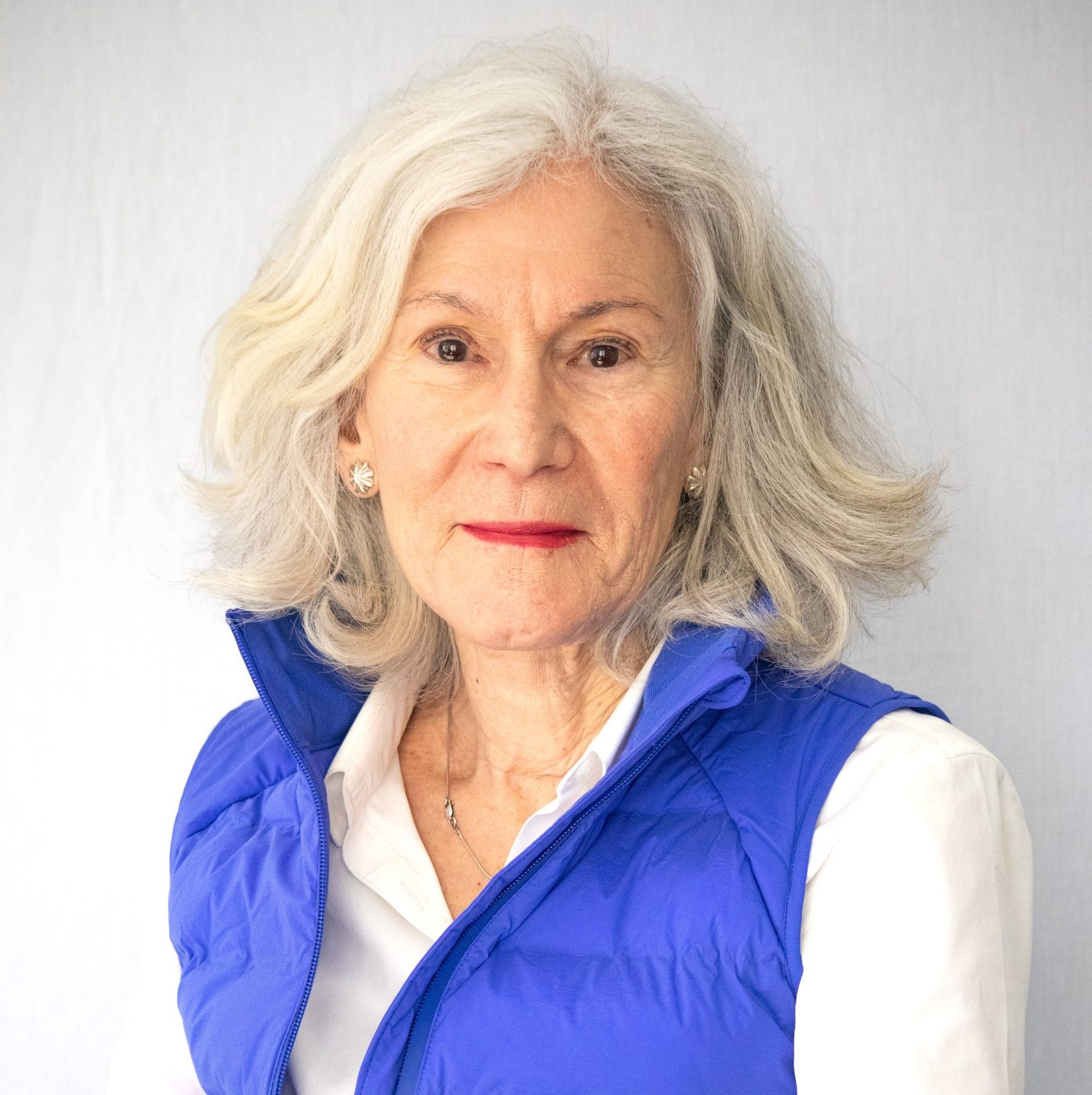

In the event of Dolores Huerta’s death today, Mission Local is re-running its 2024 sit-down with founding editor Lydia Chávez. The original story, from June 8, 2024, is reprinted in full below.
Dolores Huerta, who co-founded the United Farm Workers with Cesar Chavez, was in town Saturday for a birthday celebration. For the longtime activist, her extended birthday — she turned 94 in April — is an excuse to bring attention to the importance of voting and engaging with the community.
As workers set up dozens of tables and chefs prepared her birthday feast, we sat down Saturday afternoon for an informal interview. “I wonder who is older,” Huerta said when we met. “Me or the building.” (The building has her beat by seven years.)
Her fondness for San Francisco, she said, was sealed with the Bay Area’s support of the grape boycotts that began in 1965, but it goes back to her childhood when her family drove the 83 miles from Stockton, where she grew up, to visit San Francisco. She went to Playland by the Beach on Ocean Beach as a child and, early on, remembers drag shows at Finocchio’s in North Beach (She credits that early exposure to her longstanding interest and openness to the gay community).
Later, she saw the greats, such as Billie Holiday and Ella Fitzgerald, at the Black Hawk in the Tenderloin. “I saw Charlie Parker here in San Francisco,” she said. “I call it my claim to fame.”
Dolores Huerta: During the grape boycott, of course, you know, we had one of the big major bases of support here in San Francisco. It’s always been very, very supportive of people in the Valley. In fact, during the pandemic, Roberto Hernandez, who is now running for [District 9] supervisor … I don’t know how he did it, but he was able to send truckloads of food down to the valley. Talk about fresh food. I mean, eggs, yogurt, even chickens. We had to get it all out, like, in, in one day, you know? But it was just amazing. I think among the Latinos here, they’ve always had that connection with the Valley.”
A series of questions about what inspired her activism took us on a journey from the Girl Scouts to the Community Services Organization and Fred Ross, its founder. Her mother, who was devoted to the teachings of Saint Francis of Assisi and his work with the poor, was also an inspiration. This conversation has been lightly edited.
Dolores Huerta: Well, Number one, (what I learned in ten years of being a Girl Scout) was service to others, and then, of course, about nature. How we had to take care of nature. And to be self-reliant.
When I mentioned that I remembered its mantra to “always leave a place better than you found it,” she smiled.

Dolores Huerta: Exactly. That’s a Girl Scout. And that was also the motto of the farmworkers. You know, Cesar, when we would have these huge rallies, we’d have rallies with a thousand people. And he would always say, wherever you’re at, look around you, pick up all the litter that you have around you. And so, it was really amazing that we had these huge rallies and there was never any litter left. Everything was picked up.
Before meeting Chavez, Huerta met Fred Ross, the founder of the Community Service Organization that organized Mexican and other workers.
Dolores Huerta The Girl Scouts and Saint Francis were the whole idea of service to others. But with Fred Ross, what I learned from Fred, it’s not so much about helping people and being of service to others, but it’s about empowering people to help themselves. That’s a whole different ball of wax.
And that is what she tries to do today through the Dolores Huerta Foundation, where they help organize communities to take on projects, like getting a gym or fixing a road, and making them happen.

Huerta: To make people understand that they have the power to make the changes. And I think when we talk about saving democracy that is a message that we have to get out there. That everyone is responsible for saving our democracy, that we can’t sit back and say we’re going to have the president do it, or as you said, a quote-unquote leader, do it. Know that each and every one of us has to engage.
How does she feel about the upcoming elections?
Huerta: Like everybody else, scared. But I heard something on National Public Radio station yesterday in the valley. They brought up the whole issue of healthcare that Trump, when he was president, tried to get rid of national healthcare, and I think people kind of forget about that. … And we know that healthcare, which people are now pretty much taking it for granted, will be in danger if Trump gets elected. And so that might be something that will get people to the polls.