



Inside a San Francisco courtroom on Tuesday, Rosa Lopez sat with her daughter in the second pew, nervously fidgeting with her ring.
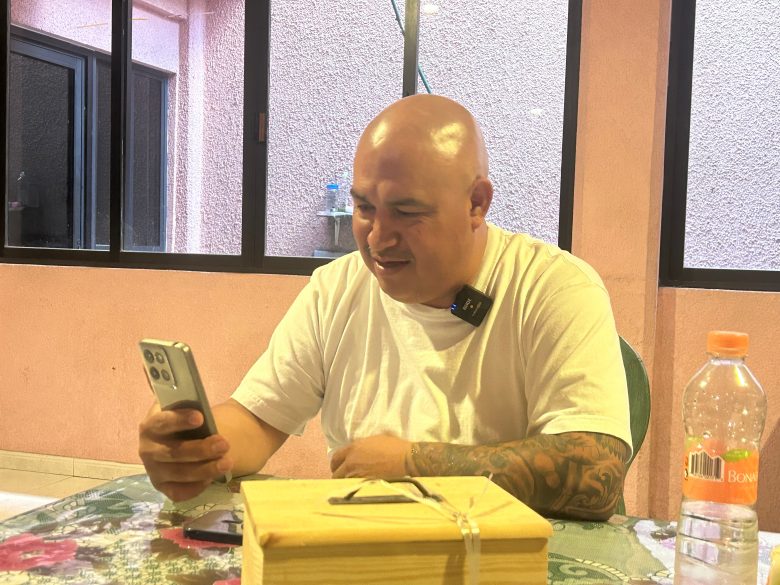
Meanwhile, her husband, Miguel Lopez, 47, was 2,213 miles away in Chimalhuacán, Mexico, where he’d been deported in June, waiting to learn his fate in a case that had held his and his family’s lives suspended for more than a decade.
Mission Local is following Lopez’s case — an example of an undocumented man who has lived the majority of his life in the United States, but must now reckon with life in a country he barely knows.
It’s a slim chance: There are very few cases where people are successfully brought back after being deported. But Tuesday’s court case meant a possible path for Miguel to return to Livermore and his wife, three children and granddaughter.
He had lived there until May 27, when federal immigration agents arrested him at a routine appointment at 630 Sansome St., the city’s headquarters for immigration court and Immigration and Customs Enforcement.
Lopez’s deportation order was based on the Department of Homeland Security’s decision in 2014 to revoke his green card, an order he has continued to contest: His attorney argues that the 2014 decision violated his due process rights to review the decision.

“We are not challenging a removal order; we are seeking review,” Saad Ahmad, Lopez’s attorney, said in court. “We believe that this court does have discretion and can provide meaningful relief to the plaintiff.”
In court, Ahmad called Lopez’s case “unique” because he had received a green card that was later revoked, and said the DHS’s decision to revoke his permanent residency and order his removal was “improvidently” made. He repeated that the court can provide relief.
Despite challenges by DHS attorneys, Judge Trina L. Thompson heard arguments on Tuesday about whether the court has jurisdiction over the case. Thompson set Oct. 30 for the hearing where she will likely determine the jurisdiction.
If granted, lawyers can begin presenting arguments about whether Lopez will receive a review of that 2014 decision to uphold the revocation of his green card.
Lopez first entered the United States in 1996 when he was 18. At the coyote’s suggestion, he falsely told the U.S. Customs and Border Protection officers he was a U.S. citizen. He was denied entry, but re-entered a few weeks later.
Once in the United States, he moved to Livermore, where he met and later married Rosa, who became a citizen when she was a child.
Lopez applied for a green card in 2007. It was denied after the U.S. Citizenship and Immigration Services discovered he had lied to border agents, according to court documents.
Then, in November 2012, an immigration judge granted Lopez a green card. DHS appealed the decision to the Board of Immigration Appeals, the highest administrative body for interpreting and applying immigration law.
In 2014, the board ruled that it had no jurisdiction over the case. DHS then reinstated removal proceedings in 2016.
At various points on Tuesday, Judge Thompson intervened to question the merits of Lopez’s removal and the motion to close his case. Thompson was the same judge who wrote a last-minute injunction to halt Lopez’s deportation to Mexico in June.
At one point Thompson asked the DHS attorney, “Are you saying that the government can bypass and interrupt proceedings and fast-track how they’d like?”
The DHS official denied this. Even if the court were to say that the Board of Immigration Appeals “abused its authority,” the attorney said, “there is no relief that the court could provide, as he’s already been removed.”
Ultimately, Thompson denied DHS’s request to throw out the case.
Outside the courtroom, Lopez’s family exhaled in relief and counted the judge’s decision as an answer to their prayers.
Ahmad cautiously called it a win. “We have a long way to go; it’s like passing a bill in Congress, you have to move mountains,” he said. “But there is a light at the end of the tunnel.”
Ahmad also mentioned a private bill, H.R. 5244, introduced by U.S. Rep. Eric Swalwell on Sept. 10, that seeks Lopez’s naturalization. While it may take six months to pass, Ahmad said, he is optimistic that this can be a way to bring Lopez home.
At court, Rosa said, “I’m happy, this is one step forward.” At the same time, she noted her mixed emotions: anxiety about the future but also gratitude for the outpouring of support from her family’s community, which began since Lopez was unexpectedly detained in May.
Rosa said that loved ones have started a prayer chain that extends to other states, and a former immigration attorney hung a banner over a freeway in Livermore that reads, “Bring Miguel Home.”
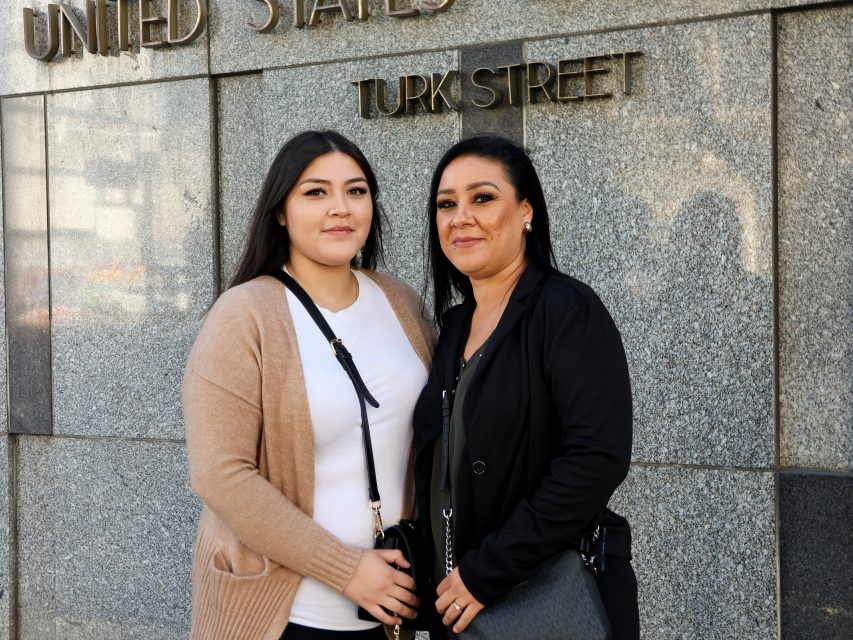
“All I ask for right now is more prayers,” Rosa said, smiling brightly.
Back in Mexico, Lopez also visited a church to pray before the hearing, “To help me out a bit.” He could not join the hearing virtually. He hadn’t slept well last night; “I woke up at 2, 3, 4 in the morning.”
While Lopez had hoped the judge would tell him he could return today, today’s results made him hopeful, he told Mission Local.
In the meantime, there was a festival a few towns over, and he and his brother planned to celebrate.
I appreciate anyone looking for a fair, free life? I understand the escape to the us. But I don’t understand doing nothing for 20?25? Years to become an American citizen. To float in our system -working, marrying, having children? I’m beginning to think they are wrong having made no citizenship attempts. It’s a hard prove but everyone who comes to the us knows the rules.