

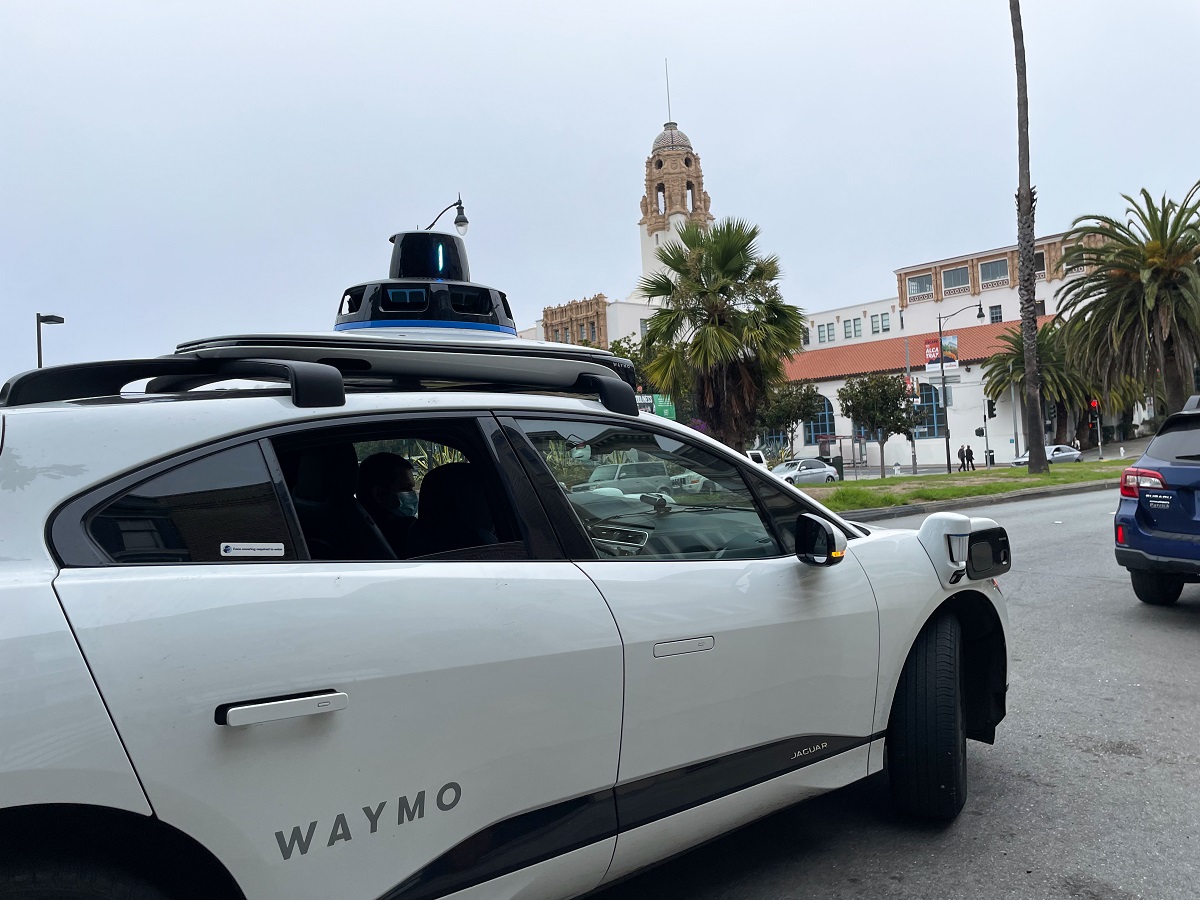
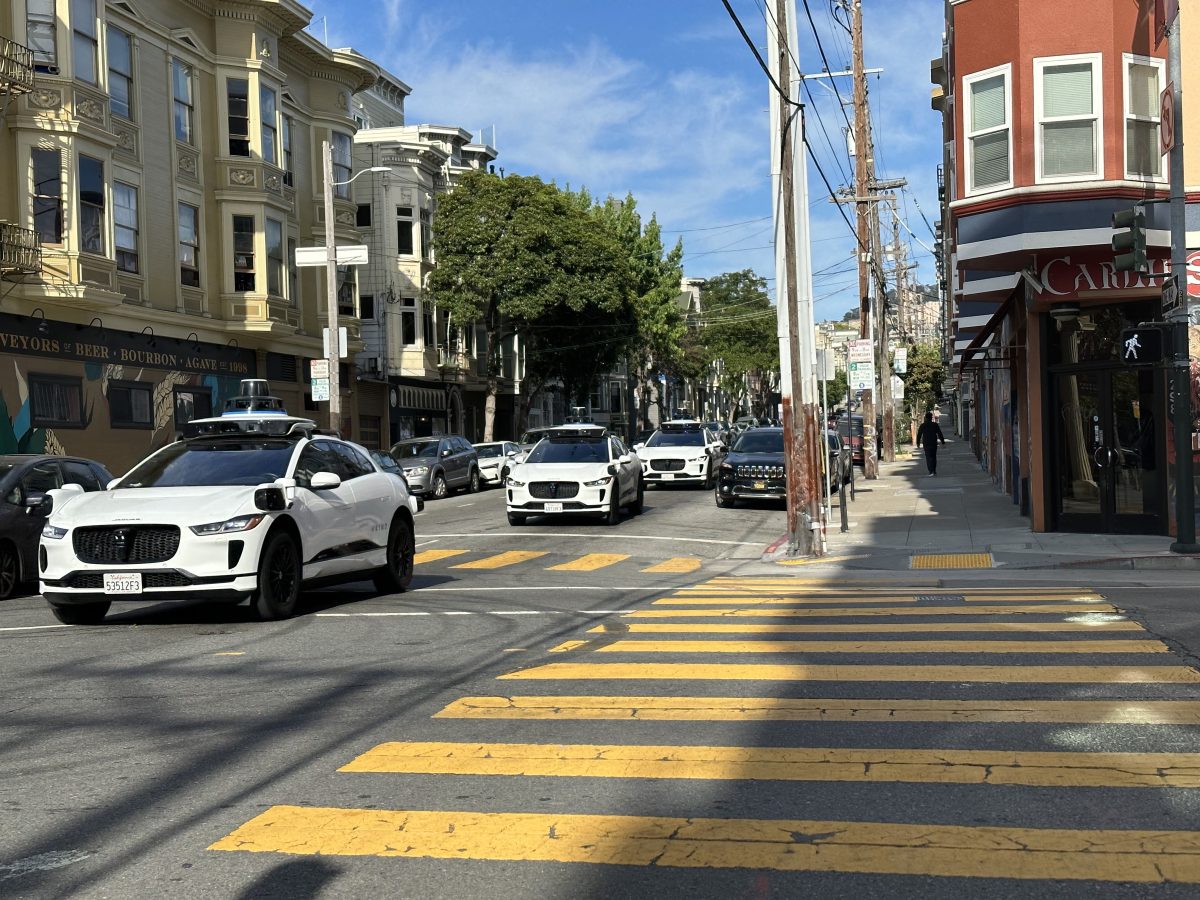
The spectacles of a driverless car placing itself between firefighters and a burning car, another blockading fire rigs on a narrow San Francisco street, and yet another inducing a traffic jam and interfering with firefighters during a massive apartment blaze bring up lots of thoughts. Especially because they all occurred only days prior to autonomous vehicle companies last week being granted full and unfettered access to city streets.
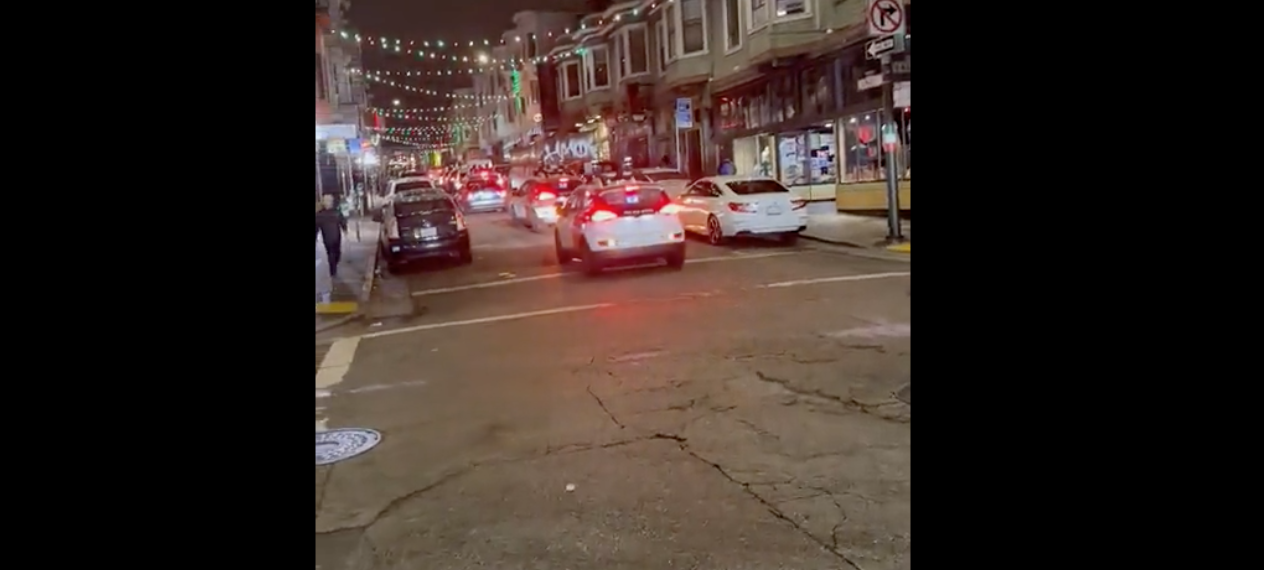
On the day after Thursday’s California Public Utilities Commission vote, around 10 Cruise autonomous vehicles went haywire and clogged up North Beach. Perhaps it was a victory lap.
For all the high-tech wizardry behind self-driving cars, their road to approval by a state regulatory agency was low-tech. Waymo and — especially — Cruise have been tossing money around with both hands; the unsurprising revelation that Willie Brown was being paid by Cruise was almost impossibly on-the-nose. Cutting a check to Da Mayor is what you do when you’ve got more dollars than sense; it’s the Something wrong? Call Anh Phoong! of (registered or unregistered) city lobbying.
Whipping out your checkbook, making new friends, and then having those friends write emphatically supportive letters to a government body is neither illegal nor novel. The crassness with which this game was played by autonomous vehicle companies, however, raised eyebrows here — among both government wranglers used to telling companies where to strategically seed their money, and government officials used to being wheedled by the recipients of that money. Cruise’s approach, specifically, was likened to wielding a T-shirt cannon full of dollars.
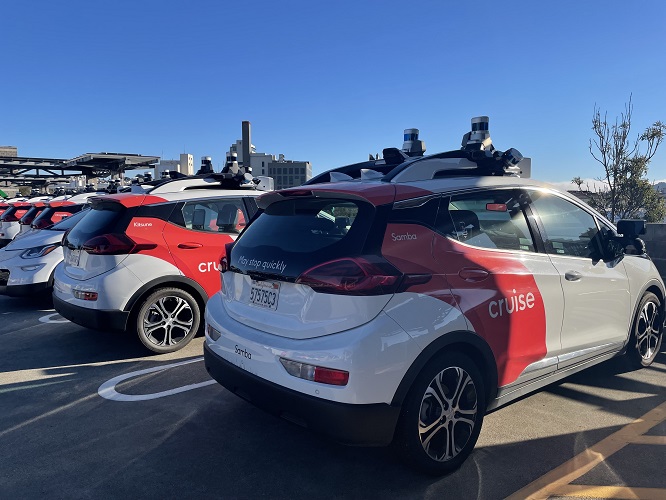
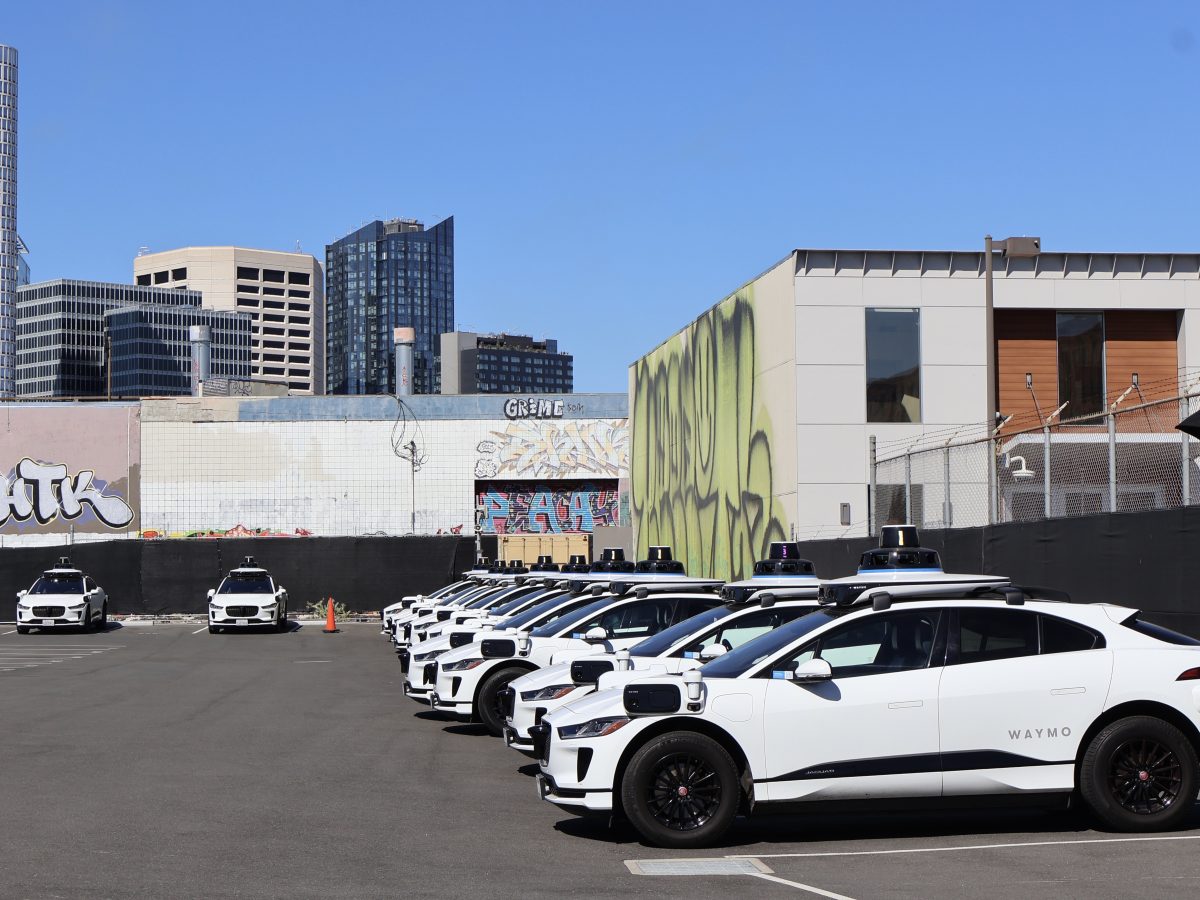
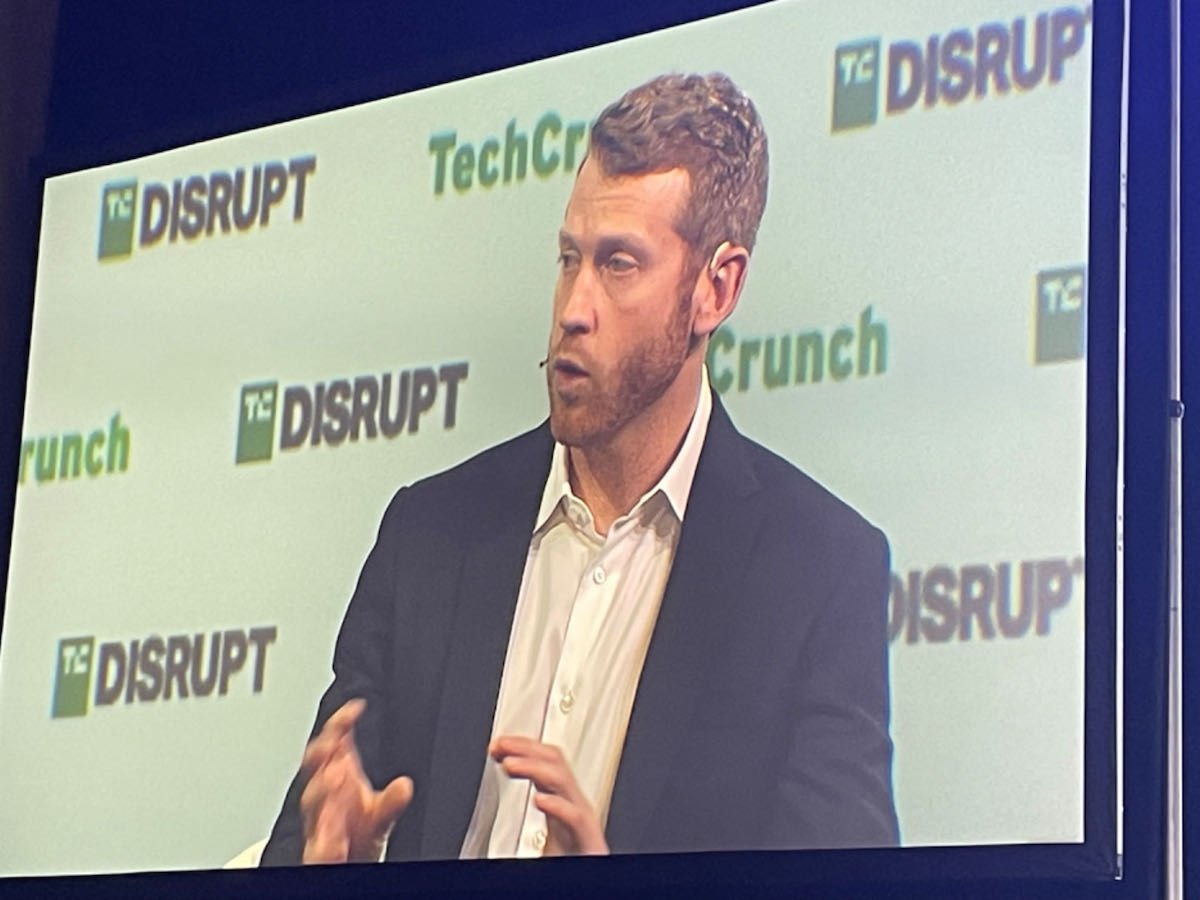
But a cannon is an effective, if crude, weapon. On a July 25 earnings call, Cruise CEO Kyle Vogt said San Francisco could easily handle “several thousand” Cruise autonomous vehicles — perhaps a tenfold increase from the present total of 303. Last week’s vote by the state Public Utilities Commission smoothed the road for this aspiration.
Now they just have to find a place to plug them in.
Is there a white-hot rage among San Franciscans regarding a state body granting autonomous vehicles unmitigated access to city streets over the objections of local government and its cops and firefighters? It doesn’t really feel that way.
Sure, people grow rankled when they’re made to sit in traffic because a Ghost Car can’t figure out what to do. But, by and large, San Franciscans are adept at growing inured to bizarre and unfortunate situations. So city residents may yet have a Bastille Day-like reaction to increasing numbers of autonomous vehicles coursing through the city. But it doesn’t feel likely, angry tweets, notwithstanding. And, to be fair, it all depends on how smoothly the vehicles integrate themselves into the city. Or don’t.
But local government officials and aligned unions who perceive driverless vehicles as an existential threat? Oh, they’re pissed. The city may yet appeal the California Public Utilities Commission’s decision (good luck with that). But city laws, as they’re now written, do enable legislative warfare of a Churchillian, block-by-block nature.
Specifically, when Mayor London Breed sent the Board of Supervisors legislation last year regarding electronic vehicle charging, “fleet charging” — benefiting the Amazons, Cruises and Waymos of the world — was included as a by-right designation. Meaning you could erect charging stations ostensibly for regular folks with electric cars and end up, in large part, serving corporate fleets — and do so with minimal interference from government officials (and their aligned unions).
Board President Aaron Peskin, however, noticed this. And — surprise, surprise, surprise — he had no desire to hand a gift to the Amazons, Cruises and Waymos of the world. So the final legislation was changed to specifically not allow fleet charging as an accessory use on public charging stations intended for city denizens juicing up their Chevy Volts or Nissan Leafs. To give an idea of what a 180 degree turn this legislation took, a section titled “FLEET CHARGING ACCESSORY TO ELECTRIC VEHICLE CHARGING LOCATIONS” was changed to “FLEET CHARGING NOT PERMITTED AS ACCESSORY USE.”
So, what does this mean? As driverless car companies eye San Francisco locations where they can power up the thousands of vehicles they hope to bring into the city, it seems they’ll have to work with the city to obtain a “conditional use permit” on a case-by-case basis. Or, perhaps, they’d be better off casting an eye on nearby suburbs with more space and less governmental rancor.
But these cards have long been on the table. In December, Peskin wrote a resolution, signed onto by all 10 of his colleagues, explicitly spelling all this out.
“While San Francisco does not have permitting authority over AV Passenger Services, there are many other incentives and support that the City provides to potential operators using the public right-of-way,” it reads. They include, but are not limited to, “fleet charging, fleet deployment, curb management tools, tax incentives, fee waivers, and other approvals and incentives which could apply to AV Passenger Services.”
The Board already spurned one application for a fleet charging station this year, and approved another only after the Teamsters gave their OK.
Last week’s vote didn’t alter this scenario one bit.
Perhaps the most frustrating part of the song and dance leading up to last week’s CPUC vote — other than the preordained nature of it — was the blurring of “safety” with driverless cars’ persistent and pervasive problems with emergency responders.
The California Public Utilities Commission’s bailiwick is passenger safety, a fact Waymo officials noted last week when making the startling admission that they didn’t even bother turning over safety data unless there was a passenger in the car. Yes, this opens up the possibility of an empty Waymo driving like Jake and Elwood Blues and the data being deemed by the company as irrelevant to regulators.
Driverless cars’ passengers, however, are doing fine. As we’ve written before, it’s no surprise that, by and large, autonomous vehicles operate with a technical proficiency that few drivers can match. They drive well. The safety data, at least what they’ve deigned to release, shows that.
But it doesn’t seem to take into account the cars’ preternatural ability to disrupt firefighters, separate and apart from all the other safe driving they do. Yes, yes, yes — people drive badly. But, for the most part, when inadvertently breaching an emergency scene, even subpar human drivers tend to listen to firefighters’ orders and get the hell out of Dodge. Driverless cars, for all their technical proficiency, do not.
So it’s not as simple as “safe” or “not safe.” Ghost Cars’ baffling misadventures and inability to stay out of emergency scenes, until fixed, ought to be a disqualifying problem.
That supercomputer-driven cars backed by billion-dollar companies can’t deal with a pressure situation a 16-year-old with a learner’s permit would be expected to handle is, in the end, not surprising. Carnegie Mellon University professor Phil Koopman, who has been researching autonomous vehicles since the mid-1990s, last year noted that “we were 98 percent hands-off-the-wheel across the country in 1995, and ever since, we’ve been working on that last 2 percent.”
It’s worth reading the professor’s entire response when he was asked why progress has come along so slowly in the intervening 28 years:
Well, the catch is, the last 2 percent is really tough, and this is fundamental to the issues of this industry. You can have a vehicle that is good at the easy stuff — and that is certainly an impressive achievement — but we have been there since the 1990s in some sense. It is really that last 2 percent that’s tough, because it is always something new. It is something you haven’t seen before. There is an infinite variety of weird stuff in the world, and handling it all turns out to be a lot harder than people want it to be.
Reached by the Washington Post after last week’s vote, Koopman wondered if the technology was really ready — or, rather, if the companies hemorrhaging money like “Brewster’s Millions” simply needed to move ahead for their own bottom lines.
Either way, the die is cast. San Francisco’s hands are, by and large, off the wheel.
More Driverless Car News




Something went wrong. Please refresh the page and/or try again.
Well, San Franciscans might be a little more irked than you think. Yesterday at the Patti Smith show at Stern Grove, Waymo received a loud and sustained “boo!” when announced as a sponsor. Of course, it WAS a Patti Smith crowd, but still, there’s hope for us yet!
I think what is most frustrating about this situation is that while probably most in this city are FOR this technology’s future use, it is not yet ready for “real life.” I do not understand why, with the seemingly bottomless venture capital in this country, they can’t just build a replica of SF in the Nevada desert and perfect the technology there. We do not HAVE to be put thru this, there are alternatives.
Finally, with all the whizz bang programmers in this area, NO ONE can program these things to allow remote access for emergency responders? Firefighters should just be able to push a button/code/key to put the things in neutral so firefighters/police can roll them out of the way or get inside to drive them out of the way. Like the firefighter access keys for an elevator. The fact that this isn’t required by law (like elevators) gives you an idea of how much $$ these companies have thrown around.
If we’re building a replica of San Francisco somewhere, maybe we should try housing people in it.
Proving grounds exists, do a web search and you’ll find GoMentum, Crow’s Landing right away. It’s presumably much cheaper to pay off the local yokels’ “leadership”.
Cruise operating here in particular is completely premature. Just Sunday they had ten cars beach themselves and block traffic at North Beach just because they couldn’t reach home… It is obvious they haven’t fleshed out their failure modes really, and will continue to annoy, possibly worse.
It does not matter whether you or I want this technology. Our tech overlords have decided to impose it on us, much like the scooters left haphazardly on our sidewalks, but only on a much lager scale. They greased the right palms, including those of Willie Brown who no doubt knew who could be convinced with a little bit o’ the ol’ filthy lucre. San Franrobo, here we come.
What happens when AI confronts the fact that mathematical chaos observed in nature is simply not discretely computable?
I’ve seen Cruises all the time around Potrero & 16th for years without problems until 3 days ago when one cut me off while turning right and stopped me in my tracks as I was walking in a crosswalk.
Be leery of these driverless cars, you don’t want to be their first fatality.
As Maui burned the other day, I walked down Leavenworth Street in the Tenderloin and saw homeless people burning a heap of trash on a sidewalk, even as a wind raced up the hill.
It crosses my mind now that the same handful of people who expect to profit from these driverless vehicles might also drool over the profits to be made from rebuilding our whole city if it where allowed to burn down again (as it did in 1906). Easy flip. Universal eviction.
With each passing day life gets scarier, but hardly as scary as the idea that there may be actual people who might find our “newest normals” appealing.
Classic that the safety of pedestrians and anyone *not* in the vehicles is ignored. That’s exactly how all automotive infrastructure has been developed in this country for the last 100 years.
It’s difficult to believe a driverless taxi service is actually what the end goal is: How profitable was taxi service anyway? The only reason uber was cheaper was the cost of vehicle maintenance got offloaded onto the drivers, and they massively increased supply of drivers, so drivers earned even less. But these are trying to compete head to head with lyft drivers, with a much more expensive piece of hardware that requires enormous computing power to back it up. Seems to me the “taxi” is just a testing ground for all delivery and trucking vehicles.
AAA is my insurance. Asked their office on my last visit a question on this issue.
“If you are in a accident with another vehicle, the law states you cannot just drive away, you are to exchange information, name and active insurance company. If serious enough, wait for police or Highway Patrol to arrive. So… what do we do with a headless horseman vehicle?”
AAA office personell had no idea or handout on protocol. Dandy!
Someone needs to officially address this issue. No guessing, a real answer that can be verified is the only acceptabble response.
Anyone? Including The author of this article… go for it Joe
Double parking in front of empty white and yellow zones to drop off passengers, driving in bike lanes when bicyclists are using, blowing through red lights and stop signs, ignoring speed limits, critically injuring and killing dozens of pedestrians and cyclists, endless violent and aggressive behavior, ignoring sirens as emergency vehicles try to pass, “driver” cars should also be included in this conversation. Driving through the streets of SF every day, I do see anger directed at driverless cars, for driving speed limits and stopping at stop signs.
“other things are bad so the bad thing that I support is not so bad.”
Has a driverless car high on meth run over and killed anyone yet? Because plenty of driver cars and trucks have…
Seeing as how they’ve already been turning into rolling sex spots, I’m just counting the minutes until these incredibly faulty machines – easily felled by a single orange cone – spontaneously combust and become rolling 🔥-balls.
oh yes ..
the hack learned at bar:
simply place a traffic cone on the hood, and they become disabled!!!
i’m sure amazon sells cones ..
Wouldn’t spray-painting the camera disable them better than a cone?
We had to endure tens of thousands Uber and Lyft vehicles that, until COVID, made traffic worse. Almost all of the drivers relied upon at-times faulty GPS but they were human drivers that one could talk with. Having thousands of driverless vehicles relying upon the same GPS routes is not an improvement.
What is troubling is how we seem to be just bending over to accommodate what driverless car company executives and investors think they need to do to SF so they can make money.
I believe that both SF government and SF citizens need to aggressively rise up against this invasion.
Just yesterday I witnessed an Ambulance driver use a speaker to get a cruise car out of the way, they said “ driverless car, pull to the right and stop” and Lo and behold it actually did move over and stop. Now that we have the command phrase we should armed ourselves with a siren and lights.
It’s long past time to tax the tech that’s replacing tax-paying workers. As driverless vehicles replace more and more humans, the tax burden needs to shift as well. We can’t continue to push all of the financial benefits of automation to the investor class without adding in the responsibility to support the society that enables tech to be profitable in the first place.
So on the one hand, the city is baffled about rising crime and homelessness, yet on they other, they pave the way for for-profit companies to kill hundreds of jobs and transfer those salaries to their already wealthy investors under the ruse of “progress.” All the while handing over public roads and services to those corporate entities at the inconvenience of sucker citizens who’ve essentially paid for those roads and services.
Is it just that people are too stupid to connect the dots that are right in front of their face, or are they just so short-sighted, self-absorbed—or corrupt to give a sh*t (Willie Brown being the perfect example.)
Thanks for spending at least one paragraph talking about how the comparison between driverlesss and human driven cars is nuanced and safety depends on context.
Now if you could get a coherent list of demands from the anti-driverless camp about what exactly they’d like to see from the cars, that would be great. I’m sure it’ll be hard for them to put “pay off my friends” in writing, but the city has a long history of creative extortionists. Maybe “fund my community district”?
Surely none will say something reasonable which actually makes a dent in the car problem like congestion pricing. Remember when we were pretending to study that?
Remember, the same folks who are bad drivers are also the ones writing the software! Buggy, you betcha!
Here’s a great idea: let’s milk these companies for all they’re worth by citing them for traffic violations that everyone claims to see. Of course that would require SFPD to enforce traffic law. And you wouldn’t want your police force to appear to discriminate between cars, so maybe some well-meaning human drivers might get caught up in the dragnet. Good luck.
There’s no way for the SFPD to enforce traffic laws with AVs. This legislative loophole was brought up at last week’s hearing. And you better believe these companies don’t care about a hundred dollar ticket.
Fair enough. They can be cited for red light violations and parking violations. DMV can also revoke their permit to operate if the city shows unreasonable risk to public safety (per SF Standard reporting).
If the companies don’t care about paying fines, even better! Free money! 10x the fines!
That’s exactly right. There will always be a group of people who will never be satisfied, and will use incidents as proof that “the tech isn’t ready”.
At this point, the tech will become ready if it’s used in real-life situations, and unfortunately, it will keep failing until we accept that.
As far as it being as simple as “safe” and “not safe” – yes, it is as simple as that. Otherwise, how would you judge if they are ok to be deployed? Why disrupting an active fire scene is a show-stopper, but humans inflict harm and death because of bad driving (and even worse judgement) should be tolerated? If they are safer than the aforementioned humans *overall*, why should we not allow with this experiment to proceed?
An interesting question though is, who is held accountable if the driverless car DOES cause harm and injury (which will inevitably happen).
“the comparison between driverlesss and human driven cars is nuanced and safety depends on context.”
There’s no scenario where we’re safer for having a Cruise car stomping through an active fire scene with no one able to formally direct it away, as has already happened.
At the bare minimum, there could be accountability on the companies’ part. They should give emergency personnel the ability to override and redirect, via whatever means can be reasonably arranged, and also recognize that authorities would have the legal ability to cite companies for any traffic violations.
But apparently that’s too much to ask for.
Who says they can’t be cited for traffic violations? And a Cruise “stomping through” a fire scene is fake news which both SFFD and Cruise have together refuted.
Literally, SFPD says they can’t cite AVs for traffic violations. This issue was brought up at last week’s hearing. The cars can only get parking citations. And the companies were completely unbothered by receiving said citations. Their response was simply that they’ll pay any citations they receive. NOT that they’d fix what they got the citation for.
California laws says that AVs can’t be cited for traffic violations, due to a loophole (they can’t prepare a court order with a driver’s name and address, which is required). So right now Cruise can block traffic, or send their cars going down side streets at 80 MPH, and nothing can be done.
And AVs absolutely have caused problems with fire/police operations, as was detailed well in other articles on this site, which mentioned dozens of incidents.
I stand corrected! The incident list published by ML here is a good reference. It seems like the Cruise cars like driving over water hoses: https://missionloca.s3.amazonaws.com/mission/wp-content/uploads/2023/08/av_reports_2_Redacted.pdf
Jake, all I would ask for is that there be an easy way to take control of the vehicle during an emergency. My friends can pay for themselves.
A cruise vehicle cut my husband off when he was crossing in the crosswalk at 16th and Harrison today.
Joe, I didn’t understand why you contrast the lack of a popular undergirding of real, white-hot rage with city government and unions who _are_ the ones who are pissed, because they “perceive driverless vehicles as an existential threat.” Maybe unintentionally you sound like either Buchanan or the Yes Minister writers claiming that a civil service is motivated by protecting themselves as a group in their own right. Startup-world has used this argument too at times when they push disruption.
What would the perceived existential threat be in this situation? You might be saying that Teamsters see loss of driving jobs as an existential threat, but (a) what’s the existential threat to the FD or PD? Did Nicholson go on a media blitz because she’s a jealous incumbent? And (b) yes, Teamsters have a lame history of acting in the insular, protective way that plays into the hands of satire, going back a long long time, but doesn’t the enormity of the potential job loss transcend this and have a very broad base after all? You said ” … millions of people out of work … all but certainly.”
more woes ..
https://www.sfgate.com/tech/article/cruise-stuck-wet-concrete-sf-18297946.php
When the Waymo or Cruise messes up, who gets the ticket?
Or do machines get to drive without consequence?
If so, that would be my defense against a camera-driven red light or speeding ticket…
(This seems like a reasonable question, but I’ve seen nothing written about it.)
Someone should name a bridge after Willie in honor of his years of dedicated service to the people of San Francisco.
“Victory lap.” Sent hot tea autonomously flying out of my nose. Even my dog laughed.
i watched a cruise vehicle make an abrupt left turn onto duboce as a car was making a right turn onto divisadero. it seems to me the cruise vehicle should have waited until the other vehicle finished its turn before proceeding lest they collide because the driver-full vehicle makes a mistake. i note that neither a seasoned driver nor a muni bus driver would take that chance.
this is the behavior of a cinderella driver eager to get to their destination
You are either on the side of humanity, or the robots.