


You may wonder why we are doing these posts daily. At times, we all do, but before we slow down, I wanted to take it on, to see if I can learn something about 16th Street and the community that inhabits it.
I started these in late March, and then went out of town and have been reading and editing them from afar. I don’t know that we’ve figured this out, but it’s not for want of trying.
Nearby residents have been great in sending us photos, but sometimes I get them too late to add. Still, they are helpful in my understanding of how quickly the dynamic or scene along one short street can change.
The project has also given us a lot more sources and ideas and we’ve dug in on some of these; stories we would not have had unless we had been doing these posts including this one on the Kailash Hotel, or the Gubbio Project, and many others you can find here.
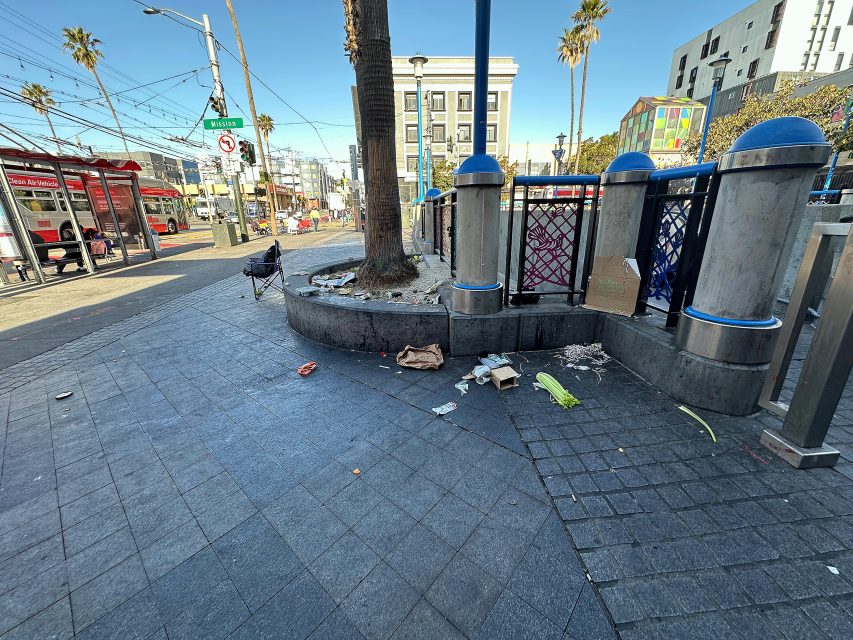
On Wednesday and Thursday, I went out multiple times and witnessed a cycle we have been recording for 81 days: Mission Street trashed, getting cleaned up and then trashed again.
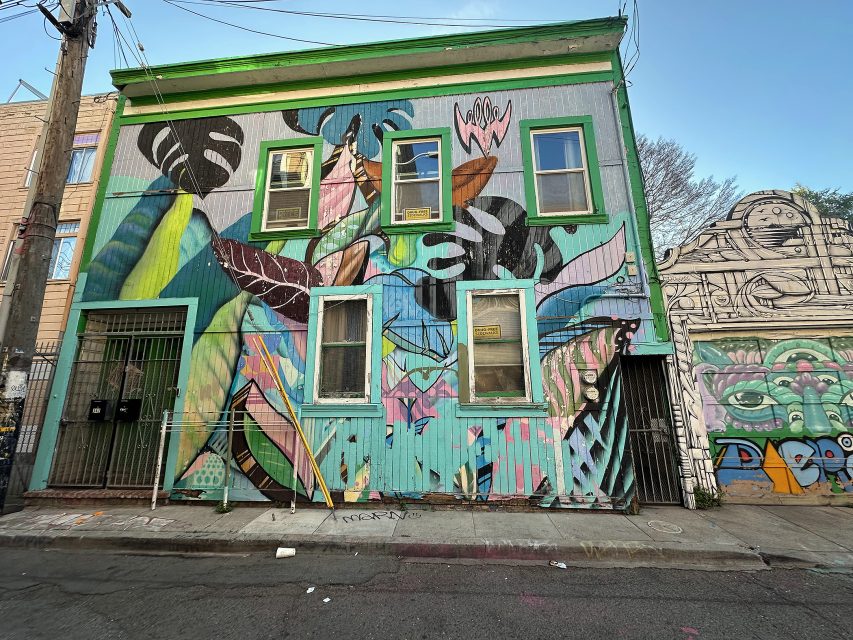
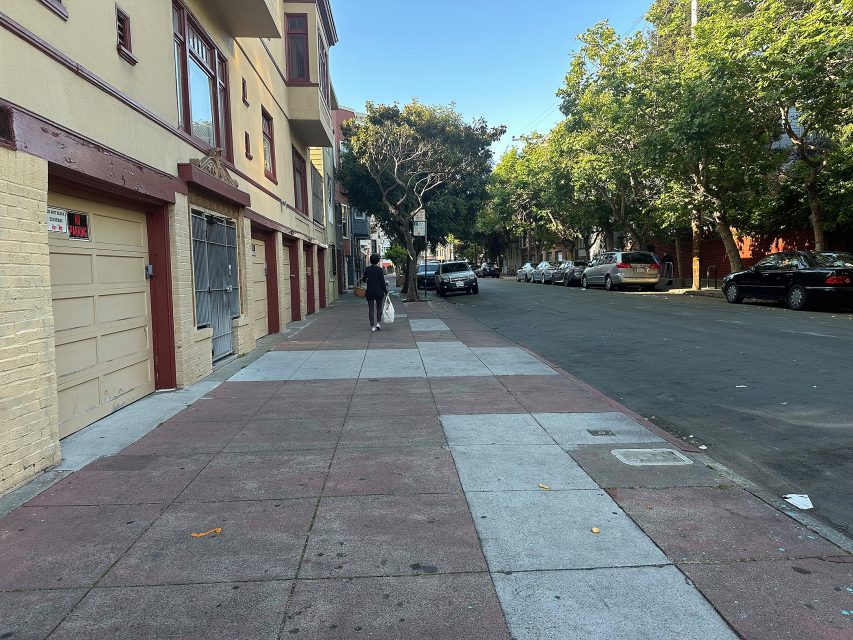
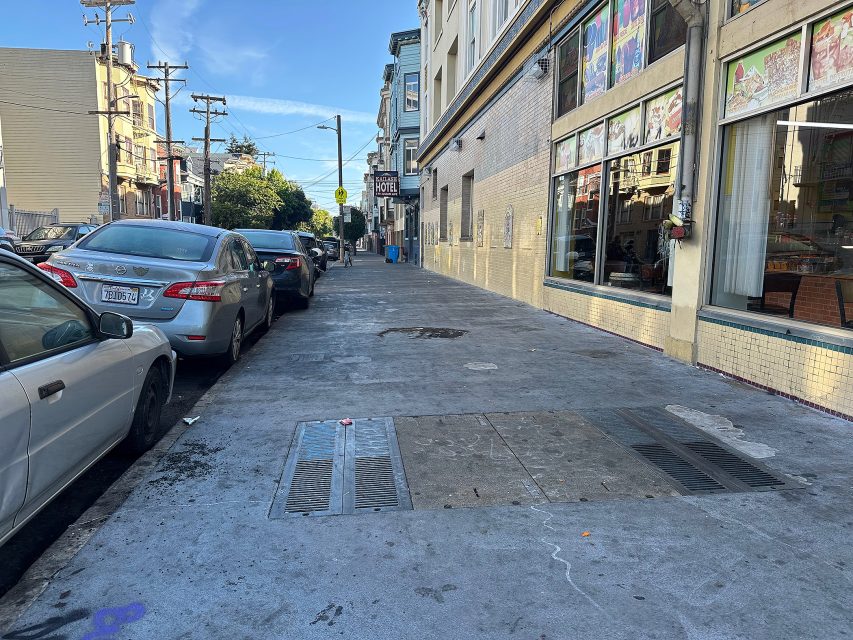
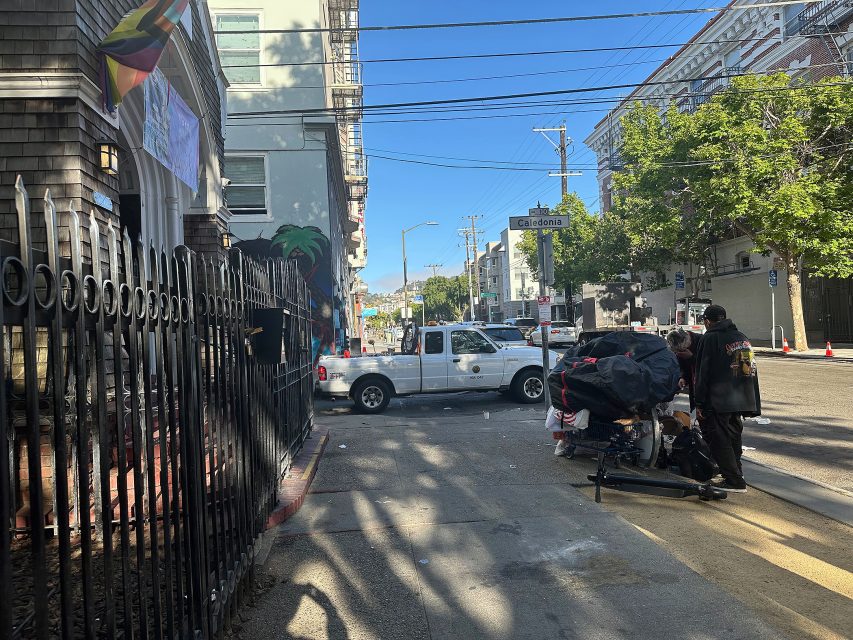
From what I have seen in our daily chronicle and our photos on the site, the city seems to have figured out a rotation for the Department of Public Works on Caledonia, Julian Avenue and Wiese Street, although the latter two can quickly become problematic.
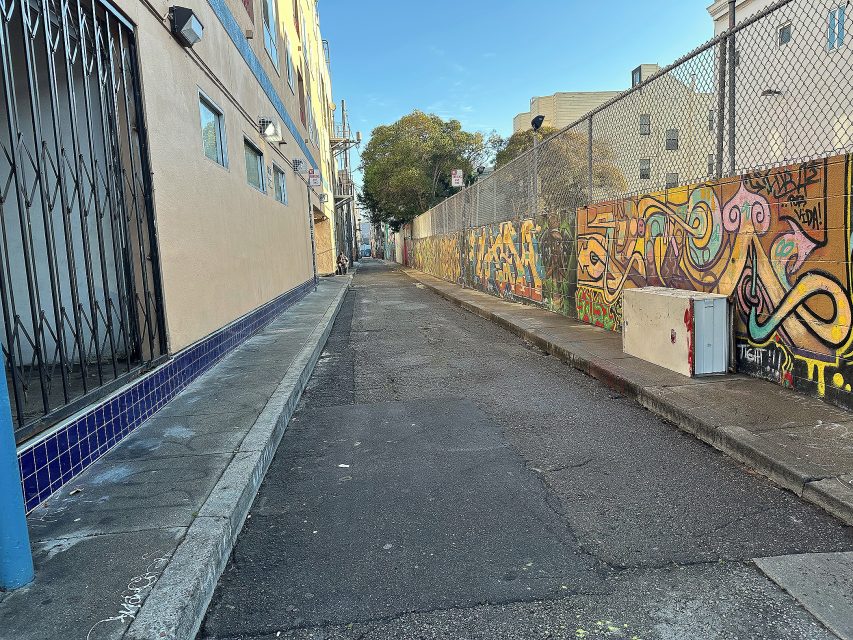
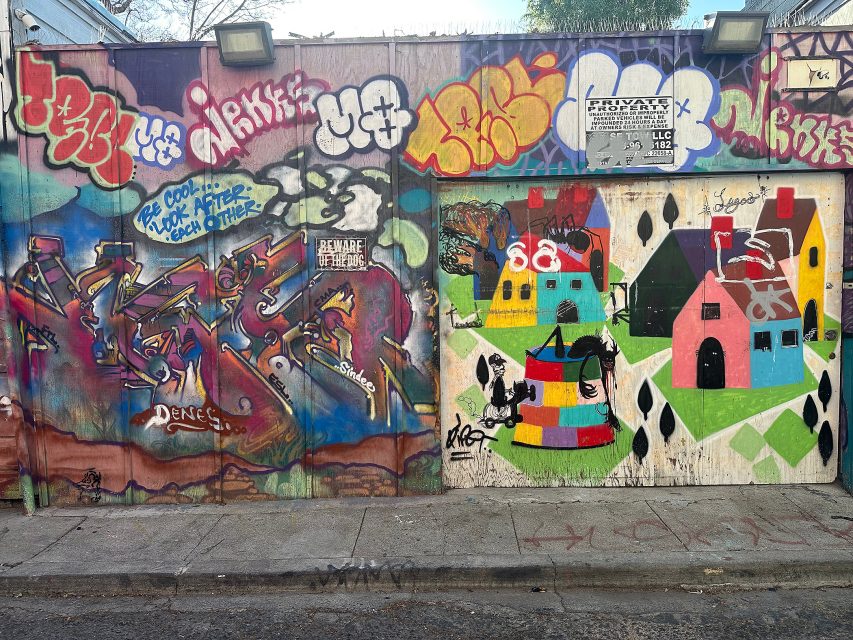
Caledonia Street was clear this morning, and the murals along the east wall popped nicely. It has potential.
“Just call me G,” sat in a wheelchair at the north end of Caledonia. He was bundled in several hoodies and had a cart in front of him, but he was lucid, chatty and grateful. He’s been a visitor at the nearby nonprofit Gubbio Project for about three years, and he talked about how kind they are, how the sun warms up the interior courtyard, and how thankful he is for their help.
But it’s not only the Gubbio staff, he said. Other residents who live in the neighborhood, some police and city workers also say hello and stop for a minute. It’s clear those encounters are important for someone who says he has had a complicated life. That gratefulness shines through.
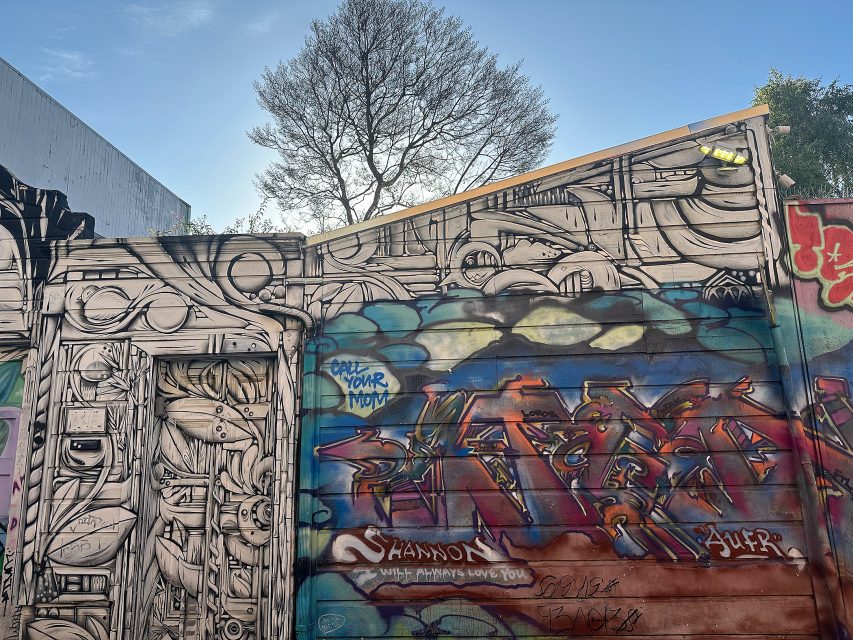
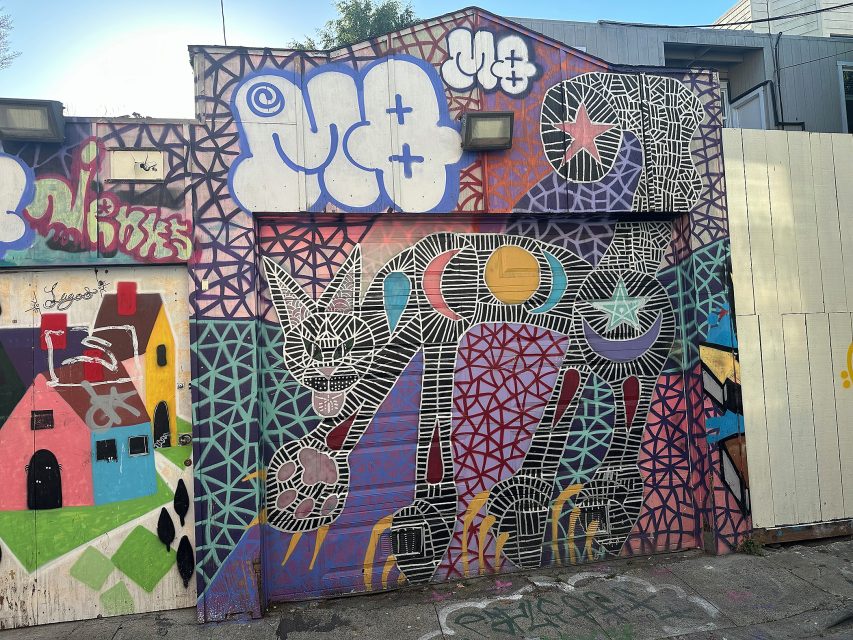
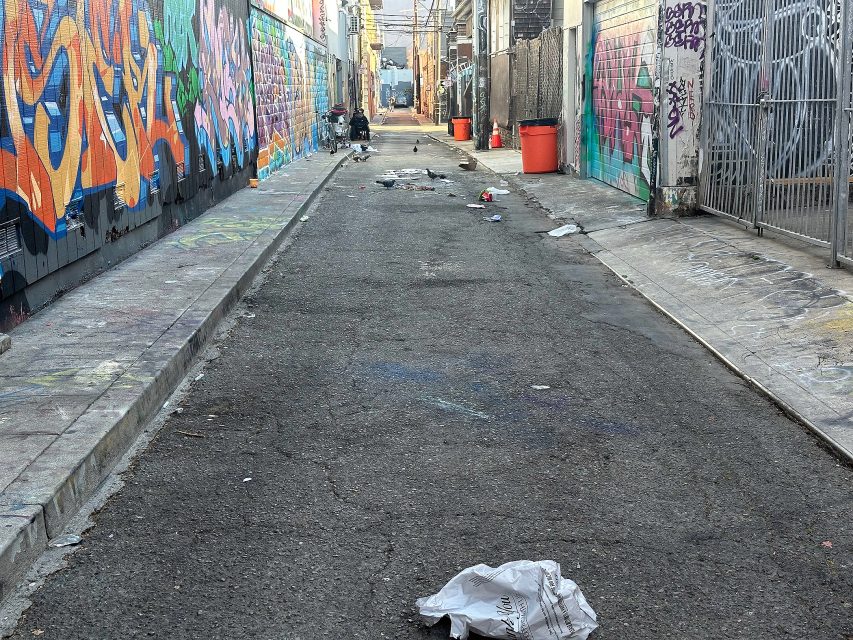
Around the corner was Raul, who works at the 16th and Mission public toilet. Like others on this route, he’s been told not to talk to the press, and he honored that.
I met J.T. on Julian Avenue. He had just left Gubbio, where he comes regularly for coffee and to relax. He’s living in the James Baldwin sober house on Turk Street. “I’m actually able to discover myself,” he said and accompanied me on my walk.
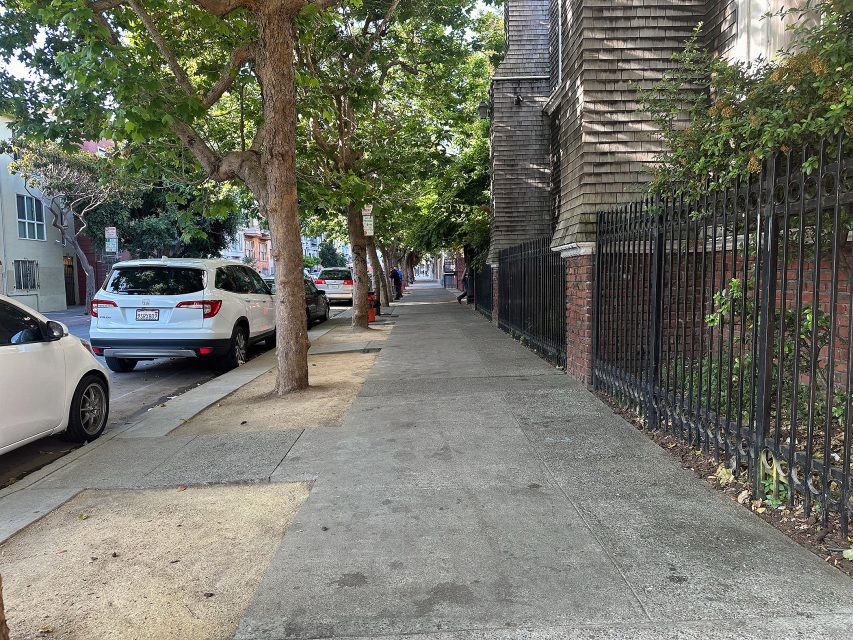
The starkest difference we ran into was at the two 16th Street BART Plazas. The southwest plaza, where the mobile command unit has been sitting since mid-March, was clear and clean, except for visitors sunning themselves on the steps or transit riders moving through. And Mission Street on the west side looked fairly clear.
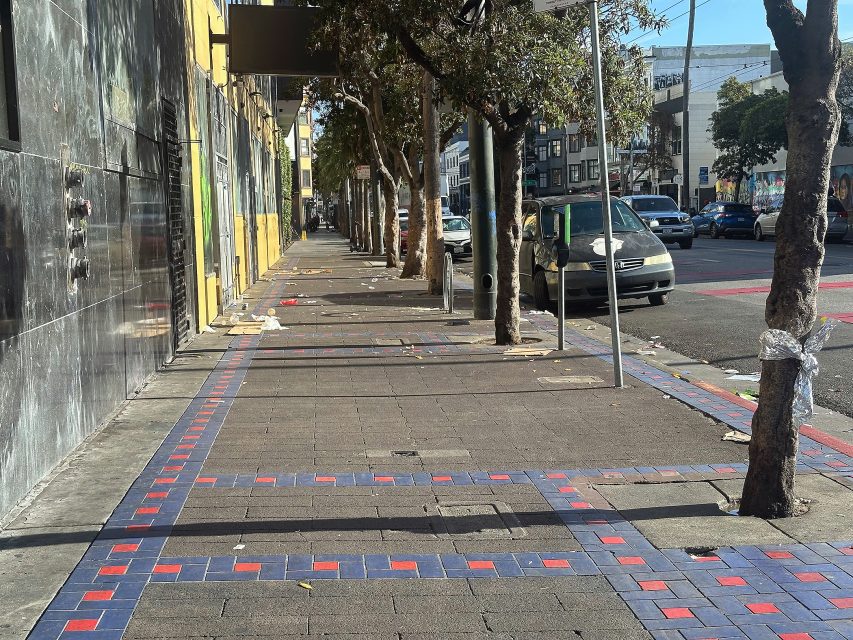
8:04: 5/30 west side of Mission Street. Photo by Lydia Chávez. 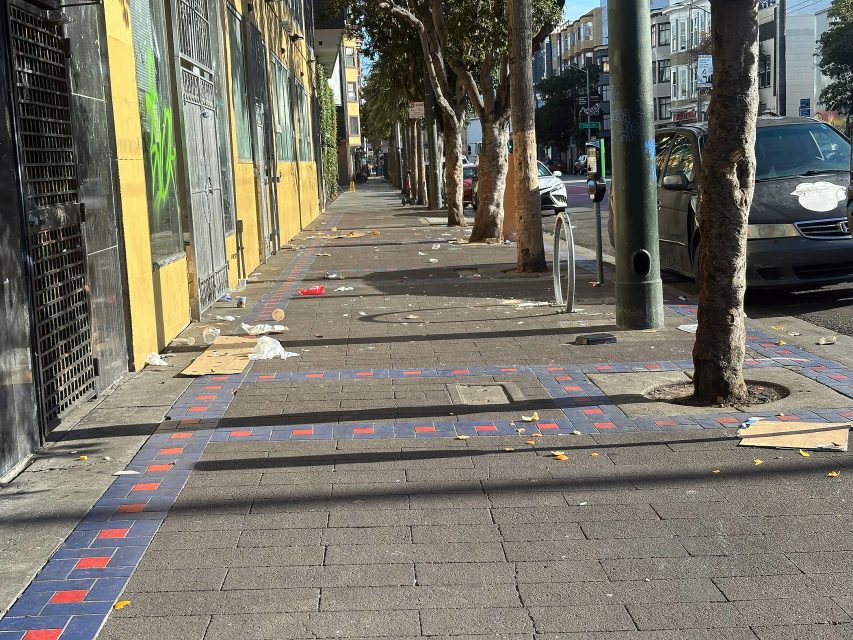
8:04: 5/30, west side of Mission Street. Photo by Lydia Chávez. 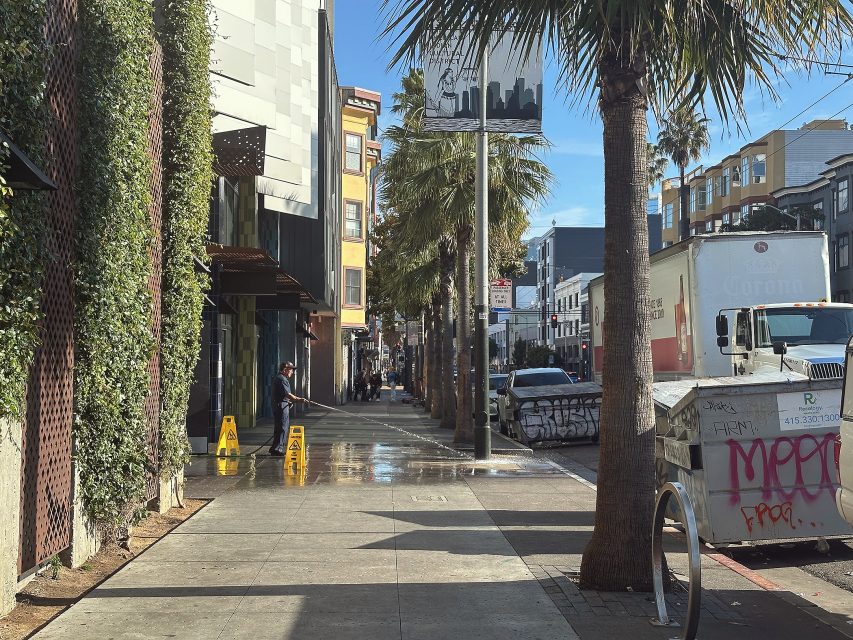
8:05: 5/30 west side of Mission Street. Photo by Lydia Chávez. 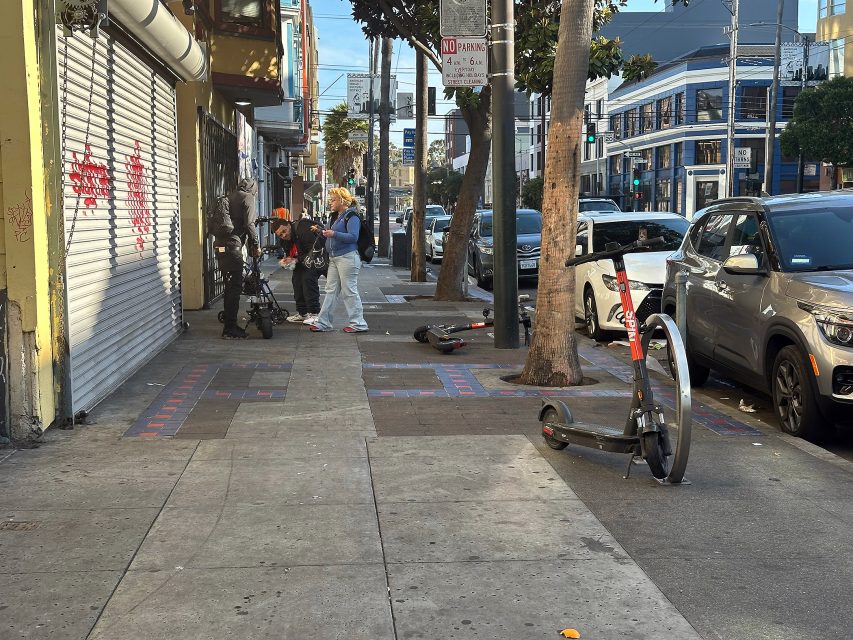
8:06: 5/30 west side of Mission Street. Photo by Lydia Chávez. 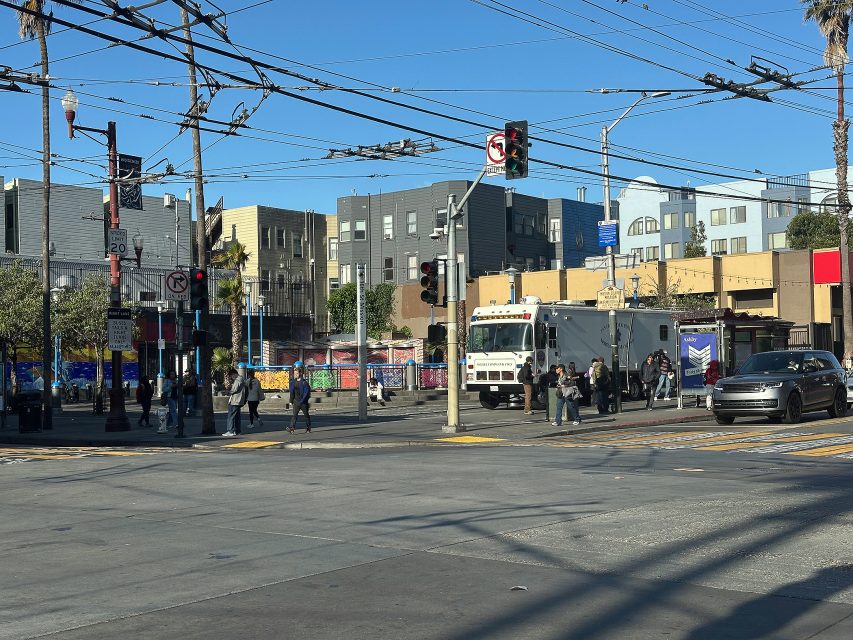
8:13 a.m. 5/30 southwest plaza. Photo by Lydia Chávez.
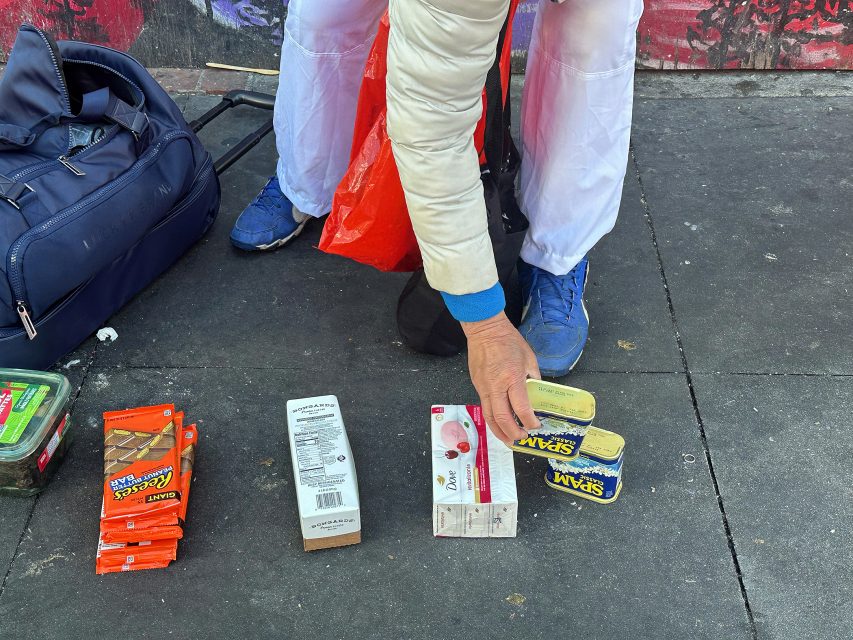
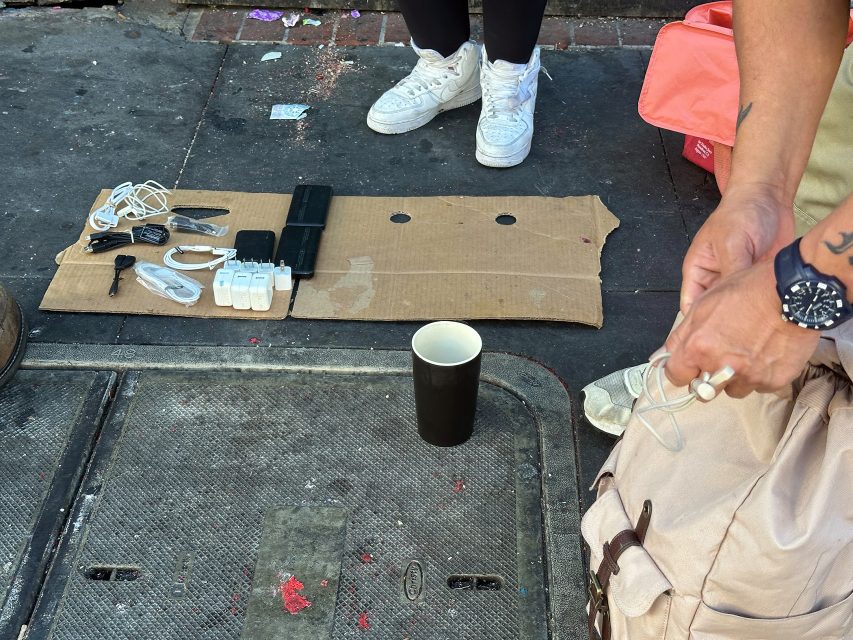
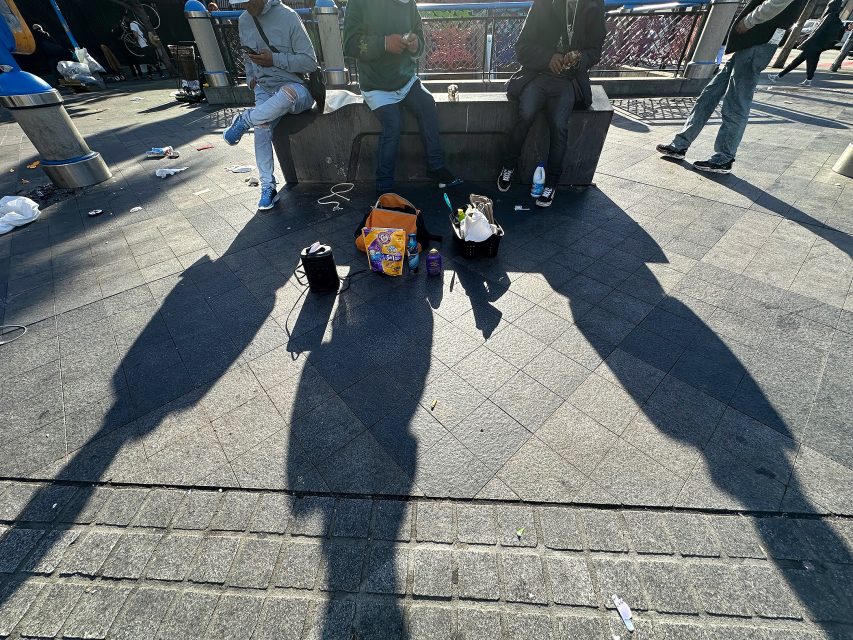
The northeast plaza remains another world. Vendors sold odd items: A half-used bottle of dishwashing detergent, Spam, and Reese’s candy.
“These are used,” said the vendor selling the detergent as he picked up the bottle and shook it.
People leave them around, he added. He collects what he can and sells them. “Talk to us,” he said. “Don’t be judging us. We need a place to sell things.”
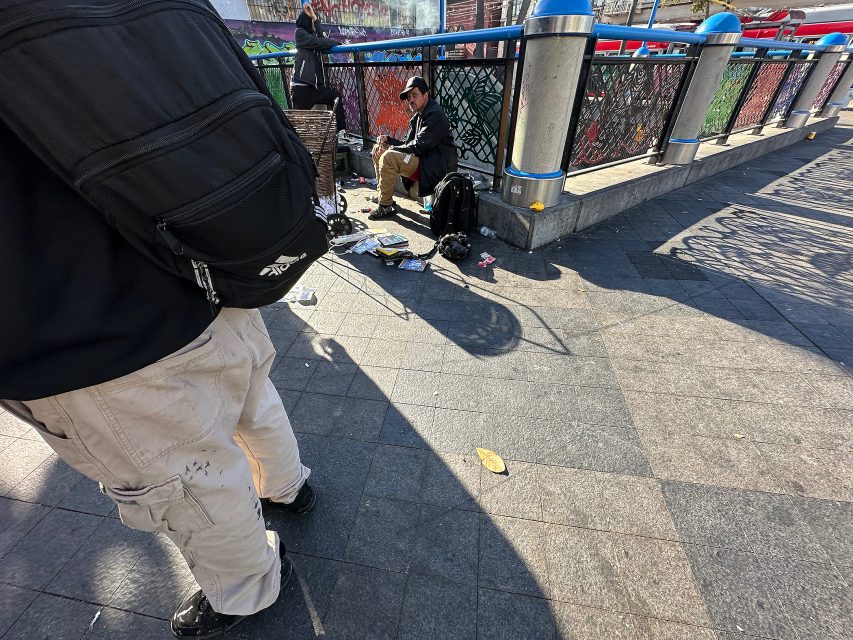
Around the corner near the entrance to the 16th Street BART Station stairs, a group huddled together and J.T. guided me by them. “They want their privacy,” he said and we walked around to the other side, which was full of garbage.
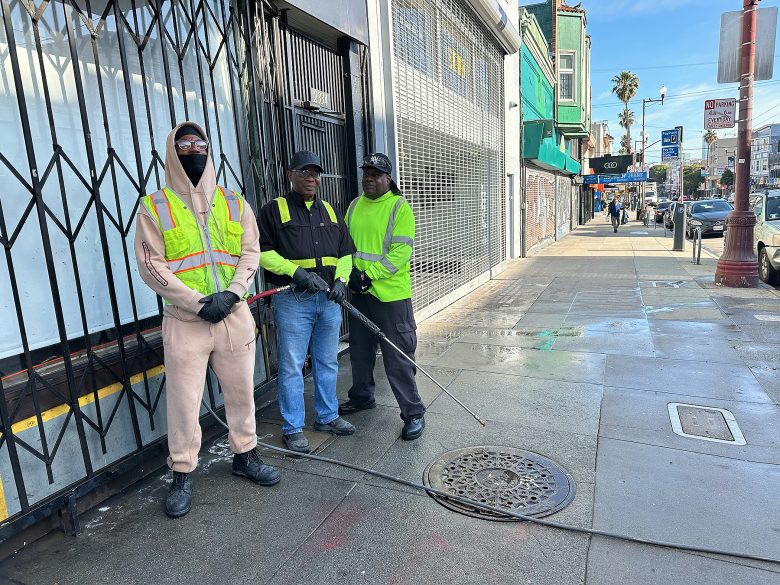
Between 19th and 20th streets, I looked across the street to see the latest of Mayor Daniel Lurie’s projects in action. Curtis Norris and his two employees, Brinson Askew and Gregory Rivers, were power-washing the sidewalk. It’s the project run through Avenue Greenlight and funded by the billionaires Chris Larsen and Michael Mortiz. They’re doing an excellent job.
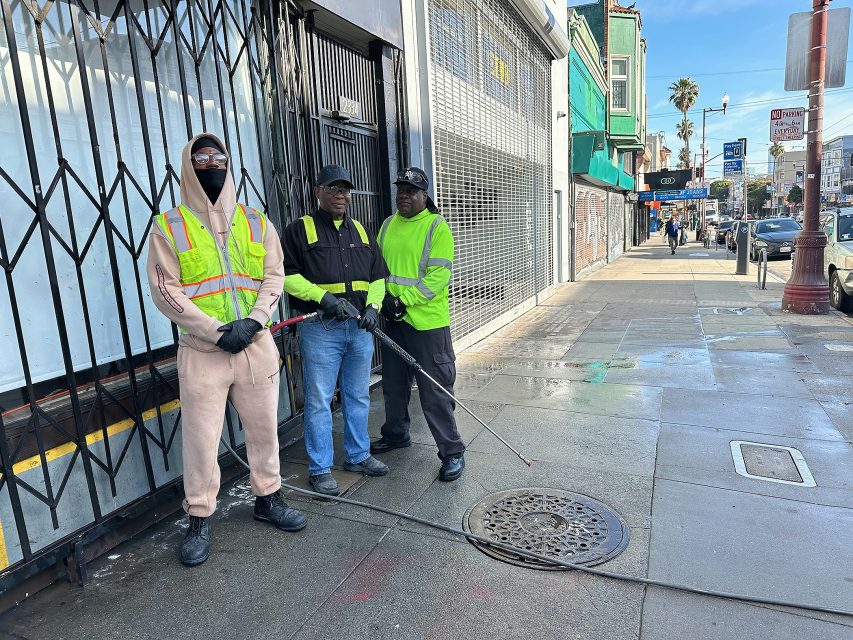
Power-washing team Brinson Askew, Curtis Norris, and Gregory Rivers. Photo by Lydia Chávez. 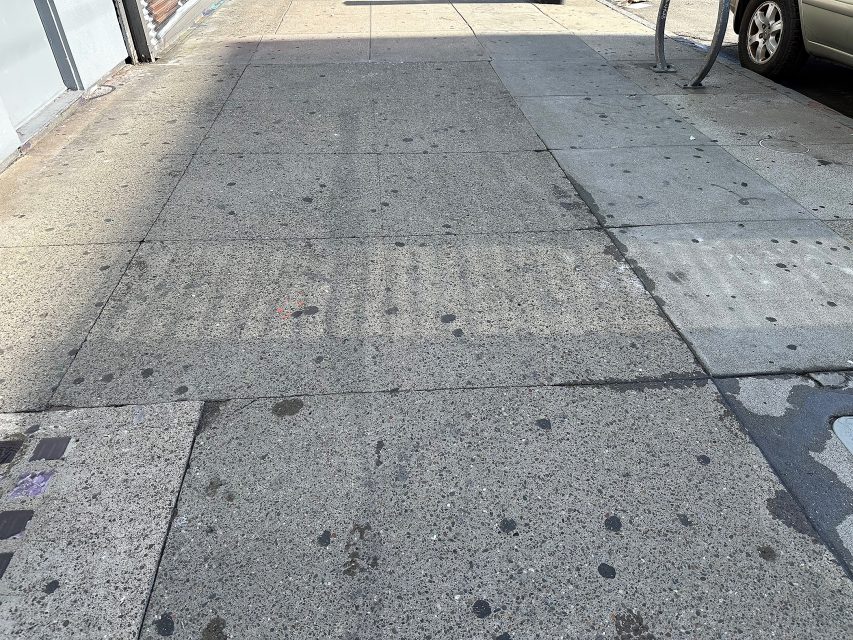
BEFORE: 8:31 a.m. 5/30 west side of Mission Street between 19th and 20th streets, before being power washed. Photo by Lydia Chávez. 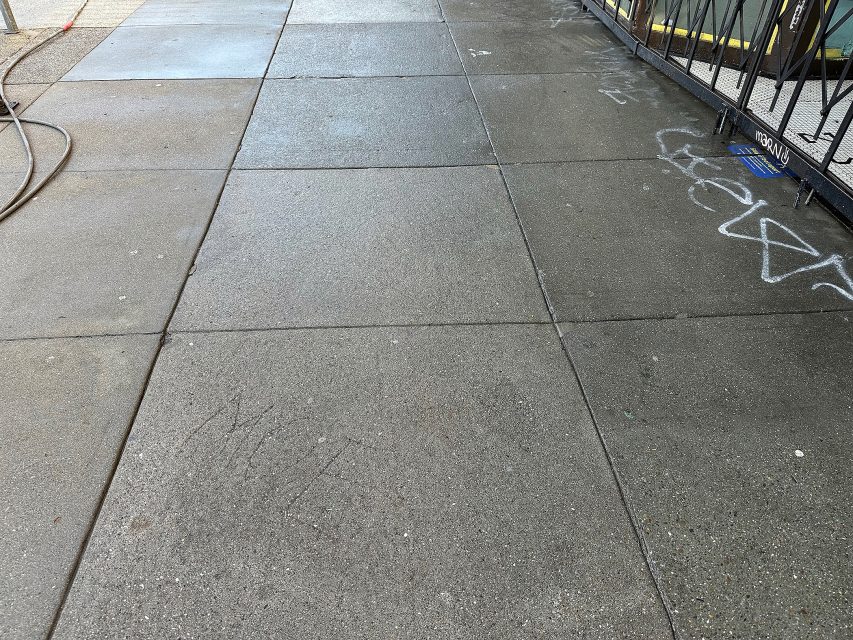
AFTER: 8:31 a.m. 5/30. Photo by Lydia Chávez. 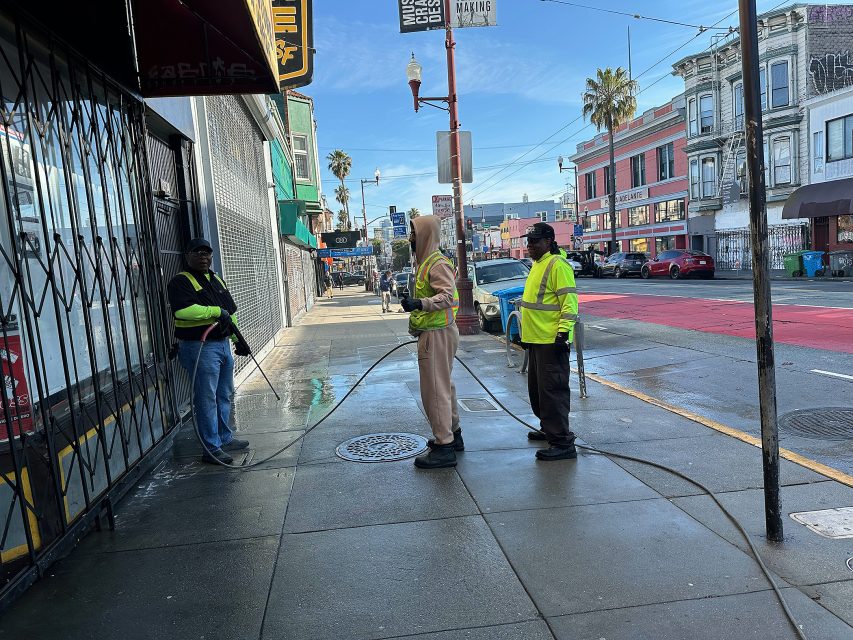
Power-washing. Curtis Norris, Brinson Askew and Gregory Rivers. Photo by Lydia Chávez.
“Don’t judge us” “Give us our privacy”
You don’t get to have privacy when you do your illegal and dirty business in the single most trafficked location in the neighborhood.
I just don’t understand how anyone can call this crackdown “progress”. Anything northwest of the command unit is drowning in trash, needles, and slumped over bodies. This especially includes 15th St just outside Marshall Elementary. Drug trade has long plagued 16th Plaza but at least in a public vicinity with eyes on the street. Before, users came and went. Now, users buy and stay. What is the point of “cleaning up” the plaza if the result is diffusing open drug use onto side streets, residential areas, and next to schools? Laurie has really kicked the hornet’s nest with this project. The Mission has truly never looked worse.
Thank you for reporting the realities in 16th and Mission area. I’ve been reading your articles.
We need to break out of this cycle of allowing crime unabated. I know some Progressives will downvote me because of their unwavering support for certain criminals. I’m socially Liberal, but want clean and drug free safe street for my family.
Hey thanks for all the hard work reporting on this. Mission local stands out among SF news for actually making an effort to paint a real picture of what’s going on. It’s appreciate in a world of journalism that often seems to be copied off X.
Thank you for your articles, I check them daily hoping you snap a Picture of my brother who is homeless accidentally, our life is a long story, I live in Illinois but he is there in san francisco and frequents mission, these Pictures bring me relief because i have not seen him yet in the photos so I assume that means he’s moving about and doing something, I miss him so much. Thank you again.
A great and humane article. Perhaps it’s time to slow down on the daily reports, but I have appreciated the series which is the best of Mission Local. I was over from London (where I live) recently, visited Mission and 16th and realised how much I had learned from your pieces.
Yes, Nicholas, I also wonder about the daily reports, but then there is so much to learn and they lead to other stories. Also, it is very hard to know what is really happening on the street unless you actually visit it. So, yes, conflicted on the daily nature, but I think for now I will continue it.
Keep up the reporting! I appreciate the daily reports and I have learned a lot about the 16th Street area. As a Mission resident and SFUSD teacher, I believe it’s brought the necessary attention to the situation at Marshall Elementary.
Been loving the mission for 40 years. I was initially skeptical of the tone in these articles (let’s watch lurie/police fail) but now it seems more even. The tidbits are s ad and funny. There can be no progress without trail and error. Hopefully sf government will learn and adapt. These articles seem helpful towards that end.