
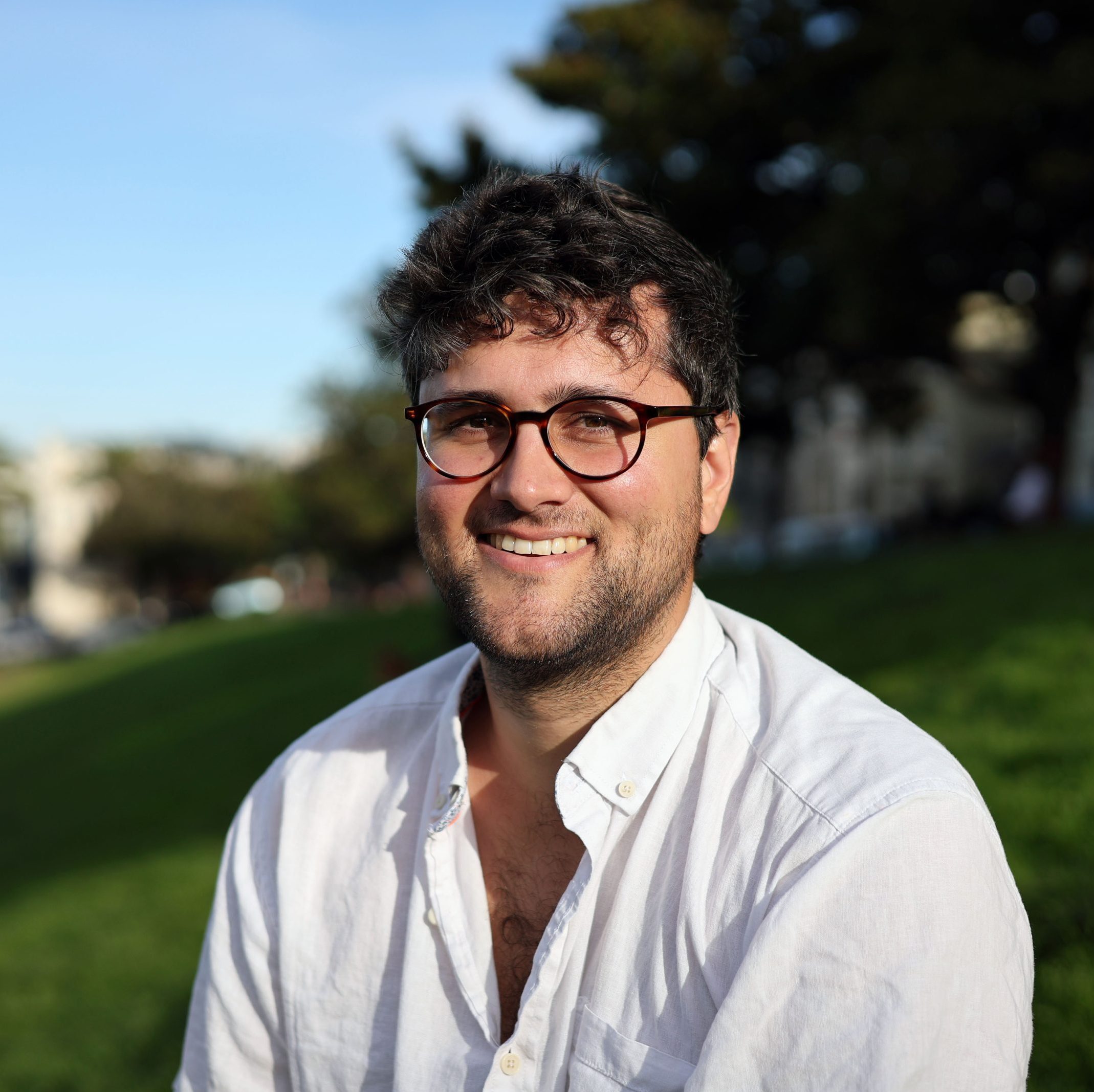

Mayor Daniel Lurie announced on Friday afternoon that the two BART plazas in the Mission District, at 16th and 24th streets, would get more police officers, a dedicated sergeant and extra street ambassadors.
“We’re going to go all in,” Lurie said in a video filmed at 16th and Mission.
Over the past year, the intersection and nearby alleys have been the focus of a “relentless” campaign by Lurie to clean up the area of drug dealing, illegal vending, and general grime.
“This neighborhood, these children, these families deserve clean and safe streets,” he said.
The mayor promised increased police foot patrols on the eight-block Mission Street corridor between the 16th and 24th street BART plazas, where illegal vending has continued to pop up. In recent months, open-air drug use has also increased on those blocks.
The mayor said a sergeant at the Mission Station, a block away, would “oversee these BART plazas,” and that the city would add street teams to “keep this corridor welcoming.” He said street cleaning would start occurring before school starts.
Police officers are already a near-constant sight at the plazas. They park SUVs with siren-lights on during the night, and stand on either the northeast or southwest plazas at 16th and Mission to ward off illegal street fencing, which grew prolific after the pandemic.
Until September, an RV-sized van was parked on the 16th Street BART Plaza every day.
Lurie, the former police chief, and the current police chief have all acknowledged that the Mission District is seeing “displacement” of drug activity and crime from other areas of the city where police operations have ramped up.
Last year, Lurie told Mission Local the city would not “arrest our way out of this problem,” but that police would have to chase drug dealers around “for a little bit” until conditions improve.


The 16th and Mission operation has had mixed results: Street peddlers often simply go across the street from where officers are standing. At night, crowds gather, selling a wide range of items, including perfume, raw steaks and drugs.
For months, the city had succeeded in moving most of the illicit activity to the northeast plaza, and it mostly took place after 5 p.m. But, increasingly, vending has started to emerge again on the southwest plaza.
And, throughout the nearly year-long operation, vendors simply moved to the 24th Street plaza. So would officers. But once police left, the crowds would return.

Residents and merchants saw little improvement after the first few months of the operation that began on March 12 last year.
But as it progressed, they said the streets were cleaner, loitering was down, and the city’s street teams were highly responsive. The results can be uneven, however, and crowds often return when police or ambassadors aren’t present.
Police arrests are up. On Thursday, police officers made 16 arrests near 16th and Mission and 59 in the last week, according to Mission Local‘s dashboard tracking daily statistics from the intersection.
Since Lurie announced his crackdown on the area, arrests and citations for drugs there have skyrocketed, reflecting a concerted police focus.
An alphabet soup of city agencies already patrol the area with dedicated street teams. They are bolstered by two nonprofit contractors.
The community ambassadors wear clearly marked uniforms and do a variety of tasks, like intervening in street fights, reversing overdoses, and walking children to and from Marshall Elementary School near 16th and Mission.
Students there see drug dealing, feces, public intoxication, and more nearly every day. One mother told Mission Local, “[we] play that we jump poop on the street” on the way to class.

They carry
walkie-talkies
Workers wear one or more
layers of the uniforms, including
a black t-shirt, a black zip-up
hoodle, and a white vest

Workers wear one
or more layers of the
uniforms, including
a black t-shirt, a black zip-up
hoodle, and a white vest
They carry
walkie-talkies
Lurie acknowledged the lack of progress in his social media video.
“We have good days, and we have days that are not what we want to see here,” he said. He promised the city would continue to work “tirelessly” on the intersection.
Feng Han, an aide for District 9 Supervisor Jackie Fielder, said in a statement that Fielder “has been asking for more community policing and foot beats since she began her term last year, as that was the number one request of constituents.”
“She hopes that this new sergeant assigned can deliver that.”
Feces, whether dog or human, is a biohazard. The city needs to respond proportionally. Sequence fecal DNA & quickly learn who the repeat offenders are. Fine or revoke licenses for dogs. People who are doing it clearly can’t function in society & restrictive interventions/treatment is what is needed. Stop spending so much on street cleaning w/o addressing the causes, and I’d bet cleaning costs go down & more people get treatment.
A more humane and logical solution would be more public restrooms or ANY public restrooms in these areas. As long as people have no place to go, they will continue to use the sidewalk. This is not rocket science. Just more insanity from a corrupt city.
Lets pretend someone does have a legitimate emergency. It’s still a biohazard. Clean it up. How hard is it to scrape it up with some of insane amounts of trash strewn around the streets every night. If they’re incapable of removing it, like I said earlier, they’re not a functioning member of the community & need to be institutionalized until they are or connected with appropo assistance. Leaving feces casually around the city is a declaration of needing someone else to make your decisions for you.
In no other city do we see human feces on the sidewalks.
There is an attended crapper at 16th BART where addicts can leave their dumps.
But the issue here is not poverty, it is not homelessness, it is opiate addiction which means that the life of the addict centers around the opiate.
I don’t give two shits if someone’s addicted and if they predictably die from addiction. We should offer treatment but don’t delude yourself about the chances for success for those with no prospects or support.
I do not think that addicts should be contained in our neighborhood, around our transit stations and stops, small biz, housing and, as if this would even need to be said in any other neighborhood, elementary school.
How can you blame lack of toilets when there is a toilet nearby and the target of the defecants is school children?
Wow. Another failure to actually address root causes and just yet another attempt at policing our way out of inequity. This is such a tired trope. How many times will cops be proposed as the solution, regardless of who’s the mayor? How many more times wil we just keep doing the same damn thing that doesn’t improve anyone’s quality of life except the overtime paid to the cops?
All of this while the Mayor continues cutting programs that actually help folks while increasing law enforcement budgets. Well I guess if you’re gonna cut what little safety net there was, you plan for an increase in inequity. Good to know the priorities of San Francisco City Hall, which never seem to be the priorities that lift up San Franciscans.
In the last month I’ve seen the resurgence of narcotic use on Mission & 16th. Especially directly in front of the Mission Plaza Apts and continuing to 18th street. I actually believed it was getting better but the game continues of chasing users through one sad neighborhood to the next. A fatalistic board game of Junkylandia; no get out of jail free, no passing go, all steps are backwards, No room at rehab. All game pieces are bent & broken waiting for that hot shot and it’s final disappointment.
The Street Ambassadors have really helped turn things around. They are making people’s lives better, often by just being there. Thank you.
The areas the Street Ambassadors serve are quite restricted. For some reason, Capp and 15th where Marshall Elementary was not covered by the ambassadors. Section 8 housing on Capp and La Fenix nonprofit affordable housing were covered.
The only things that happen in the North Mission by default is whatever the nonprofits want to happen. If the nonprofits don’t want it, it does not happen.
This is not going to get fixed until those with power to make change engage the community that knows what goes on around us because we’ve seen it over the years.
Why do they fear engaging with residents so?
Why do other neighborhoods get consideration on matters like this while the North Mission is treated like dirt?
Why are nonprofits the only constituencies that count in our community?
For the crowd that screams “racism!” as a first resort, they sure are silent when they’re enabling actual racism in real time against the constituents they claim to represent.
❖ It’s insane for transit stops to be “sacrifice zones,” though for decades the police have allowed just that at these stops (and at Civic Center). 16th Street in the 1990s was the worst, heroin-dealers firebombed anyone who blew their cover.
Until recently that SFPD mobile command unit was at 16th Street, but I don’t know what good it did. What’s going to be different this time around?
So the solution is that they should starve?
These people are harmless, but millions, cumulatively, have been spent on the war against them and on those near UN Plaza. Some of them are elderly Chinese women.
I want to be wired at my joints and followed by a robot down 14th street to clean around the Armory.
Uh huh.
Most City workers have poor work ethic which wouldn’t be a problem with a robot.
I talked to Copilot and the technology exists.
My reservation is that so many people would lose their jobs so I suggest SF lead the World by not ‘firing’ people but ‘retiring’ them on the exact salary they are making when the robot replaces them.
We’d be the first in the World but not with UBI.
I think Stockton had it for a short while.
go Niners !!
This is all theater. The root problem is the psychological aversion and consequent inability to impose painful consequences on those who behave anti-socially.
Bleeding-heart progressives complain about “criminalizing poverty,” but that’s nonsense. Most poor people don’t behave anti-socially. It’s only a small percentage that do.
We’re tole by City health care professionals the priority is preventing public drug deaths caused by lethal abrupt withdrawal(through detention) or by street drug overdose. By making narcan abundantly available or enabling safe consumption sites(of street drugs).
At the same time, City priority is elimination of street drug sellers.
So if street drug sales was immediately eliminated, drug users will immediately experience lethal abrupt withdrawal. Drug sellers are saving lives by preventing abrupt withdrawal.
We can’t prioritize both preventing drug deaths and eliminating drug sellers. Those two goals are contradictory.