
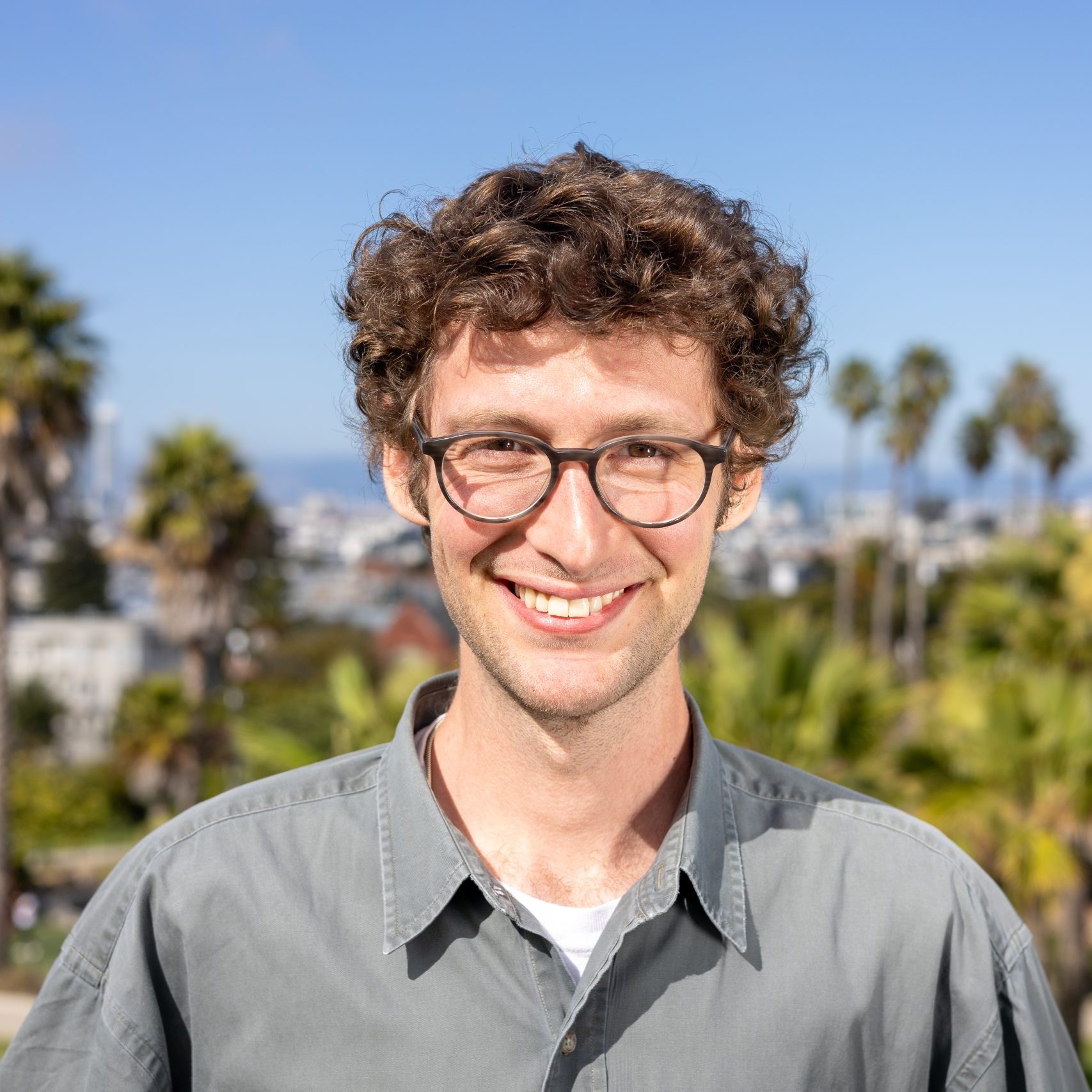

Two street ambassadors approached a woman lying wrapped in a blanket on a grassy mound near the Great Highway on Wednesday morning.
Urban Alchemy worker Roger Hill had given Anna five minutes to gather her things and leave.
After a brief but contentious exchange, she picked up her head to reveal a face covered in scabs and began walking her bike toward Ocean Beach, yards away. Then she turned and walked the other way, toward the Safeway across the street.

Urban Alchemy, the nonprofit founded in 2018 to ease street conditions in San Francisco’s core, has since gone national and is now growing within the city: It started patrolling in the Richmond District, around the Safeway and a plaza near the beach, in mid-August.
So far, the newly arrived ambassadors largely appear to be moving unhoused people along. That, and sweeping the street; much of their job is “helping to maintain a safe and clean environment,” said Jackie Thornhill, a spokesperson for the city’s Department of Emergency Management, which coordinates street ambassador teams across the city.
“They have positive engagements with people, they clean up litter, they reverse overdoses, they help connect people to the teams that can connect them to services,” she said.
And, when they deem it necessary, they call in the police.
A set of contracts signed last year between City Hall and five ambassador programs — including Urban Alchemy, which was awarded over $24 million — has expanded the nonprofit’s reach beyond its original scope in the Tenderloin and areas near Market Street.
One of those contracts put $1.8 million toward a new category of Urban Alchemy “commercial corridor” teams, which are currently assigned to the Outer Richmond, Hayes Valley and the Castro.
Three Urban Alchemy ambassadors have been assigned since Aug. 19 to walk around the Outer Richmond Safeway. Commercial corridor assignments, Thornhill said, are generally “based on demonstrated need” and arise out of discussions between the Department of Emergency Management, the mayor’s office and district supervisors’ offices.
Neighbors near the Safeway, a block from the beach between La Playa Street and 48th Avenue, have long complained of homelessness nearby. The site is slated for redevelopment.

Thornhill confirmed that the department of emergency management had coordinated with Supervisor Connie Chan’s office. Chan’s office did not respond to requests for comment.
One Muni bus driver, whose route ends across the street and who often takes his break by the beach, pointed to the plaza, where he said unhoused people used to hang out.
“There used to be about 10 people here,” he said. “Now, there’s none.”
But there were people elsewhere, and they knew about Urban Alchemy. On a recent Friday, Steven Stimbrosky and two other unhoused men sat across the street from the plaza, in the ice plants wedged between the Great Highway and the beachfront sidewalk.
The men’s belongings — bikes, jackets, suitcases, umbrellas — were stashed in carts. One man rolled a joint; Stimbrosky played guitar. The third man looked out at the ocean.
Visibly sunburned and wearing open-toed sandals, Stimbrosky said that Urban Alchemy ambassadors had asked him to move spots “every day for the past two weeks.” He said he spends most of his time between the plaza and the Safeway parking lot.
His interactions with the ambassadors are usually amicable, he added.
Then, as another man described a recent argument he’d had with an Urban Alchemy ambassador, two U.S. Park Police officers and a park ranger approached.
“Just so you guys know, you guys can’t be camping here,” one of the officers said.
“We’re not camping, we’re enjoying the landscape,” yelled the man with the joint, apparently agitated. “Just like all those white motherfuckers walking their dogs.” He kept yelling.
The officers asked the other men and this reporter to step away as they addressed him. A good-cop/bad-cop routine ensued. Eventually, the officers left without incident.
Earlier that morning, the officers had detained a man who had allegedly wielded a weapon and made threats against Stimbrosky and others.
Alongside police officers, an Urban Alchemy ambassador had responded, and the confrontation ended with the man being placed in a psychiatric hold.
Stimbrosky said the ambassadors had been a helpful presence during the incident.
“They were acting as mediators in that situation,” he said.

A recent Stanford University study suggests that Urban Alchemy ambassadors have brought a meaningful reduction in crime to city streets. As part of its guiding philosophy, Urban Alchemy employs people who have been formerly incarcerated or have experienced addiction and homelessness.
“I used to be homeless, myself,” said Rolando Candia, one of the three Outer Richmond Urban Alchemy ambassadors. Candia said he got out of federal prison two months ago, after 13 years behind bars.
“I was addicted, so I can relate and I empathize with them. It’s hard, seeing people on the streets, sleeping with a blanket over them on the street. It’s hard. I know it’s hard for them.”
Candia started working as an ambassador in August, and still wears an ankle monitor as he works to clean up trash and “relocate the unhoused individuals.” He rides public transit from Hayward five days a week to start work with the rest of the team from 7 a.m. until the afternoon.
Asked where he expects the unhoused to go, Candia said: “Just not in the area where I’m basically responsible to keep clean and clear.”
The Richmond District (even the Outer Richmond) is not a suburb of San Francisco, It IS San Francisco.
No need for it out here, generally speaking, in my opinion as a d4 and d1 resident of 15 years.
Possible exception at the western terminus of the N Judah, I haven’t lived close enough to that location that I can say.
Conclusion really says it all, I think: “Asked where he expects the unhoused to go, Candia said: “Just not in the area where I’m basically responsible to keep clean and clear.”
Expanding the move-along state is not a solution.
Do I have the solution? No! If I figure it out ML’s esteemed journalists and readership will be notified forthwith.