
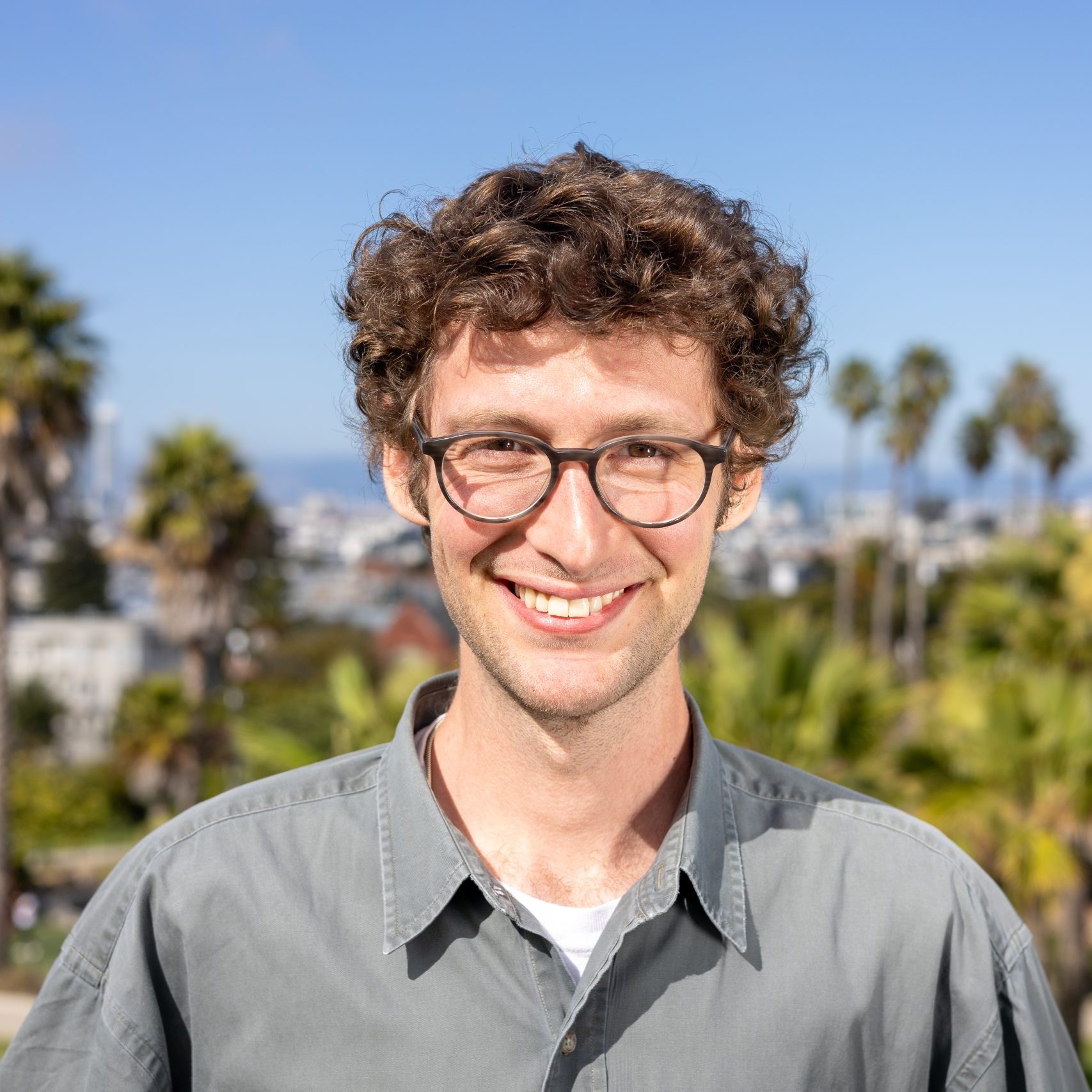

Dr. John Murnane is cautious about declaring with certainty that the great horned owl paying regular visits to his Inner Richmond backyard is the same owl he rescued in June last year.
But the evidence doesn’t rule it out.
Murnane, 78, is a professor emeritus at University of California, San Francisco, and a retired molecular biologist in cancer research with a lifelong love of nature. He’s written three novels, photographed the birds of the Presidio, and volunteered as a waterbird docent on Alcatraz.
That last job gave him some experience in bird rescue. So, when his neighbor Cindy Samucha, who uses a wheelchair, was near Mountain Lake Park last year, staving off curious dogs from an injured owl and waiting to no avail for animal care and control, she thought: “I know who to call: John, the bird guy.”

Murnane, who sports a thin white mustache, donned a thick coat and gloves and went straight to the park. The injured owl hobbled away and snapped its beak in self-defense until Murnane wrapped it in a towel.
“After that, it just melted,” he said.
Murnane swears he didn’t know it at the time, but there’s a maxim among wildlife rescuers: “towels for owls.”
“If you find an injured owl,” he said, “you can throw a towel over them and then they just relax.”
After calling a wildlife center in Marin County that said it wouldn’t take the owl — “because it wasn’t a Marin resident” — Murnane chauffeured the owl to the Peninsula Humane Society & SPCA in Burlingame, where he had taken birds from Alcatraz before.
He and the owl spent an hour and a half together in rush-hour traffic.
“He was in the back seat,” Murnane said, “and I felt sorry for him, so I was talking softly to him most of the time.”
Weeks later, wildlife rehabilitators released the owl back into the wooded area of the Presidio near Murnane’s home.
Not long after, glancing out their kitchen window, Murnane’s wife shrieked.
“I turned around,” he said, “and it was looking right at me.”

After that, he saw an owl in his backyard almost weekly for a few months, and still sees or hears one there regularly.
Sure, it could be any owl. Other neighbors have also seen owls in their backyards: Restoration efforts by the Presidio have helped grow the city’s owl population, and Murnane says there’s a practical reason for the feathered predators of Mountain Lake to go back and forth between the Presidio and the residential blocks of the Inner Richmond: They like to eat rats.
(This Murnane says with confidence, because he dissected an owl pellet left behind on his back patio and, in it, he discovered a rat’s skull.)
The son of a newspaper editor, Murnane grew up in Lancaster, California, and Mesa, Arizona, where “the desert was our playground.” He’s also spent a lifetime backpacking through the Sierra Nevada mountain range and hiking the trails of San Francisco.
Walking around the Presidio, which Murnane does every day with his dog, it seems he can’t help but study all that the natural landscape has to offer.
“I just like watching nature,” he said softly.
Long before the rescue, Murnane had chronicled a family of owls living in a tree nearby, which became a nightly spectacle for neighbors and passersby. He said he knew that the one he’d rescued was an adolescent he’d photographed as an owlet and a fledgling.


After the rescue, when the owl was still young and had more distinct features, it always perched on a certain branch in the Presidio. It left for a while, but now Murnane regularly sees an owl on that same branch. Could it be the same one, returned to its favorite spot?
And when the owl in Murnane’s backyard showed up, hooting, dropping its pellet and staring through his kitchen window, the favored branch in the Presidio was empty. (This he knows, because he checked every day it was in his yard.) Could that be the same owl?
“It could be the same one, but, you know, people start to think you’re crazy if you start telling them that.”


Wonderful story. I hope San Francisco adopts a no rodenticides policy to protect these incredible creatures. Many rats in San Francisco already have some rodenticide in their system. When the owls eat them, they can be poisoned or permanently harmed (just as San Francisco’s “parrots” are sickened and killed by rodenticides).
My father, a lifelong animal lover who had rescued wild birds his whole life, was given 3 baby Great Horned owls to take care of and raise. The owls grew to love him, and when they were grown up to become adult owls, he released them in the Carmel/ Big Sur area.
All 3 of them would fly back to the outdoor hanging deck off the rear of his art gallery, Gallery Carmel, and he would feed them chicken parts. It became a social event, a famous ornithologist came a couple of times, and other Carmel animal lovers would show for the sunset show of the owls swooping onto the deck. It was a wonderful sight. BTW, this deck was directly above Clint Eastwood’s bar, The Hog’s Breath.
I am from carmel.. i am curious if I knew your dad.. I kind of knew the art community,, I love bird and nature stories.. all lead to something good.
This was such a pleasant and good-natured read! Thank you for all that you do, Dr. Murnane ❤️🦉