
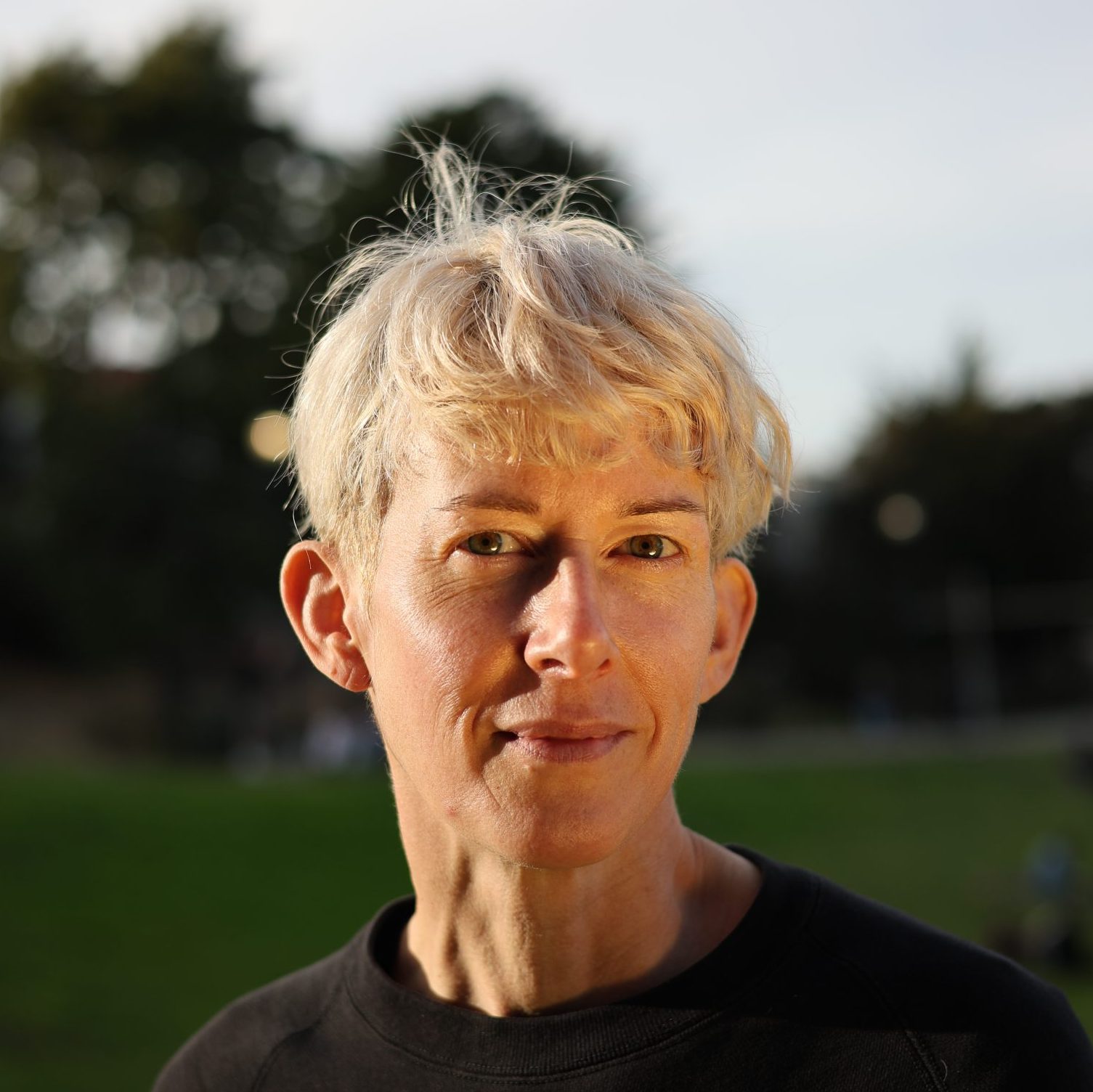

A lot of journalism bigwigs are good talkers.
Dean Baquet, who was the executive editor at the New York Times from 2014 to 2022, a period when it achieved more subscribers than ever before in its then-164 years, is arguably a very big wig. But when Baquet visited Mission Local’s offices last week, what stood out was his unflagging enthusiasm for listening.
Over the course of two days, Baquet sat down with Mission Local’s editors and talked editing, and sat down with reporters and spent hours tossing ideas back and forth about their different beats.
He grilled our City Hall team on the good, the bad, and the ugly of San Francisco governance (“Sounds like Chicago!” he said, more than a few times) and offered lessons from the investigative work that he’s edited at local newspapers all over the country through the New York Times Local Investigations Fellowship, which he’s led since 2023.
It was a master class in journalism, and a shot in the arm for a punch-above-your-weight nonprofit newsroom whose mission is training reporters and covering local news in an industry where the number of local journalists has, by one estimate, dropped 75 percent since 2002.
On his final night, Baquet sat down with Mission Local’s managing editor, Joe Eskenazi, at a gathering of our supporters last Thursday. Here’s what they talked about.
This conversation has been edited for readability and flow.

Joe Eskenazi: I think we should first start by defining what it is that is local news. In my own deep past, I went to a exurban daily to apply for a job, and they had a local news model which was ingenious. Every kid playing baseball gets his name in the paper, and the parents buy the paper. And this paper still exists, whereas so many others don’t.
But this, I imagine, is not the basis for local journalism as you would see it.
Dean Baquet: My definition of local news is pretty broad. I would include the publication that makes sure your kids’ baseball scores get published.
In the last three years, I’ve probably been in 40 or 50 newsrooms around the country. I think local news is — I see it as news that is about communities, up to and including states.
It ranges from how governments work, how local politicians work, how local institutions work. Local crime, local sports — I have a pretty broad view.
JE: What are we losing as we lose local news?
DB: I think it has contributed to the sense of disconnection Americans feel. I think it has led to the surprise at the seismic shifts in the country’s politics. I think there used to be a sense people had — and I don’t think I’m mythologizing this — there was a sense that people had that there were some truths that were held commonly, and I think a lot of those truths appeared in local newspapers.
Even if you hated the president — whether you were conservative, liberal, middle of the road — you cared about the school board. You cared about streets getting fixed. Local news provided coverage of the things that everybody cared about, and I think that entire ecosystem, in many states, is completely blown over.


JE: You started out as a local guy in your local hometown paper, and you worked your way up to the New York Times. What happens to the pipeline, now when there are fewer places to get in?
DB: People think that everybody at the New York Times graduated from Harvard and then went to work for the New York Times. That’s actually not true. I grew up in New Orleans, worked for the afternoon newspaper in New Orleans, the morning newspaper in New Orleans, the Chicago Tribune, and then went to work for the New York Times. That’s a very difficult career to pull off now.
JE: You kind of anticipated my next question, which is, you are a guy who grew up in New Orleans. (He dropped out of college to be a news reporter in New Orleans, which, by the way, no one does this anymore. Don’t do that.) What are the ramifications of journalism becoming a profession where you often need a master’s degree to even get your resume on the pile?
DB: When I first started in New Orleans, being a journalist was actually much more of a working-class profession. Most of the people in the newsroom of the Times-Picayune, when I showed up — and I was 19 — most of the people had gone to LSU or Loyola or were from Louisiana.
And then I think some of it was Watergate, some of it was the heroic reporting of Vietnam, some of it was the civil rights movement — being a journalist became a mission and became a sort of a romantic profession. When I was at the Times-Picayune, there were suddenly a lot of really talented reporters from the Ivy League, from the East Coast, from California who came to work in the newsroom.
That did make the newsroom better, in some ways — not because people went to the Ivy Leagues, but just because suddenly your pool of talent was bigger. But it also did one thing I don’t think we anticipated. It used to be that there might be reporters shopping at your supermarket. There was a good chance there was a reporter whose kid went to school with your kid. That started to erode.

JE: You’ve written and spoken a lot about the dearth of investigative ability of undersized, overworked local newsrooms — as you put it, places that are too strapped to even chase down a tip. Tell us a bit about that.
DB: The best investigative reporting is risky. I don’t mean I don’t mean risky that somebody’s going to shoot you. I mean risky in the sense that you get a tip, and you actually don’t know if you’re going to be able to pull it off.
You could do that when I worked for the Chicago Tribune. It was a 600-person newsroom. I chased tips, and some of the tips ended up being year-long investigations, and some of them fizzled out. The newsroom was big enough to support that.
If you have a newsroom of 10 people, and you’re trying to put out a daily report to build an audience, you can’t have a reporter come in and say, “I think I might have a story for next month.” That is why there’s just less and less of this kind of reporting.
The program I run — I have a team of four or five editors who work for me, and we pick 10 to 12 investigations a year from around the country, pitched by local newsrooms or local freelancers. If we pick the story, we pay the salary of the reporter, we pay all the expenses, we edit the stories.
Some of them go in the New York Times. Some of them don’t. All of them go in local publications. We did one last year in Texas, and we published it in 20 newspapers, Univision, news organizations that are very tiny along the border.
It’s designed to do two things, it’s to let younger reporters chase tips, so we bear the risk. Some of them turn out to be great stories. One of them last year won the Pulitzer Prize. Some of them turn out to be just okay. But that’s okay. Hopefully the reporter at the end of the year knows more stuff, and can go back to her newsroom and continue to do the work.
JE: We were talking yesterday about the changing role of competition. I used to write for SF Weekly, and I have to say that the rivalry with the San Francisco Bay Guardian was not friendly. Nobody was getting together for drinks afterwards. There were no softball games. I did have an editor threaten to strangle one of the men at the Guardian with his own ponytail, and he was very serious about it. I don’t know if you had that happen, but you did work in Chicago, which is a tough town. Tell me about the changing role of competition. Are we better now, for it being different?
DB: Competition in big city newsrooms really was a blast. It was cutthroat. When I was at the Times-Picayune, the afternoon paper and the morning paper were owned by the same publisher. There was a glass wall between the two newsrooms, and we hated each other.
I was a federal courthouse reporter. I would sit there and I would watch the federal courthouse reporter for the morning Times-Picayune sitting at his desk, and I would get sick if he didn’t leave.
Chicago was the most competitive news town I’ve ever worked in. There were three fabulous television investigative reporters. The Tribune had a great investigative team. The Sun Times had a great investigative team. And frankly, we drove each other to do great work. That’s gone. The Chicago Tribune‘s great newsroom is now a condo. So that competition is gone.
I think competition was good for journalism. I mean, as I said in the newsroom yesterday, I can tell you, I actually am an idealist. I can tell you that I wake up every day and I want to change the world. That happens to be true. But as a young reporter, I would be lying if I said that I was driven more by that than beating Gordon Gsell, who sat across from me on the other side of the glass.
That’s over, and I think we have to just accept it. Washington is still very competitive, but it’s gone around the country for the most part.
Now newsrooms work together more. That used to make me sad until I actually saw it in action. If you have a lot of small newsrooms and they can all put their heads together and work on one big mighty project, I think that’s great. I ran a big investigation in Mississippi last year, and every publication in Mississippi ran the story. That would never have happened 10 years ago.

JE: You were a very local reporter who covered local news, and then you worked your way up to Chicago and the Times and Los Angeles. How do you feel the big national publications do when they drop a reporter into a place like New Orleans, or for that matter, San Francisco?
DB: You know, it’s interesting. They used to do a really bad job.I was the national editor of the New York Times and in the print game, you were covering the country for your New York readers. You had California readers, but most of your readers were in New York — which meant that you weren’t thinking about breaking stories. Which meant that sometimes cliches infiltrated your coverage. Every story about New Orleans had to have a bayou in there. I’m not sure I’ve seen a bayou in New Orleans, but it just happened because you were writing for people in New York.
Boom — in comes the digital era. Actually, the New York Times‘ biggest audience is in California. Actually, if you cover a wildfire in California now, you’re covering it for people whose lives are affected by it. It’s changed the whole dynamic.
We now will run maps of where the fires are. That wouldn’t have happened 20 years ago, because our readers wouldn’t have known the difference.
I actually think that the national news organizations — the Times, the Post, and I guess the Journal, in a different way — I think they’re better now because the readers are sitting there thinking, “You’re not writing just for New York. You are now writing for me. And I actually want to know.”
JE: Yesterday when you were kindly speaking with the newsroom, you said it’s harder to do investigative work on a local level than the national level or the international level.
DB: I’ve done all three. I did local investigative stories, I did some international investigative stories, and I did a lot of national. The closer you are to home, the harder it is. For instance, in some international stories, you might see a reference like “the governor is rumored to be aligned with the cartel.” That’s not an uncommon phrase. Imagine saying that the governor of California or Ohio is rumored to be aligned with the cartels. You can’t.
The closer to the ground — people know the story. They know the subjects of the story. If Mission Local does a big investigative story that takes a hard look at an institution, your readers are affected by that. They pay taxes. They have a stake in it.

JE: This dovetails with what you’ve said in the past about objectivity in journalism. Though I know that that’s a term you don’t favor, and it’s a concept you do.You use the analogy that a reporter should get onto the plane with an empty notebook. But this is local journalism, so we’re getting onto the bus. I’m wondering — how does sophisticated objectivity work in local journalism?
DB: I don’t use objectivity because I don’t really care about the word. Frankly, though there’s a whole history to the word. If anybody wants to read a book about the history of objectivity, there is such a thing. What I think is that some subjects are simple: anti-Semitism, racism, misogyny. Those are simple. A lie is a lie.
That’s about 5 percent of what we cover. The other 95 percent — religion, even subjects like abortion, are complicated by people’s feelings and people’s histories. And I think our job is to go out and try to understand and grapple with those complications.
I grew up in a very Catholic family. I was an altar boy, and I remember coming home from college as an arrogant schmuck and telling my father I was pro-choice at 17, and I thought he was going to kill me. That does not mean my father’s a jerk. It means that things are complicated.
I think that the job of journalism is not to hop on a plane or hop in a taxi and go to a community to affirm what you already thought. It’s to go to a community with an empty notebook, with no preconceived notions, and try to understand what’s on people’s minds, and try to understand a subject and not judge.
That’s 90 percent of all stories. The other 10 percent: Boom! Nail them. But most stories are really, really complicated.
JE: What do we do about people who are dishonest? The disinterested model of journalism fails when you have knowing liars.
DB: We were the first ones to use the word “lie” in reference to Donald Trump, and I remember the moment. It was a clear lie. He was running for office. I still debated. The political politics editor came in, and we talked about it. It was such an evident lie that we used the word.
But I still told everybody I want to sign off on every use of the word “lie,” because I mean, there’s no question that he lies a lot, and newspapers now call him out for it. But I don’t want to call the head of the school board in Chicago a liar if he says the budget is $62 million and it’s actually $69 million. That gets sort of ridiculous.
Everybody gets caught up in the use of the word. I don’t think it’s important. I think what’s important is to just prove the point. I think what’s important is to do the reporting and say “the person said this, but here’s the reality.” But there’s something intellectually lazy about just falling on the word and not doing the reporting and just proving the point.
The New York Times’ coverage when they got Donald Trump’s finances has been remarkable, but none of the stories say Donald Trump is riddled with conflicts of interest. They say Donald Trump made X billions of dollars as president, making money from the things he regulates. I think that’s more powerful than anything else you can say.
The craft of reporting, proving the point, making the case, laying it out; I think that’s our primary job.
JE: And is this trickling down to local journalism?
DB: I mean, at any given moment, I’m involved in 10 investigations around the country in different newsrooms, and local governments are sort of — they’re following the lead of the president of the United States. They sue more. They don’t give us basic stuff.
I’m running a project in Mississippi, where a 1-year-old was shot by a police officer in a parking lot in a small town outside Jackson. We’ve been banging away, writing stories for a month. The police have given us nothing, zero. They’ve never even identified the police officer, and that’s not uncommon.
I think people have become emboldened by the White House to not cooperate — to say “fake news” at the drop of a hat. I think it’s infiltrated local news.
JE: Is there a cure for that?
DB: You keep reporting. You keep reporting, and you don’t let up.
JE: You again anticipated another question we have here. You’ve bemoaned the loss of shoe-leather reporting, which has gone the way of leather-soled shoes. You said that too much reporting is now done remotely. What are the benefits of reporting in person?
DB: When I first did a series at the New York Times about the New York City Board of Elections, I wanted to know who owned the warehouses where voting machines are stored in every county and every borough. I had to go to every courthouse in every borough. You can now do that online pretty easily now. I think that’s fantastic.
But I do think that the ease of reporting online should not get in the way of the fact that you should face the person you’re writing about. You should face your sources. One of the most important parts of the reporting craft is knocking on somebody’s door, trying to convince somebody to talk to you about something that makes them uncomfortable. You should learn how to make the case for your story.
JE: Now, yesterday you were kind enough to share your time at Mission Local, and you mentioned a great little story of the sort you would find just walking around in your neighborhood — in your case, Greenwich Village. And you mentioned that during the World Cup, people would just gather around and drink beer and watch the games at the bodegas. My colleague, Oscar Palma, brought up that he had written a story about unlicensed street vendors, and then they did indeed get busted by the health department.
What is the right approach for a journalist to cover something that’s definitely happening, but also could lead to ramifications like this?
DB: You should always treat — I’m going to call non-journalists and non-politicians “normal people.” Forgive me. I’ve never thought of a better phrase. You should treat normal people differently. If the mayor calls you up, tells you something, and then calls you back two hours later and says, “You know what? That was off the record.” — “Sorry, I’m writing.”
If you interview the parent of somebody who was killed, and then they call you back two hours later and say, “I really can’t. You really can’t use that part about the breakup of my marriage contributing to the delinquency of my child” — I’m probably not going to use that.
On the other hand, I do think some stories are important enough to tell that you do have to make your subjects a little bit uncomfortable. But emphasis on “important enough to tell.”
In the case of the Greenwich Village story,I think that’s an important snapshot of life in Greenwich Village, and I think some stories are important enough that I think you just got to try to convince the quote-unquote “normal people” that there’s a reason to tell the story.

JE: Now, we in local journalism are not in a position to turn down money, but I know you have complicated thoughts about proposals for government funding. How would that be different than taking money from people who make toilet paper, or from various foundations?
DB: I’m not opposed to it. I just think I’m anxious about it.
A lot of places, including California, give state money to put into newsrooms. I do worry a little bit about the legislator who will get mad when he or she learns that the reporter who wrote something bad about him is actually being paid by the state. Eventually, that’s going to happen, and some legislator is going to go nuts and lean on the small local paper. That makes me nervous.
On the other hand, local news is in a fundamental crisis. I don’t think you can overstate how big of a crisis it is. So I’m not opposed to taking the money. I just want people to think hard about it.
Frankly, I think the future of local news funding has got to come from people being willing to pay for news. It’s got to come from the way that people understand that local institutions like this one deserve their support. Maybe the way people think automatically that they’re supposed to help support their local library.
JE: You’ve also told us that you would like to free up reporters to do more reporting, and that leads to the gigantic virtual elephant in the room, which is AI. You have interesting views on the role of AI in a newsroom, especially a small newsroom.
DB: Yeah. So, everything we say about AI comes from Dean Baquet, not from the New York Times, because the New York Times might disagree with me.
The New York Times is also a very different animal. The newsroom that I left as the executive editor three and a half years ago had over 2,000 people, and now it’s about 2,500. So, that’s a different creature.
My view is: If you have a 10-person newsroom, and AI can help you do some of the work that will allow you to keep those ten people on the street reporting, we should be open-minded about what AI can do.
If that means AI can do a certain level of editing — I’m not talking about the most sensitive stuff — if that means that AI can pull together weather coverage, I’m okay with that.
Do I think that some bad actors in the publishing business will have one poor person sitting in a newsroom and AI doing everything else? Yes. But I think that’s possible anyway.
Every time technology comes into journalism, it’s unexpectedly transformational. If you read the histories of journalism, the arrival of the telegraph was like — can you imagine? So the internet comes and, sadly, many newspaper publishers looked the other way, avoided it, pretended it wasn’t going to happen. I don’t want us to do that this time. It’s coming. We’ve got to figure out how to make use of it.
JE: Where are your red lines? What would you say AI shouldn’t do?
DB: The fantastic obit you did two days ago: AI can’t do that, and shouldn’t do that. The red line should be those moral, ethical judgments that good journalists make every day. But would it bother me if AI did some first-cut editing? Not really. Not in a 10-person newsroom.
JE: Are we at risk of looking back through a rose-colored mist? What about the past would not be worth recreating now?
DB: In the newsroom I started in, the women covered “women’s news.” All of the women worked in the style sections. We should not recreate that.
If you look at Southern newspapers in the 1960s, most of them were embarrassing. They did not do great coverage of the great story of that era, which is the civil rights movement. We don’t want to recreate that.
Newsrooms were not fabulous. We should not think “woe is me.” They were really big, but many of them were not great. When I left Mission Local’s newsroom today, I kept thinking — the spirit of your newsroom, which is a lot of very young, idealistic journalists who question some of the norms I grew up with, and are passionate about their communities — that’s an improvement.
It’s too bad you don’t have a 600-person newsroom, but that’s clearly an improvement. Everybody says that younger journalists ask harder questions. Fabulous! They should, because we didn’t ask enough hard questions.
Newspapers — you hate to think of it, but it was sort of a manufacturing plant. Everybody wrote the same way. Go back and look at the writing of newspapers 40 years ago. They were awful. Writing’s better now. There’s more risk-taking.
I don’t want to romanticize the old world. I just wish we were as big as they were, with some of the same values we have now.

JE: When was the golden age?
DB: I think, starting in the late ’70s and into the ’80s, newspapers were probably the best they ever were. Watergate suddenly made people want to do more hard-hitting reporting. Newspapers were rolling in it; 30-percent profit margins were not unusual. There were these great regional papers.
We had learned that we made a lot of mistakes. In the early years of Vietnam, we weren’t questioning the government enough. The Post was better than it ever was. The Times at that time was better than it ever was. I think that was probably the best period.
JE: On a more joyful and fun note, you’ve talked about the need to insert joy and fun into what we do as local journalists. What do you have in mind?
DB: A lot of the new publications can be a little bit earnest, partly because they’re funded by philanthropists. When you read the Miami Herald at its peak, you felt like you were in Miami. Carl Hiaasen was a columnist! Everybody will give you money to cover healthcare, but nobody’s giving money to get a really fun local columnist with a sense of place.
Think of all the things that the old newspapers did well. They had comics. They had local cartoonists. The best of them had really good local columnists. A lot of the new publications don’t have that. You guys do. I wish more of them had that.
I’ve spent my whole life explaining the problems of the world. But I also like a little bit of joy. I love a book review. I really do miss the alt-weeklies.
JE: It’s not hard to find things to worry about regarding the state of local journalism. What gives you hope?
DB: A lot. Technology has made storytelling more vibrant. We did a project about what happens when the state of Texas decided to put a police officer in every school, and we had all of these very powerful videos that showed police officers beating up kids, and to have that mixed in with the words — that storytelling is better.
What we’re seeing now is what journalism looked like two hundred years ago. A city like New Orleans, a city like New York, they had newspapers that covered the Jewish community, newspapers that covered the Italian community, newspapers that covered the Black community, newspapers that just covered ships going in and out.
That’s starting to happen again. There’s much more experimentation, much more willingness to try stuff, and a lot less head scratching over “Is this appropriate for us?”
I think the young reporters are just as good as we were. I think we have got to help them get the training they need, but they ask harder questions than I did. They ask, “Why do we do it this way?” We need to be asked that.
I come away from all these visits to newsrooms — and as I said, I do it a lot — I come away excited. Mission Local is going to do great stuff, and it’s going to do stuff that the San Francisco papers of 25 years ago did not do. And I think that’s fabulous.
Cool to read Mr. Baque’s thoughts. Apropos of nothing, he is from a family of magnificent restauranteurs in NOLA.