
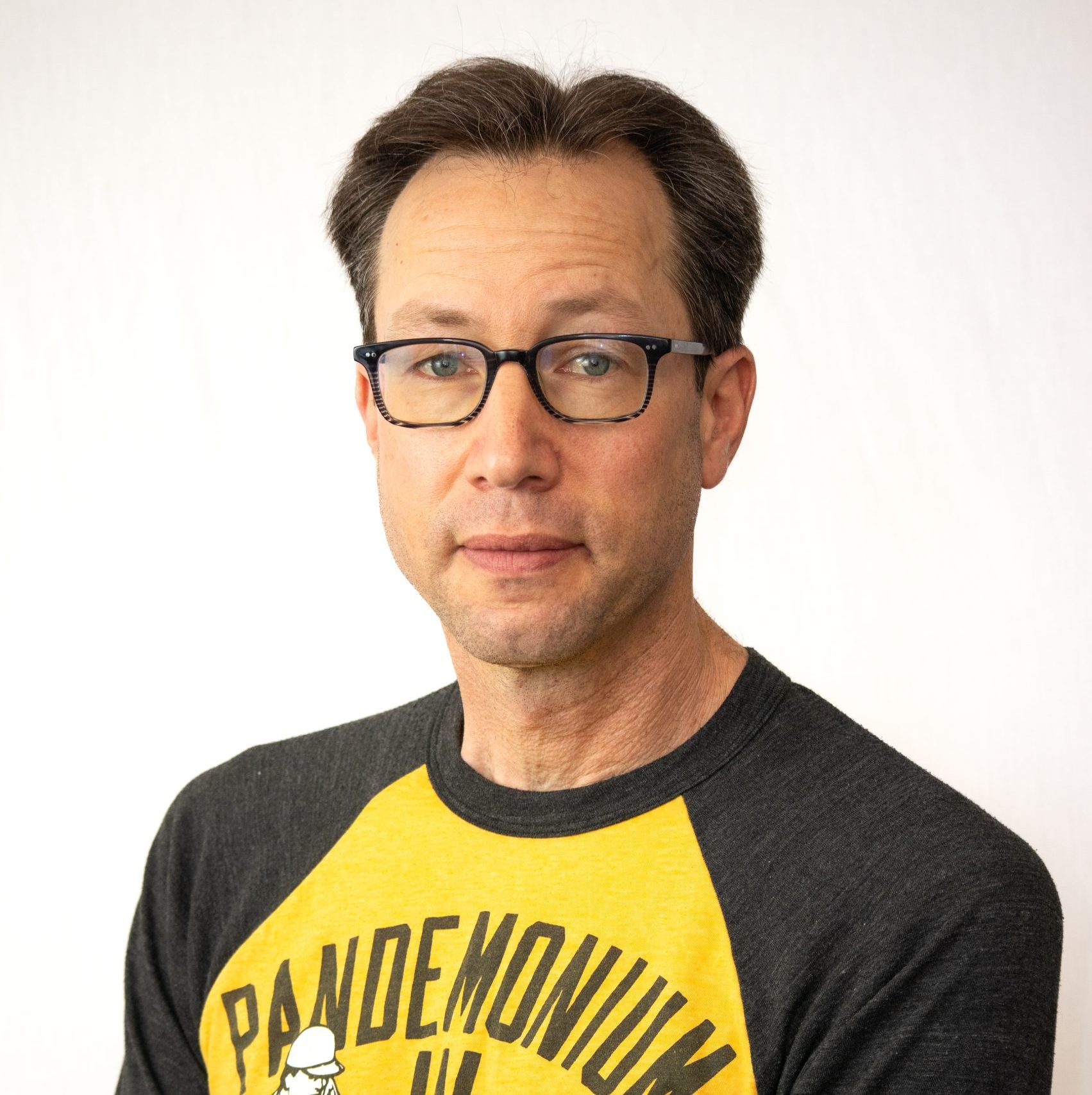

My fashionable friend has identified the sleek, grey jacket Mayor Daniel Lurie has sported on his Instagram forays through San Francisco as a Brunello Cucinelli gray cashmere (MSRP: more than my car).
As outerwear goes, you could do worse. But it doesn’t offer much in the way of coattails.
Tuesday’s election will demonstrate whether Lurie’s political coattails are more sizable than his actual ones.
Not halfway through his first term, the mayor’s polling numbers are on par with Joe Montana’s circa 1988. He’s not just liked — he’s well-liked. But it’s not yet clear how much of the mayor’s popularity is transferable. Joe Montana, you may recall, urged us to buy Nuprin. We didn’t.
Lurie, meanwhile, has urged us not to buy Proposition D, which would tax billion-dollar companies and fund social services to make up for Trump’s federal budget cuts. He has also urged voters to elect his appointee in District 4, Alan Wong, and Lurie’s donor network has been active propping up the Sunset supe.
Both races are critical for San Francisco organized labor. If Prop. D fails — or if the Chamber of Commerce-spun measure designed to tank it, Prop.C, gets more votes — the city will have to deal with perhaps $300 million yearly failing to materialize in the general fund.
This would likely lead to a reduction in services and the mayor pushing for even more layoffs, which is why passing Prop. D has become the raison d’être for much of city labor.
Numerous city observers foresee that some manner of labor strife is on San Francisco’s horizon in the not-too-distant future.
Whether that strike comes as a flex after labor beats back Lurie and a billionaire-backed campaign or comes out of a position of weakness and anger after losing that campaign is to be determined.
It brings to mind the line from a vindictive cobra in the Rudyard Kipling short story “Rikki-Tikki-Tavi”: If you move, I strike, and if you do not move, I strike.
Meanwhile, if Wong is not the winner in District 4 — or, for that matter, if Stephen Sherrill, another Lurie ally backed by the mayor’s well-heeled allies — loses in District 2, it could become that much harder for Lurie to lay off city workers (or give tax breaks to sellers of big-dollar real estate in the midst of a revenue shortfall).
If the voters do as Mayor Lurie wishes, however, he goes from “people thinking he’s untouchable to actually being untouchable,” in the words of a political strategist critical of the mayor.
Conversely, if Prop. D succeeds and/or voters dump one of the sitting supervisors, a mayor who has thus far walked on water would have to learn to swim.
Uniquely among modern San Francisco mayors, Lurie won without the support of virtually any vestige of organized labor. He didn’t need them. To an extent, he still doesn’t; see those Joe Montana numbers.
Lurie’s vast wealth and adjacency to vast wealth, in fact, enable a different kind of governing.
When Lurie-aligned networks of rich donors fund downtown renovations or civic boosterism, that money can’t be reallocated by the board toward far more pressing needs — or, for that matter, the needs of favored unions and nonprofits.
The mayor’s priorities, privately funded, are not pitted against layoffs and cannot be threatened or leveraged as part of the tumultuous budget process.
“It’s just happening,” says a longtime city politico. “And that’s why voters are responding to Lurie. They feel like things are getting done.”
It also doesn’t hurt that the mayor can continue to spend his own money on consultants, strategists and speechwriters to help frame his messages. These people are good at their jobs.
To wit, the mayor abandoned and utterly failed at his election pledge to add 1,500 shelter beds in six months, a pledge all of his opponents decried as untethered and untenable, and then successfully spun that as a sign of growth and strength.
Unions, specifically progressive-aligned unions like the SEIU and IFPTE, are growing increasingly rankled. They have put millions behind Prop. D, the so-called “Overpaid CEO Tax,” and Lurie has become the de-facto face of the No on D campaign.
This effort, funded by some of the wealthiest tech barons in all the realm, is sending a forest’s worth of (Daniel Lurie-emblazoned) mailers to voters’ homes.
Anyone hoping for a fleeting nine minutes of joy watching YouTube highlights of the one game in three the Giants win must first witness Lurie delivering a doozy about how Prop. D would be a disaster and other deleterious, damning dictions debuting with “D.”
The argument against Prop. D is not demented or dotty; in just 2024, the city revamped its business-tax structure to be less reliant on the biggest companies and do away with ballot-box one-offs of the sort voters are now weighing.
Yes, big companies could decamp from San Francisco. That’s notable. But it’s also notable that Lurie never in his (surely polled up the yinyang) anti-D dictums describes what D would do.
That’s because San Franciscans would likely support that message: The measure is a means of offsetting Trump budget cuts to healthcare and sticking it to the billionaires who got a tax break. Tying Prop. D to Trump was, in fact, the core message of its backers.
And, with $3.3 million behind it, the Prop. D campaign has enough money to spread that message. Its backers are betting that if their message has been effectively delivered, it won’t matter that opponents have put $6.6 million into kneecapping it.
There is a philosophy on running San Francisco campaigns that, with enough money behind a message that appeals to most San Francisco voters — like, say, taxing billionaires to fund social services — that no amount of opposition funds will prevail.
Voters approved an Overpaid CEO Tax by a 65-35 tilt just six years ago. It is an understatement to say that times have changed since 2020, and it’s hard to conceive of Prop. D passing by that gaudy margin now. But its backers certainly aren’t bracing for a loss. Vamos a ver.
If D does indeed win, coupled with the incredible shrinking gubernatorial run of San Jose mayor Matt Mahan — a moderate funded by some of the very same wealthy tech interests — that would be quite a predicament.
We could expect to see this city’s newly activated and emboldened donor class rending its Brunello Cucinelli garments in a fit of pique.
And they’ll rend harder if Lurie doesn’t retain both of his allied supervisors. A lot of money changed hands here — consultants’ boat payments were likely assured.
Poor to middling outcomes would make it that much more difficult for Team Lurie to fundraise for his November charter amendments to greatly enhance mayoral power.

Par for the course for the charmed life of Daniel Lurie, he’ll arguably be a winner no matter what voters decide regarding Prop. D.
If, over the mayor’s wishes and in a rebuke to his wealthy donors, Prop. D passes, it could actually provide Lurie with the best of all possible worlds. At least politically.
Could businesses abandon San Francisco? They could. They always say they will. But the mayor can note that this is exactly what he warned us about.
And, in the meantime, he can take the anticipated hundreds of millions of dollars coming into the general fund from the tax he opposed and use it to stave off the curtailing of city services and wholesale dismissal of unionized and nonprofit workers.
The SEIU, IFPTE and other union contracts are up in 2027. City unions fought, methodically, for years, to win the right to strike. Did you notice Lurie giving police and firefighters 14 percent raises in April? Other unions sure did.
Whatever deleterious disasters may be developed by Prop. D, it would certainly behoove the mayor to have dispensable dollars to derail our more draconian dilemmas.
There is, in fact, a history of pro-business, pro-downtown San Francisco mayors opposing taxes on business and downtown, losing, and then using the resultant hundreds of millions of dollars to balance the budget. That could happen here, too.
So that’s something to think about on the eve of the election. As is the ever-prophetic presidential slogan of Alfred E. Neuman: “You could do worse … and you always have!”


The mayor’s apparent popularity is utterly confounding to me. It can’t come down to people liking his “Let’s go, San Francisco!” can it? Crime is down, true but it’s down everywhere, not just in SF. Is it due to the consultants, strategists and speechwriters Joe mentions here? Has everyone drunk the Kool-Aid??
I was also wondering this. I read a fair amount of local news and I’m really not sure why people are so excited about this guy. Like, what are the achievements? The upzoning thing? I think he’s doing a better job than London Breed but is that really so impressive? It’s a low bar.
To me it looks like business as usual.
Hey Lu,
He’s a genuinely nice guy, relaxed and loose.
That’s quite a change from the succession of junk yard dogs he succeeds.
Family man all the way down to having a dog like over a quarter million of us.
He’s the kind of guy you’d like living next door.
Only thing on this ballot I care about is Pelosi’s successor.
Connie Chan for Congress !
go Niners !!
h.
You’re right, it couldn’t possibly be that people notice cleaner streets, fewer visible problems, hope and a city government that is functional rather than under progressive socialist rule. Clearly the only explanation is mass hypnosis, elite speechwriters, and industrial quantities of Kool-Aid.
I support Mayor Daniel Lurie. a great and respectful guy making good improvement to San Francisco, however him pushing/ sorta like forcing Sunset District to pick Alan D4 is not go. I prefer the other 2 Candidates. They have less “issues” in the past. Either go for David Lee, Albert Chow or last resort Gee.
For District 2 go for Lori
The public service unions are not the powerhouse Joe imagines. First, the rank and file have no input on the political positions the union takes. Second, 59% live outside the city so, when you talk about public service union voters in the city, you’re talking about ~15K eligible voters. Not a huge group. And the higher earning IFPTE members are even less likely to vote in lock-step with the union. Third, the chief interest of the union members – higher wages, is fundimentally at odds with the interests of the union – more dues paying members.
Frank —
Somehow, you seem to have missed the part about a potential strike. If large swaths of the city’s workforce walked off the job, it would be significant.
JE
Joe, given SEIU’s mien, would you expect for Local 1021 to enjoy as much public support as UESF did when they struck?
Given that so many city employees do not have public facing roles, would anyone notice?
Labor’s really cut itself loose from the voters.
Marcos —
That’s the multi-million dollar question. In the event of a strike, there are few groups with more public support than public school teachers. And the mayor’s talented and well-compensated advisers would surely have a field day presenting his case to the public. On the other hand, if garbage piles up and the city suffers, no one really wins. But city workers don’t answer to the electorate. Politicians do.
JE
Given that progressives have been reduced to the development arm of city government, running revenue measure after revenue measure and little more, the voters do indeed have a chance to weigh in.
A strike leads to higher wages… and more layoffs. A win for workers but not the unions. See UESF vs. SFUSD
Frank —
Teachers, who had been raring to strike for years, struck. San Francisco miscellaneous employees, who have been raring to strike for years, may well do the same. Your thesis that the unions will, in an act of self-interest, prevent this, seems unlikely.
Yours,
JE
you clearly don’t understand how unions work.
Dues are a percentage of your pretax wage (often a little bit under 2 percent). so a union wants to unionize all the members of given workforce. If that’s 300 people, it wants to unionize all 300. Most of those 300 will want higher wages, and if they can win that in their contract negotiations then, those dues will go higher. See how that works? unions’ and workers’ interests are in alignment.
if union members don’t like their leadership, they can vote tehm out, which they do quite often in smaller unions.
The rank and file are smarter than you think, Frank, and overwhelmingly support union campaigns because they’re in our interest. I wholeheartedly endorse the use of my AFSCME dues contributing to the campaigns of pro-worker candidates and legislation. Your third claim is a tired, old anti-union trope that tries to spin the reciprocal (and democratic) arrangement of unions negatively. Workers are one and the same with their unions.
This will be viewed by many as one of the best arguments against powerful public employee unions, and or unions in general.
Workers might see it as one of the best arguments in favor. Choose your side wisely.
My understanding is that about half of SEIU 1021 members working for the City and County of San Francisco opt out of political representation, so your position is not representative at 1021 in SF.
My husband is retired City and County of SF SEIU 1021, collecting retirement benefits negotiated long before anyone employed by 1021 was born.
When he was working, the union’s only business was increasing and defending headcount and going to bat for the deadest of dead wood members, while doing barely anything for productive workers being harassed by management.
Come out to the Bayview and then tell me how clean the streets are. I guess you only see what you want to see. With confirmation bias that strong, who needs Kool-Aid?
Prop D is more correctly “The Envy Tax”, not tax the wealthy tax. Non-profits have
been getting not a free ride but a tax payer sponsored entitlement. Some years ago,
Judge Quentin Kopp noted that around 17% of the workforce within SF was employees
of non-profit. Since COVID, and a more hostile business environment, private commerce has cut back and, in some instances, left entirely. That percentage of
the work force being non-profit has probably grown well into the 20th percentile.
Throwing more money around exacerbates the fiscal crisis. Spending is
the problem. Resource management. That is the dilemma.
Don’t eat the rich. Manage the resources.
When ever the dire predictions of “OMG! ARE YOU CRAZY?? THE RICH WILL LEAVE AND TAKE THEIR MONEY!!” come screaming, it’s best to take a look at other times when the predictions have been made, the bill passes, millions of dollars come in, and one pathetic right-wing rich guy who already pays no taxes flys out to Texas to visit his 132th vacation home and check his bank accounts in Argentina.
I don’t think people understand the ultra rich. If they want a bananna and it costs $1, they buy it. If it costs $100,000, they buy it. They, like many others, make decisions ahead of time and then justify it for other reasons. Just look at Walgreens going on and on about how Chesa Boudin was causing them to close all their businesses, only to find out that the closing plan for every single store that closed was made prior to his election. They wanted to make a political point. That’s it. That’s what they do.
Adorable alliteration!
We finally have a mayor trying to boost the economy, clean up the city, and cut through bureaucratic nonsense. Naturally, the response from unions is to throw sand in the gears. Nothing sparks opposition quite like the possibility that government might actually start working efficiently.
Come down to 16th and Mission BART and tell me that Lurie is “cleaning up the city.”
All Lurie is doing is tapdancing backflips at the foot of Market Street any time a business throws a press release over the transom.
Labor, for their part, have hijacked progressive politics along with their nonprofit collaborators and made progressive politics nothing more than running ballot measures to preserve headcount for an array of unaccountable services.
Labor greed has been pronounced over the past decade, that it has led to a backlash of right wing charter deform that’s going to weld shut access to the ballot.
Hopefully the political position of 1021 and Local 2 will be diminished by eventualities, the economic position of the nonprofits diminished by budget cuts. Then, these money interests will have no alternative but to stand down on the closed, self serving political shop, and make common cause with residents against the right wing, instead of holding us in barely concealed contempt as nothing but sources of tax revenues who need to sit down and shut up.
“16th and Mission” is the new Tenderloin. The rest of the city is cleaner and seems better. Lurie gets the credit.
This.
Right here.
A brilliantly succinct political distillation of progressive San Francisco:
(San Francisco) “progressive politics” (are) “nothing more than running ballot measures to preserve (and increase) headcount for an array of unaccountable services”.