
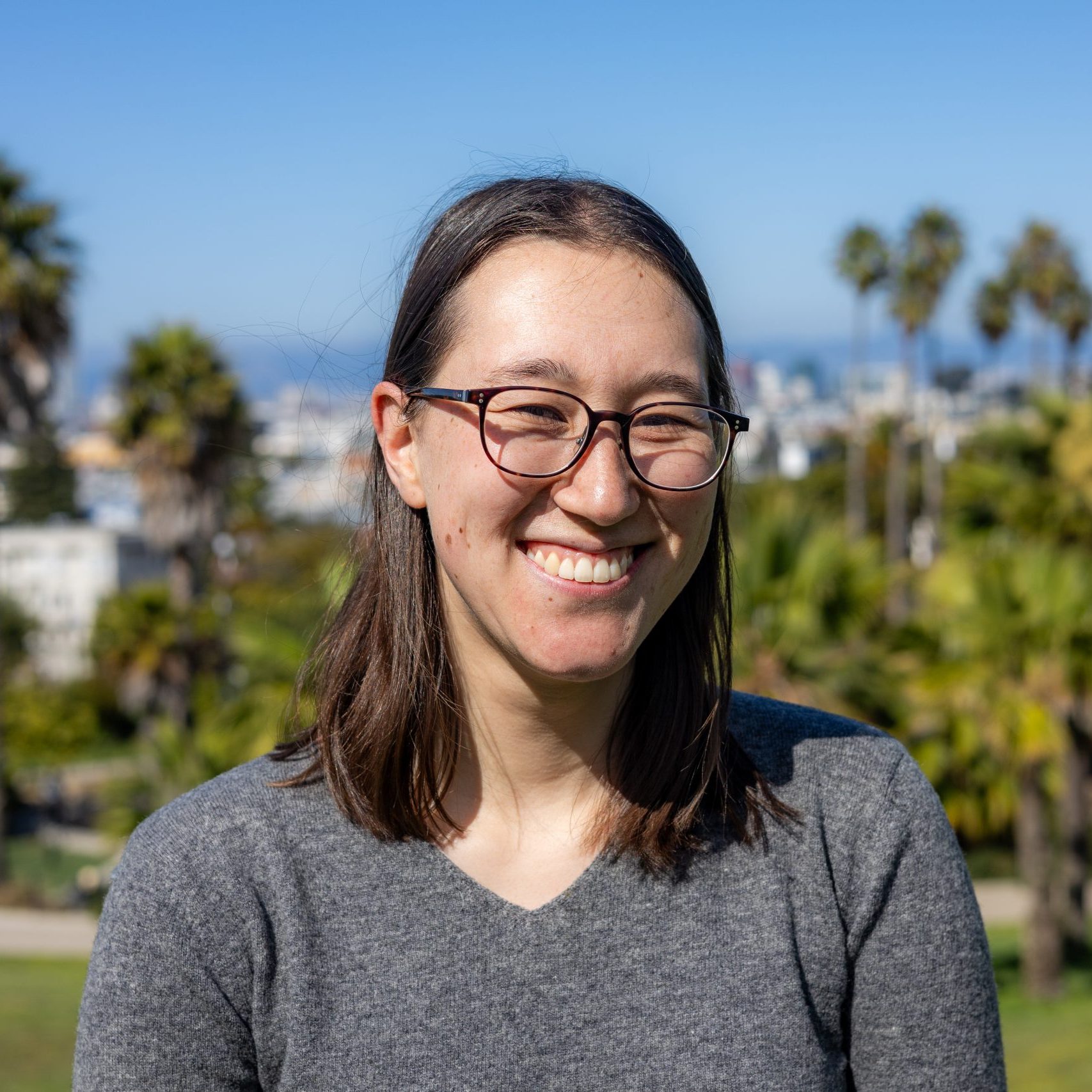

It’s T-minus 11 days until the June 2 primary, and Saikat Chakrabarti is all systems go.
The centimillionaire progressive has put just shy of $10 million into his own campaign, according to filings released Thursday evening, in a go-for-broke effort to secure a top-two spot and move on to the November general.
Chakrabarti is flooding the zone to get his name out: Filings show he has spent at least $8.8 million already — almost all of the money he’s raised — taking out TV spots, cutting digital ads, mailing flyers, and doing whatever possible to edge out his progressive rival, District 1 supervisor Connie Chan.
While State Sen. Scott Wiener is a favorite for the No. 1 spot in June, Chan and Chakrabarti are neck and neck in the polls, and vying for second place. Because of California’s jungle primary system, the top two vote-getters, regardless of party, will advance to the general.
And Chakrabarti can dump more money into his campaign at any point: He put in another $1.1 million just last week, and has said he’ll spend whatever it takes.
Chan has far less money than Chakrabarti. She does not have deep pockets, and must fundraise, but is spending equally quickly. She’s raised some $651,000, and only had $72,000 left in the bank as of May 13, the last day for which filings were available.
Chan, too, is spending on advertising, though, with a fifteenth as much money as Chakrabarti, she is still spending a significant portion of her funding on basic campaign functions like paying staff members, campaign consulting, and polling.
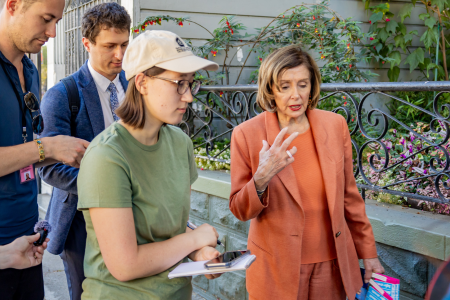
Still, Chan has far more name recognition in San Francisco, owing to her five years on the Board of Supervisors. And on Monday, Chan received the priceless endorsement of Speaker Emerita Nancy Pelosi.
With the primary so close, that pick may be more valuable for winning votes than raising money. But, if Chan makes it through to November, she may well tap into Pelosi’s famously productive fundraising machine and keep pace with her opponent.
For now, however, Chakrabarti is far and away the leader in the money race. Wiener is a distant second with $3.9 million; Marie Hurabiell, a former Trump appointee turned Democrat, is in third with $792,886, although $370,000 of that is her own money; and Chan is in fourth place.
When self-funding is removed, Wiener has the most from individual donors and groups, Chan the second-most, then Hurabiell, and then Chakrabarti.
Wiener has the most cash left on hand: $1.3 million, a tidy sum he is saving for campaigning ahead of the general. He has increased his spending in the past month, and is starting to air TV ads.
Wiener is also backed by the most third-party money in the race. He has three political action committees spending on him, two of which are involved in LGBTQ advocacy, and a third tech-backed PAC that is financing his “Team Wiener” canvassing outreach.
That third-party spending is not just backing Wiener, but attacking Chakrabarti: $778,000 has gone toward attacking the former Alexandria Ocasio-Cortez chief of staff.
While some of that anti-Chakrabarti money comes from a pro-Chan labor PAC, almost all of it ($764,000) has come from the tech-backed Abundant Future PAC.
That PAC is funded by familiar names in San Francisco’s moderate circles, including Y Combinator CEO Garry Tan, venture capitalist Jeremy Liew, venture capitalist and San Francisco Standard chairman Michael Moritz, crypto billionaire Chris Larsen, and Yelp CEO Jeremy Stoppelman.
The Abundant Future PAC is also channeling money from other groups and PACs: It took in $250,000 from the Smart Justice California Action Fund, a criminal justice reform organization that has donated to Wiener in the past, and $500,000 from Public First Action, an Anthropic-funded PAC backing candidates in favor of AI regulation.
Wiener passed one of the first bills to take a crack at AI regulation in 2025 , earning him fans in the AI safety world.
Though Chan has struggled to keep up financially with her opponents, in late April she, too, started benefitting from PAC money.
The Working Families for San Francisco PAC opened and has thus far spent $260,000 to support Chan. The PAC is funded by several unions, including electrical workers, hotel workers, pipefitters, and teachers.
The union support is no surprise. When Chan ran for reelection to the Board of Supervisors in 2024, labor spent handsomely for her, and Chan is the pick of most city labor unions.
Labor money took time to materialize, however, although it is now firing on all cylinders: The strategists running the pro-Chan labor PAC say it is only a matter of time until San Franciscans receive a big mailer with Chan’s face next to Pelosi’s.

This is the 3rd or maybe 4th article in Mission Local about Saikat’s self funding campaign. But still no time for one article that goes deep into Scott Wiener’s corporate donors? Saikat said it publicly many times, he is a class traitor and he prefers to spend his own money than be bought by corporations and lobbies.
How about Scott Wiener, why is the endless list of his corporate donors never talked about here? Is Scott Wiener going to represent us in Congress or is he going to represent his donors: Amazon, Anthropic, Tesla, Google, Facebook, Uber, Yelp, Airbnb, PG&E, Paramount, Pfizer, PayPal, Zillow, Visa, Microsoft Corporation PAC, Astra-Zeneca, Blue Shield of California, ACADIA Pharmaceutical, Anthem Blue Cross, Align Real Estate, Allstate Insurance, Home Depot, Real Estate PAC, Oracle, Novo Nordisk, eBay, California Real Estate PAC, TaskRabbit, Target, etc. etc. etc.
Acting like they’re both spending like crazy is bad reporting. The techbro is funding his own campaign-like Trump. Connie Chan is diligently working with $5 donors.
Weathly individuals Corporations and lobbyists continue to decide elections
Unless you give money , all politicians will never listen to you
Good luck ever trying to get any politician to help you
Enjoy talking to an intern and getting a cut and paste reply
Dont forget the mail asking for money
They are off to Washington The mess in sf will continue to be the same thanks to the local
Politicians warming their chairs and sitting in the ivory tower at city hall
Who remembers Carole Ruth Silver ?
She’s 86 now and Skippy and I ran into her and an older sister as we cleaned in front of the St. Francis Nursing home on Guerrero.
She was a supervisor til Gonzo and Aaron and the ‘Class of 2000’ came down to the corral.
She was also an RE agent who brokered the kind of mortgages that led to the Crash of 2008.
Anyway, I asked her who she liked for Pelosi’s job and she just kind of harrumphed and said ‘Wiener’.
I thought, ‘sure’ cause they are both about real estate for maximum profit.
Then, I asked if she knew that Pelosi had endorsed Chan and she looked very very surprised and interested.
I asked if she’d follow Nancy’s lead and she wouldn’t answer but would also not offer a second to her first endorsement of Ichabod Crane.
So, Nancy does still hold a big bunch of clout with old timer Democrats.
This ole dawg votes at that Old Folks home by the way and was onstage with Silver and Chris Daly and 17 others in 2000.
Connie Chan for Congress !
go Niners !!
h.