
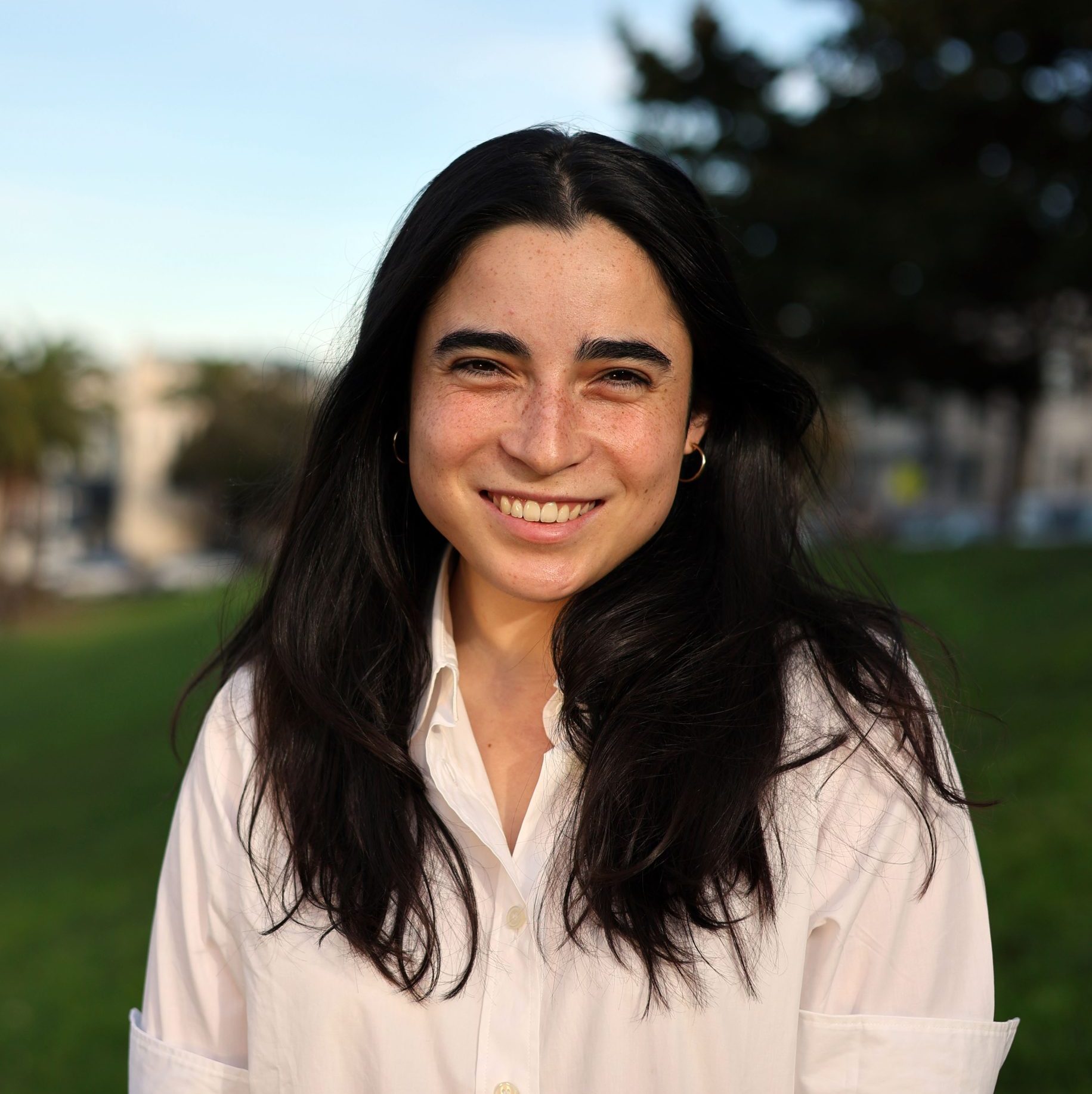

Phoebe Maffei, a prosecutor in the San Francisco district attorney’s office and candidate in the city’s judicial race, is on a fundraising tear for a race that usually sees little big money action: She has raised some $150,000, outraising her opponent, Deputy Public Defender Alexandra Pray, fivefold.
Maffei’s total includes contributions from major political donors and law enforcement unions, according to filings submitted to the California Secretary of State tracking donations as of May 11.
Pray has raised close to $30,000, mostly from smaller-dollar sums.
In California, judges are usually appointed to their positions by the governor. In this case, Judge Gerardo Sandoval did not file papers to seek reelection, leaving an open seat at the San Francisco Superior Court that will be filled following the election on June 2.
Both Maffei and Pray put their hats in the ring, and for both, it’s their first foray into campaigning and fundraising.
Maffei, who has worked in various departments at the district attorney’s office over 15 years, has received $5,000 from the San Francisco Deputy Sheriff’s Association and $2,500 from the San Francisco Police Officers Association.
Jeremy Liew, a venture capitalist who was the first to invest in Snapchat, gave $10,000 to support Maffei, the largest contribution to her campaign. He is a major contributor to moderate political groups: In 2025, he gave $200,000 to Neighbors for a Better San Francisco and $500,000 to GrowSF.
“I have a broad coalition of support that’s representative of the life I have lived in San Francisco,” said Maffei, who added that friends from her bartending days before law school have also chipped in.
It’s like her pre-law days, she said, when “a group of my regulars got together when I left the bar business and bought me a suit so that I could wear it to interviews in law school.”
Maffei also received $1,000 from Martha Conte, a major Republican donor who last year gave $75,000 to the Briones Society, a local Republican group. William Fisher, the son of the Gap founders and hedge fund manager, also gave $1,000 to Maffei.
Stop Crime SF, a group that advocates for more policing and previously misrepresented information in judge “report cards,” has endorsed Maffei.
Pray, who works in the public defender’s research unit and was previously a staff attorney in two of the city’s collaborative courts, has raised some $29,800, generally from smaller contributions.
A number of progressive politicians are supporting Pray’s campaign, including former mayor Art Agnos and former board president Aaron Peskin, who gave $250 and $200, respectively.
On top of that, Pray has put $15,000 of her own money toward her campaign.
Pray’s campaign filings show that she has vast support among her colleagues. More than a quarter of the contributions to her campaign came from other attorneys at the public defender’s office.
“I’m comfortable with how I’m raising money, because I don’t feel beholden to anybody,” said Pray.
Judge races are generally low-visibility and low-turnout. Unlike political candidates, judicial candidates cannot make promises to interest groups. In the cases of the candidates for June 2, the candidates’ platforms mostly draw on past experience.
Both Maffei and Pray have similar language in their campaign materials focused on being fair and impartial, and both were ranked “well-qualified” by the Bar Association of San Francisco.
“It’s the Canons of Judicial Ethics that prevents us from taking a position that would indicate how we would rule, or show any kind of bias,” said Maffei.
Politicians zero in on interests from different groups, said Pray. “You can’t do that, as a judge.”
However, in recent years, deep-pocketed interest groups have put their money toward the judicial races.
In March 2024, the last time a judge seat was on the ballot in San Francisco, several major political donors collectively gave more than $1 million to support two tough-on-crime candidates, Jean Myungjin Roland and Albert ‘Chip’ Zecher, who ran against two incumbent judges.
Despite raising significantly more than their opponents, both candidates lost.
Liew, the Snapchat investor, also gave in that election: He contributed a total of $100,000 to Roland and Zecher in 2024.
Judicial races are state-level races and are therefore not subject to campaign-contribution limits. Should a case involve someone who donated more than $1,500 to a judge’s run for office within the last six years, the judge must recuse themselves.
Maffei and her husband, Michael Maffei, an attorney at Google, have also contributed to moderate candidates. Each gave $500, the maximum contribution, to mayoral candidate Mark Farrell, District Attorney Brooke Jenkins, district attorney candidate Suzy Loftus and Catherine Stefani’s supervisorial campaign.
Whichever candidate wins a majority on June 2 will serve a six-year term.
Should we start a grassroots campaign to get a constitutional amendment overturning Citizens United? Who’s with me? Anyone else down to get money (legalized bribery) out of politics?
And can we stop pretending these “moderates” (god I hate that word) aren’t really just Republicans who know full well they can’t get elected with an “R” next to their names? Cause the one raking in the POA and tech money is obviously the “R” here… and obviously supportive of the fascist tendencies of the tech right wing.
Disgusting.
For context, Judge Sandoval likely isn’t running for reelection because of his soft on crime approach. Among other things, he released a suspect accused of stealing $16k in merchandise from Walgreens and granted bail to a different suspect caught carrying an illegally converted automatic handgun on MUNI before public pressure forced him to revoke his bail order. Electing Pray would just be replacing like with like.
Speculation…