

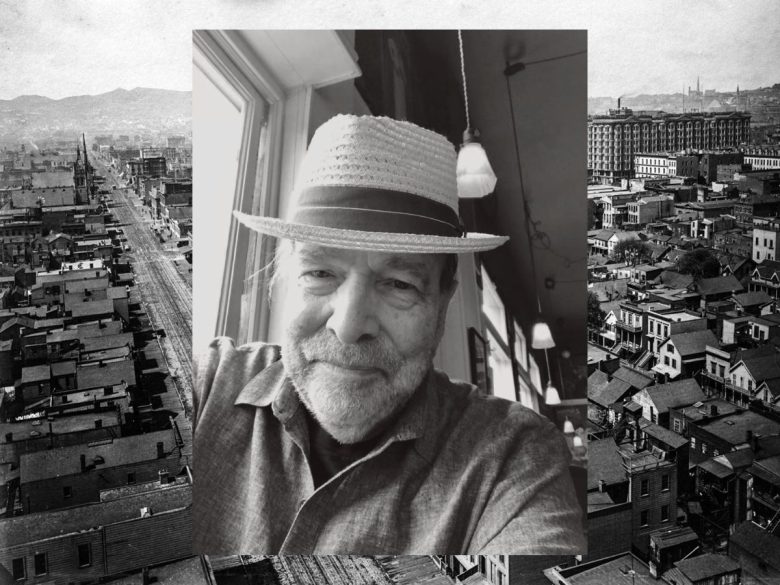

John Elberling, the longtime South of Market housing leader, political pugilist and founder of Tenants and Owners Development Corporation (TODCO), an affordable housing group, died at 79 after spending nearly half a century fighting San Francisco housing developers and politicians over a basic question: Who is this city for?
Elberling, who took over TODCO in 1978, became one of the most consequential and polarizing figures in San Francisco housing politics.
He was admired by allies as a fierce defender of low-income tenants and elderly residents, and denounced by critics as an obstructionist power broker who used ballot-box politics and funds acquired through taxpayer-funded affordable housing to block or slow market-rate development.
To those who knew him, the controversy he sowed was inseparable from a larger and older fight over San Francisco itself.
“John held the unbending position that everyone in San Francisco had the same rights, regardless of interests and status. I don’t know if he was controversial. The battle over who San Francisco is for, and who gets to stay here, is as old as I am, and I’m as old as dirt,” said Eric Jaye, a veteran San Francisco political consultant.
Jaye was referring to the redevelopment fights over Yerba Buena and SoMa that began in the 1950s, and that launched TODCO into the political fray.
“To the extent that he made people angry, it was because he wouldn’t bend his principles.”
For supporters, Elberling’s legacy centers on the thousands of permanent affordable homes tied to TODCO’s organizing work in South of Market, especially senior housing and residential hotels developed in the 1980s and 1990s on Sixth Street and near Yerba Buena Gardens.
They credit him with helping preserve a community that might otherwise have been erased by redevelopment.
Elberling saw South of Market as a neighborhood full of people whose lives, histories and cultural institutions mattered, supporters say.
Former District 6 Supervisor Jane Kim, who worked closely with Elberling during her tenure from 2011 to 2019, said he had an unusually comprehensive view of the district.
Once housing was secured, he was already pushing for safer crossings, better public space and the neighborhood infrastructure that could make SoMa more livable for seniors and families.
“His organization built community,” Kim said.
Yet Elberling’s advocacy was inseparable from controversy. In the early 2000s, TODCO largely stopped building new housing, and shifted more heavily into neighborhood advocacy.
Over time, TODCO and affiliated entities became formidable forces in San Francisco ballot politics, spending heavily on measures tied to housing, zoning and taxation.
Critics argued that a nonprofit landlord devoted to affordable housing had diverted money and influence into political warfare, rather than construction.
Supporters countered that, in San Francisco, politics is inseparable from housing preservation. If advocates did not fight tooth and nail politically, low-income communities could be steamrolled, they argued.
Kim, who heard those criticisms firsthand, said Elberling believed the political fight was necessary. In her telling, he understood that affordable housing could not survive long-term unless the broader neighborhood and policy environment survived with it.
Elberling relished that fight. He was known as a deeply informed and often abrasive tactician, someone who could master the technical language of land-use while also browbeating opponents with profane language.
He made enemies across City Hall and the development world. But even some of those adversaries regarded him as indispensable.
Eric Tao of L37, a developer active in SoMa, recalled first seeing Elberling at a community meeting in the early 2000s, and finding him “probably the scariest guy at the table.”
But Tao also came to see Elberling as an extraordinarily savvy negotiator: Tough, uncompromising and often infuriating, yet grounded in a clear theory of how development should serve the community.
Tao said Elberling understood economics because he had built housing himself, and that he was not trying to stop all housing so much as extract more affordable units and community benefits from market-rate and office projects.
At the end of the day, Tao said, Elberling knew that, when it came to negotiating, “One hundred percent of zero is zero.”
Tao was named temporary CEO of TODCO in January as Elberling’s battle with leukemia took a sudden turn for the worse.
Elberling’s influence extended beyond TODCO’s affordable housing units. He was linked to major ballot fights, including the abortive Proposition K of 2022 and other measures that shaped debate over housing growth, displacement and who benefits from San Francisco’s prosperity.
He also drew scrutiny for appeals and studies that critics said delayed housing production in the city’s urban core, including a high-profile challenge to a large Stevenson Street development.
Those battles made him a hero to anti-displacement activists and a villain to pro-housing moderates and developers who saw him as emblematic of a city unwilling to build its way out of a housing crisis.
But to supporters such as Jaye, Elberling was replaying, over and over, a fight he had been waging since the era of 1986’s Proposition M and the office-building boom, when he and others argued that San Francisco should resist becoming a commuter city with nowhere for ordinary people to live.
Elberling was also attacked over the unusual financial structure that helped underwrite some of his activism.
According to prior reporting and Elberling’s own comments, TODCO benefited from the recapitalization of federally subsidized affordable-housing properties, creating revenue that could then bolster progressive political efforts.
The arrangement was legal, but contentious. Critics questioned whether money associated with affordable housing should be used to finance ballot measures at all.
Elberling was untroubled by the outrage.
“They are unhappy because we do a million bucks and they don’t do anything,” he told the San Francisco Chronicle in 2021. “F— ’em. And tell them we are thinking about doing more next year.”
Former Supervisor Aaron Peskin, one of Elberling’s closest political allies, echoed the sentiment in the present day.
“Fuck his critics,” Peskin said. “Mostly, his critics were political operatives for right-wing billionaires who whine like a bunch of spoiled babies because someone other than them was investing in politics in San Francisco.”
Elberling was known to be irascible. He could cut deals, but he could also blow them up. He was sued, criticized and pilloried in public, yet remained a durable figure in local politics because he often understood the terrain better than the people trying to outmaneuver him, supporters say.
Sarah Jones, who oversaw environmental review in San Francisco before becoming planning director at the Municipal Transportation Agency, said Elberling exemplified a distinctly San Francisco type of activist.
He didn’t simply try to kill projects, she said. He assumed development would happen, and used the city’s processes to force concessions, improvements or protections that he believed the community deserved.
“People like John would engage with development projects to get what he perceived to be important for the community and its interests,” she said. “That’s how activists engage in San Francisco, and it drives the city crazy.”
Jones said Elberling knew which decision-makers to influence and how to use CEQA appeals and related fights as leverage. She also argued that Elberling forced the city to perform better planning and environmental assessments, because his scrutiny tested whether official conclusions would hold up.
Elberling’s personal choices could also become public flashpoints, including criticism over his free living arrangement in a TODCO property, which he defended as living among the people he served.
He was a complicated person, Tao said: Intensely smart, deeply passionate and sometimes too stuck in his ways to leave room for outside ideas.
That quality could damage relationships and turn people against him. But Tao also said it was Elberling’s dogged belief in who he was and what he was doing that gave him the strength to push for so much.
“He was no saint,” Tao said. “But his motivation was saintly.”
“To the extent that he made people angry, it was because he wouldn’t bend his principles.”
That’s because his principles were already warped.
Elberling bent his principles regularly on Western SOMA. When Newsom threatened TODCO funding, Elberling hupped to.
I sat in meetings with Elberling for 3 years, 05-08, in the Western SOMA Citizens Planning Task force and know how his mind worked.
Most of the fight on Yerba Buena was fought by retired merchant marines living in SRO housing that got demolished for Moscone, not nonprofiteers or consultants. Chester Hartman’s series of books from “Yerba Buena Land Grab” to “The Transformation of San Francisco” to “City for Sale” document how people power almost stopped Moscone and when that failed, exacted a significant amount of replacement affordable housing. Elberling came onboard with TODCO after the heavy lifts were done.
In recent years, however, Elberling had come to rival Randy Shaw and Calvin Welch as district affordable housing and land use warlord, lone actors all, powered by public money, accountable to nobody. Their life’s work lies in ruin around us.
I remember when one of the TODCO slush fund financed measures was advancing that had impacts on SOMA, I stopped by SOMCAN to ask an acquaintance there if they knew what Elberling was up to. They said that he was out there on his own.
One white guy running politics with zero accountability for a neighborhood where most residents don’t look like him cannot advance a progressive agenda. Not only did this illegitimate waste of cash lack democratic legitimacy, it failed spectacularly. This is what colonialism looks like.
Elberling’s tweaks to city plans were useful, but let’s not delude ourselves that he did not get paid in exchange for representing a community negotiating itself out of existence.
In the last 990 form for TODCO in 2024, Elberling’s salary was $314K.
My sister was hired by John and runs a photography gallery that helps veterans and low income people. It was supposed to be a 6 month program. They just celebrated 35 years and John was not able to be present but he was able to read about the gallery as written by Mission Local. I could not thank John Elberling more for this gallery and how it helped my sister. RIP.