

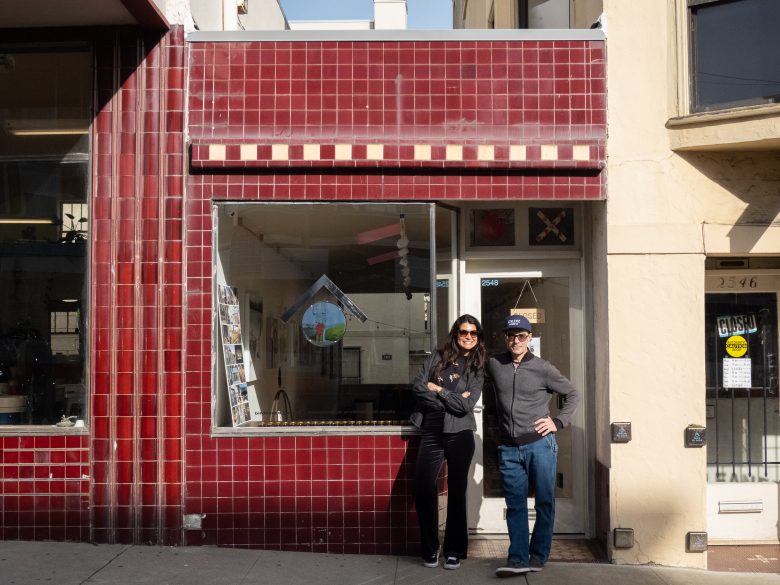
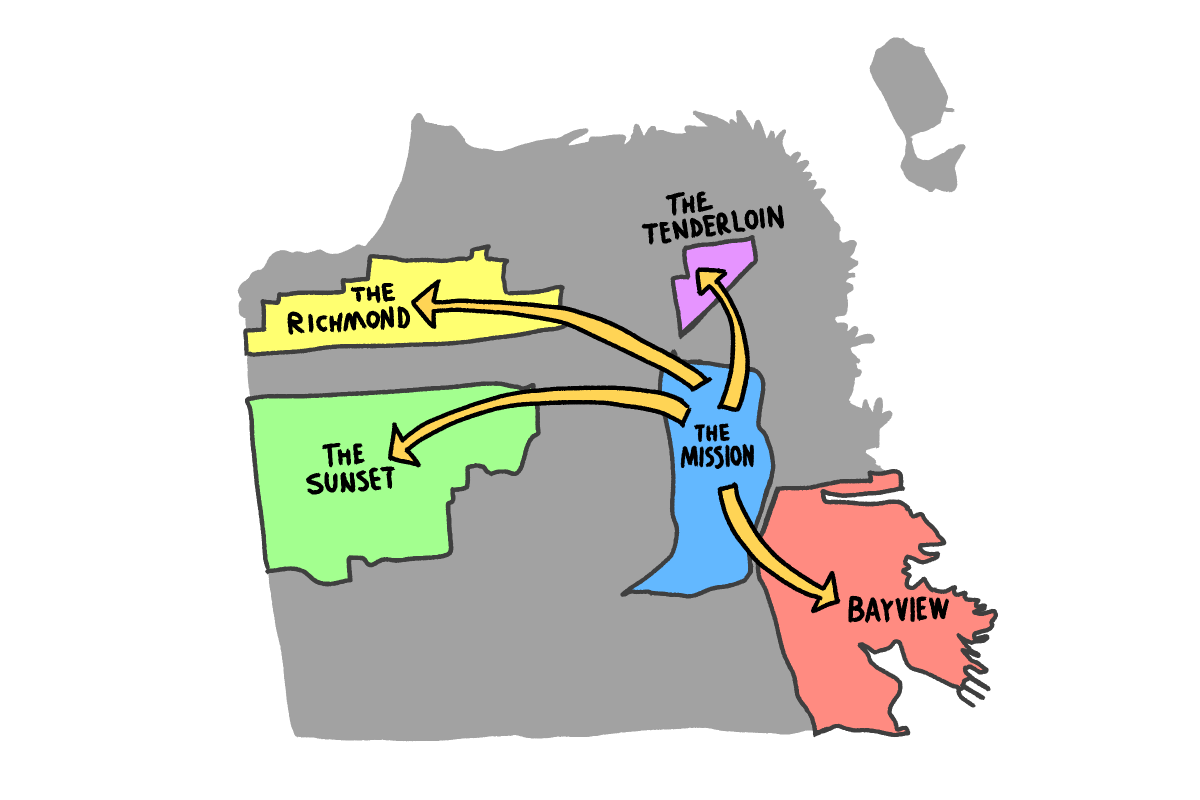
People come to the Sunset to sample the fish burrito from Hook Fish Co., the chicken wings at San Tung or the biscuit breakfast sandwich from Devil’s Teeth.
Now, increasingly, they can come for the art galleries.
These spaces, often just a few hundred square feet, are tiny compared to those in other parts of the city, like the three-story artist building at 1890 Bryant St., or the Minnesota Street Project in Dogpatch that occupies 4,600 square feet.
But artists, curators and gallery owners — many of them locals who live just a few blocks from their space — are putting the Sunset on the map for the arts.
After the COVID-19 pandemic, smaller commercial spaces on the Westside became more available and affordable.
“It felt like the scale was tipping right at this moment,” said Ben Frombgen, an architect who runs Birdhouse Gallery at Judah Street and 31st Avenue.
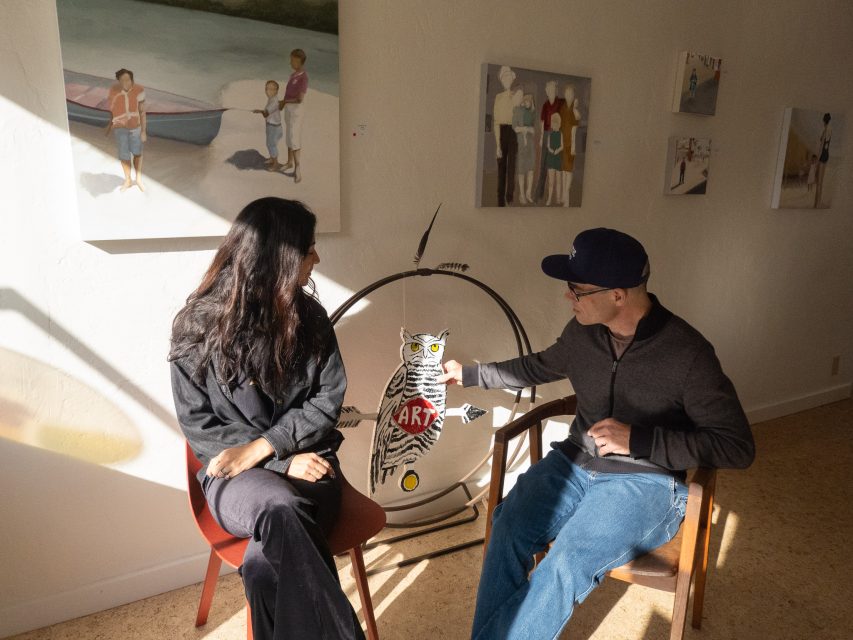
There has always been a vibrant artists’ community in the Sunset, noted John Lindsey, the owner of the Great Highway Gallery on Lawton Street since 2013.
Back in the 1890s, people bought discarded horse-drawn streetcars and used them as houses, offices and studios near Ocean Beach. The area, known as Carville, was frequented by Bohemian artists like novelist Jack London, poet George Sterling and artist Xavier Martinez.
More recently, artists like the Mexican performance artist Ana Teresa Fernandez, sculptor Lawrence LaBianca and painter Jessica Dunne have moved to the outer avenues.
But “right now, you have a lot of small little spaces, which is really cool,” Lindsey said. “That wasn’t the case when I opened up.”
“Rent is never cheap,” he added. “But there were a lot of opportunities for people to go into spaces that were not $5 a square foot, but maybe $2.”
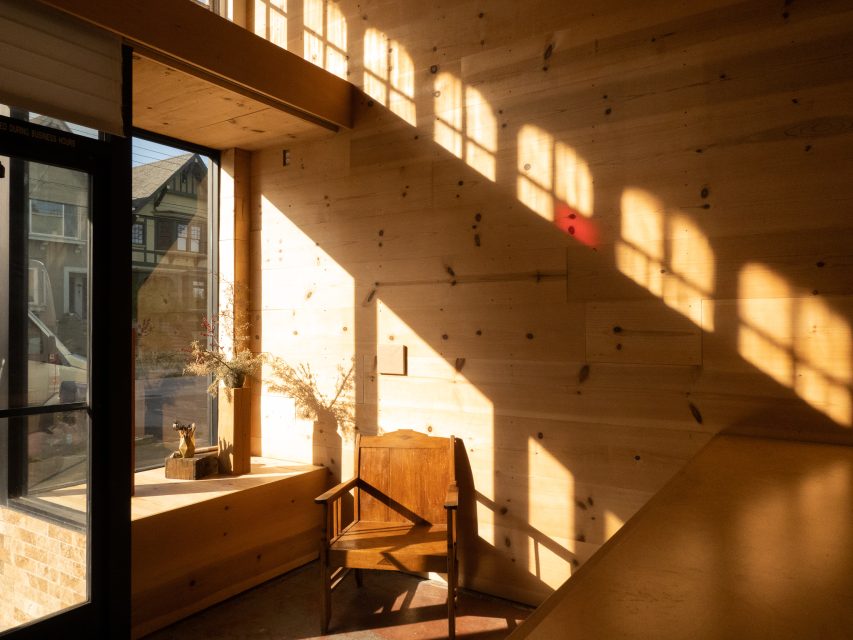
The Sunset is not yet a place like the Mission, where people go on a random Friday night and see what they can bump into, said Daniel Lucas, the education director at Problem Library, an art and education space in the Inner Sunset.
“These spaces are less of their own destination, but more like part of the community and life out here,” Lucas said.
That freedom also benefits the artists. “There is a lot of openness out here,” said Lucas. “You can experiment in a way that might be more difficult if you’re in a cluster.”
Fog and the ocean
Many of these galleries feature Sunset artists, or artwork related to the unique nature of Sunset, the ocean and summer fog.
Last May, the Last Straw, a 200-square-foot gallery at Irving Street and 47th Avenue, presented a solo exhibition by photographer Richard Sexton. It showed photographs of the Outer Sunset from 1977 to 1978: The streetcars, colorful single-family homes, and dangling power lines.
Over at the Great Highway Gallery, Lindsey has hosted over 150 exhibitions in the past decade. A westside zine fest. A photo exhibition from longtime Ocean Beach life guard Sean Scallan. An installation from Kevin Byrd, a Sunset artist who uses zip ties, USB cords and speaker wires to make fly-fishing flies.
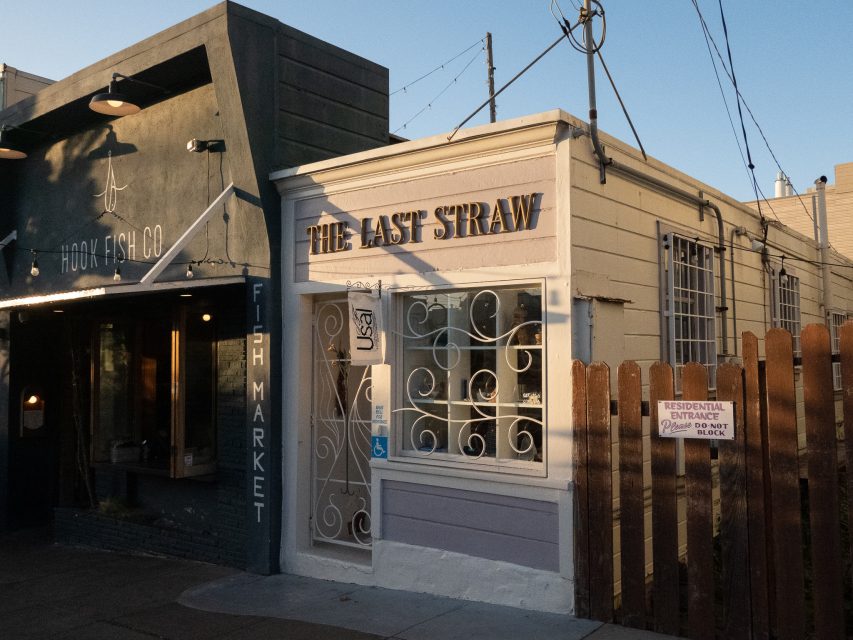
In these tiny gallery spaces, curators have to be creative. At the Last Straw, “everything can be brought in, and everything can be removed,” the owner, Graham Woo-Holoch, said.
Every piece of furniture has to be modular and, most important, able to fit in his hatchback Subaru Impreza, so he can haul them to his studio in Dogpatch and leave a blank canvas for artists, Woo-Holoch said.
At the 360-square-foot Birdhouse Gallery, Frombgen keeps four wooden beams stacked against the wall and moves them around, depending on the show.
“Sometimes it’s best to have them out of the space completely. Other times, we’ll make a pair of benches, or a table, or a bleacher,” he said.
With space so tight, galleries spill onto the sidewalk. When a show opens at Birdhouse, artists share a ritual of making a bench on the street, and anyone, coming for the show or not, can take a seat.
While bigger galleries often feel empty and cold, Frombgen said, at the Birdhouse, “It’s warm. Sometimes it gets pretty loud. But that’s what makes it fun.”
‘Everyone’s living room’
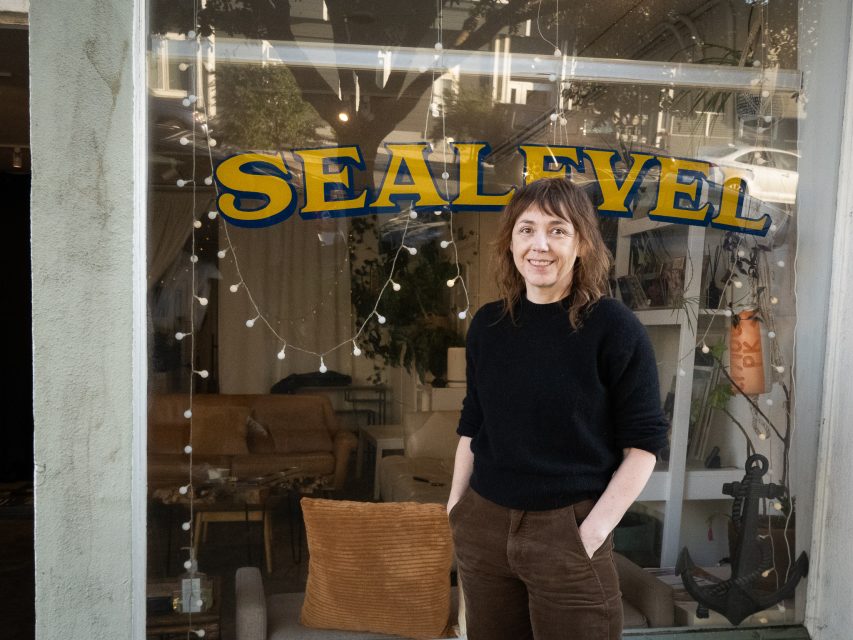
When Jeana Loraine opened Sealevel, a 450-square-foot art space at Irving Street and 45th Avenue five years ago, her goal was to create a place that serves as “everyone’s living room.”
For the past three years, Loraine has hosted annual “Summer in the Sunset” group exhibitions, which invite some 20 artists to pay tribute to the neighborhood and its unique summer weather. Sealevel also hosts open mics for music and poetry, and a songwriters circle led by Grammy-nominated musician Frances England.
These days, “it’s so important to have a space where people can gather,” Loraine said. “It’s not a bar, not a place where you have to pay an entry fee. People are just really hungry for connection.”
With an influx of young families in the Sunset, Frombgen said the neighborhood is ripe for more art spaces, which often double as a hub for neighbors and friends to gather and interact.
Tucked between a pottery studio and a dry cleaner, Birdhouse Gallery was once a stinky driveway where the previous pet store next door — the Animal Connection, before its name made headlines in the District 4 supervisor controversy — boarded its birds.
After the pet store moved in 2019, the landlord separated the driveway and leased the small space on its own.
Since 2023, Frombgen has kept the doors open for art and for people to hang out.
His first event was a bike club get-together with bike trainers and movies. Then there were paella parties and birthday celebrations. It even served as a polling place during elections.
Frombgen puts up ping-pong tables in the backyard, inviting friends to play. He hosts his bike club after rides for coffee and pastries, with 50 bicycles flooding the backyard.
The gallery had its first art show in October 2023, a solo exhibition of abstract paintings by Bill Bloomfield. This year, 15 shows are already scheduled, with Lani Asher’s mixed-media collage on paper, currently on view to the end of the month.
“As we grow these communities and create this buzz,” Frombgen said, “I feel an obligation to not let up, to not let there be a lull. I want to keep the momentum.”

I urge Outer Sunset artists to learn from history: band together and buy your buildings if you can – asap. History shows, when any neighborhood becomes “cool” the developers follow in no short order. Even higher rents and more gentrification will be one the way.