

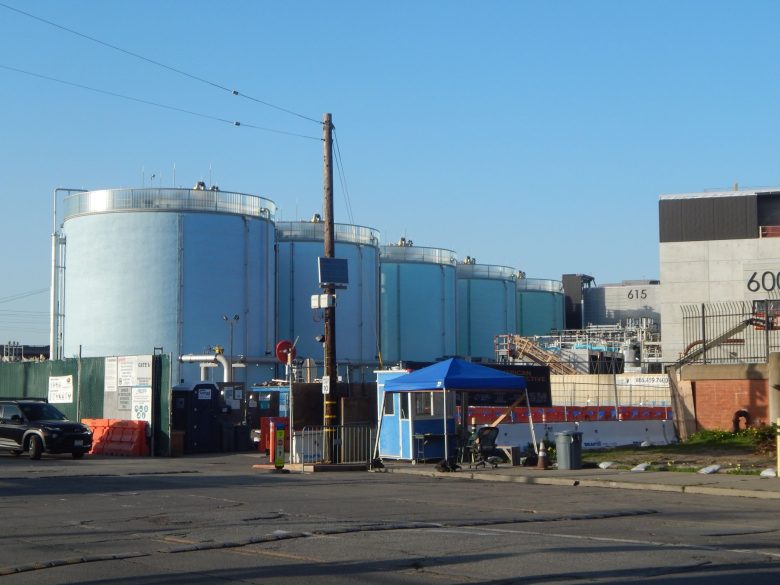
At the Southeast Treatment Plant in Bayview, where nearly 80 percent of San Francisco’s wastewater is treated, residents say a strong smell hung over the neighborhood for about 20 years.
“It was real bad,” said Cynthia Yannacone, who has lived in Bayview since 2004. “It’s like a bathroom, you know, it was really nasty.” When her cousin visited, she said he would often joke, “I know I’m close to the house because of the smell.”
Keyanna Johnson agreed. “You could smell it blocks away,” driving off the freeway and onto the streets near the plant, the 20-year-old resident said. “Even if your windows are up and your vents are closed, you’re still gagging in the car.”
But in September of last year, the San Francisco Public Utilities Commission finished a $717 million project to upgrade the plant’s headworks, where wastewater first travels for treatment.
Yannacone, who lives less than a mile away from the plant, said she’s noticed a reduction in smell compared to years past: She joked that her cousin will soon be lost visiting her home without the odor to mark the way. “I don’t think he’s going to find his way to our house anymore,” she said.
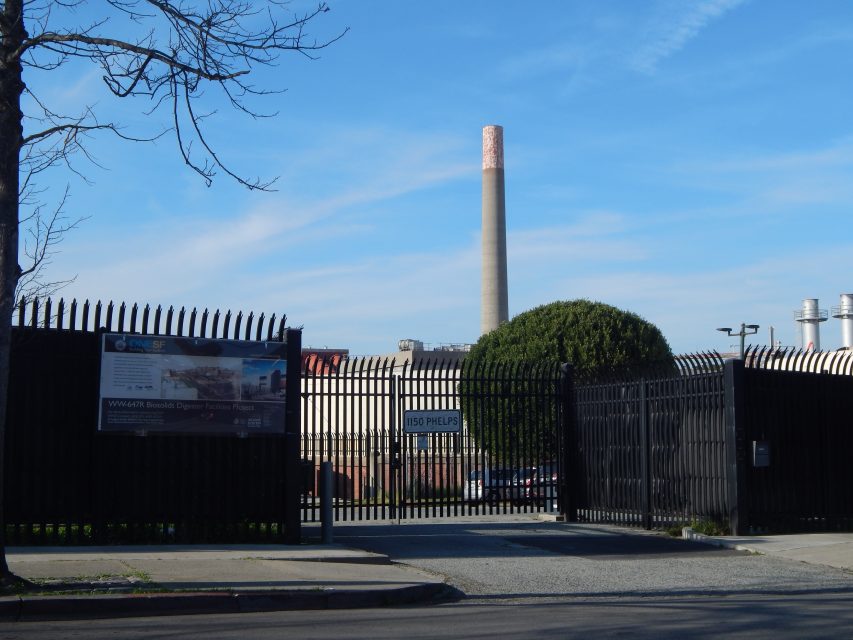
The headworks help remove debris, trash or grit from the wastewater, ensuring that pipes aren’t damaged as the water travels through the system. The renovation upgraded the decades-old infrastructure. Also in progress: Upgrades to the plant’s sewage digesters, which convert organic waste — urine and excrement, in this case — into biogas, but give off an odor in the process.
Those projects are two of six in a $5 billion-plus plan to upgrade the Southeast Treatment Plant, the largest and oldest wastewater treatment facility in the city. Other upgrades include new operations, engineering, maintenance buildings and a nutrient reduction project.
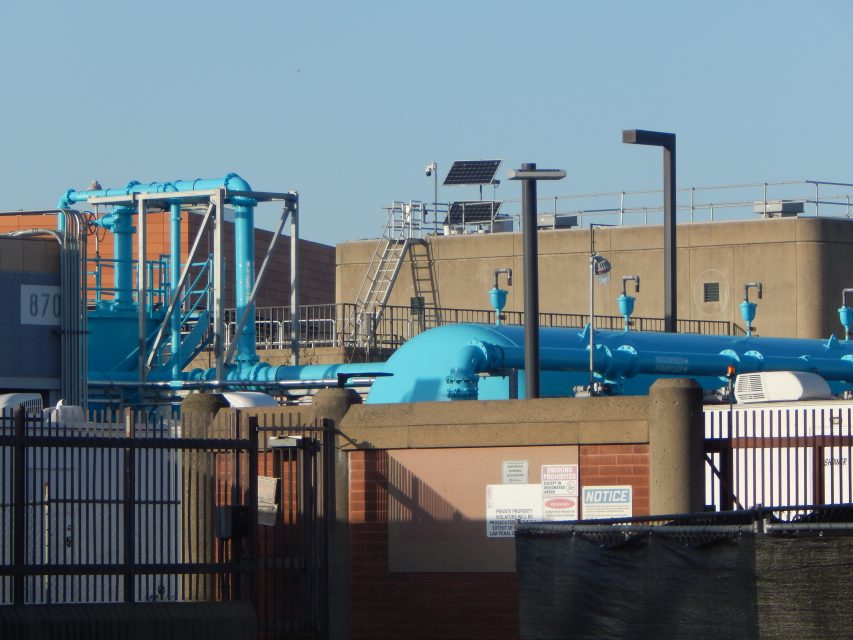
There’s been an aesthetic change, too. Neon green tubes were painted over in “a vibrant pattern of muted blues and greens designed to evoke the wastewater cleaning process,” according to the public utilities commission’s website.
The city said the upgrades have been a long time coming. Nancy Crowley, the press secretary for the Public Utilities Commission, said that “since the mid-1990s, city staff knew the sewage digesters were aging and causing odor complaints.”
Residents say it has been too long coming. “I’m not surprised at all that it’s taken this long,” said Alijah Mestayer-Orollo, who works in Candlestick and Heron’s Head as an ecotechnician for the nonprofit Literacy for Environmental Justice. “I feel like the city doesn’t prioritize Bayview-Hunter’s Point. It’s not on their top list. Over here, people have to fight for what they believe in more so than other neighborhoods.”
CalEnviroScreen, a tool used to measure the effects of pollution in California, shows that the area surrounding the treatment plant is a bright red — indicating the highest (worst) pollution above the 90th percentile. The rest of the city, save the Tenderloin and Treasure Island, is a healthy green.
“We don’t even know how much we are exposed to, been exposed to and continue to be,” said Yannacone, referring to pollution.
Markos Major, founding director of the group Climate Action Now!, said that in the United States writ large, industry is built in the southeastern corners of cities because of prevailing winds, which push pollution to the southeast.
“If you put it in the Richmond District, all the pollution would be blowing through town. Now it just blows into the Bay and goes to Hayward and stays in Bayview,” said Major. In San Francisco, the historically Black neighborhoods were largely in the southeast.
“There were Black people that were predominantly living up on this hill because the city displaced them from other places,” said Arieanne Harrison, founder of the Marie Harrison Foundation and a longtime Bayview resident.
Still, the difference is tangible. The city’s website says the project “significantly reduces odors with new advanced odor technology.” But some residents are still catching whiffs.
“It was just yesterday when I smelled it,” said Mestayer-Orollo. “It’s not smelly all the time, but there’s definitely a couple days in a row where it’s still hella smelly.”
Harrison said the smell comes in waves because of wind gusts, the heat or proximity to the treatment plants.
“If you get a good gust of wind,” she said, even after the upgrades, “you might smell urine.”