

Mission Local has put together the following guide to accompany a piece on the rise of immigration scams across the Bay Area. You can read that piece here.
Immigration advocates have reported an alarming trend: A rise in scams in which people impersonate immigration lawyers in the Bay Area.
People who are particularly vulnerable — the elderly, people who are on a tight deadline to find a lawyer, and those with limited literacy — seem to be targeted most frequently, according to Dalia Blevins, an attorney at Centro Legal de La Raza.
To help readers recognize the warning signs of a scam, Mission Local created the following guide with advice from Blevins and immigration attorney Luis Rosario Rodriguez, who works for the nonprofit Catholic Charities.
1. Beware of promises
One of the first warning signs, Blevins said, is an attorney who guarantees or promises a favorable outcome.
“Be wary of someone promising you the moon,” Blevins said.
In this case, promising the moon could be an offer to fast-track an immigration case, or claiming to have special connections within the immigration system.
Most real lawyers, Blevins said, use phrases like “it depends,” or “it seems like a strong case, but we’ll see what we can do.”
“Nothing is guaranteed in any case,” she said, especially when it comes to immigration law.
2. Avoid unofficial channels of communication
Do not respond to anyone who initiates contact through WhatsApp, direct messages on any form of social media, or a personal phone number or email address.
Real attorneys typically communicate through their office phone numbers, office email addresses, and scheduled consultations, either in person or through secure video platforms, Rodriguez explained.
Attorneys will then reach out to a potential client after the client has visited the office, received a referral from a trusted organization, or completed an intake form.
Those in need of legal aid should also be wary of social media advertisements on platforms like Facebook, Instagram or TikTok. Even if the ad is for a real attorney, the people who posted it could be impersonators.
A clear warning sign of a scam is if an “attorney” on social media asks to move conversations to private messaging apps, or sends messages that create urgency and push for immediate payment.
3. Do not pay anything until you have vetted the contract
A real attorney, said Blevins and Rodriguez, won’t ask you for payment until after they’ve scheduled a consultation to discuss a potential case in detail.
After this consultation, an attorney will draft an agreement for both parties to sign. This agreement should clearly outline the scope of services (as in: what you are paying them to do), as well as the type and amount of fees that you will be charged.
According to the State Bar of California, the three most common types of fee arrangements are a fixed fee, a flat rate or a retainer. The contract should also outline what responsibilities you have, as a client, to help them with the case.
According to both Blevins and Rodriguez, some scammers present convincing contracts.
Rodriguez said that these contracts “look official, but contain inaccuracies or inconsistencies.”
To verify that a contract is real, Blevins recommends reading it closely and searching any terms that you might not understand.
For those who may not be able to read or have limited reading comprehension, Blevins recommends using the text to speech feature on Google to listen to the contract for better understanding.
Sometimes, a situation truly is urgent, and even normally cautious people can be taken advantage of. Blevins, specifically, has seen scammers target those who have been detained.
In cases like these, it is important to remember that one clear sign you are dealing with a likely scammer is demanding an upfront or first installment payment through an online platform like Zelle, or a wire transfer platform like Western Union.
After receiving payment, these scammers typically cut off communication and disappear. Rodriguez emphasized that any lawyer who asks for payments over the phone is probably not real.
4. Verify an attorney’s license
All licensed attorneys have a state bar license number that can be verified online to confirm whether or not they are legally allowed to practice law, and are able to serve as your lawyer. Clients should always ask for and verify this license number before signing a contract, sharing documents, or making payments.
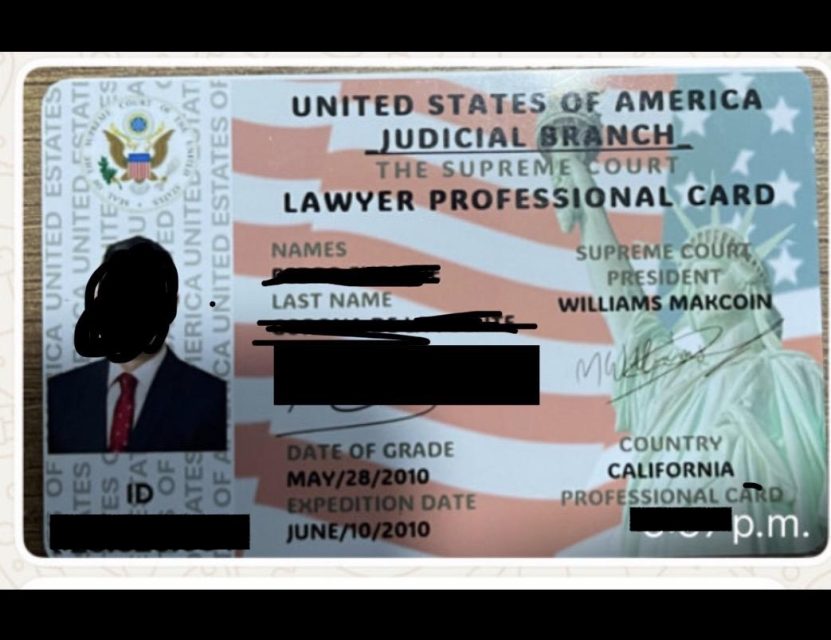
But that’s not all. Some scammers are smart enough to use real attorneys’ bar numbers and headshots. That means, even if you find your attorney listed on the State Bar of California website, Blevins recommends calling the office number listed by their name on that website to confirm that you are a client of theirs.
Also: every time you write out a check or make a payment, make sure that the check is made out to that lawyer’s office, the one listed on the State Bar website.