
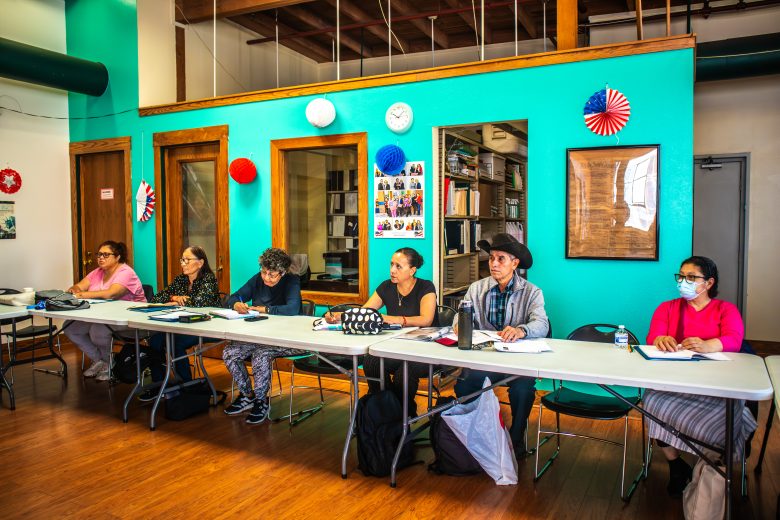

On a Wednesday morning in the Mission District, the classroom fills with middle-aged and elderly men and women. Most are Latinx. All are there to become U.S. citizens.
“Do you support the Constitution?” the instructor, Jake Simons, asks the class of 20 or so students. “Qué decimos?” he says in Spanish. “What do we say?”
“Yes,” the group choruses in English.
For some in the room, this free citizenship course is the closest they’ve ever been to a formal education.
Simons is the associate director at Centro Latino de San Francisco and its naturalization program manager. He teaches the citizenship class three days a week.
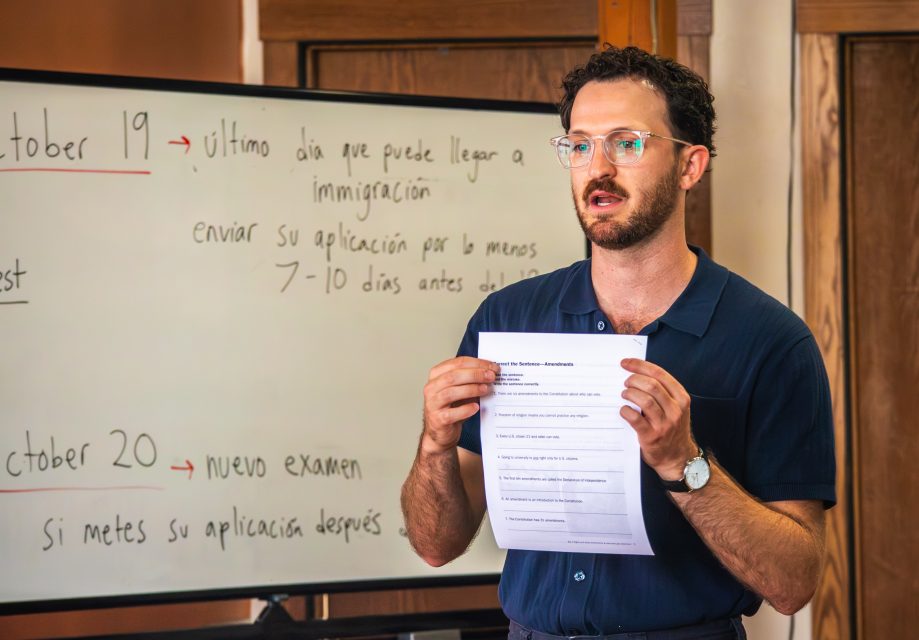
In Simons’ classroom, students complete worksheets with practice questions like, “Who is in charge of the executive branch?” and “What is the capital of the United States?”
They are preparing for the 10-question civic exam given to all prospective citizens. They’ll need to answer 6 of them correctly to pass.
Like in any class, the students crack jokes and whisper to each other for help during practice exams. But their determination and eagerness to learn is clear.
In class, Simons asked his students a practice question: “Why do you want to become a U.S. citizen?”
“I want my vote to count,” Flora Villalta said in English. Villalta, a Salvadoran immigrant, heard about Centro Latino’s classes through a friend.
“Initially, I was going some days and not others. But later I said, ‘No, this is interesting,’ because I saw that I was actually learning,” she said in Spanish. “Since then, I haven’t missed a class.”
Villalta has been attending since March, and is waiting to be given a date for her citizenship test. She’s expecting to wait at least three months, she said, but she’s relieved that she already submitted a naturalization application. There are changes coming to the test that will soon make it harder to pass.
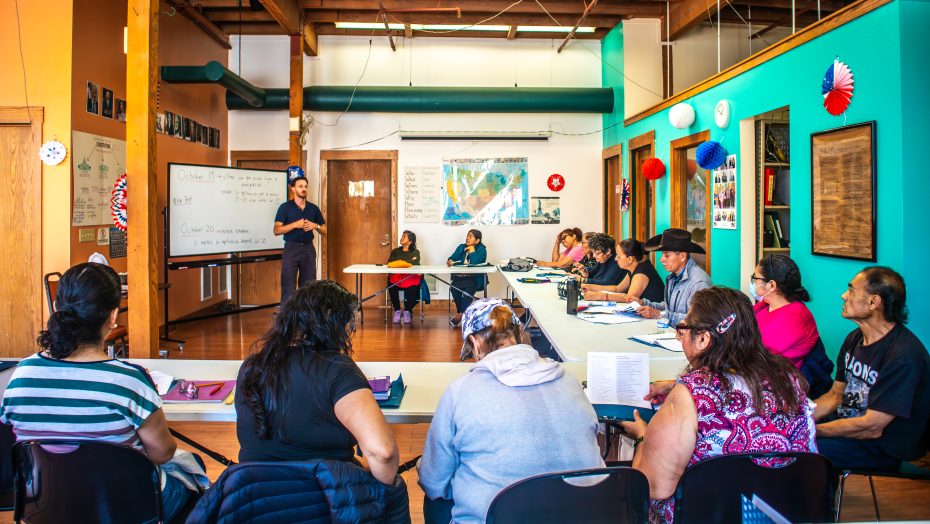
Starting Oct. 20, the exam will feature twice as many questions, and require double the correct answers to pass, according to the U.S. Citizenship and Immigration Services. Those who file their naturalization application on or after Oct. 20 will have to take the longer, 20-question version.
Even if they are not “100 percent prepared,” said Simons, he tells his students to “submit their application sooner rather than later, so they don’t have to learn all these new questions.”
Despite the looming change, Francisco Herrera plans on studying for at least another year before he submits his application. He has been attending classes for a year, but didn’t know how to read or write in Spanish — much less in English — before starting the course.
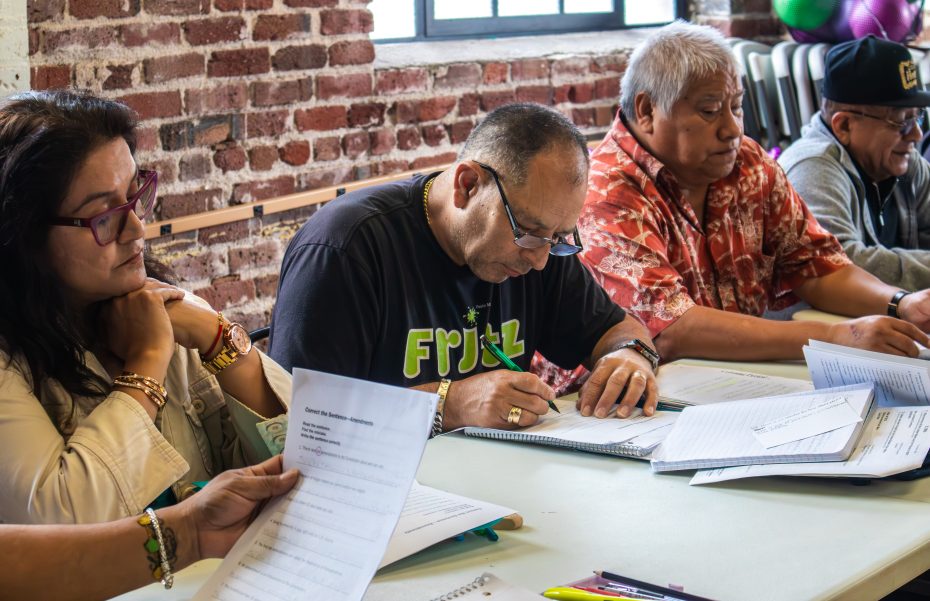
Growing up in El Salvador, his access to education was limited. He began working at the age of 6, when his dad bought him a small machete and introduced him to cleaning the milpa and harvesting maize.
Herrera comes to the class three times a week. “I pay attention, but it’s hard for me,” he said in Spanish. Two of his children in El Salvador are a motivation; he wants to travel freely between there and the United States, and hopes to use his citizenship to petition for his sons’ residency.
The upcoming test change is nerve-wracking. “It worries me even more,” he said. “I don’t know how I’m going to do it, but I want to become a citizen.”
At Centro Latino, 300 people filled out a registration form for the free citizenship course in the 2023-2024 fiscal year. From 2024 to 2025, that number jumped to 400.
Enrollment numbers are also going up at other citizenship courses. Glen Olson, who teaches at Centro Latino and is the program manager of citizenship education at the Immigration Institute of the Bay Area, which offers 11 citizenship courses across the wider Bay Area, said that interest in the course doubled in the second half of 2024.
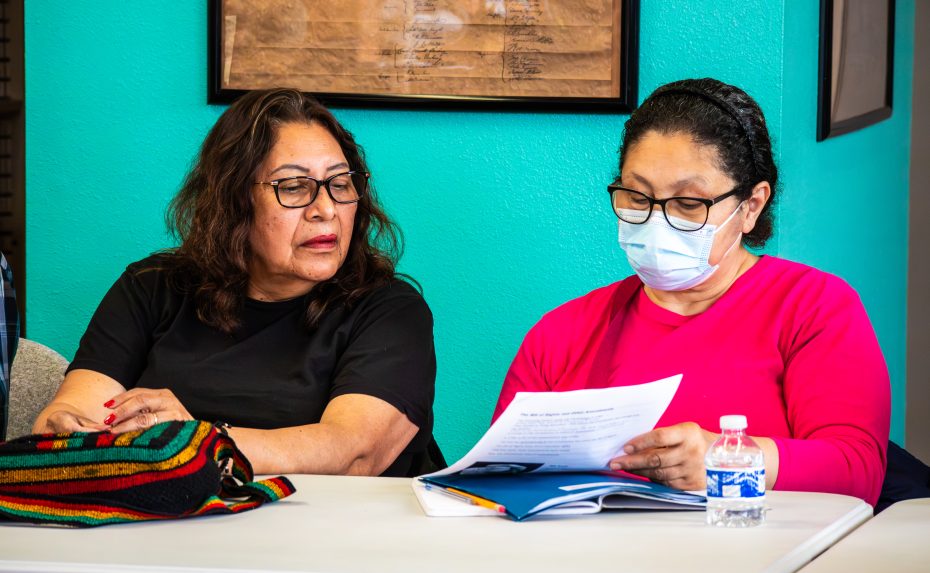
“Students come to us with this goal that’s very important for them. We really want to make sure we honor that goal,” Olson said.
Aurelia Ramirez, a native of Yucatán, Mexico, attended evening classes at Centro Latino for four weeks before taking her test.
“When the examiner told me, ‘Hey, you passed’ — wow, I couldn’t believe it,” she said in Spanish. On May 1, 2025, she earned citizen status.
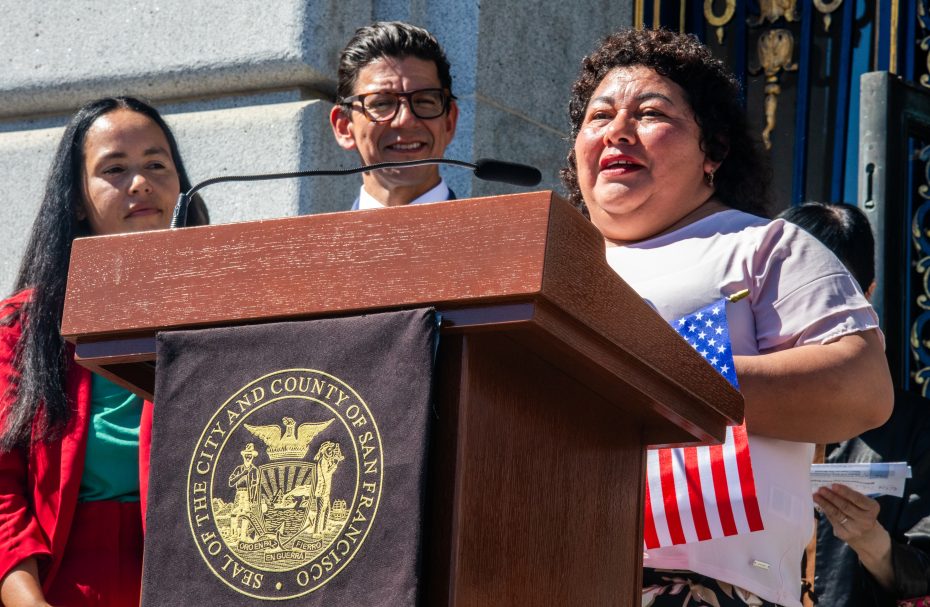
Ramirez celebrated the milestone this month on National Citizenship Day at City Hall. From a podium, she delivered a speech encouraging others in similar situations to “just do it.”
“It’s my dream to become a citizen. I always show up, even on days I don’t want to anymore,” said Herrera. “I have to make the effort. I have to keep trying. We’ll see what happens one day.”
As I understand it, citizenship classes used to prep with 100 questions to learn, 10 of which could be asked in the test, and needing 6 correct to pass. After October 18, students will be prepped with 128 questions, be asked 20, and answer a minimum of 12 correctly to pass. I wonder how many I would get correct…
I am a legal immigrant and proud US citizen. Upon entering the USA I could not read or speak English.
The current citizenship test is extremely easy, too easy. Yes, I have taught many classes for free. I am quite happy to see this change, this hopefully is another change in the right direction for our country.
As a side note, Thank you President Trump and my thanks to EVERY ICE agent.
Maybe the hardest part of the test is that it is only conducted in English (unless you are above a certain age, 70 I think). No translators allowed.
When I studied for the test, my American friends couldn’t answer the questions but my foreign friends sure could. Glad to be a citizen.
Good luck to all of them.
The immigration ceremony is very memorable and moving when sky see all these people and cultures come together.