
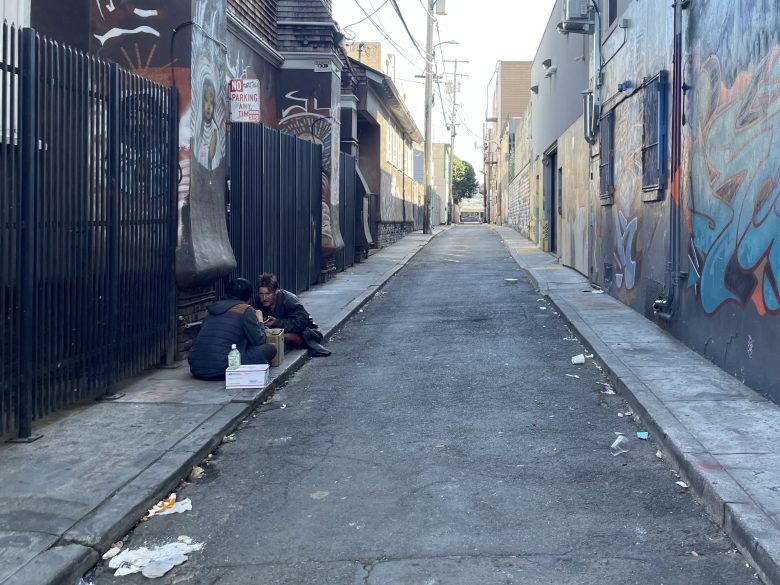

It’s been 200 days since the Lurie administration decided to make cleaning up the area at and around 16th and Mission Streets a priority.
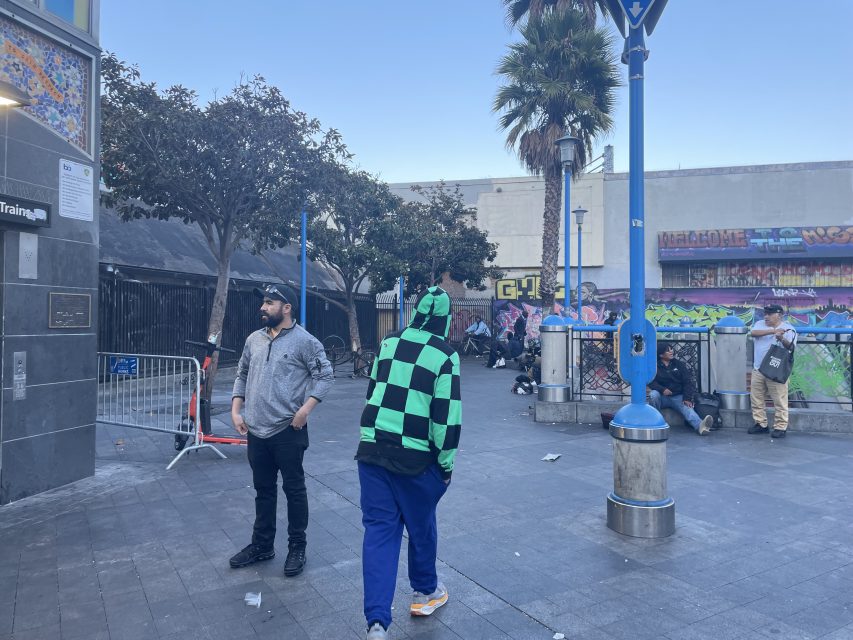
That day, March 12, the San Francisco Police Department drove a “mobile command unit” — a large white vehicle with police branding on it — onto the southwest BART Plaza.
“We are just getting started,” Mayor Daniel Lurie said at the time, promising to be “relentless” in clearing Mission Street and the side alleys and streets of unpermitted vendors, drug dealing and drug use.
Since then, the city has been relentless and made some progress: The BART plazas and some of the streets in the surrounding areas have gotten clearer. But it has taken time. On Day 100 of the campaign, open drug use and vending still raged on Mission Street between 15th and 16th streets.
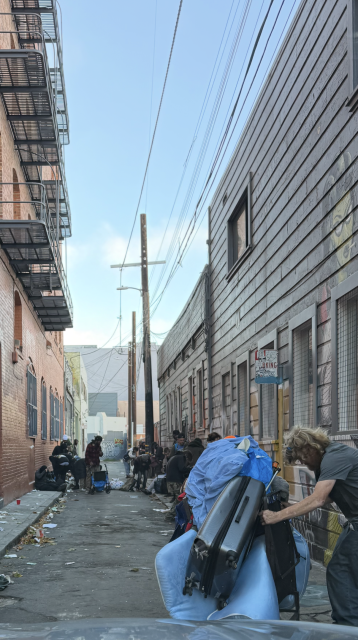
Now, another 100 days in, the city has allocated even more resources and gotten a better handle on the situation. The results are uneven, and can falter when police, ambassadors and other city workers retreat.
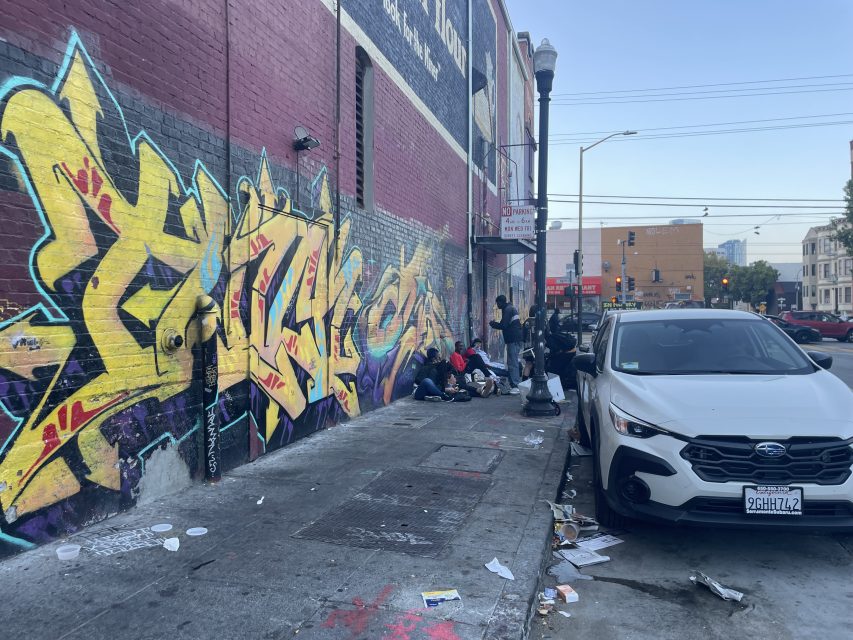
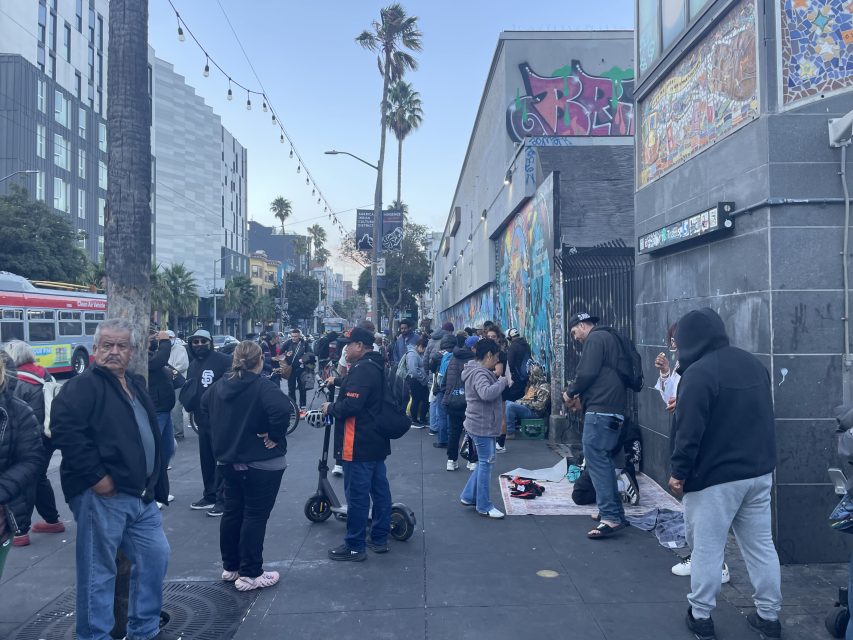
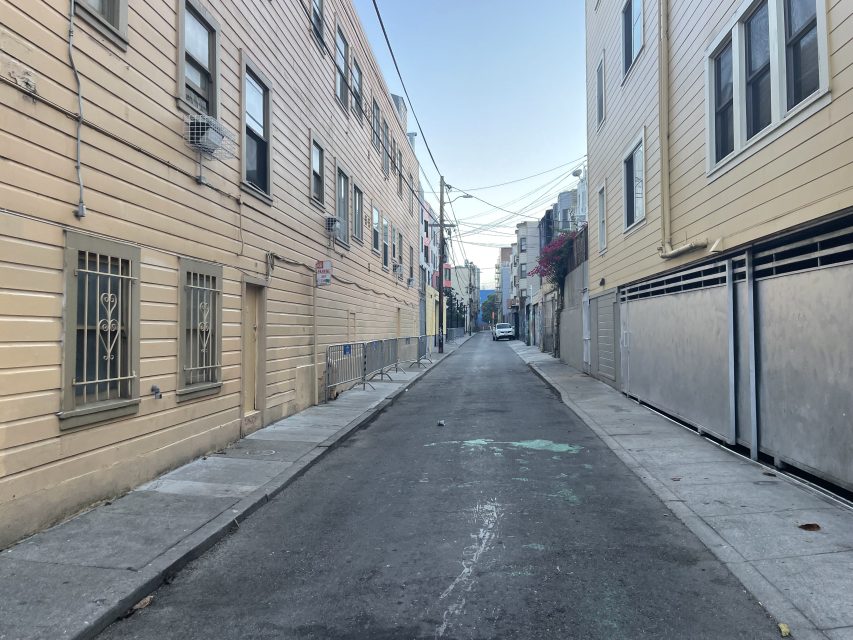
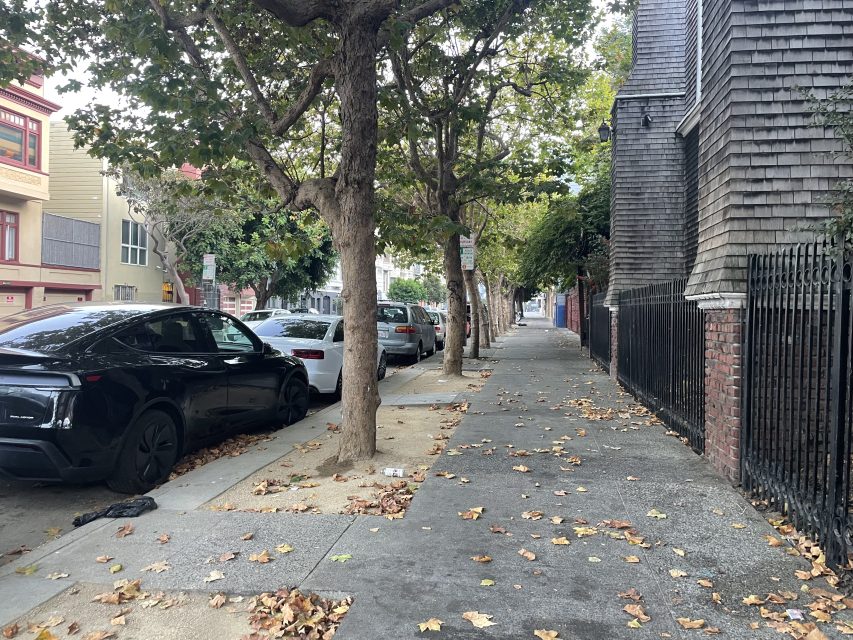
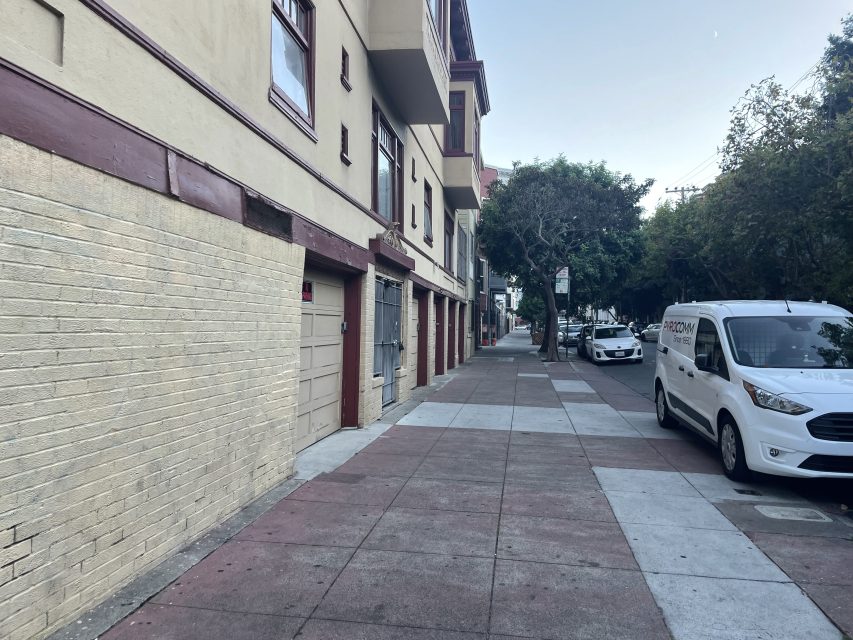
The west side of Mission Street, for example, was packed with vendors on June 19 — Day 100 — but has been clear since early July. However, the east side of Mission Street near the Muni stop can change dramatically after 5 p.m and fill with unpermitted vendors and open air drug use. And, while Wiese, Julian and Caledonia streets have also been clearer, north of 15th Street, they are often more congested.
Drug users started congregating in the dead-end block of Caledonia north of 15th Street, for example, right around the time that the other alleys in that area got noticeably clearer, one 10-year Mission resident said.
“My husband’s getting out of the car and pushing people in their wheelchairs to the side. We’re picking up debris. There’s needles everywhere. There’s people hunched over from the waist, completely incoherent and unable to move,” she said.
The Good
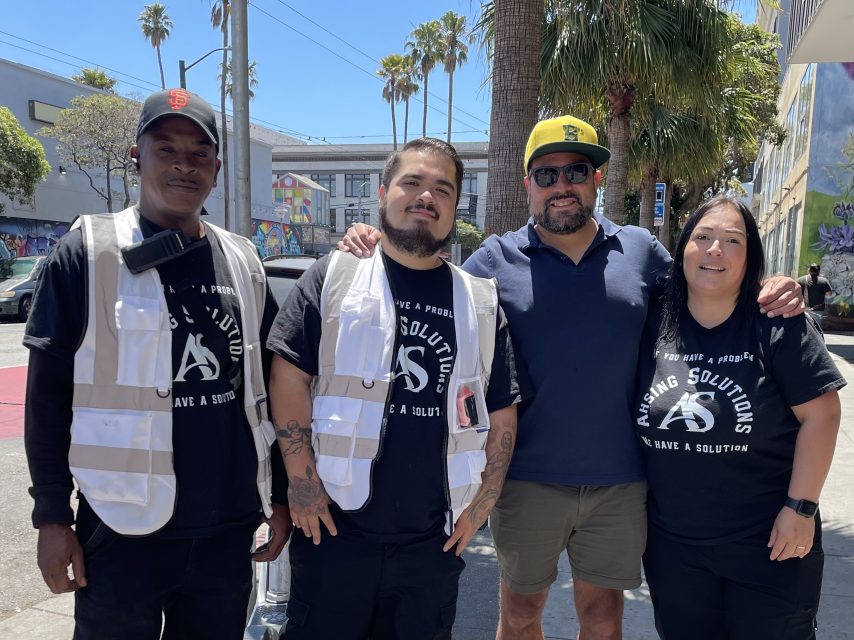
The resident, like many others, agrees that more consistent improvements began on July 5 when an Ahsing Solutions began working. The crew of formerly homeless or incarcerated ambassadors is tasked with helping to keep the streets clean and clear.
From 11:30 a.m. to 8 p.m. every day, six to eight ambassadors patrol the west side of Mission between 15th and 16th, plus the alleys: Caledonia, Julian, Wiese and Capp streets. All but Capp Street have become far clearer since they started on July 5.
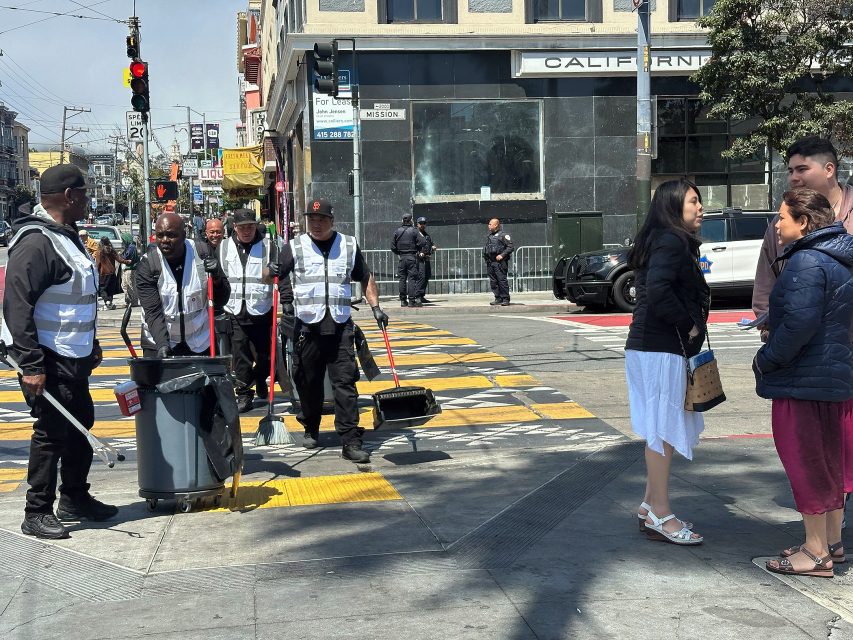
Their priority is keeping clear the west side of Mission Street, where a 157-unit affordable-housing project and an early education center are located. However, Santiago Lerma also directs them to places where the most people are congregating.
Lerma heads the Mission’s street team, one of the newly reorganized neighborhood street teams that consolidated outreach workers from seven different departments under one leadership structure.
Now, workers with different specialties — homelessness outreach, psychiatric medicine, and street cleaning, for instance — report to one lead and, at times, work alongside each other. The Mission’s street team and the Tenderloin’s started working in March, with the other teams launching on July 1.
But reorganization can only do so much. At some point, more boots on the ground were needed. So Lerma and his team lobbied for the addition of the Ahsing ambassadors.
They’re making a difference, several residents and business owners in the area said.
Bryan Tublin, who owns Kitava, a healthy foods restaurant on Mission near 16th, said that ambassadors from Ahsing have come over at least a half dozen times to help with incidents like someone locking themselves into the restaurant’s bathroom to do drugs, or people camping out on Capp, the side street behind the restaurant.
He’s found the ambassadors to be highly responsive and effective. After he messages them, “I’ll come back in 10 minutes, and I’ll see them interacting with the folks that are there. And then I’ll come back in 30 minutes, and the area is completely cleared,” he said.
Another area of improvement is that the city has brought street vending under better control in the past months.
While the 16th Street BART plaza has long been a place to buy drugs, a flea market in a parking lot between 14th and 15th Streets began, post-pandemic, to spill over onto the streets. On the weekends, Mission Street north of 16th Street and the plazas became veritable Thieves’ Markets, and remained so until early July.
A 2018 state law decriminalized vending, but it wasn’t until the pandemic that vending proliferated on Mission Street and at both BART plazas.
Since then, the city has struggled to control vending. At times, drug users become one with with the vendors selling stolen steaks, ice cream or other goods, all for the quick cash needed for a fentanyl hit.
Lerma said that continuing to address vending is crucial. “Vending is the crux of the whole problem,” he said. “If people don’t have access to quick cash, the drug dealers won’t come to the area.”
The SFPD and staff from the Department of Public Works have been consistently effective since early July in clearing much of the unpermitted vending, except for what goes on in the late afternoon on the east side of Mission Street.
“The whole sidewalk on Mission was just completely full of sidewalk vendors for a long time, and now it seems to have been fixed,” a Capp Street resident said.
More assistance should be coming soon. State legislators rolled back the 2018 vending law a few weeks ago, and soon police officers will be able to penalize vendors who are selling items that the Board of Supervisors placed on a list of commonly stolen items.
The Bad
It’s undeniable that there are nowhere near the number of people planting themselves on the sidewalk than there were on Day 100 — and that certain blocks of the Mission have seen drastic improvement. But some people seem to have simply moved a street over, to wherever the city is not.
And once security leaves, streets can again become a place where drug users will congregate. For months, Capp Street north of 16th Street, where Marshall Elementary School is located, was clear, thanks to the security guards who worked at the Mission Cabins next to the school. But the cabins have shuttered to prepare for the construction of an 100-percent affordable housing development. Since then, some activity has made its way to that block.
Naomi Fox, a parent and PTA member at Marshall, said that this Tuesday, when she went to pick her kids up from Marshall, a drug user was sitting on the stairs. She asked him to leave, but he didn’t. A week ago, she would’ve called the security guards at Mission Cabins, but they are no longer there.
“It was just kind of disheartening to not really have a great way to get this person out of the area of the school,” Fox said.
Businesses whose buildings abut Caledonia north of 15th also report increased activity, and also note that there has been an increase in people coming into the shop who seem mentally unwell or are looking for items to steal.
Mission Local has also seen up to a dozen people huddled in the alley, particularly in the evenings after the Gubbio Project — a nonprofit that gives people a space to rest inside, even if they’re on drugs — closes for the night.
Minna and Capp streets, small streets to the east of Mission, already bad to begin with, also saw a jump in drug use, trash and feces in the past months, according to a Capp Street resident and Tublin.
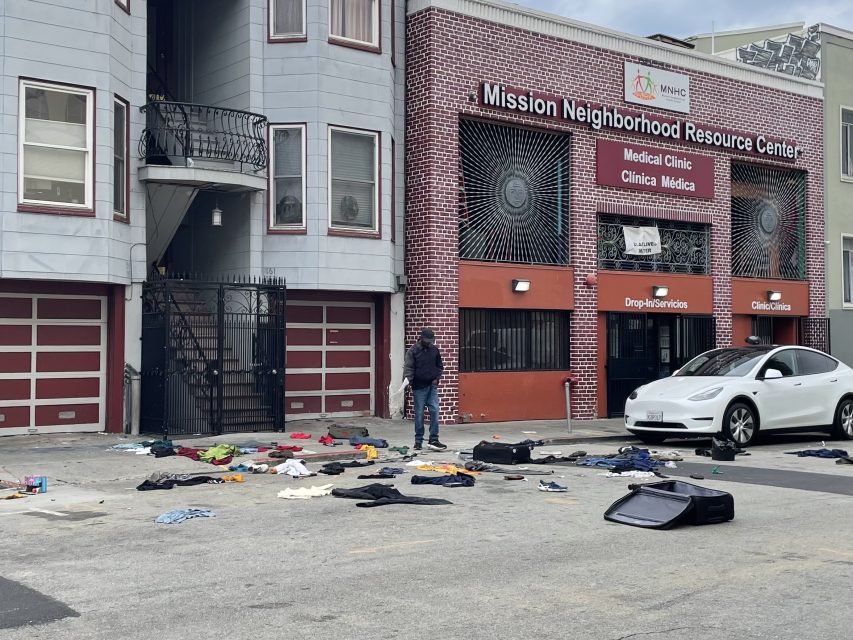
On a recent morning, several men and women were passed out on mattress toppers on the sidewalk. Dozens of clothing items and several suitcases were scattered throughout the street. Feces was smeared on the sidewalk.
“The conditions that we’ve lived in are not okay by many, many standards,” said a Capp Street resident. Tublin said that his staff members worry about their safety while coming to work.
Arleen and Mike Luong, who head Ahsing Solutions, said that Capp has proven to be the most challenging block for them to keep clear. At times, they’ve needed the police and public works workers to come and help them clear encampments. A
nd even after that, the street wouldn’t remain clear. “When we come back in an hour, you’ll probably see 10, 15 people all piled up again,” Mike said.
So, starting this week, they’ve begun stationing an ambassador on Capp between 16th and 17th streets to deter people from setting up there. When Mission Local visited Capp Friday, that block was, indeed, clear. But, around the corner, on the south side 16th street, more than a dozen people were doing drugs out in the open.
Where do we go from here?
Two hundred days in, the city has partially succeeded in establishing what Lurie called “decency and security” on some of the Mission streets. But where did all the vendors and homeless residents previously on streets go?
It’s a mystery. In May, District 9 Supervisor Jackie Fielder called for the street teams to measure whether they were successfully getting people connected to drug treatment and permanent shelter, or whether they were just pushing people to different places.
The city responded by asking organizations to send in suggestions for how they could improve data collection. But it’s unclear if any changes are underway.
What we do know is that every morning, the street teams fill available shelter spots quickly. It’s unclear, however, if the people in those spots move into permanent housing or if they end up back on the street.
Lerma said sometimes people accept shelter and spend their nights inside, but then return to the streets of the Mission during the day.
“People still need to exist outside of the times that they’re sleeping in their shelter,” he said, adding that getting shelter is an “important first step of recovery.”
And some people are still resisting the help the city is offering. Several people on the streets have told Mission Local that they’ve turned down the services that city workers offered them, choosing instead to stay on the street and continue using drugs.
Nevertheless, Lerma is optimistic that with sustained attention, real progress can be made. The difference, he said, will come when the Mission’s reputation changes.
“There is this sentiment on the street that, ‘Oh, you’re in the Mission. You’re allowed to do whatever you want.’ We need to break that,” Lerma said.
Though there are some structural issues in the Mission that cause street issues — namely the large concentration of SROs — problems are exacerbated by outsiders coming to the neighborhood because of its reputation.
“If we get to like our baseline of people who live in the neighborhood hanging out out there, we can deal with that,” he said.
Capp Street
East side of Mission Street
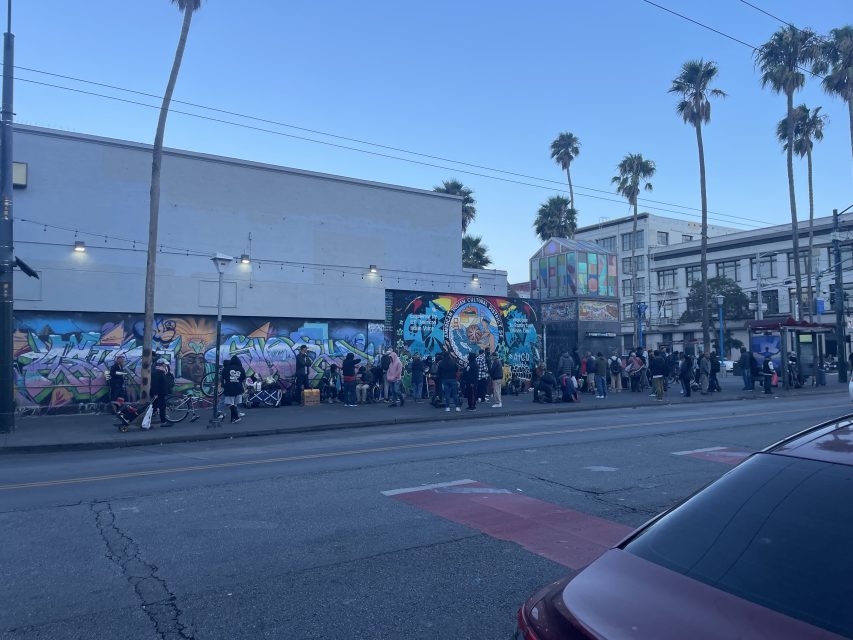
West side of Mission Street
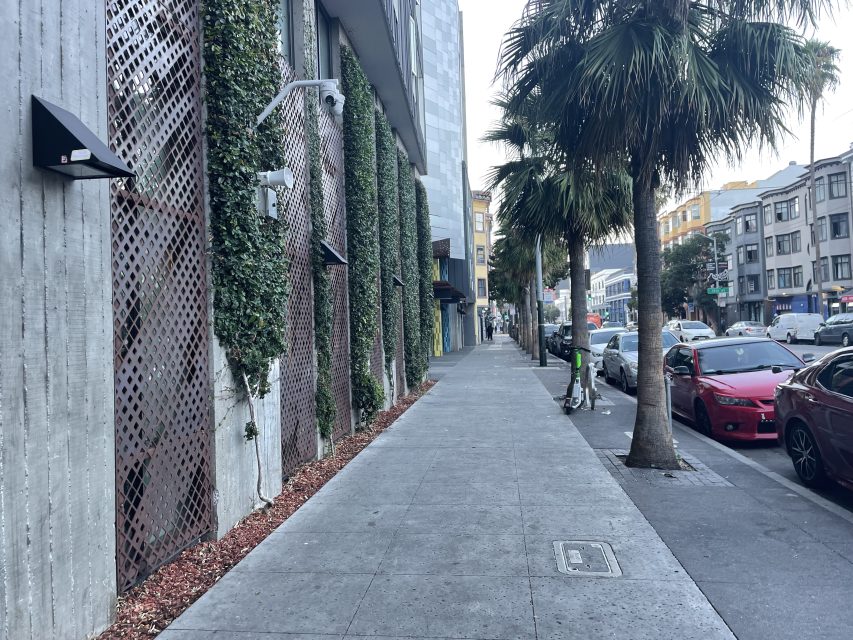
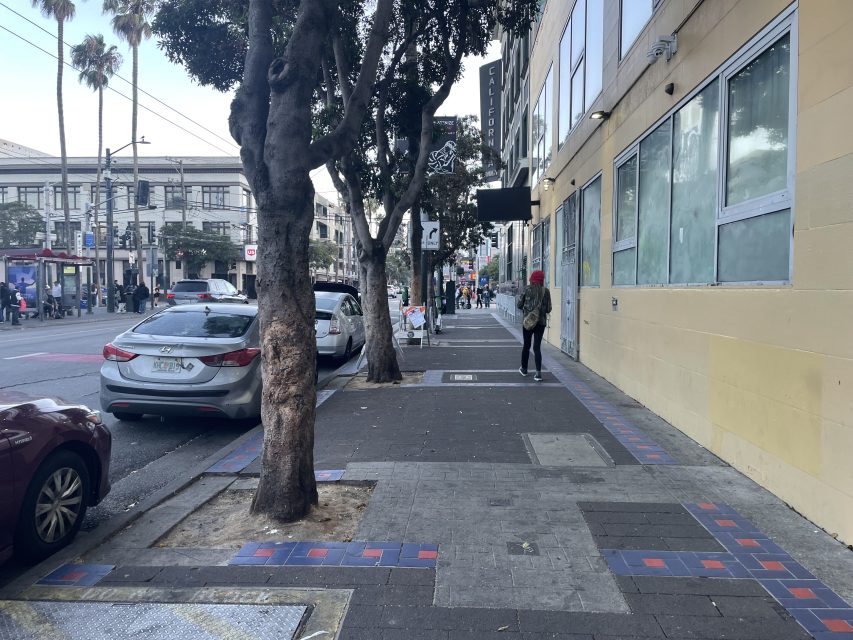
Caledonia Street
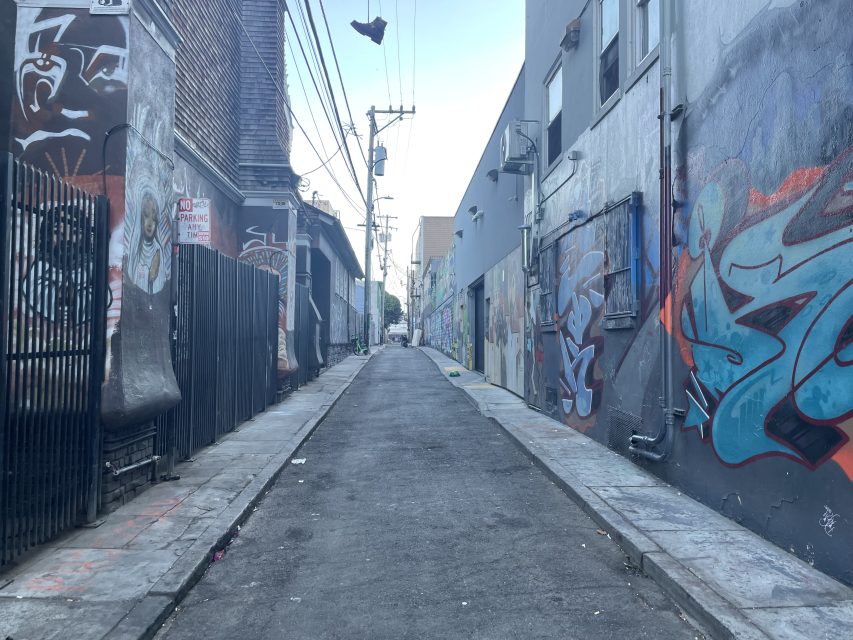
Wiese Street
Julian Street
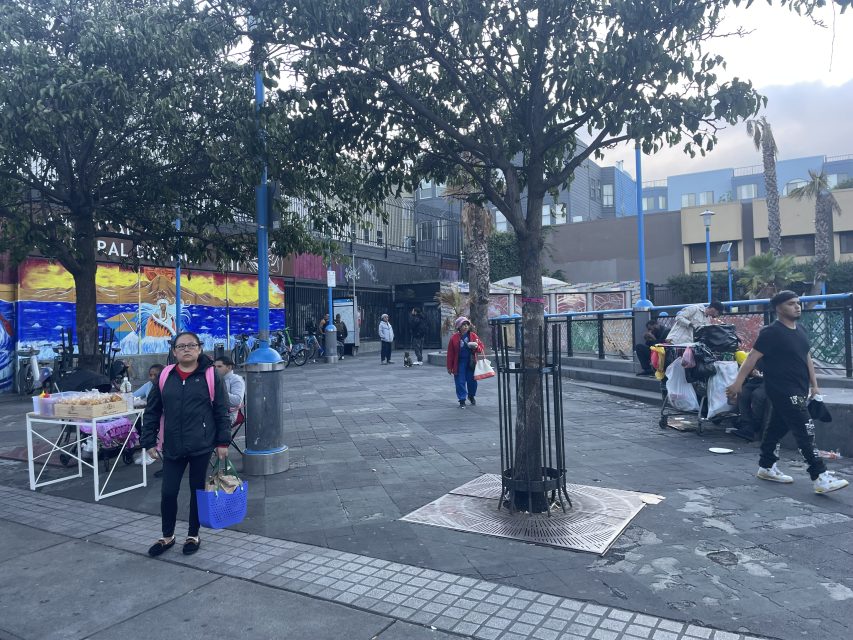
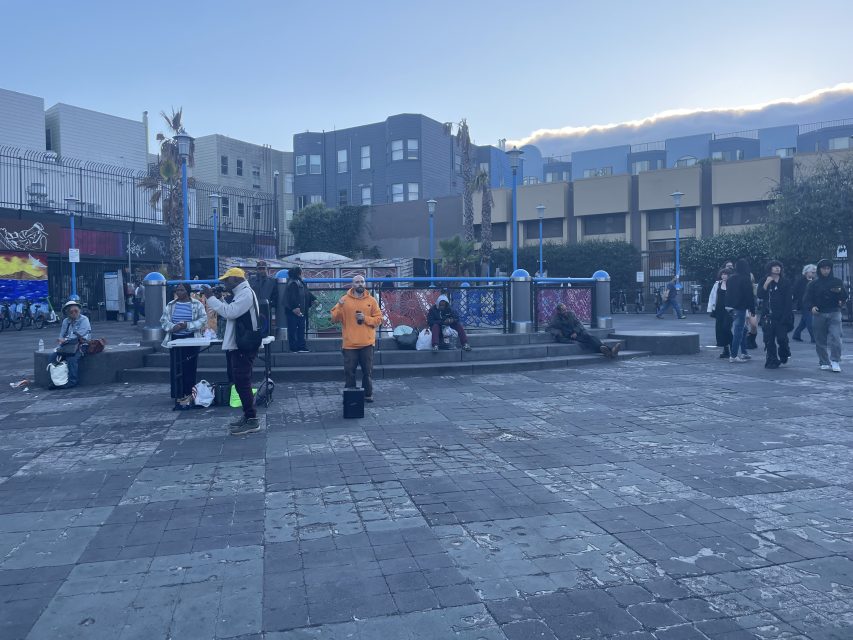
Northeast Plaza
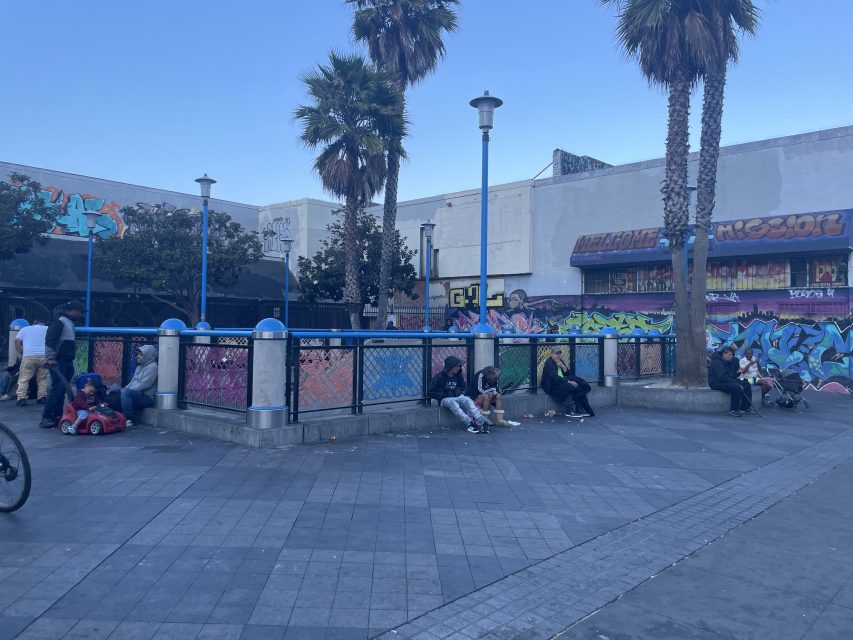
Southeast Plaza
It’s absurd that they can’t get control of the sidewalk at 16th and Mission, directly across from the police temporary command center, or won’t.
Thank you for this reporting! Seeing these improvements has been really nice over the past many months. Now let’s enforce the multitude of laws on our books around open air drug use and dealing (especially near a middle school!) and get these remaining folks into diversion programs for the help they desperately need.
Well, come on… it’s the same people. Just because you have some ambassadors walking the streets won’t make a difference. The bad element leaves, but just goes somewhere else, and as soon as the ambassadors leave, they return. You have to PERMANENTLY REDUCE the number of people acting anti-socially.
Lerma: ‘“If we get to like our baseline of people who live in the neighborhood hanging out out there, we can deal with that,” he said.’
This is true.
Also Lerma: ‘
Though there are some structural issues in the Mission that cause street issues — namely the large concentration of SROs — problems are exacerbated by outsiders coming to the neighborhood because of its reputation. ‘
Also true. Our SRO neighbors are not a problem. The City is siting permanent supportive housing between the BART plaza and Marshall Elementary school BECAUSE of the neighborhood’s reputation, a reputation that is what it is because of discretionary city policies. This is no accident. These addicts did not jump into the North Mission. They were pushed.
But the City speaks out of both sides of its mouth.
Instead of defending our baseline, the City is directing addicts from the TL to the North Mission and adding more low functioning, below the baseline, neighbors to an area that needs to defend and raise the baseline with high functioning new neighbors.
This is political Munchausen Syndrome by Proxy.
Thank you for this detailed update that only ML seems able to provide. After so many years of appeasement and several billion dollars spent, I’m grateful that our elected officials are trying different approaches and caring about results. Whatever works in the Mission might help the Tenderloin and my neighborhood (4 drug users always camp at the entrance of the building I’m in). Does ML know what happened to the plan to use a cruise ship as hospital to house, treat, and rehab the most serious drug users?
Thanks for staying with this issue!
The only way to get rid of keep homeless away is simple: 1.) IF they leave their encampment it’s fair game, have trucks ready to come by and dump everything out! 2.) Get a power washer to spray down the sidewalks on a regular basis, when the homeless see a power washer & they R asked to leave they do! This formula has been working effectively for the last 2 plus years in my area around SOMA!! Once a few homeless encampments get thrown away and the regular power washing word gets around and the homeless leave!!
And besides power washing the sidewalks keeps the City clean!!!
GF, I must say by far has the BEST understanding of the entire issue at hand. Well said fellow human!
Indeed homelessness is a problem that is widespread, and can cross all boundaries, so looking down ones nose is not recommended, as it very well could one day be you.
I have always been one who wants to know “the whys” in life. I have since early childhood learned to look at the goings on in the world thru my “anthropological eyeglasses” . What I have noticed over the years is; yes many people whom are homeless do indeed have dogs . The reasons do vary but ultimately the relationship is what keeps most away from making decisions that would land them in jail, after all who would care for their beloved animal should that happen. So I understand it to be felt by many homeless who do have an animal that they have only survived thus far due to the ownership of their pet(s). So many would never dream of disposing of their “fur baby” for a unknown “temporary” housing situation. Another big factor I’ve heard over the years many times is anyplace that offers help is shoveling religion down their throats as a condition of receiving help. So in order for people to actually want to utilize the options out there I’d suggest making shelters way more pet friendly perhaps offer vet care and spay or neuter as an incentive. And if you “must” then offer some spiritual knowledge space, for those who SEEK it out. But don’t make people feel as if the only way to receive some half-ass temporary assistance is really only available if they sacrifice the one soul who hasn’t forsaken or betrayed them in exchange for a loaded religious agenda.
Holy shit !!
I wonder if anyone has mentioned to the Mayor and Supervisor Fielder that DPW has taken out the toilets that were mid-block on 14th Street in front of a parking lot and across from side of Armory and on 15th Street in front of St. John’s and their Gubbio Project where the unit was well managed and it was gone when I went by there this afternoon with my dog, Skippy who doesn’t really care because he can go anywhere he wants.
The truly homeless amongst that crowd have not gone away.
They are no longer in the Tent Census but are much more numerous in my new, ‘Turtle Census’ which means the folks who used to be in tents but now have everything on wheels and on their backs which, that and the Fentanyl makes them bend over as the move which makes them look like turtles from a distance.
Build some KOA level campgrounds (your legacy after AI makes poverty a memory and millions of tourists come here and we have 4 RV/Tent campgrounds for 1,000 each and 400 RV’s space plus the Casino in the Armory) … get the Homeless (especially the vets who could stay in the RV/Tent campground next to Fort Miley.
They have to have some real place to go, Mr. Mayor and your insistence on brick and mortar is too time consuming and expensive when you have a remedy right here and we did it after the ’06 Quake in hours cause we had too.
go Niners !!
h.
They put in a stage and took out the Cop Emergency Motor Command !
Part of my own dream of the intersection of 16th and Mission is a combination of the Feinstein scene with the Permanent Police Koban and a stage for the preachers and poets and musicians and today when I came through on my daily walk I was surprised to see the Cop Mobile gone and a stage under construction for “Christian Music”.
The President would approve.
go Niners !!
h.
Shuffling people around the city truly helps nothing. The “vending” isn’t the main issue, yet it’s brought up repeatedly as such in this article. The REAL issue is there isn’t enough shelter space, housing, rehabs or regularly accessible bathrooms. People are not in their right mind due to drug use/mental health challenges and as a result do things like relieve themselves in the streets. Do you know how unwell someone has to be to defecate in public? Especially in broad daylight, which I myself have seen more times than I can count between living in SF and West Oakland. Separately from that, a big determining factor on whether or not someone unhoused may turn down shelter/housing is whether they will be allowed to bring their animal(s). This may be assumptive, but I believe that the average pet owner wouldn’t simply part ways with the family dog or any other pet just for a temporary place to stay. A lot of these people only have themselves, each other and/or their animals. For example, many of SF’s unhoused population have dogs. While the average person may see animal ownership while unhoused as inhumane or selfish, there’s a deeper underlying meaning to the dynamic. A main reason being protection. Outside of companionship, living in the streets, especially as a woman, a member of the LGBTQIA+, injured/disabled, elderly etc. can be extremely dangerous. Between the harsh weather conditions of SF and other individuals with negative intentions, being homeless often is a constant battle for safety and survival. I implore all of you who simply view this city’s unhoused population as a burden, if not worse, to take a few steps back and recognize we are all just a few bad decisions or events from ending up like our unhoused neighbors. We are all someones child, we are all human, we are all in need.