



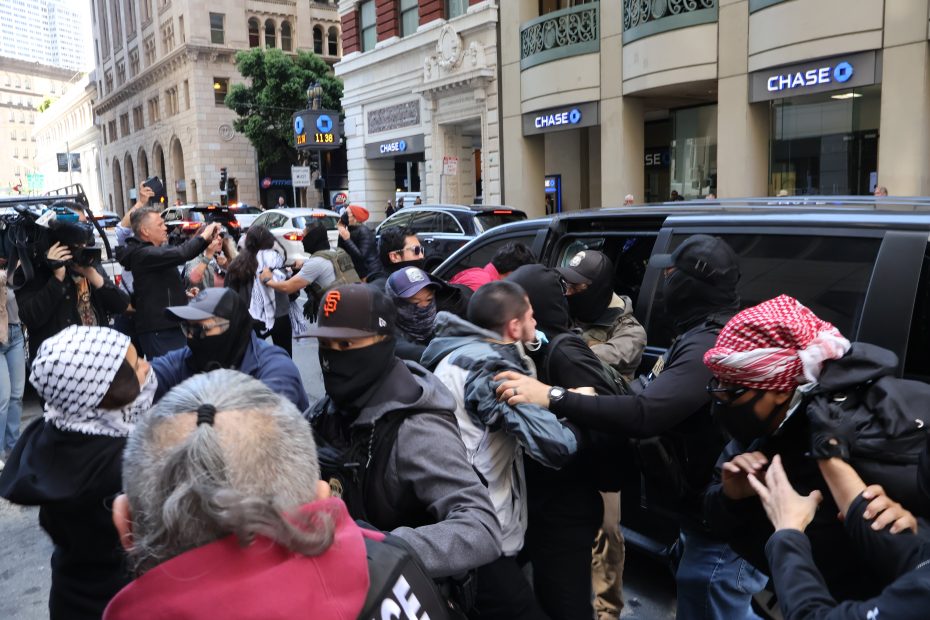
Since early June, more than two dozen people have been arrested by federal immigration agents in San Francisco. Often, these arrests take place at the San Francisco immigration court at 100 Montgomery St. and at the local Immigration and Customs Enforcement field office at 630 Sansome St.
Those arrested are then taken to detention facilities elsewhere in the state — or outside of it. It’s part of a wider push from the Trump administration to detain immigrants and meet the president’s campaign pledge of “mass deportations.”
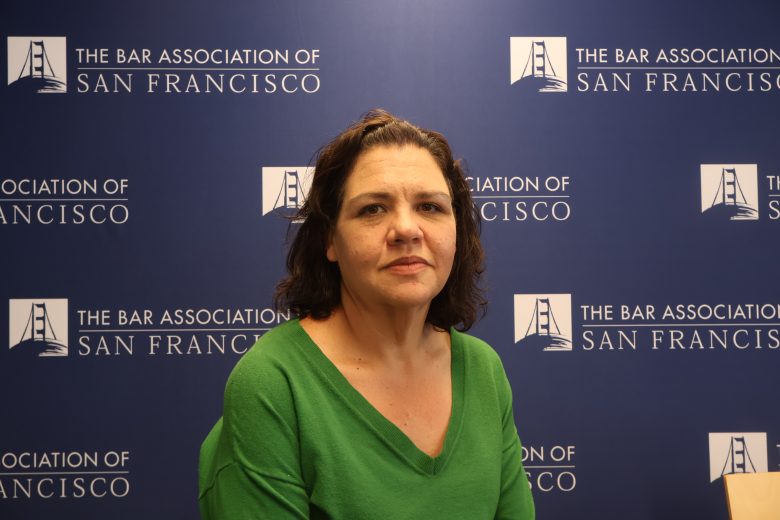
If you’ve been reading Mission Local’s coverage of ICE arrests, you may recognize the name Milli Atkinson. Atkinson is the director of the Immigrant Legal Defense Program at the San Francisco Bar Association. She leads the Attorney of the Day program, which gives free legal support to immigrants at court hearings.
She also leads the San Francisco Rapid Response Network, which is the city’s most reliable resource for reporting and confirming ICE activity. It also connects immigrants to legal advice.
Atkinson has been at the center of the recent turmoil.
ICE arrests used to be rare in San Francisco, Atkinson told Mission Local. Now, “it’s daily that multiple people are detained.”
While most of the immigrants arrested are sent to detention centers in Southern California or the Central Valley, in theory, the Department of Homeland Security “can send them anywhere in the country,” she said.
All of this makes it harder for immigrants to get a lawyer, Atkinson said, and “when someone is unrepresented in immigration court, they’re much less likely to win their case.”
On July 8, Mission Local sat down with Atkinson to talk about courthouse arrests, ICE detention centers, and how the Attorney of the Day and Rapid Response Network’s roles have changed during Trump’s second administration.
The following interview has been edited for clarity.
Mission Local: What did your day-to-day work look like before the current administration?
Milli Atkinson: These six months have been incredibly intense, and things are moving very, very rapidly in a way that they didn’t in the first administration. Before January, usually when an attorney was on call [for Rapid Response] it was rare that they would actually have to respond and meet with a client. An actual confirmed ICE arrest was pretty rare. That immediately changed in January.
The first huge impact we saw was the volume of calls that the dispatchers were getting of people just scared and reporting ICE when it wasn’t ICE. There were fake reports of ICE presence on Muni, in schools, at malls, at courts that weren’t true, and so, that first couple of weeks, a lot of our work was trying to quell panic, and keeping people informed about their rights, and what they should do if they see ICE.
Then within a few weeks, we started seeing an increase in enforcement. It went from maybe once or twice a month to at least once a week someone was being detained. Now, it’s daily that multiple people are detained. They aren’t necessarily all San Francisco residents, but we’ve seen more than one day where 10-plus people were detained and processed at the 630 Samsome St. facility.
I’m regularly seeing attorneys who’ve been doing this for years just break down into tears at the end of the day. And then it’s really challenging now to not be able to give people solid legal advice because you don’t know what changes are coming. You have to prepare [clients] for the worst-case scenario, which then also increases their anxiety and panic.
And it doesn’t feel like we have a break. On Juneteenth, I remember being like, it’s a federal holiday, I don’t have to worry about rapid response. But no, they arrested someone on Juneteenth and then, on top of that, they closed their offices, so they wouldn’t let the attorney speak to them once we had notified them, so we had to do everything over the phone. We’ve had arrests on weekends, we have arrests on federal holidays, so it’s a 24/7 thing instead of before, when it was during normal business hours. Now it’s all day, every day.
ML: Most of these arrests and detentions, where are they happening?
MA: In the city of San Francisco, mainly it’s at offices at 630 Sansome St., where people go voluntarily for their check-ins because they’re applying for something or they have some type of pending case. Before, these people weren’t detained, because it made no sense to detain someone who they couldn’t physically deport. Now, they’re just detaining anyone they can, for the sake of getting their numbers up.
We’ve seen cases where people have their applications on appeal, so they can’t be removed from the country. But the government is detaining them anyway. What this does is, for some individuals, it makes them give up on their claim because they don’t want to be detained indefinitely.
For others, they’re less likely to find an attorney who can represent them if they’re detained. Most of the detention facilities are in remote areas. It’s very difficult to get there, and we know that when someone is unrepresented in immigration court, they’re much less likely to win their case.
ML: How many people are being arrested and detained at 630 Sansome every day?
MA: That I know of that get reported to me through our various networks, I would say it’s probably between five to 15 people every day. It could be more, because there could be enforcement going on where they don’t know to call the hotline, or there’s no one who actually witnesses the arrest.
ML: Most people are getting arrested at 630 Sansome, but Mission Local has written about arrests happening at other places, like the immigration court at 100 Montgomery St. Where else are you seeing arrests?
MA: At the court, we were seeing maybe once a week in the last month. And now, since last Wednesday, we’ve had at least one arrest every day.
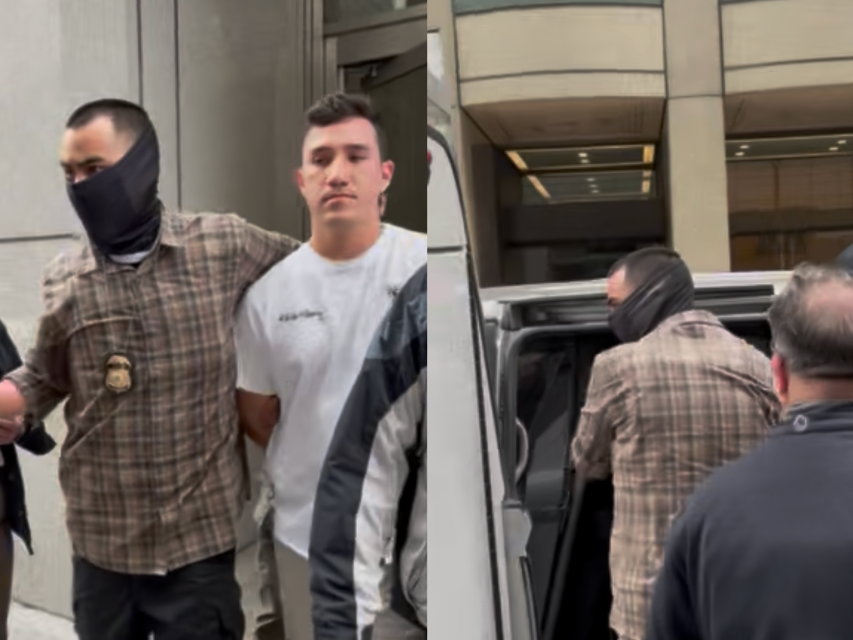
ML: You’ve mentioned to us in the past that you’re now seeing arrests at asylum meetings?
MA: That’s relatively new, so I don’t have a lot of information on that, except that I think, starting July 1, we started seeing people arrested following their credible-fear interviews and their reasonable fear interviews, which we have never seen before. [Note: These are interviews, conducted by Department of Homeland Security officials, that determine whether someone is eligible to stay in the United States.]
Officers are generally trained to deal with people in a trauma-informed way, and so to have ICE officers there when they are there to tell about how their government persecuted them and then get immediately arrested is a really shameful practice.
ML: Have we had the same kind of mass workplace arrests here up in San Francisco that people have talked about in Los Angeles?
MA: In the city of San Francisco, no. What we do see is targeted arrests of individuals who have a prior removal order [Note: People have prior removal orders for many reasons. Someone could have entered the United States previously without authorization, and been removed. They could have gone through the asylum process and lost their case. They could be from a country that won’t accept them back].
In San Francisco, they [ICE] wait outside a person’s house or they wait outside that person’s workplace. In terms of arrests at work sites, they’re usually looking for one specific individual and they don’t arrest anyone else. That doesn’t mean that can’t change, but right now we’re not seeing it, and we’re not seeing the agricultural raids like they have in the Central Valley, either.
ML: Going back to the courthouse arrests — who does ICE seem to be targeting there?
MA: The courthouse arrests are part of a larger scheme to expand something called expedited removal. Expedited removal is a process where someone does not get to see an immigration judge if they want to apply for asylum, because they don’t pass this very minimal test that is supposed to happen at the border called a credible-fear interview.
The Trump administration is trying to expand expedited removal to the interior of the country. Initially, the language was around people who’ve been in the United States or came into contact with ICE within two years of their entry, so we thought that the people being targeted for this expanded version of expedited removal would be people who are in the country for less than two years.
But then, last week, we saw that several of the arrests were of individuals who’ve been in the United States for more than two years and, in a large percentage of those cases, people had pending asylum applications before the court.
Now, the government is trying to take them out of court, moving their cases to a detention court in Adelanto, where the judges are dismissing the cases. Once the case is dismissed, their asylum application is no longer pending, so they have no protection from deportation.
Then the government is starting the expedited removal process, and having them go through that first step that they normally would do at the border from detention. If they don’t pass the credible-fear interview stage, then they get removed without the opportunity to present their asylum claim before a judge.
ML: And have you followed along with people who have actually had their motions to dismiss happen and have actually been deported back to another country?
MA: No, not yet. The first instance of courthouse arrest [in San Francisco] was May 27. So we’re just now seeing them get scheduled for those credible-fear interviews.
ML: Where are those interviews happening?
MA: They’re happening in Southern California, from the Mesa Verde and Golden State Annex facility which [are the detention facilities] where most people from San Francisco are sent. But if they don’t have space in those facilities, they can send them anywhere in the country.
ML: Can you describe to us in a little bit more detail what happens after someone is arrested, and before they are sent to a detention center? The first step is they are transferred to the ICE field office at 630 Sansome, right?
MA: They [ICE agents] usually pick people up super early in the morning. The reason they do it early is because they need to transport people, usually by two or three in the afternoon. They bring them in [to the ICE processing facility at 630 Sansome St], they fingerprint them, they take photos, they do DNA swabs and then they review their case and have a supervisor sign off on what’s gonna happen.
When the attorney gets there we ask to meet with them immediately. Usually around noon, they make a decision of where that person is going, or if they’re gonna be released. And then usually by two in the afternoon, the buses start leaving. If they have a plane available, sometimes you’ll see an arrest of a large group of people from one specific country because they want to get them on that plane and up on that flight.
Anyone that they’re going to detain longer term gets sent to a detention facility based on bed space. The two closest are near Bakersfield. At [one of them, Mesa Verde] they just reopened cells for women. The only facilities for families right now are in Texas. There’s also a women’s detention center in Oregon. But if they really want to detain someone, and they don’t have a bed available for them, they could send them to Louisiana or Georgia or pretty much anywhere where they have space available.
ML: Are there detention facilities near San Francisco?
MA: There never was a large detention facility near San Francisco. What used to happen is they would contract with local county jails and hold people there. County by county, through advocacy and also through the mistreatment of how ICE treats people when they’re detained each county in the last 10 years, has decided to not continue with ICE for bed space. In the state of California, there was a bill passed not allowing them to build any new facilities. That law got overturned, so that’s why they’re trying to build new facilities now.
ML: What other changes are you seeing from the previous four years of ICE enforcement and what we’ve gotten in the last seven months?
MA: During most of my time practicing in immigration, even during the first Trump administration, there’s always been a prioritization of arresting and deporting people with some type of criminal history. Those cases have always been the most challenging and most difficult and most at risk of being detained and deported because immigration law is written around penalizing people who have any type of criminal background, even if it’s a simple drug possession.
I’ve represented many people with some criminal history, and you know, 20 years later, they have kids and have completely changed their life. But with immigration, a lot of that stuff is going to follow you.
ML: What comes next, do you think, here in San Francisco? What are you keeping an eye on?
MA: Right now, the biggest issue we’re dealing with is how to help people who go to court: How to help them appear virtually instead of having to go in person, how to get them connected to representation who can make sure that they don’t get arrested or they don’t have to appear in court, how to get know your rights information out to people so they understand what they should do if they have an arrest or they witness an arrest.
Getting the hotline number out so people understand that they can call the hotline. Encouraging people to get legal consultations one-on-one with an attorney at one of the nonprofits in San Francisco, instead of relying on TikTok or, you know, generalized information on what the situation is, because it really does vary person to person.
There are people who shouldn’t be living in anxiety and panic every day because they’re really not at risk, but because they are an immigrant and they’re seeing what’s happening in LA, they’re terrified.
And trying to figure out a way to get volunteers engaged. It’s a challenge, because a lot of people wanna help right now, but it’s also incredibly technical and difficult work. Just because someone wants to volunteer doesn’t mean we have the resources to train them.
Because I’m the director of a program, I’m more focused on those big-picture things: What systems can we build to better serve as many people with the needs they have right now in this moment? I think for the attorneys, it’s more about their individual clients and what they’re doing to serve those clients every day.