As it should be, the 1906 earthquake is always marked on April 18, but we rarely take the time to think much about the 7.9 earthquake beyond its anniversary.
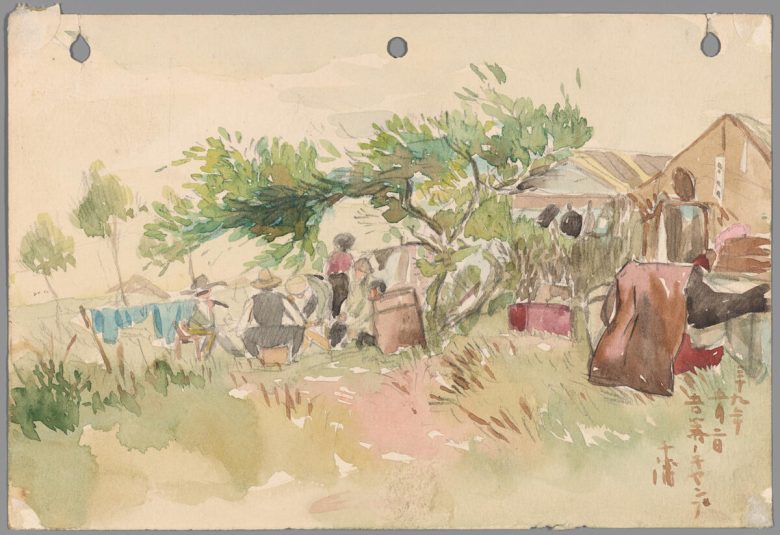
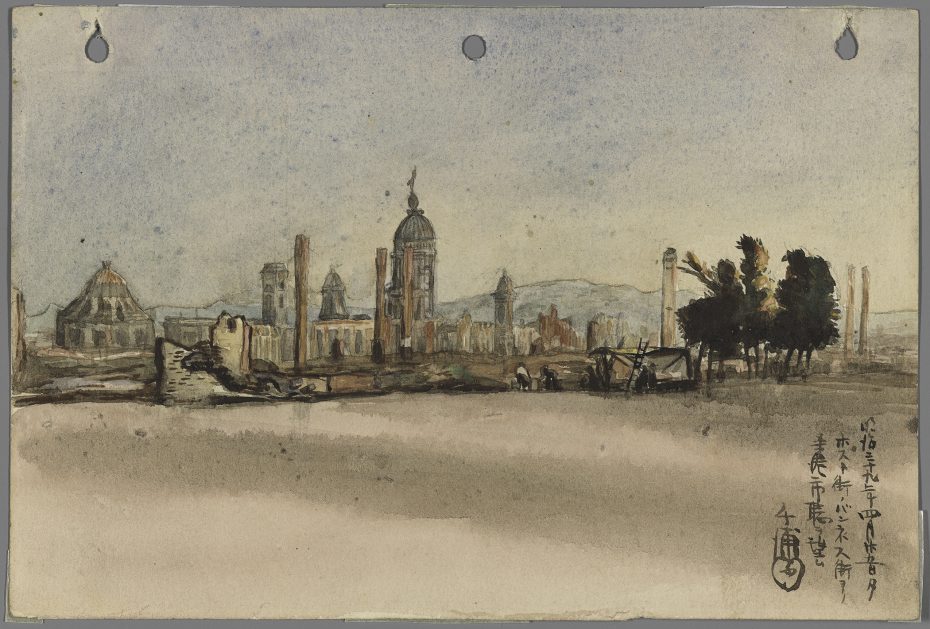
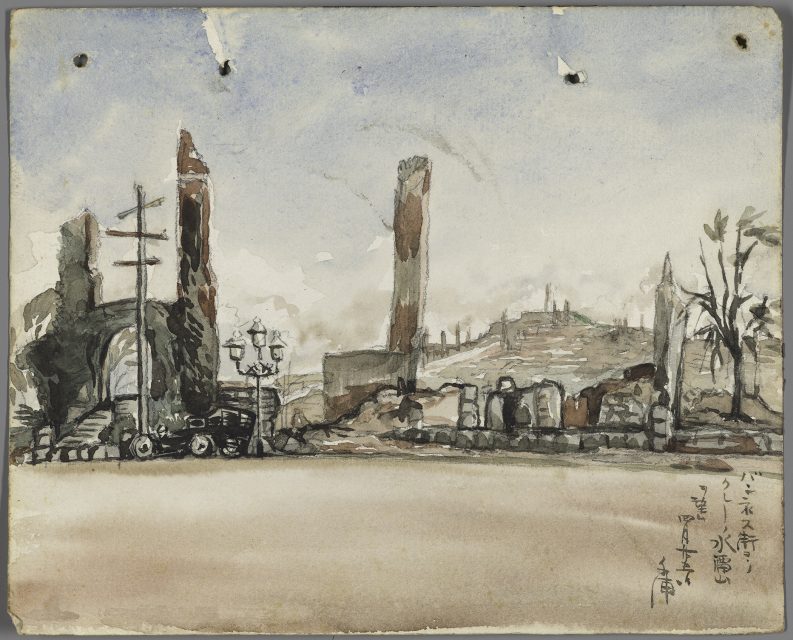
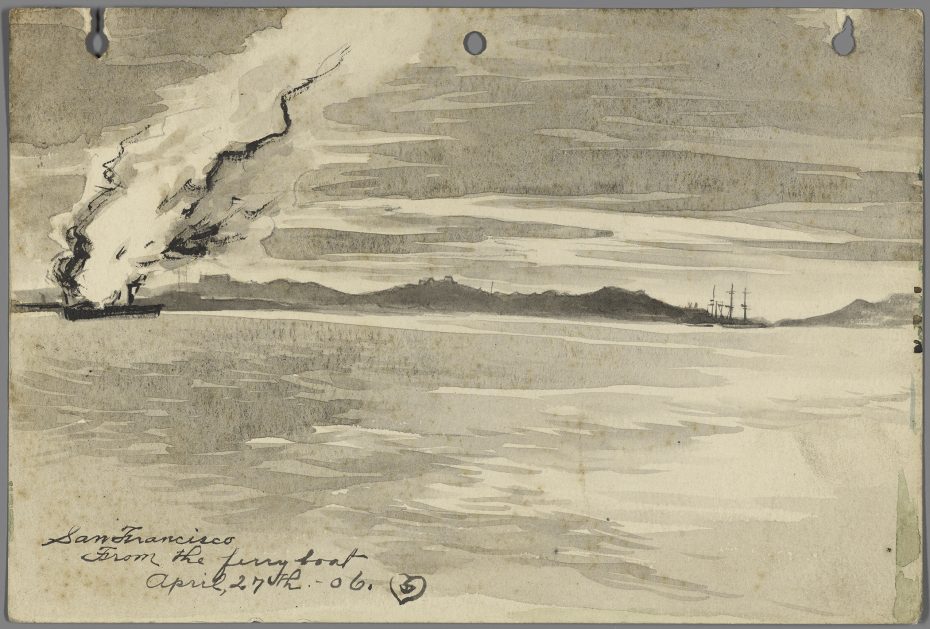
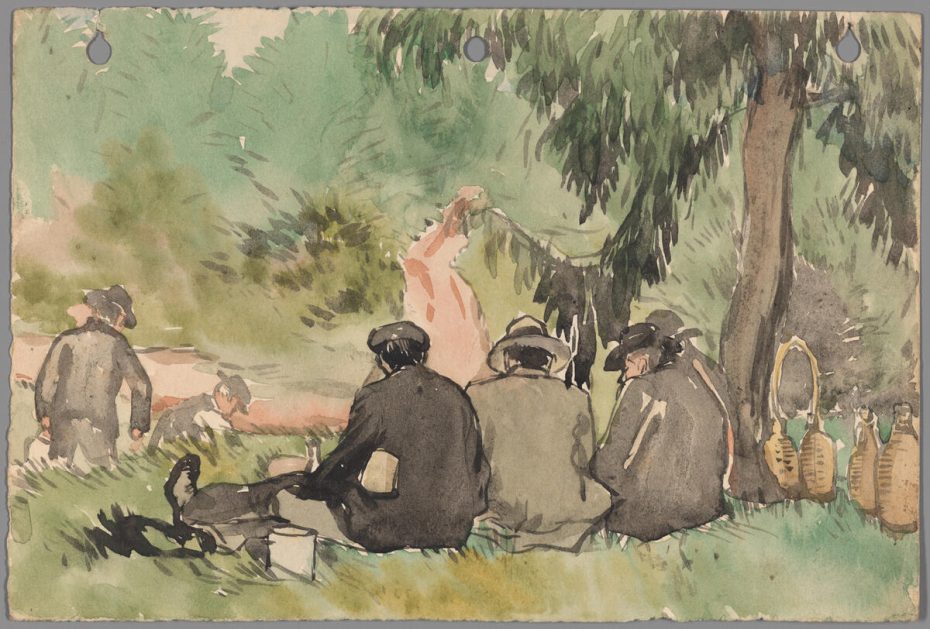
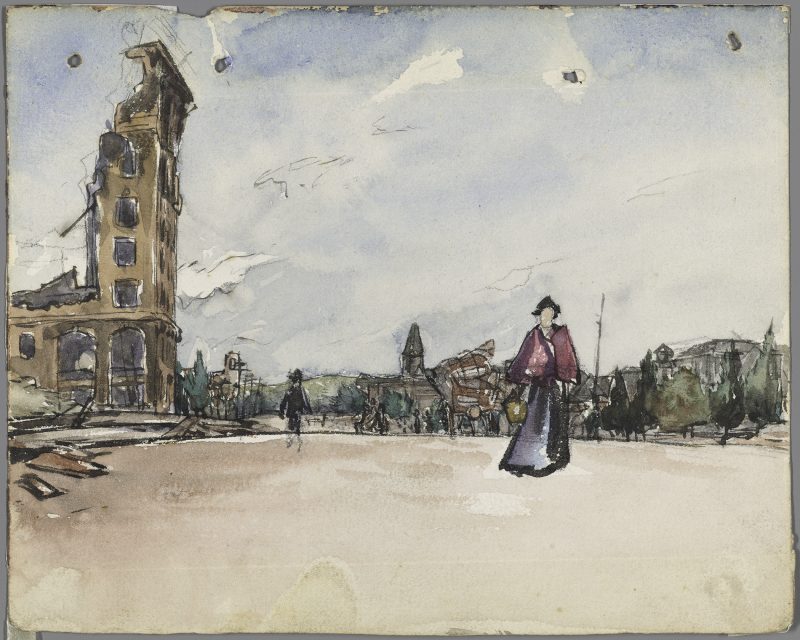
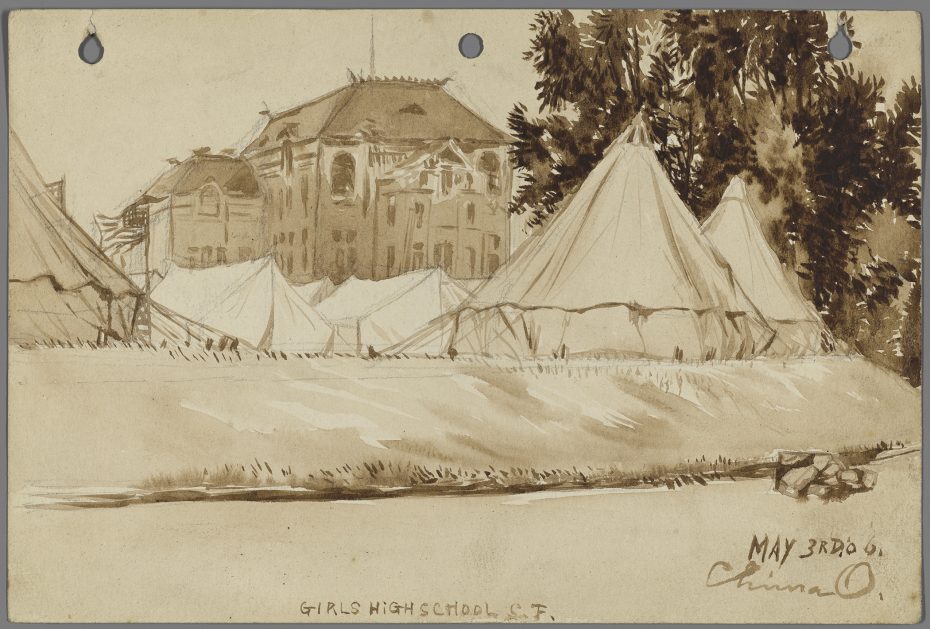
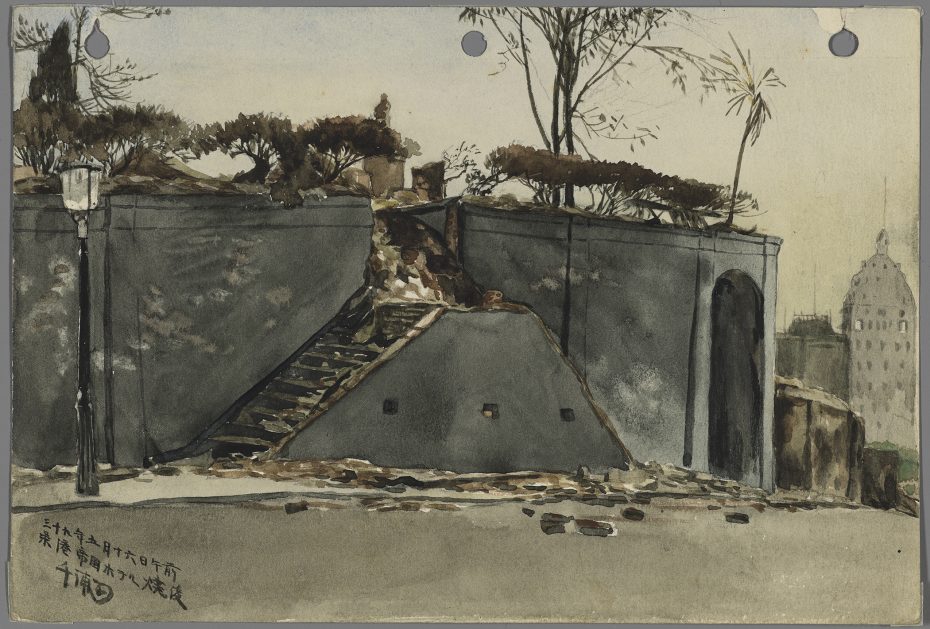
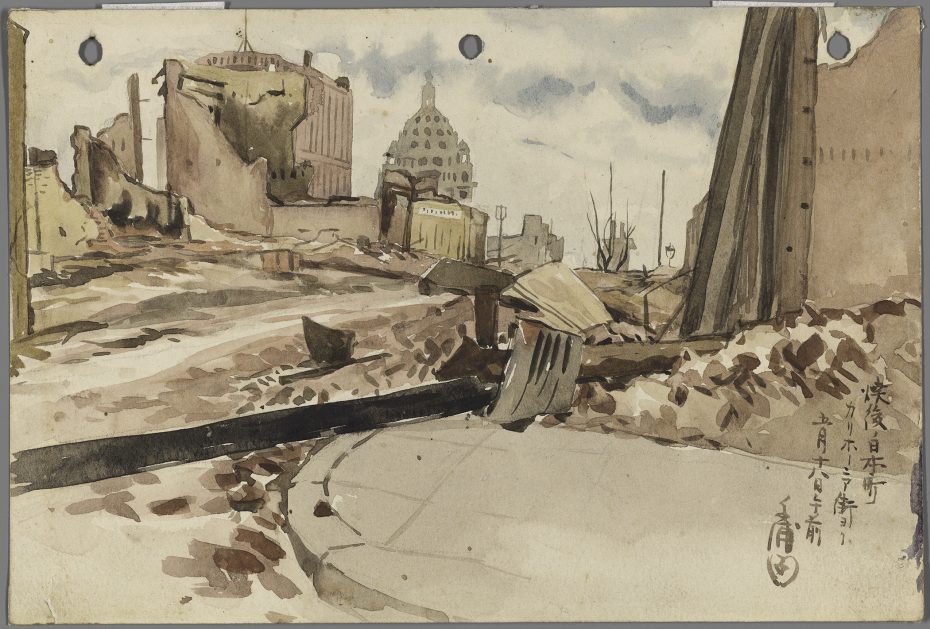
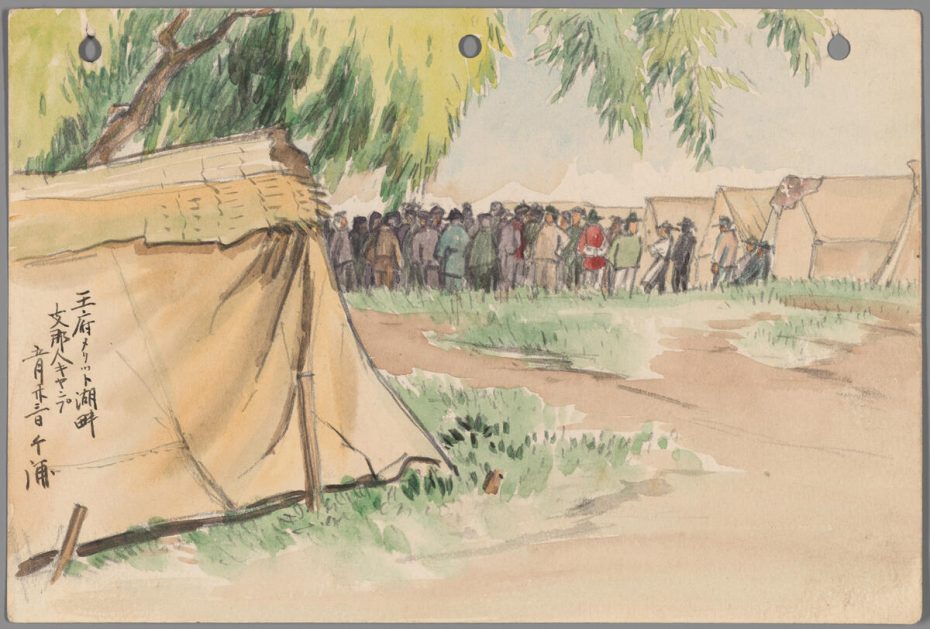
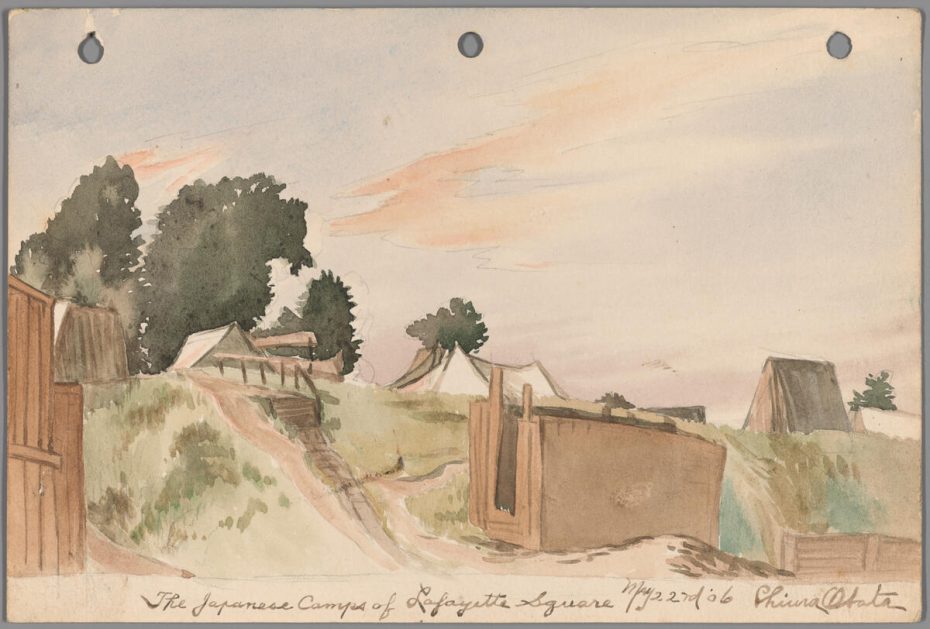
In the days following the quake, the 20-year-old Chiura Obata, who had only been in the country for three years, grabbed his sketchbook and went to work. The Asian Art Museum’s 2022 exhibition, “Bearing Witness: Selected Works by Chiura Obata,” showcased the firsthand depictions.
“The watercolors in this series begin on April 25, exactly a week after the earthquake and three days after the raging fires subsided,” the museum wrote of the exhibit. “Binding holes across the top of the paper show that the pages were once part of a sketchbook — perhaps the same one Obata grabbed on the morning of the earthquake, when the twenty-year-old artist fled his wrecked lodgings on Leavenworth Street.”
The Asian Art Museum shared some of the images.
“Obata observed first-hand the tragedy of the earthquake and subsequent fire,” said the museum’s chief curator, Rob Mintz. “His images document the tragic property loss in the heart of the city, but perhaps more importantly, he documents the plight of the Chinese and Japanese Americans who survived in makeshift camps set up in the East Bay.”
Several Berkeleyside reviews of earlier Obata exhibits offer a fuller look at the remarkable artist, who would go on to live in and create art schools in two Japanese internment camps.
The photos of the sketches are organized in chronological order.
I’ve been a Mission resident since 1998 and a professor emeritus at Berkeley’s J-school since 2019. I got my start in newspapers at the Albuquerque Tribune in the city where I was born and raised. Like many local news outlets, The Tribune no longer exists. I left daily newspapers after working at The New York Times for the business, foreign and city desks. Lucky for all of us, it is still here.
As an old friend once pointed out, local has long been in my bones. My Master’s Project at Columbia, later published in New York Magazine, was on New York City’s experiment in community boards.
As founder/executive editor at ML, I've been trying to figure out how to make my interest in local news sustainable. If Mission Local is a model, the answer might be that you - the readers - reward steady and smart content. As a thank you for that support we work every day to make our content even better.
He had access to the ruins only because when asked to dig a latrine at Alamo Sq Park, he was the only one who actually stuck around to do it. When the military leader returned to find him doing the work alone, he granted Obata a pass to go anywhere in the city’s wreckage.
He would go on to become an unparalleled artist and teacher. This from Chiura Obata, 1933 “Natural Rhythm and Its Harmony”
Step 1: Put down the nail polish. Step 2: Don’t bash a monkey’s head in, pour wine over it, set it on fire and eat its brains.
When did philosophy of art and aesthetics stop being so practical and concrete?
All earthquakes are created with Directed Energy, Technology.
The first Great San Francisco earthquake was executed by the Battleship Connecticut, 119 years ago.
119 years backwards is 911
Prepare
TransAmerica pyramid is the military’s target.
Water will rise.
3:03am to 6:36am
8.0+- mag
Please keep your comments short and civil. Do not leave multiple comments under multiple names on one article. We will zap comments that fail to adhere to these short and easy-to-follow rules.


He had access to the ruins only because when asked to dig a latrine at Alamo Sq Park, he was the only one who actually stuck around to do it. When the military leader returned to find him doing the work alone, he granted Obata a pass to go anywhere in the city’s wreckage.
He would go on to become an unparalleled artist and teacher. This from Chiura Obata, 1933 “Natural Rhythm and Its Harmony”
Step 1: Put down the nail polish. Step 2: Don’t bash a monkey’s head in, pour wine over it, set it on fire and eat its brains.
When did philosophy of art and aesthetics stop being so practical and concrete?
All earthquakes are created with Directed Energy, Technology.
The first Great San Francisco earthquake was executed by the Battleship Connecticut, 119 years ago.
119 years backwards is 911
Prepare
TransAmerica pyramid is the military’s target.
Water will rise.
3:03am to 6:36am
8.0+- mag
Great work!