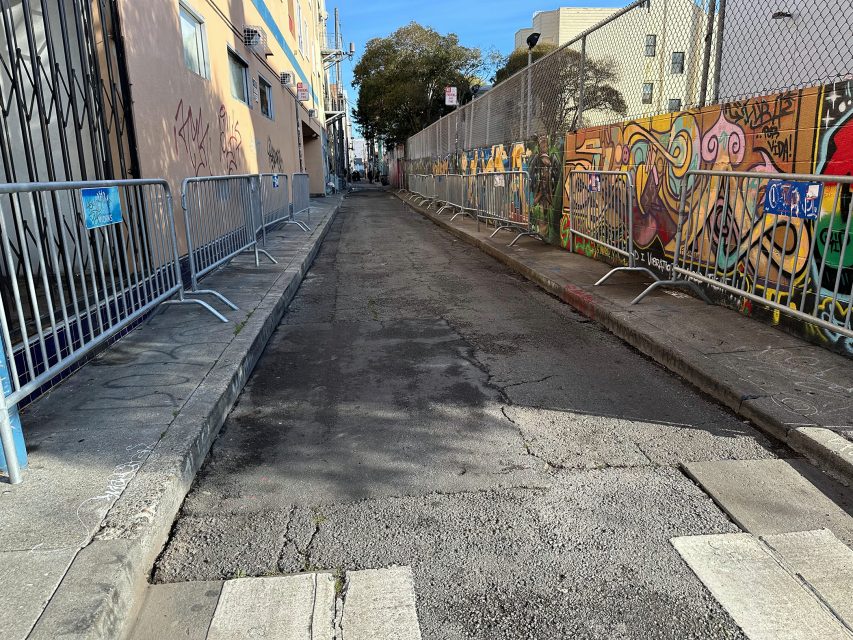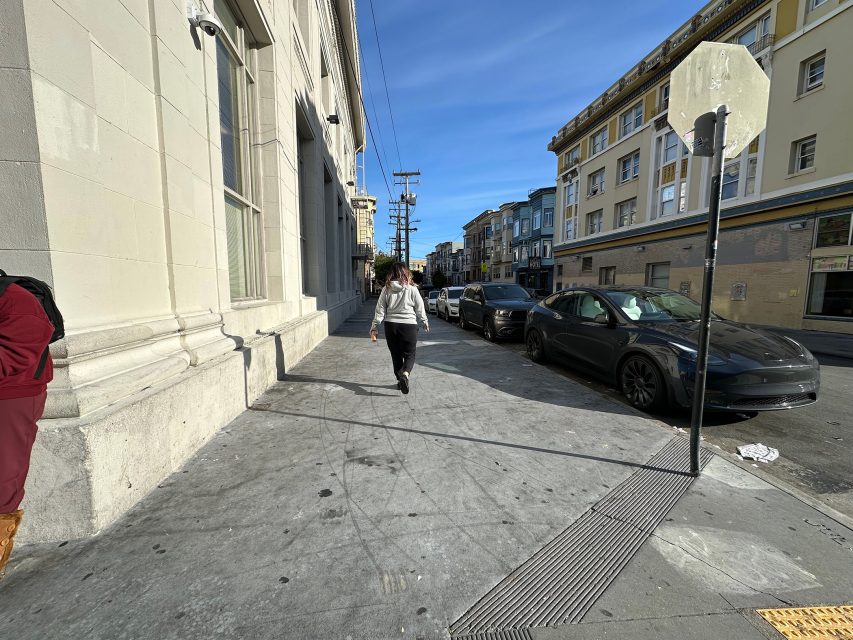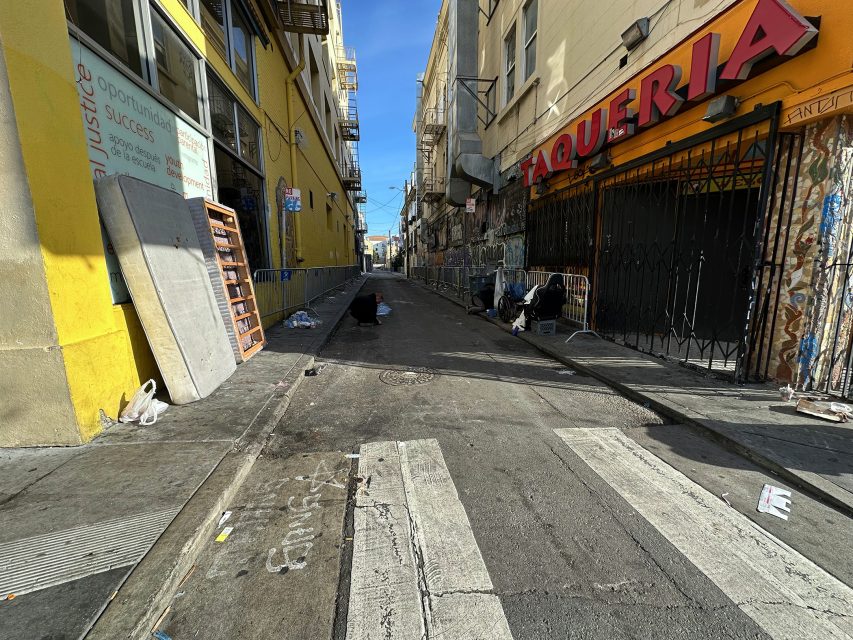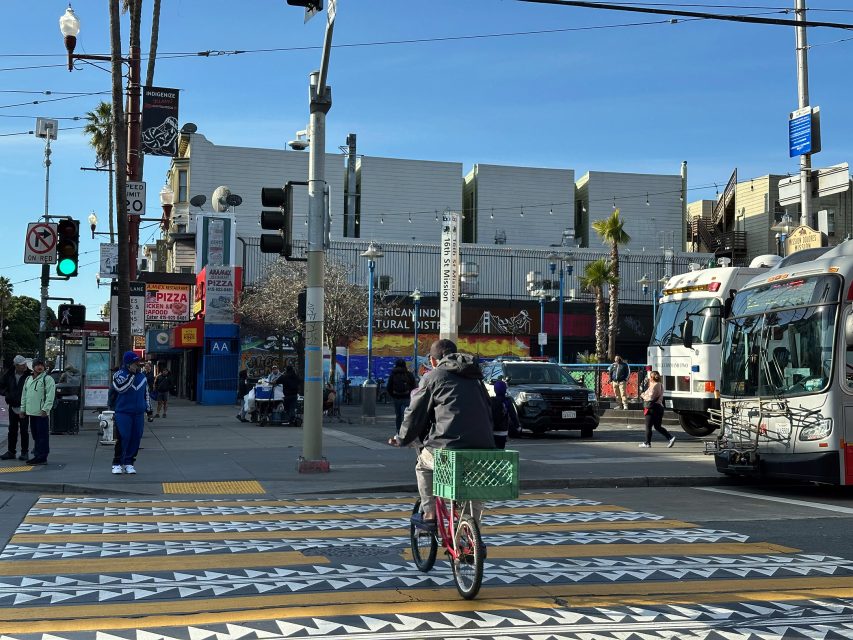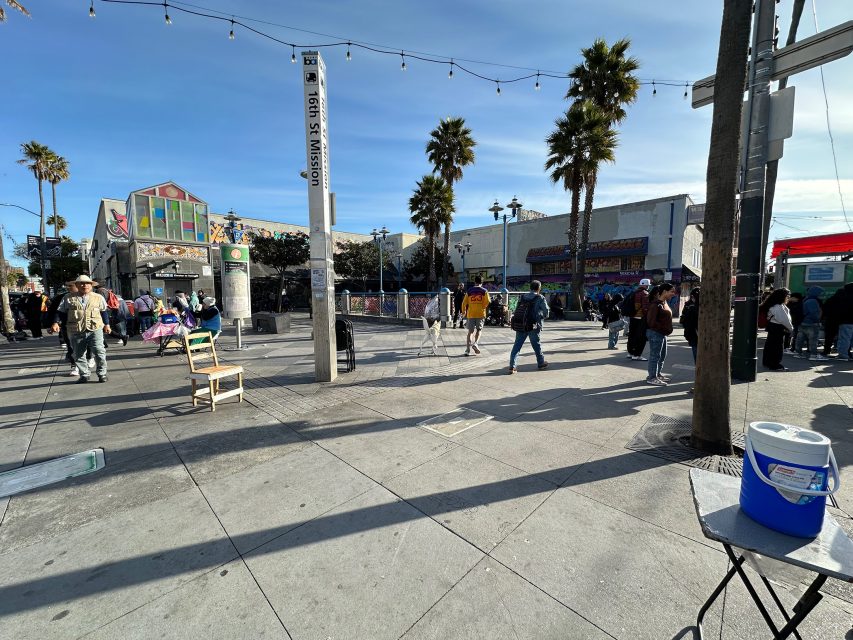


The side streets looked from clear to less clear today. The southeast plaza where the mobile unit and another police car are parked remains clear.
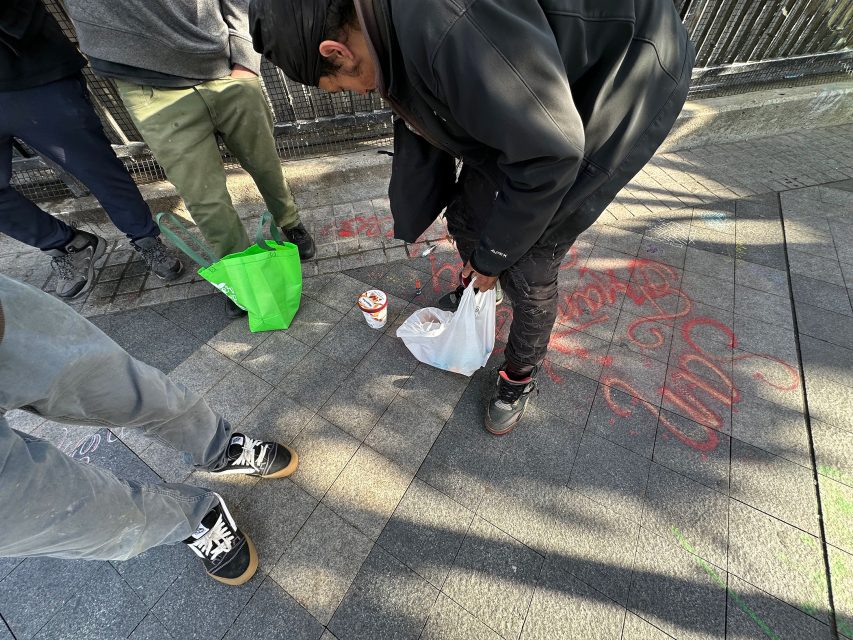
The northwest plaza had some interesting activity. First, a few guys huddled around a pipe and other drug paraphernalia. They also had a bag of candy, but only offered to sell me some when I asked if they were selling. Otherwise, the candy appeared to be for their use. There are no police on this plaza so it is fairly easy for anyone there to carry on as they like.
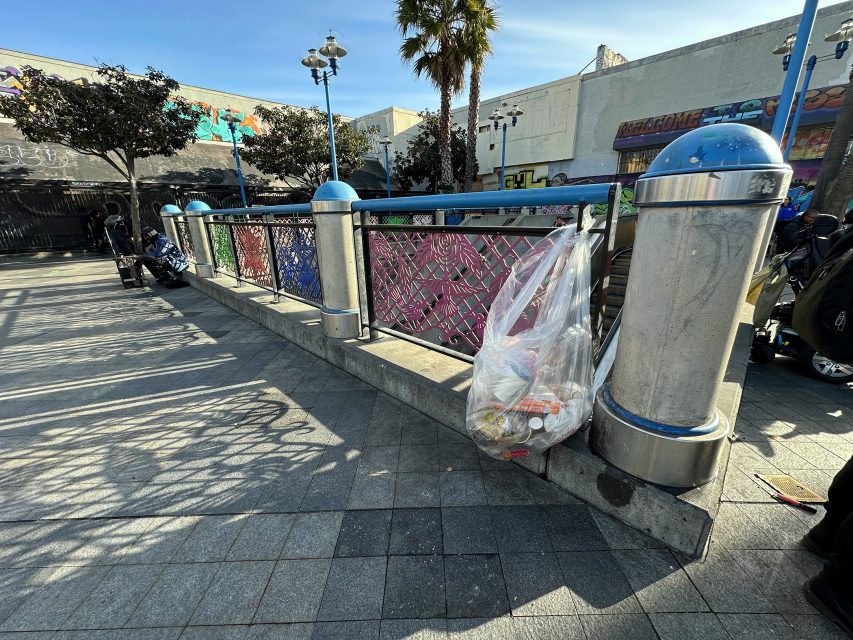
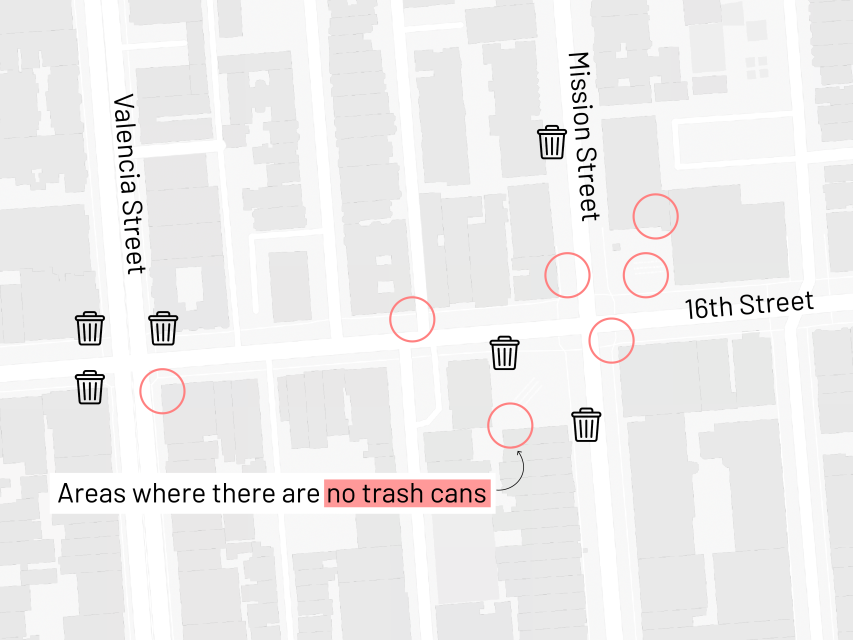
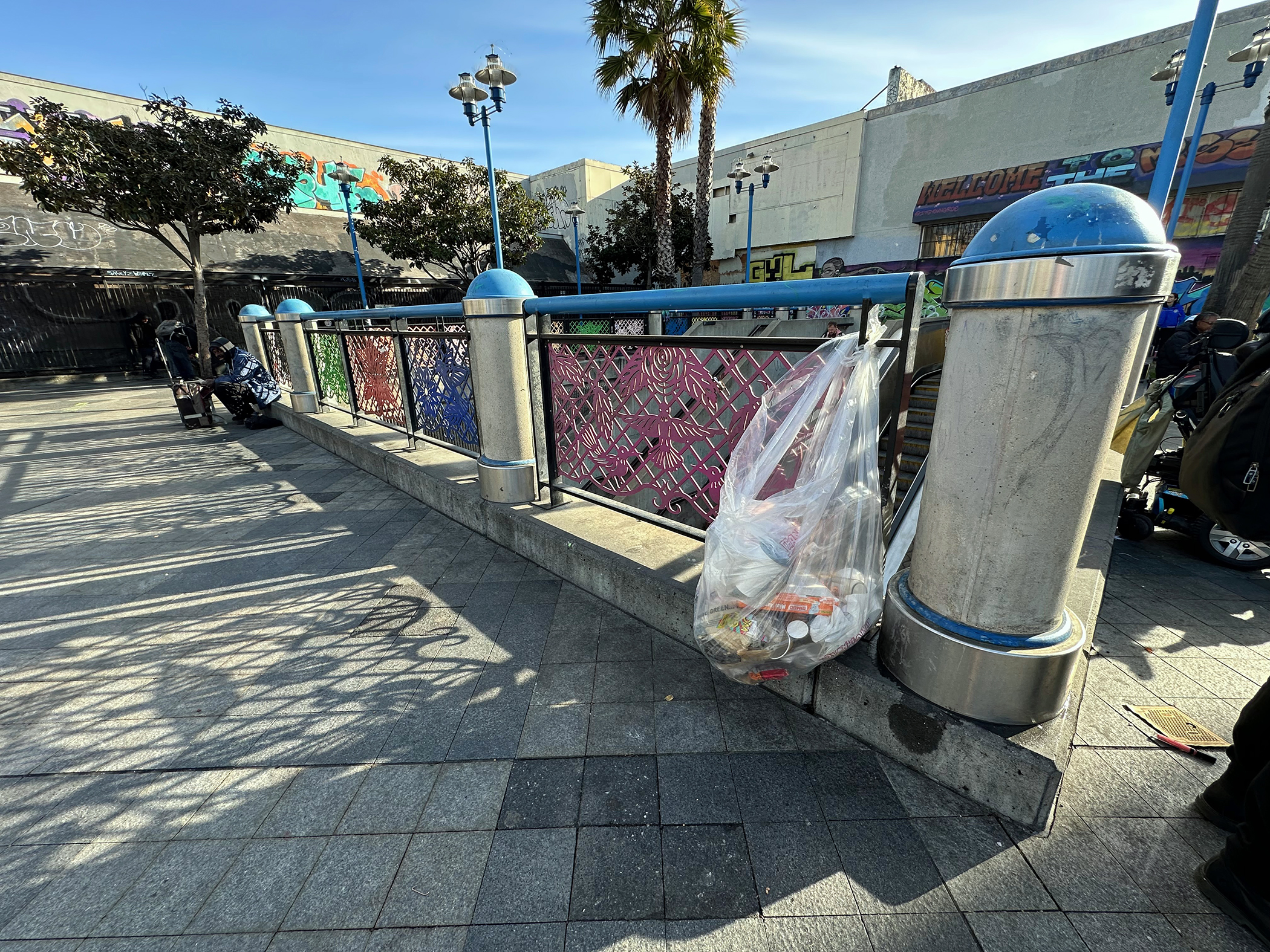
Most interestingly, someone had hung a large plastic container against the railing on the northwest plaza where there are no garbage cans. It was filled with a fair amount of trash.
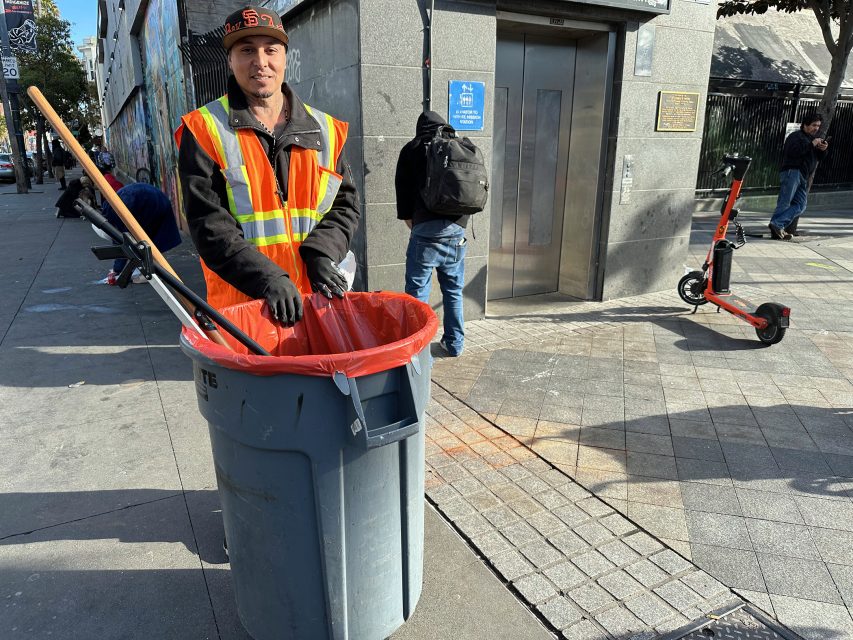
Richard Olivas, who is on contract with Public Works and cleans up the plaza daily, was grateful. A few months ago, he said, the city took away the plaza’s trash cans. We’re asking BART exactly when this happened and will add once we get a response.
“They said people were piling stuff nearby,” Olivas said, but he had not witnessed much dumping. Moreover, he said, the cans really helped with the litter. “It’s made the streets a whole lot dirtier,” he said, referring to removing the cans. “They should have been putting out more cans.”
Anecdotal evidence, yes, but in 2018 the city of Philadelphia commissioned a study on the efficacy of trash cans. Philadelphia 3.0, a blog run by a political organization quoted from the study: “Averaging across all sites, decreasing the number of available receptacles increased the percentage of trash collected as litter daily by 2.9% each (compared to increasing the number of available receptacles). Among the commercial corridors, a clearer pattern regarding litter emerged. Although Francisville only collected data during the baseline and decrease periods, the percentage of trash that was collected as litter versus from a receptacle increased dramatically when there were fewer available receptacles, to 95.84% from 39.37%.”
I’ve requested a copy of the full study as the links no longer work. But when Mission Local wrote about San Francisco’s 2007 experiment to get rid of trash cans, we noted that New York’s experiment in trying to decrease trash by getting rid of trash cans had also failed. The city’s 2007 experiment means that San Francisco now has just over 3,000 trash cans, compared to the 4,500 we had in 2007.