



As the lead of the Center for AIDS Research at the University of California, San Francisco, Dr. Monica Gandhi is spending the month in a world of devastating “what-ifs.”
What would have happened if a federal judge had not, on Feb. 10, blocked the Trump administration’s order to slash billions in biomedical research funding from the National Institutes of Health? Monitoring the health of study participants in biomedical research funded by NIH would be gone. Clinical trials on patients would be stopped. Key services, like maintaining the lab equipment and keeping research data safe, would also vanish.
“All of that, as of Friday, is massively threatened,” Gandhi said.
A judge blocked the freeze, and a hearing is scheduled for Feb. 21 on the lawsuit filed by a coalition of 22 universities, including the University of California system, which led to the injunction. But no one is sanguine about the possibilities ahead.
“The feeling within the university, from my perspective, has been one that borders on panic,” said Dr. Joe DeRisi, a professor in the Department of Biochemistry and Biophysics at UCSF and the president of the Chan Zuckerberg Biohub.
If the cuts do go through, “everything will come to a grinding halt,” DeRisi warned. “Because you are talking about a massive cut on a very large scale.”
All across UCSF, and all across the country, Gandhi has colleagues working in HIV, cancer, infectious diseases, cardiovascular and pulmonary diseases. That work would have been threatened, too.
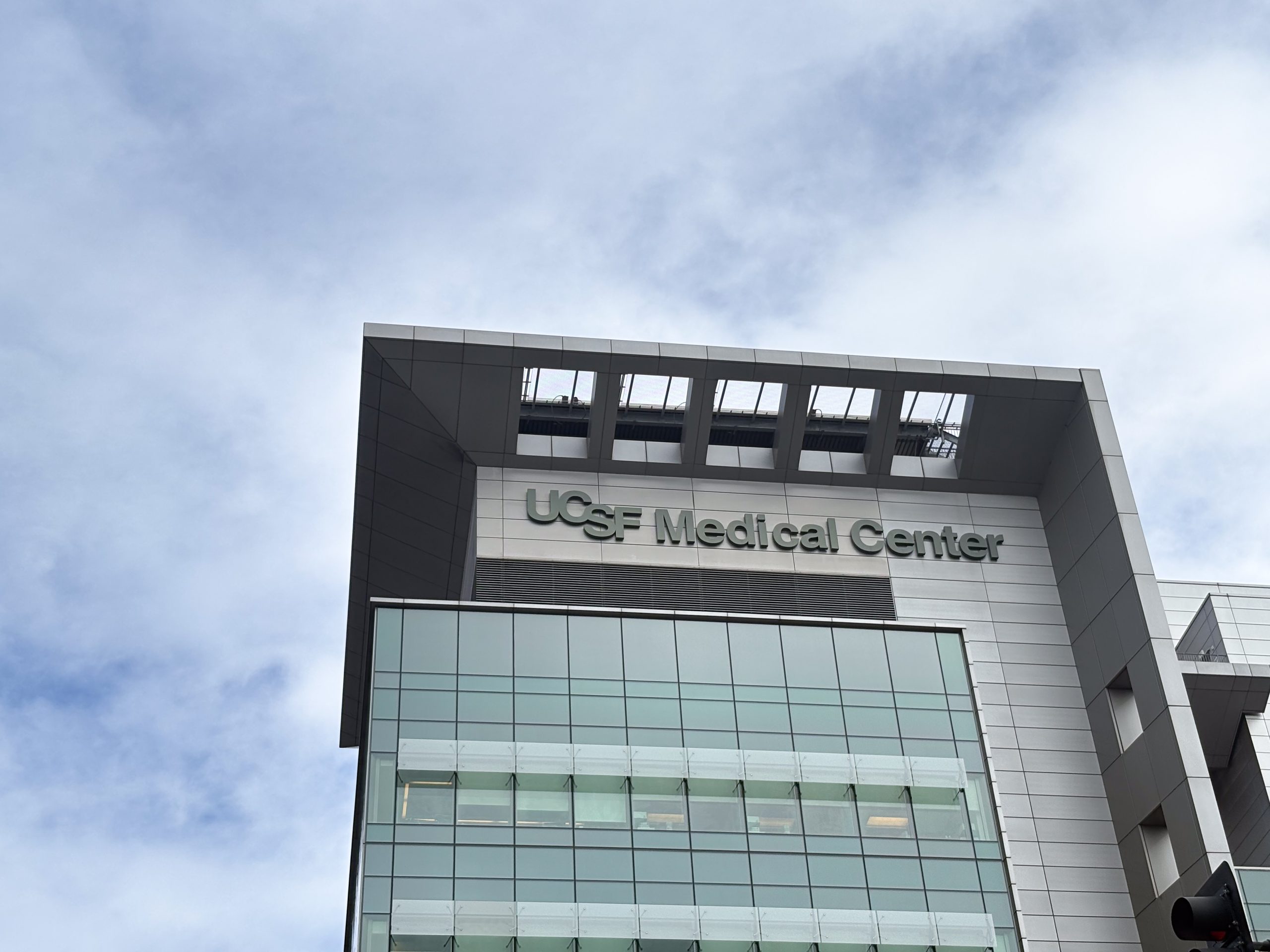
The NIH’s announcement described the cuts as a 15 percent cap on “indirect costs” for grants. Opposition to the “indirect costs” funds, which appeared in the conservative policy wishlist Project 2025, described the funds as “reimbursements” and claimed that they “cross-subsidize leftist agendas and the research of billion-dollar organizations such as Google and the Ford Foundation.”
Project 2025 also claimed that universities use “this influx of cash to pay for Diversity, Equity, and Inclusion (DEI) efforts,” which Trump has called “radical and wasteful” in the federal government, and has demanded gutting.
Direct costs typically pay researchers, as well as cover the cost of the equipment and materials needed for their projects. But the indirect costs can be just as important, paying for equipment maintenance, laboratory safety, internet, and electricity, among other things.
“Who keeps the lab safe? Who inspects the labs for chemical safety, for radiological safety, for radioisotopes, for biological use authority?” DeRisi questioned.
Dr. Jeremy Reiter, former chair of the Department of Biochemistry and Biophysics at UCSF, runs a lab that studies, among other things, the way cancer cells grow and communicate.
Normally, Reiter thinks about things like how cancer cells communicate. Now, he is forced to think about basic research infrastructure, such as having heat in his building, access to the internet, libraries, and journals, having staffed janitors, and data security for his research. “All of that would be compromised,” Reiter said.
“There is a lot of anxiety and nervousness,” he added.

At UCSF, the indirect cost rate is as high as 64 percent, meaning that for every $100 it receives as “direct costs,” it can receive an additional $64 in “indirect costs” to keep the labs up and running.
Under Trump’s cuts, the campus will see “indirect costs” paid out at a rate of 15 percent. And not just at UCSF: Across University of California campuses, cost rates differ but are, on average, 59 percent, according to a confirmation from the office of the president at the University of California. That would mean a double-digit percentage loss in funding.
“We are grateful for the judge’s order and the bipartisan chorus of policymakers for supporting efforts to continue this vital research that saves lives and improves health care for countless Americans,” the UC Office of the President said in the statement released after the judge’s decision. “The University of California is committed to working with the new administration to ensure taxpayer dollars are well spent on innovations and lifesaving research.”
DeRisi, for his part, says the NIH cuts will be a “devastating blow” to the health of the entire country. “It is really going to hurt the development of new medications and new therapies for diseases.” Raising prices for medical care is, for him, out of the question; it would mean, sometimes, raising medical bills tenfold. “There’s no realistic way I can see to recover or make up for those cuts. People need to eat and pay their rent.”

San Franciscans, in particular, would feel the impact of these cuts directly and immediately. UCSF is the city’s second-largest employer, with more than 32,000 employees, according to the San Francisco Business Times, and the cuts could mean layoffs and hiring freezes. “I don’t see any way for the university to function or pay bills with an indirect cost-recovery rate that low, without trimming a massive number of staff,” DeRisi said. Cuts could also mean pauses on job searches for new faculty members, and the possibility for “new young, bright, innovative scientists” to start their own labs, Reiter pointed out.
If the cuts go through, the university would be hard-pressed to backfill funding from elsewhere without compromising research. Private funding from places like pharmaceutical companies, Gandhi cautioned, is more likely to support studies that deal with limited populations.
Philanthropists like Bill Gates fund some infectious disease research, but working with donors can skew research in ways that public money doesn’t. “You’re always conflicted, because you’re bound to the interests of that individual,” Gandhi said.
“This sudden, drastic cut left everyone railing, anxious, and miserable,” Gandhi added. “It takes a huge emotional toll on researchers.”
DeRisi, for his part, doesn’t see any viable way forward to continue much of this work if the NIH cuts are approved.
“How will we be able to do research if this goes through?” DeRisi asked.
Disclaimer: Joe DeRisi sits on Mission Local’s board of directors.
I will never be able to befriend, forgive, or respect anyone who voted for this.
It’s appalling that Elon Musk and Donald Trump regard life-saving care for people with AIDS and cancer as “fraud and waste.” We have not seen one iota of evidence that their cuts have eliminated either. They have no problem increasing “defense” spending while at the same time alienating allies around the globe.
The only thing that’s amusing about this administration is the degree to which formerly powerful congresspeople will abase themselves in Trump’s service.
It would be helpful to hear from more doctors than Gandhi for a change. Despite her ubiquity and love of media attention, she got so much wrong during the pandemic.
This!
Chan Zuckerberg Biohub. Time to step up since they put their name on it…
Yes, Mr Z stepped up – but completely the wrong way!
Anyone heard from Nancy Pelosi?
I wrote to her she has not got back. Everyone is afraid. We got to be strong. I remember when I worked a uc. The government cut funds. It was hard. They had to merge with Stanford for 3 years. I pray this does not again
I know San Francisco is an expensive place to do business. And I certainly don’t trust the flamethrower approach that the Trump administration is taking to cut federal spending. But 64% for indirect costs is a figure that’s hard for me to take at face value. It does raise a lot of questions about whether research dollars are being spent as efficiently as they could. I’d like to see a follow up piece by ML on how UCSF calculates those indirect costs, and how exactly the money is spent.
Siphoning off ~50% of all federal research spending is a vital source of funding for the US higher education system as a whole. Its definitely dubious accounting, and there are certainly legitimate questions to be raised about how efficiently this money is used – especially after decades of rising tuition costs and exploding administrative staffing – but the results are hard to argue with: the US has the best universities in the world.
Why’s UCSF getting any money from the Federal Government ? Shouldn’t the Ca tax payer be funding it … I am no Trump fan but he needs to cut spending ASAP. Gavin Newsom needs to step up and fund UCSF . Plus he should give them an additional 50% more . Most are under appreciated and under paid .
you are ignorant as to how scientific research is funded. please inform yourself.
Just watch UC transport that “panic” into another reason to deny a fair contract and proper staffing to overworked members of its largest union, AFSCME, when they again go on a statewide strike February 26-27.
The millionaire chancellors of this flush institution just bought eight hospitals and is opening numerous new facilities. In fact, UCSF announced in November that its revenues will exceed costs through 2034.
Research is of course essential. But in the triage model, frontline community healthcare—which UC currently runs on the Walmart model—must take precedence under the circumstances.
Good. Neither San Francisco or UC schools deserve a penny of Federal money. I wish I could keep them from getting my state tax money as well.
You only want to be Americans when there is a check in it for you.
go back to arkansas