

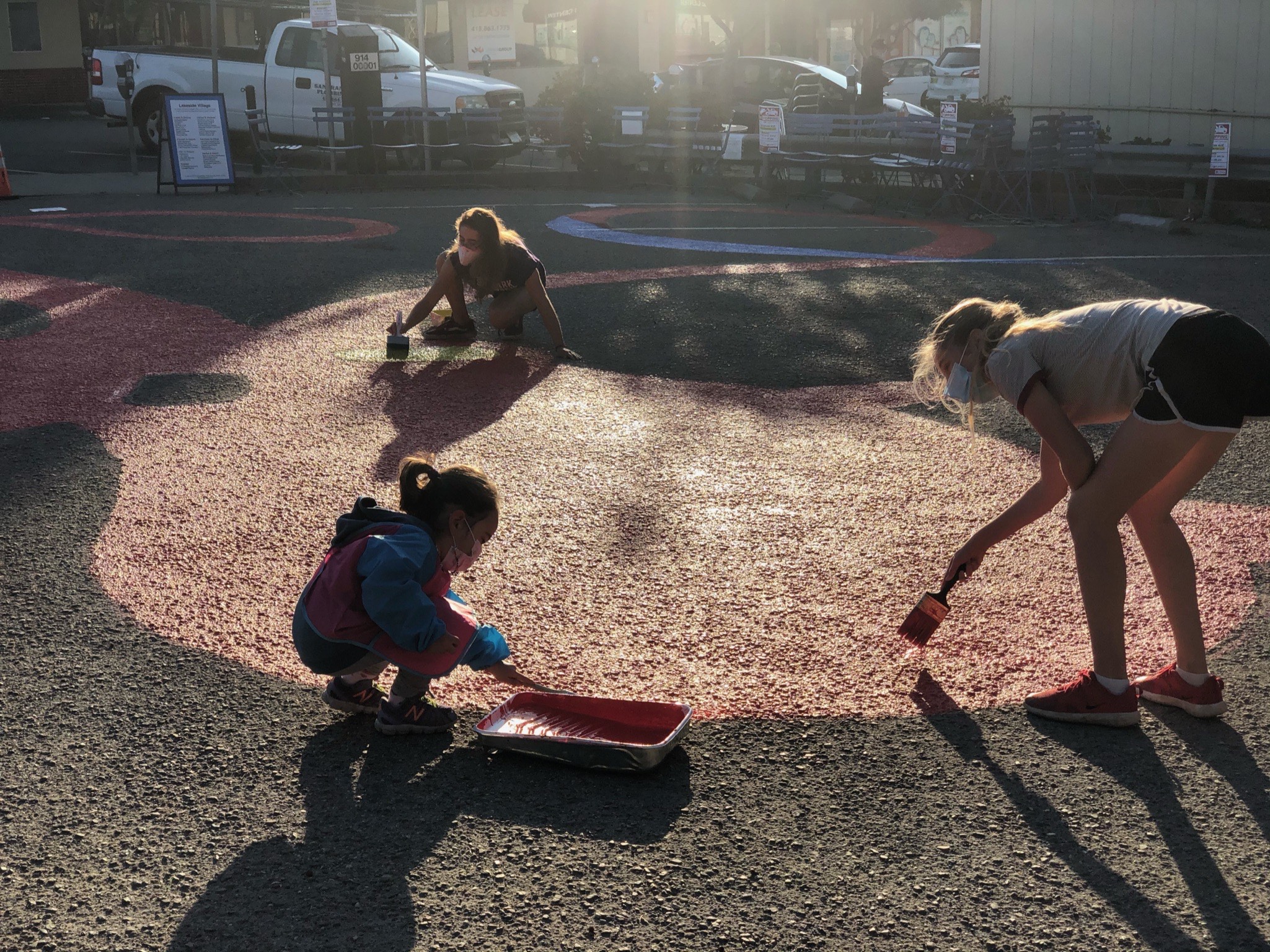

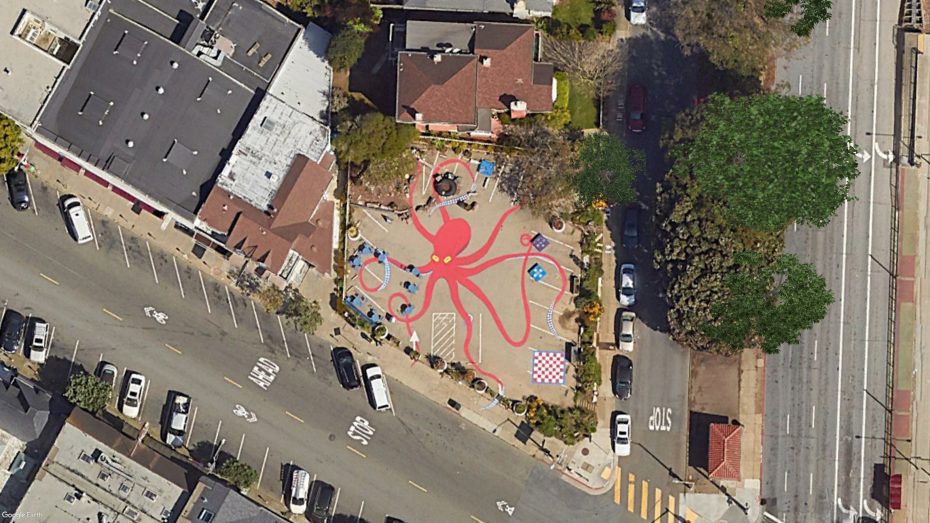
The giant octopus painted on a former SFMTA parking lot was partly funded by the District 7 participatory budget. So were the new volleyball nets at Commodore Sloat Elementary School, local “disaster resilience training,” and a new course on digital literacy for area seniors and parents.
Setting up a system where neighborhoods could take a sliver of city revenue, propose local uses for it, and then vote directly on those proposals, was a red-hot civic trend not long ago. From its radical origins in 1980s Porto Alegre, Brazil to its 2009 United States debut in Chicago’s 49th Ward, participatory budgets were seen as a way to get apathetic residents engaged in city government. Residents as young as 16 could vote, as long as they could prove they lived in the neighborhood. Mayoral candidates campaigned on it. District 3 launched one in 2012. Districts 7, 8, and 10 followed.
At the moment, District 7 is the last participatory budget standing, although Supervisor Chyanne Chen has expressed interest in following suit in District 11. District 7’s participatory budget now includes some $400,000 from San Francisco’s $7 billion general fund, a relatively small allowance, but an improvement over earlier years; the first participatory budget was seeded with $100,00.
It’s impossible to know if the $400,000 means that District 7 gets more money than other districts. The many districts that don’t use participatory budgeting have more nonprofits and other projects funded directly through the city. But it is a sum of money that residents have a direct say in spending, and that does not happen elsewhere. Typically, to deal directly with the city, a group has to be eligible to be a city supplier, and that is difficult for individuals, groups and neighborhood associations.
“It’s a lot of work for the staff,” said Supervisor Myrna Melgar, who added that the heavy lift is likely why her colleagues do not run their own participatory budget processes.
Melgar sees the work as a way for her office to communicate with the community.
Others have not found it to be the most effective way to get communities involved. District 10 Supervisor Shamann Walton said, in an interview with Mission Local, that when his predecessor, Malia Cohen, ran participatory budgeting, it wasn’t reflective of the entire community. “Only certain groups of people were participating: More affluent people,” he said.
“It’s labor intensive,” said Norman Yee, who was district supervisor before Melgar and set up the district’s participatory budget. “When you add a program — where you’re directly administering it — it’s additional work for your staff.”
The work is one hurdle. To begin now, other supervisors would have to fight for the funding during a time where the city is under financial strain. Yee first funded the program through addbacks — money the supervisors get to have a say over from the mayor’s budget proposal — before District 7’s allotment was baked into the general fund.
How it works in District 7
Every year, local organizations send in project proposals, residents cast votes for their favorite proposals, and grants are distributed among those that rank the highest and obtain at least 400 votes. Every year, about $150,000 from the fund is earmarked for Vision Zero projects in the district, a decision made by Melgar’s office.
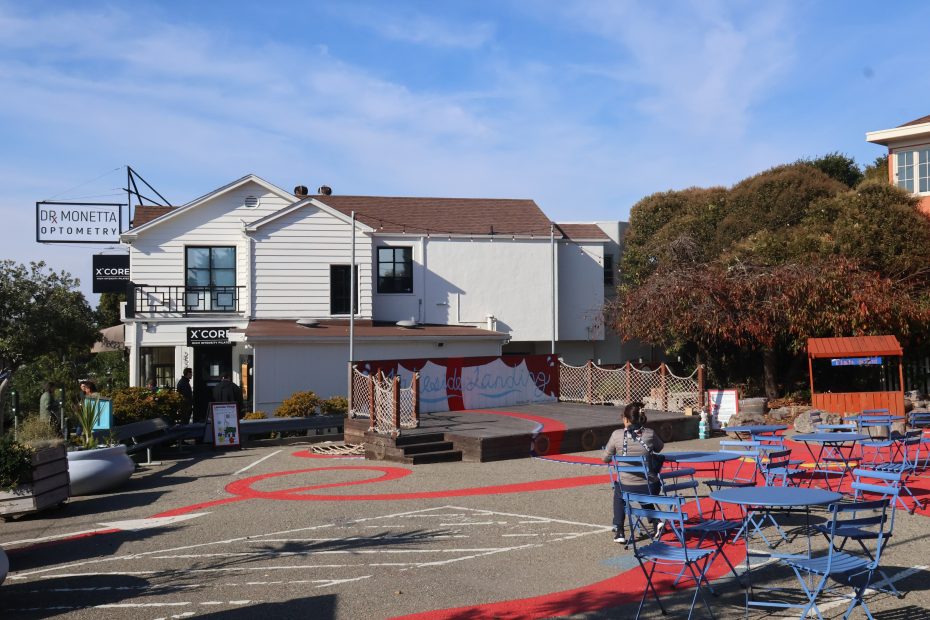
Apart from this, the money is up for a community vote. Last year, 15 proposals received funding, including a parklet on Hearst street and picnic tables at Commodore Sloat Elementary School.
The participatory budget’s monetary investment may be relatively small, but the resources required to administer the project can add up.
After the proposals come in, Emma Hare, Melgar’s legislative aide, reviews each one with a volunteer steering committee (whose members are appointed by Melgar) and staff from several city departments to determine feasibility. Then, for proposals that make financial sense and are selected, she connects applicants with the relevant government departments, which manage the grant money and see the project to fruition. “I have a lot of spreadsheets,” said Hare.
For instance, for mural projects, money might go to the Arts Commission or, for traffic-calming projects, that money would go to the SFMTA.
For Hare, participatory budgeting is a model for civic engagement. It gets residents involved in local governance, and helps legislators understand their constituents better by turning the campaigning, decision-making and project management for small infrastructure improvements over to them.
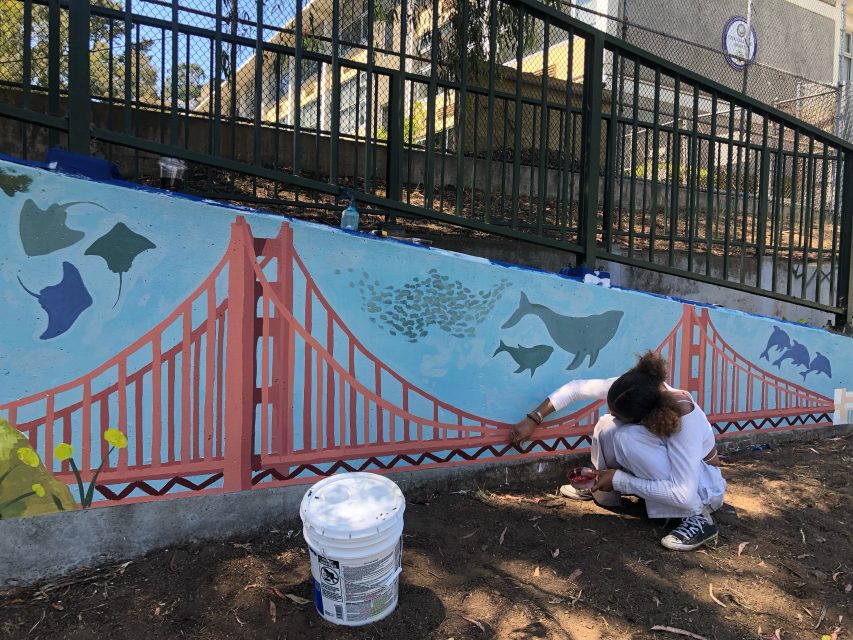
Many of the projects proposed (and selected) also involve local artists and students. For example, the Midtown Terrace Homeowners Association proposed a mural for the Clarendon pedestrian bridge near an elementary school of the same name. Once approved, the association worked with the Youth Art Exchange, a citywide nonprofit, to hire Anthony Jimenez, a local artist, to paint a mural and supervise high-school students to work with Jimenez.
“It’s a great way for community leaders to understand their neighbors and their constituencies, and understand government bureaucracy,” said Hare. “Selfishly, it allows me to share in the frustrations of government bureaucracy with my constituents.”
Specifically, it helps share the experience of the bureaucratic timeline. “That’s one of the frustrations; it’s not instantaneous,” said Sally Maske, a volunteer with the West Portal Neighborhood Association, which applied for (and received) funding for flower baskets about 10 years ago, and money for murals and flower beds more recently.
For each project, the neighborhood association had to work with each department connected to the project and figure out, among other things, the work needed to be done by union workers, and the work that could be done by volunteers, said Maske. “It’s not like you can expect it to be completed overnight.”
Not all beneficiaries of the participatory budget made it across the finish line. Yee admits some projects were never completed under his tenure. But, says Melgar, participatory budgeting has offered a way for residents to engage with and enjoy their district. It has also been a welcome financial resource for District 7, a part of the city that generally has fewer financial needs and generally fewer nonprofits making these kinds of investments in the district.
“It’s different when you see a bench in front of the bus stop that you use, that you proposed, that you voted for, and that’s there,” said Melgar. “It’s tangible.”
Proposals for this year’s round of participatory budgeting can be submitted starting February 17, 2025 until March 28, 2025. Read more about the submission process here. Proposals must be submitted by neighborhood nonprofits, merchant groups or institutions located in District 7.
Two years ago, there was a participatory budgeting process in the Tenderloin to allocate $3.5 million to community-focused projects.
1,368 Tenderloin residents and workers voted, of those approximately 30% were workers.
More than half of the funding will go towards improving neighborhood safety and livability.
Tenderloin community showcased predominant support for improving neighborhood safety and livability with public space improvements, direct safety investments, cleaning, and basic needs such as shelter and food security
Community wellness was also on the minds of voters, with community-based services for youth and immigrant seniors also receiving support
https://sfplanning.org/sites/default/files/documents/citywide/tenderloin-community-action-plan/TCAP_Participatory_Budget-ProcessSummary.pdf
https://pbstanford.org/2022-sf-tenderloin
Could anyone imagine for a moment the Mission nonprofit mafia taking the delegation of any budget power to untrustworthy D9 residents sitting down?
Hi:
I have lived in SF for fifty years, until I moved. It seems to me-San Francisco-the city is in a state of collapse. The London Breed mayoral management team had no idea as to what the damage was, while in office. In 2009, there was a report-which was trashed by Mayor Gavin Newsom and City attorney Dennis Herrera-titled-I think from memory, “SF’s Pension Liability and their inability to pay it.” This was 16 years ago. Several times I requested the report-to get a full copy-but City Hall each time just gave me a page or two. When I finally got the whole report, I was shocked. It stated, by analyzing two departments, the SFPD and Fire that-unless changes were made-now-to address the issue, SF would be bankrupt by 2023-25. Breed started her political machine with 23,000 city employees, and we now have 29,000. One employee audit determined that 40% of the city employees may be related to one another. And, over half of all City Hall employees make almost $200,000 a year. today, Newsom is trying to run for the US Presidency and Herrera has another sweet paying job at the Public Utilties Commission.
Emil —
San Francisco has more employees than that, but there was not a jump of 6,000 workers under London Breed.
The claim that 40 percent of tens of thousands of employees are related to one another is absurd.
The claim that half of City Hall employees make $200,000 is also absurd.
Please try to keep to the realm of the plausible when making whatever points you are trying to make.
Best,
JE
So picnic benches, a couple murals, volleyball nets… a parking-lot plastic-paint-park right next to a busy freeway… but you’ve got to hand it to Melgar for using a relatively small amount of (taxpayer) money to make locals in her district “feel” like they’re getting what they want out of her district control. Pretty savvy to advertise it too, even with as comparably little it actually achieves for as few as it serves. Those who get the bench they wanted, they’re captured voters now. The appearance of democratic governance is powerful PR in a town where everyone feels like their voices don’t get heard by downtown. It’s hard to find fault with this tactic.
It’s actually not like that at all. You should visit. I go there all the time to eat at Dinosaurs. They have a stage and host local music performers on the weekend. Super mellow, friendly to every age and stage.
It’s in a little village-like neighborhood away from J Serra and 19th. Right off the M and K.
Er, what exactly is not like what at all? They got picnic benches, volleyball nets, murals, and a parking lot “park”… Am I missing something substantive in that list that I’m getting directly from this article? I don’t have a personal use for that “park”, and I don’t go to Commodore Sloat or play volleyball. Murals, fine by me? I don’t actually mind these funds being used for these things. I actually do like public input in how money is spent, and I actually am COMPLIMENTING Melgar’s political savvy in using this as a means to shore up political support despite it being a small-time budgetary concern. She gives the impression with a small amount of money that people are in control, they like that. Captured voters. Smart. It’s what happens with the big slices of pie on a wider basis that I’m much more personally concerned with. I’m glad you find value in the park-let, as it were. It doesn’t negatively affect me, it doesn’t seem to detract from other people’s needs. Win/win for Melgar, frankly.
One thing District 7 should consider as a long range plan is to turn Junipero Serra Boulevard into a linear park. As it is now, it is just a slight shortcut for motorists who should be on 19th or on transit. There are already frontage roads in place for local access. I would like to think this linear park would be as popular as any in the city, relatively flat for walking and cycling, plenty of room for many activities!
By that logic, people who want to use a park “should be” in one of our huge urban parks that already exist, are funded, planned for, managed accordingly. Inventing parks in front of your house because you want that is not urban planning. The opposite, that’s urban yuppie gifting. Some of us still have to get to work in fact, must be nice.
Not really, no. It connects Portola/Market and that entire neighborhood to 280. I guess if you don’t personally use something that means nobody does? Weird.
We have a huge linear park already, thanks. It’s called Golden Gate Park. The hair-brained idea of turning major thoroughfares into parks is great for people who don’t have jobs to get to and who want more thru-traffic in quiet residential neighborhoods as traffic becomes less manageable. For actual local residents not so much at all. There’s already plenty of room for activities for the jobless daytripper yuppie class.