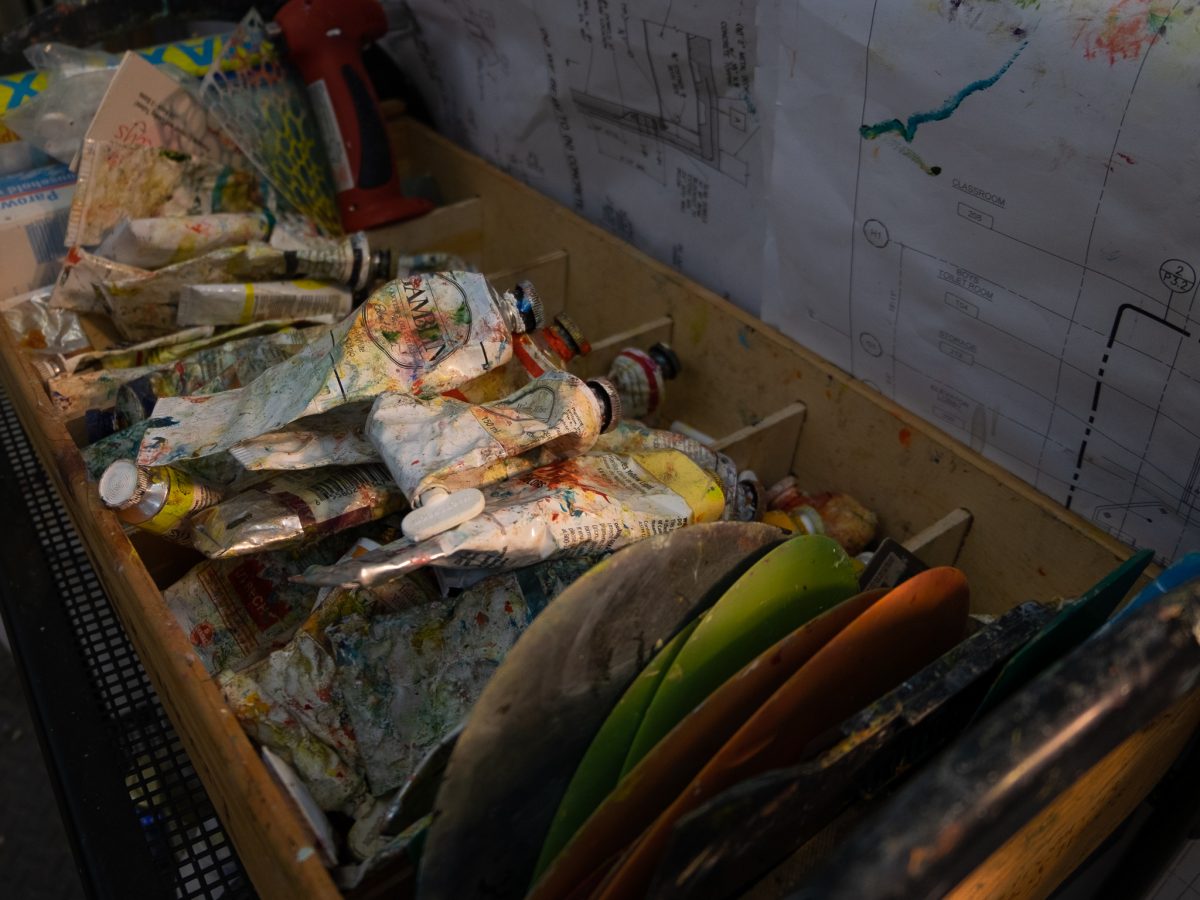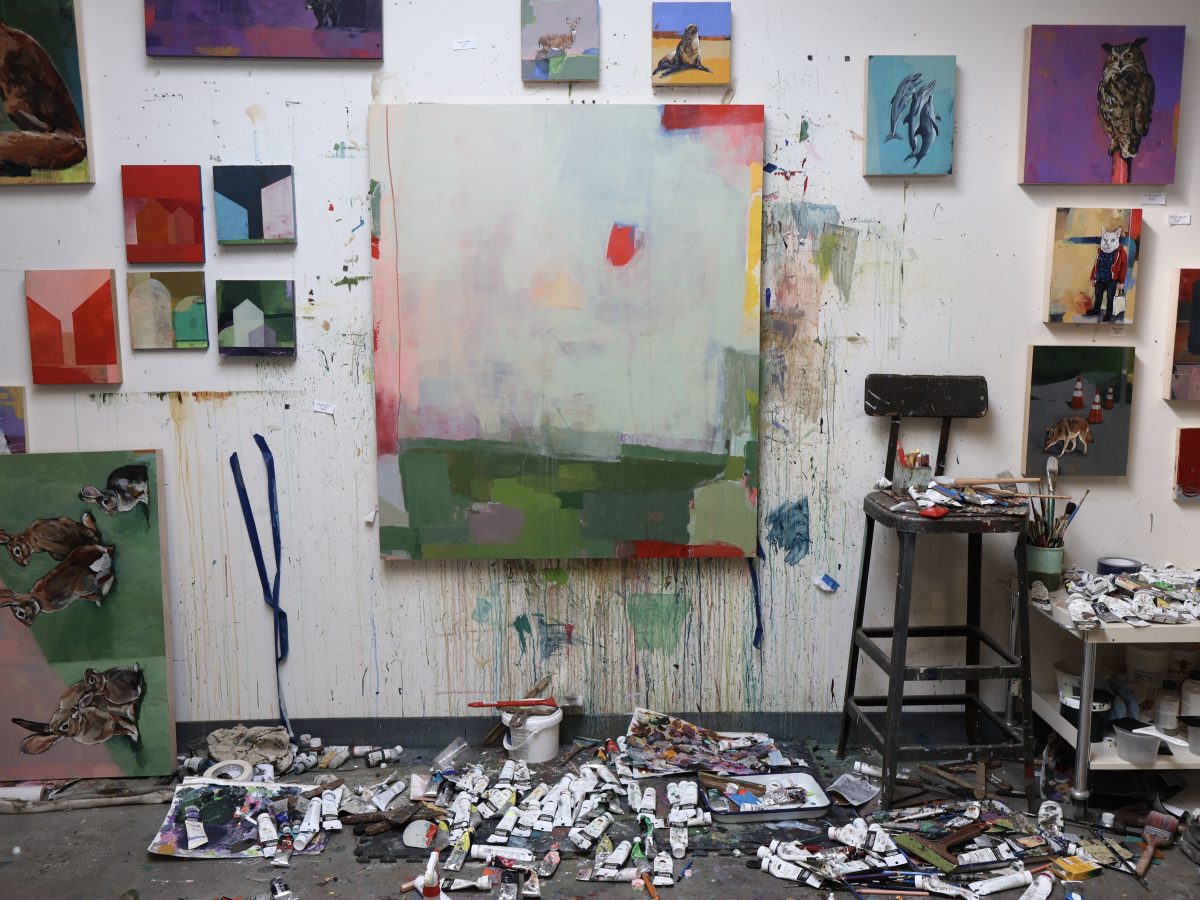

On the outside, 1890 Bryant St. is an unassuming three-story building. The hallways are gray, the elevators industrial. But when you step inside a unit, easels, fabric scraps, and smeared paint tubes are everywhere.
Members of the 1890 Byrant artist collective will open their studios to the public this weekend, letting anyone peruse their art and workshops.
We asked some of the artists what visitors should have in mind when stepping into their spaces.
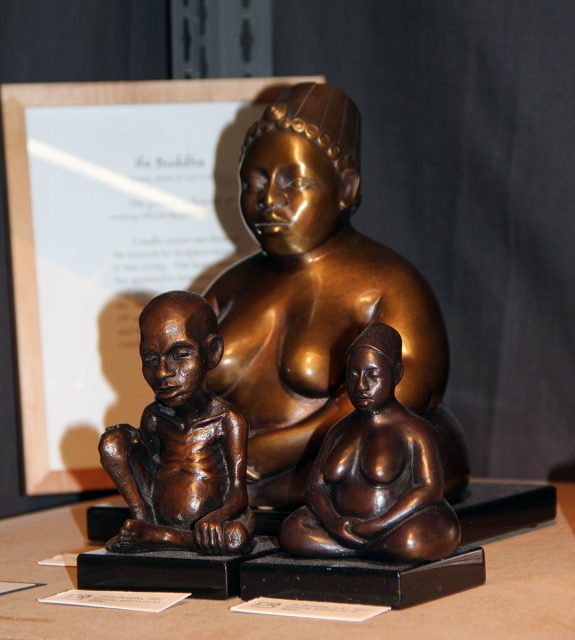
The first sculptures Charles Stinson cast in bronze were inspired by the AIDS epidemic. One, the “Castro Buddha,” reflects the gay community’s shift from a party culture to “pausing to reflect mortality,” the 72-year-old multimedia artist said. Stinson added that the figure is modeled after one of his close friends, a former male prostitute and drug addict who started practicing meditation, then founded the San Francisco Zen Center.
Stinson’s advice to viewers is practical: Go quickly through every room, take notes, and return to ask about the stories behind the work that speaks to you.
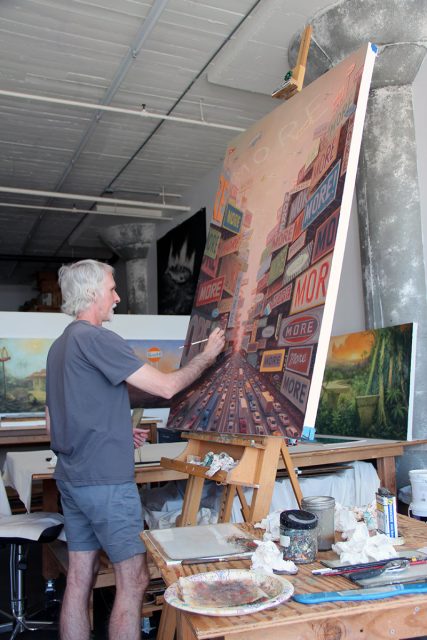
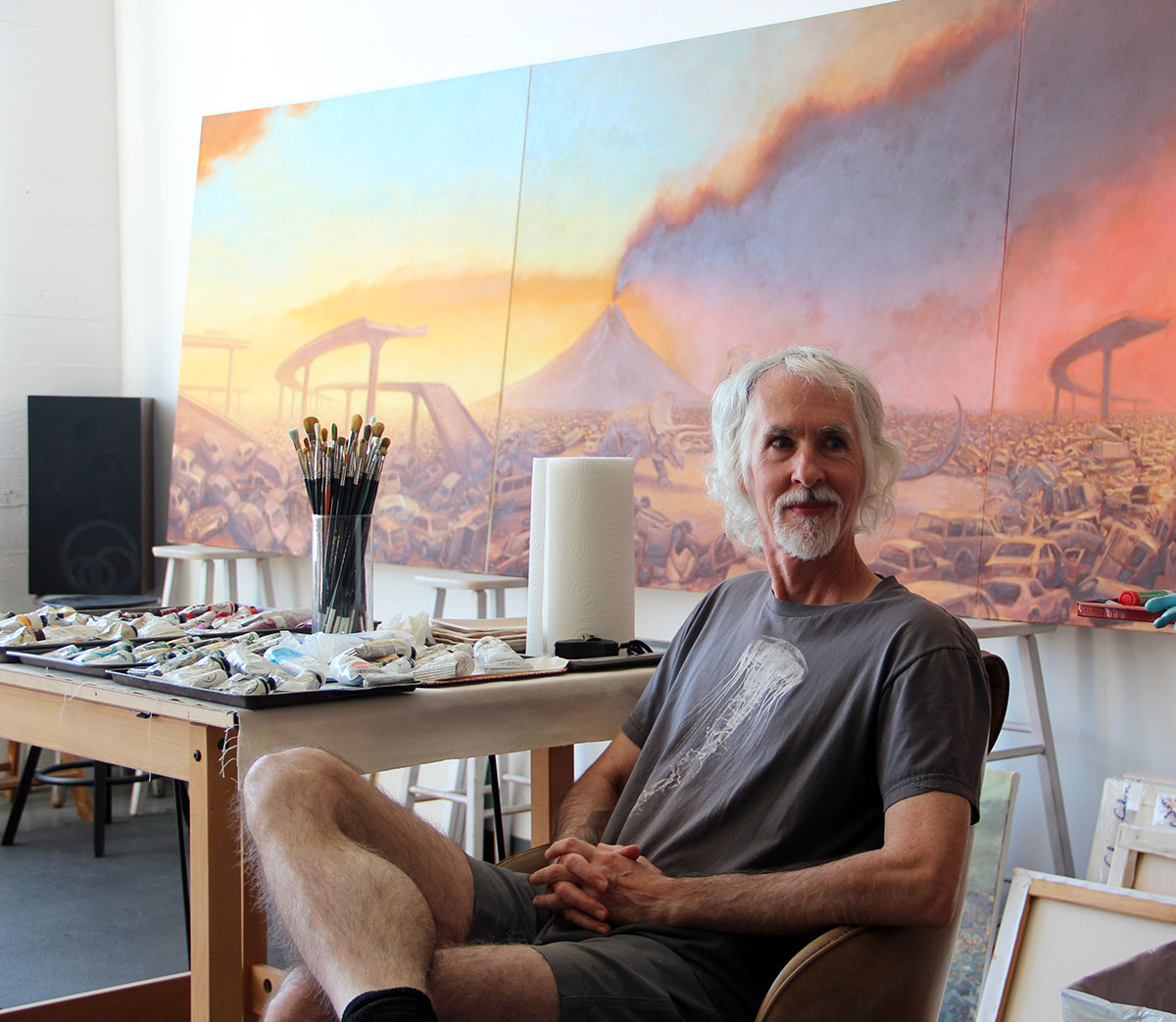
Most days, Michael Kerbow, with a paintbrush in hand, jumps between multiple intricate dystopian landscapes that surround his studio. Dinosaurs are a common motif; there are dimetrodons visiting a crumbling McDonald’s, pterodactyls attacking a Chevron, and a triceratops wading through a pool of littered soda cans.
When Mission Local visited, Kerbow was in the middle of painting dozens of billboards reading “MORE” onto a Times Square-esque scene. Kerbow said he usually struggles to decide when to cut himself off from adding more detail.
When he’s in his own “insular world, painting these images,” it’s hard for Kebow to tell if he’s accurately conveying his message. So, he said, he uses the public as a sounding board during Open Studios.
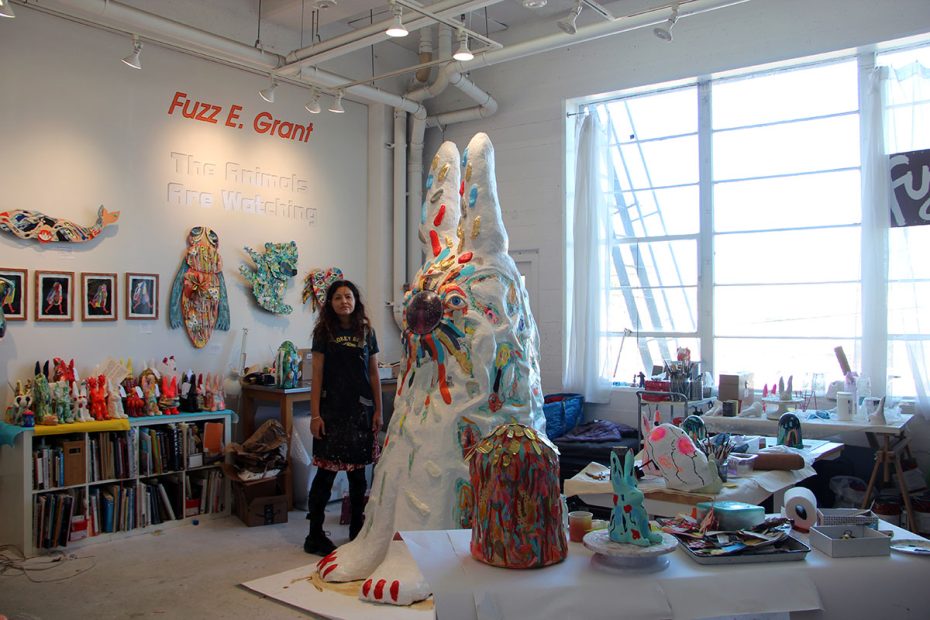
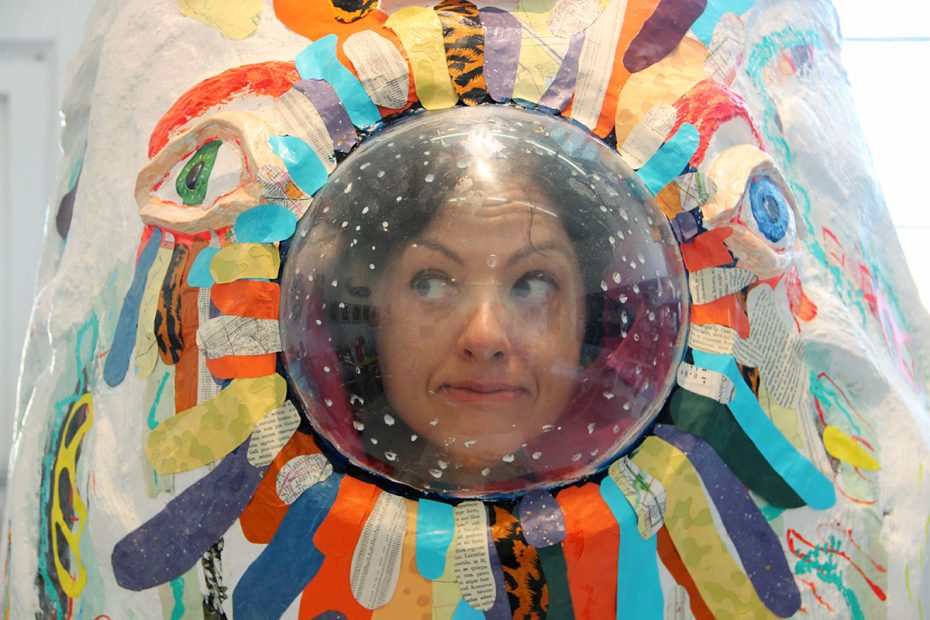
It’s difficult to visit Fuzz E. Grant without noticing the rabbit in the room. It’s an almost-seven-foot-tall papier-mâché bunny, to be exact. And, yes, Grant welcomes guests to step inside the towering animal and see the rest of the studio — lined with an assortment of other, smaller multicolored bunnies — from within.
People can be kind of scared when they first enter because they don’t know what to do, Grant said. But there’s “no snobbery” here. So, ask the sculptor, who once spent a few weeks living among grizzly bears in Alaska, why all the bunnies are “disapproving.” Hint: they all have something to say about humans.
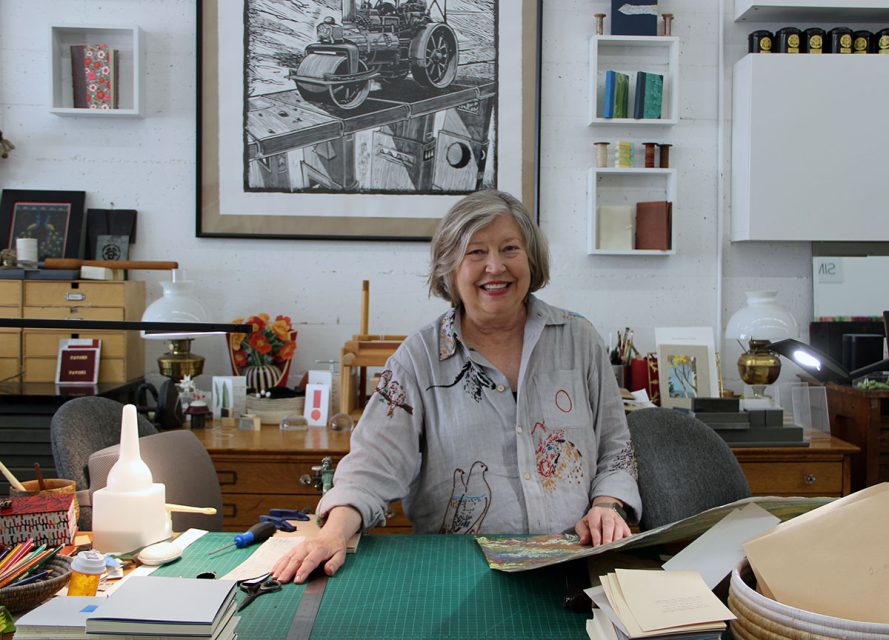
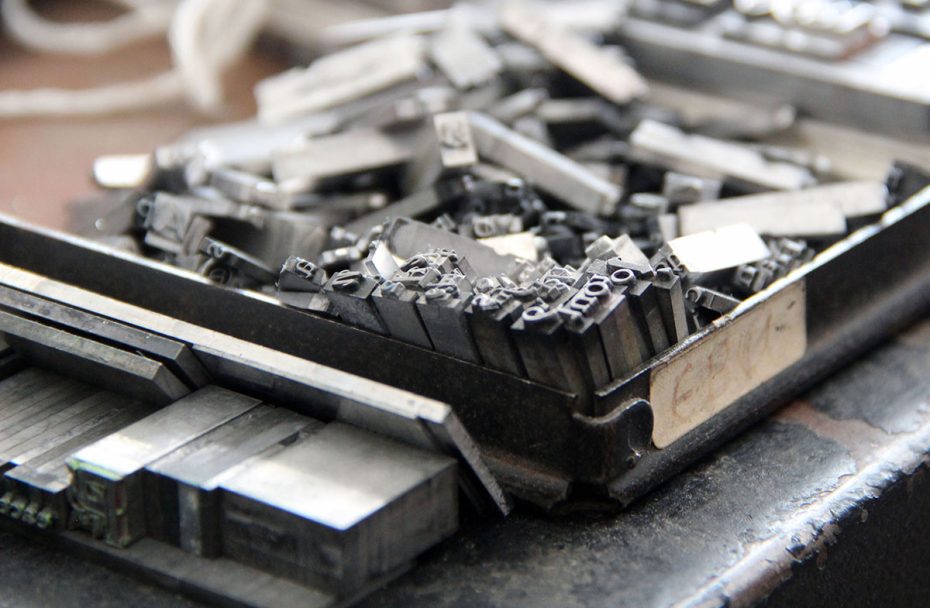
Kathleen Rydar is a bibliophile in every sense. The former literature major has spent her retirement translating Emily Dickenson’s poetry into Italian. But Rydar also reveres books as physical objects. Her studio is filled with handcrafted marbled paper (future book jackets), leather notebooks with hand-sewn bindings, and wooden letters she rescued from historic printing presses that shut down.
She hopes that visitors come to appreciate the “tactile, as well as intellectual” art of book-making as much as she does.
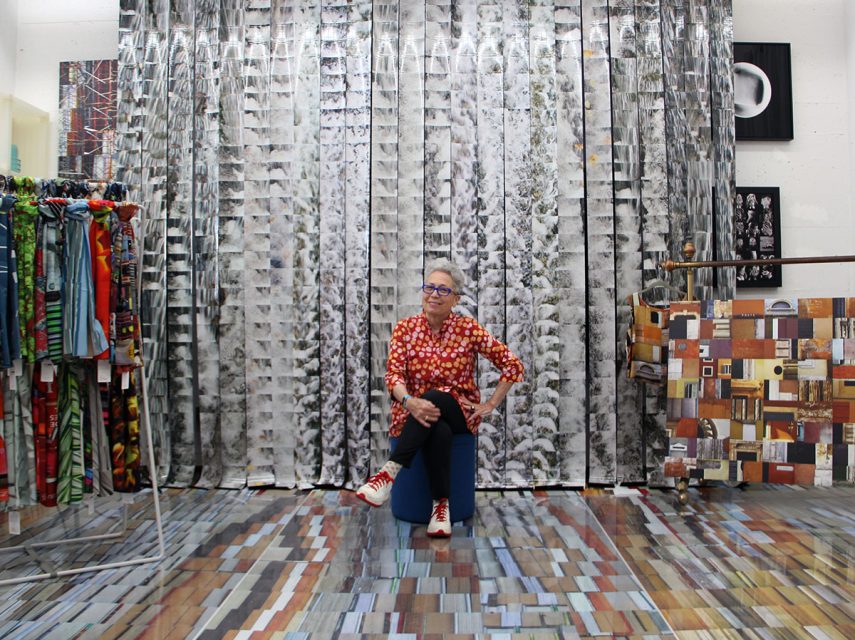
Don’t worry; you’re allowed to step on the vinyl print covering the floor of Simo Neri’s studio. In fact, Neri’s art is meant to be experienced physically, including the waterfall of photographs that tumble down one wall and her wearable textiles. She even sells neon-green “You think you just fell out of a coconut tree?” hats, part of a collaboration between her and her 19-year-old intern.
“There’s always something for people to rest their eyes on and ask questions about,” Neri said. “As the people behind the work, that’s what’s interesting for us.”
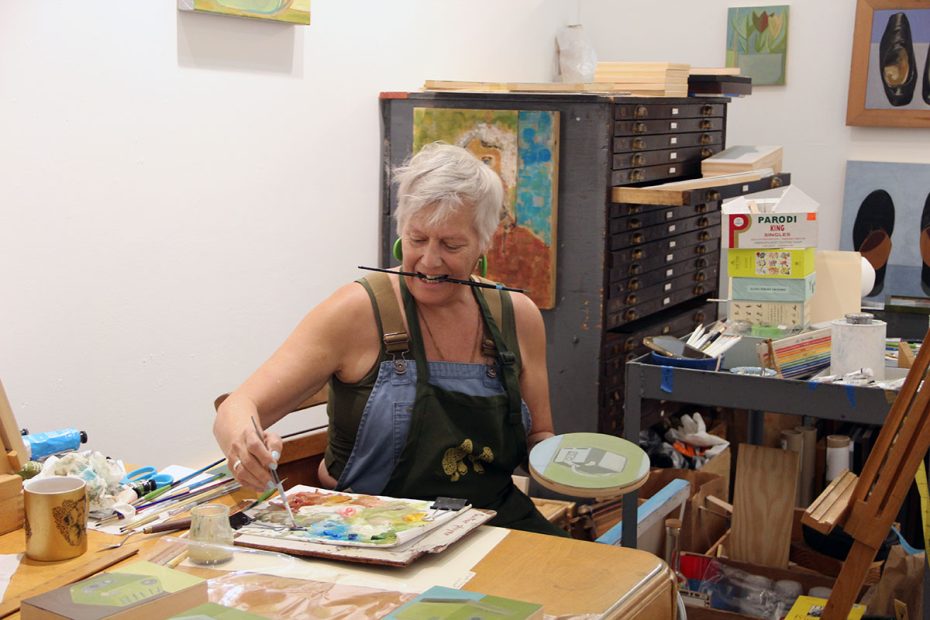
1890 Bryant is not a museum. So self-taught painter Kate Razo welcomes kids to touch her supplies, ask silly questions, and take it all in. The building can be overwhelming, Razo said, but families should stop worrying about doing the right thing and focus on having fun. In Razo’s opinion, the only aspect of art that can’t be taught is enjoyment.
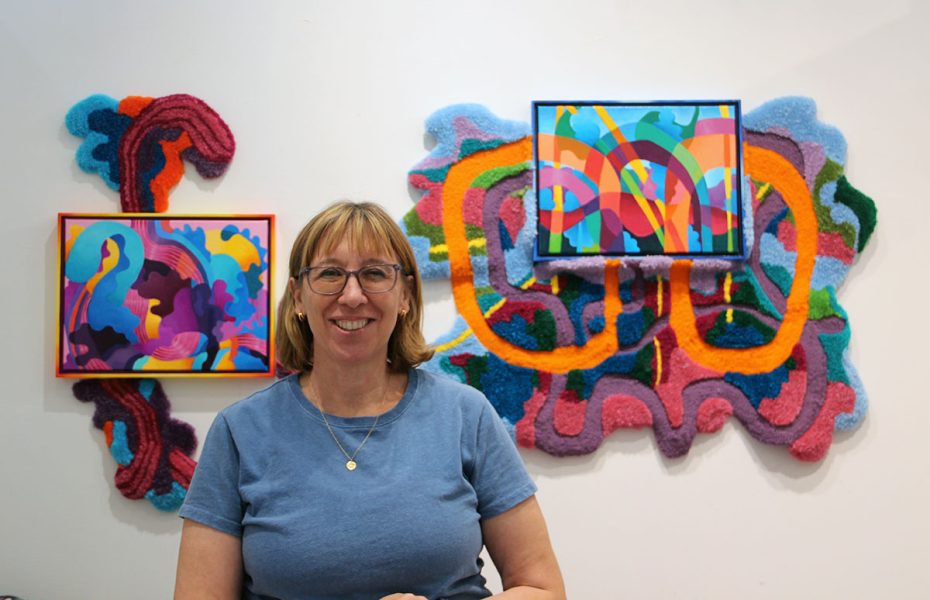
If you’ve seen the viral rug-shaving videos and thought “I want to try that,” you already have something in common with Jennifer Banzaca, who mixes tufted textiles with vivid paintings on organic wood shapes.
“The craft is as important as the art,” Banzanca said. So visitors should embrace the opportunity to see artists’ spaces when they aren’t “pristine and presented.” According to Banzanca, it’s the best way to get a sense of their personalities.
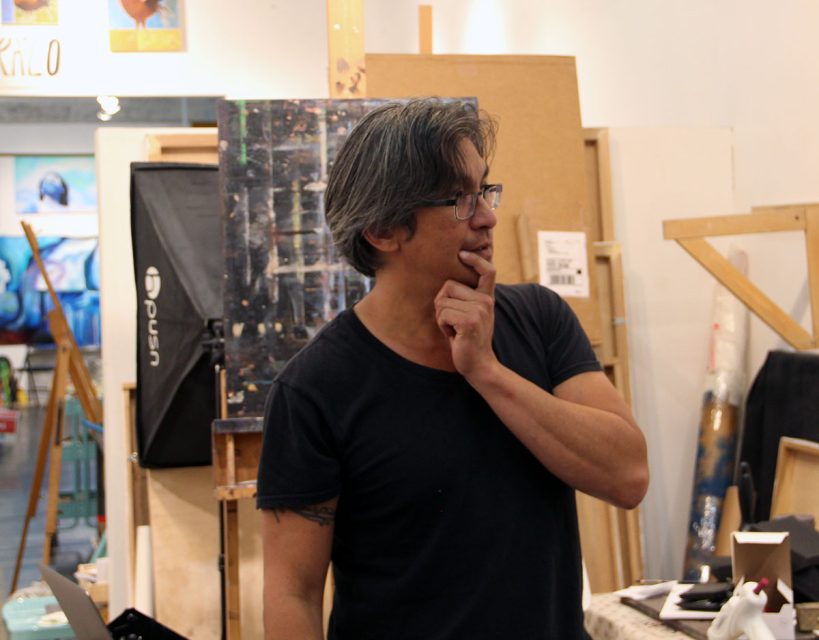
Only in a studio does the public get to peer into the process of how art is made, Calvin Lai said. That’s why, counter to his classical realism training — a “very academic” practice where you “just paint what you see” — Lai encourages people to try to “feel” the works being created around them. “The most powerful art that I see is emotional art,” he explained.
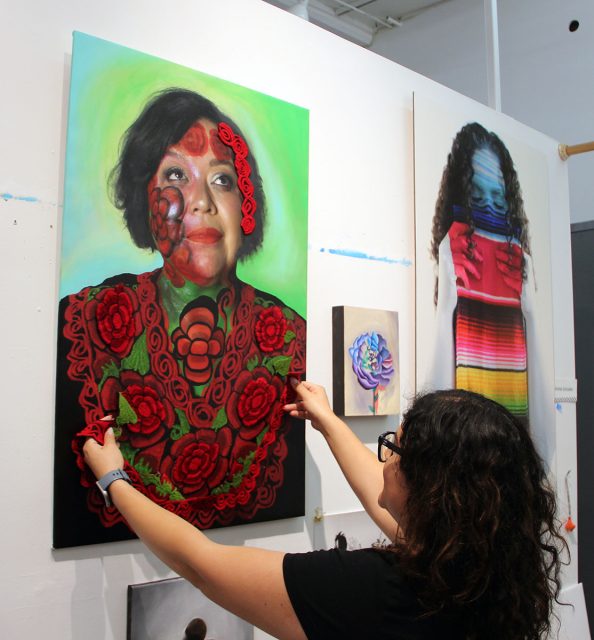
Andrea Gonzales’ canvases are more alive than any other artist’s; she paints directly onto her muses’ skin. The former makeup artist’s studio is decorated with photographs of the people she’s painted, including one portrait with cut-outs of the lace shirt her subject was wearing collaged on top.
Seeing art in person, rather than consuming images of it online, is like seeing a band perform live, Gonzales said. “It’s incomparable.”
Visit these nine artists, and 53 others, at 1890 Bryant between 11 a.m. and 5 p.m. on Sep. 28 and 29. There will be free demonstrations, and a preview of the studios Friday evening between 6 p.m. and 9 p.m. on Sep. 27.
The 101 artists participating in Open Studios this weekend can also be found at other studios in the Mission between noon and 5 p.m.:
- Art Explosion: 744 Alabama St.
- Miro Studios: 744 Alabama St.
- Art Explosion: 2427 17th St.
- Upside Artspace: 1333 Mina St.
- Alexander von Wolff: 260 Church St.
- Tisha Kenny: 599 Valencia St.
- Martin Hsu: 3150 18th St.
- Tai Chi Hip Hop Productions & Stellar Insights Astrology: 3358 23rd St.
- Tanya Herrera: 394 Fair Oaks St.
- Scott Idleman: 1206 Treat Ave.