
Half a year into the artificial intelligence boom, the creators embracing AI art in San Francisco’s Mission District generally have a tech background.
“I’m here for it,” said Ashley Herr, who’s visibly excited for the prospects created by incorporating AI into her art. Herr’s AI art installation, recently displayed at Gray Area in the Mission, types out letters when a person makes the shape of that letter with their body. On June 21, the screen showed a disproportionately large number of Ms and Gs, an indication that it might have been melding different postures together.
While instructing visitors on how to interact with the installation, Herr kept a computer and the codes by her side. Most tools for AI art require some basic programming skills to maximize its potential. And most, like Herr who is a marketing professional for an NFT marketplace in terms of her day job, share a familiarity with tech.
Soon, however, the tools to create AI artwork will likely be available to a wider range of users. “My feeling, or my intuition, is that, over the next few years, or maybe even a few months, we’re going to see more and more tools that are made user-friendly,” said Karim Jerbi, a professor at the University of Montreal and an associate professor at Mila, one of the world’s leading AI institutes, based in Quebec. Jerbi’s team is currently trying to answer the question of whether ChatGPT is creative, by measuring its creativity.
For now, however, the AI tech world seems most embraced by the tech-savvy.
Like Herr, sculptor Sophi Kravitz, who is an electrical engineer, is also thrilled about the AI boom. She’s used Midjourney, a San Francisco-based generative AI program, as a source for inspiration in the past seven months. Uniquely, on Midjourney, the process of generating images is open to the public, meaning users can potentially see the creative process of artists they enjoy.
Kravitz’s latest series, “ChimerAIs,” depicts modern day mythological creatures. But to start out, she hunts for inspiration in the work of other artists on Midjourney, attempting to transform and modify certain elements even as she blends them with the work of a dozen others.
For her, this is a way of capturing the collective imagination she’s seen on AI image tools. “Things change,” she said, sounding like an early cubist making the realization that an object can be depicted on the same canvas from different points of view.
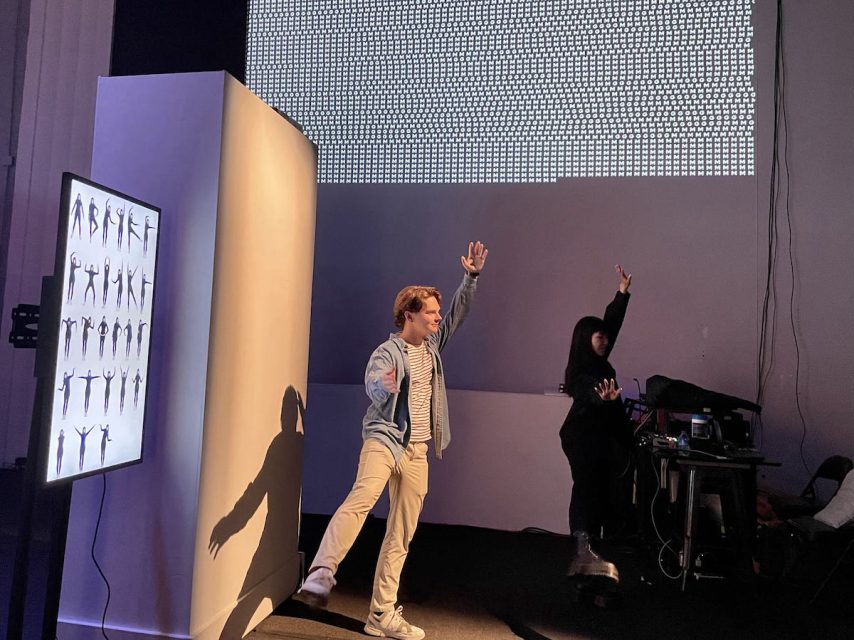
Herr’s AI art installation types out letters by recognizing a person’s posture. Photo by Yujie Zhou, June 21, 2023. 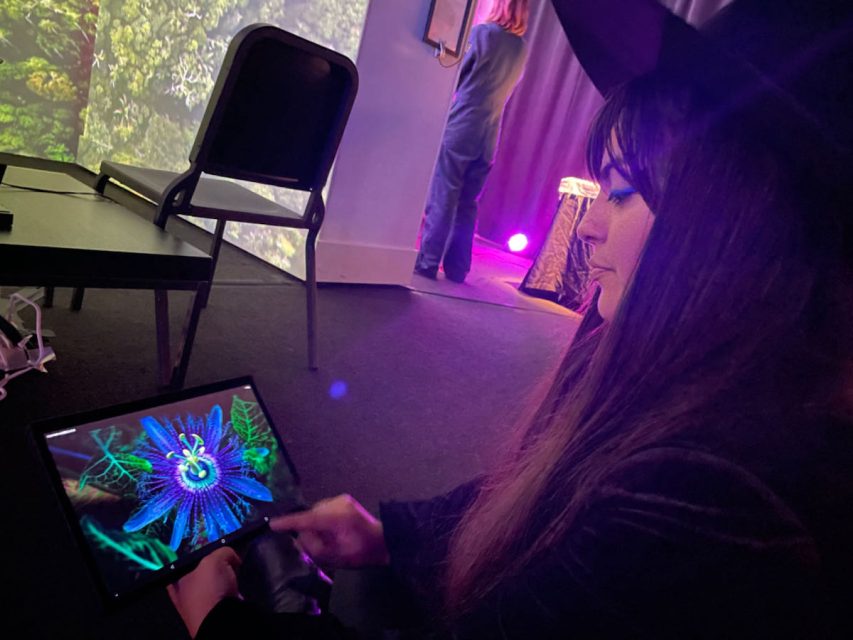
Cristina Isabel Rivera’s latest work combines a short film of the Amazon rainforest with images of passion flowers generated by AI. Photo by Yujie Zhou, June 22, 2023. 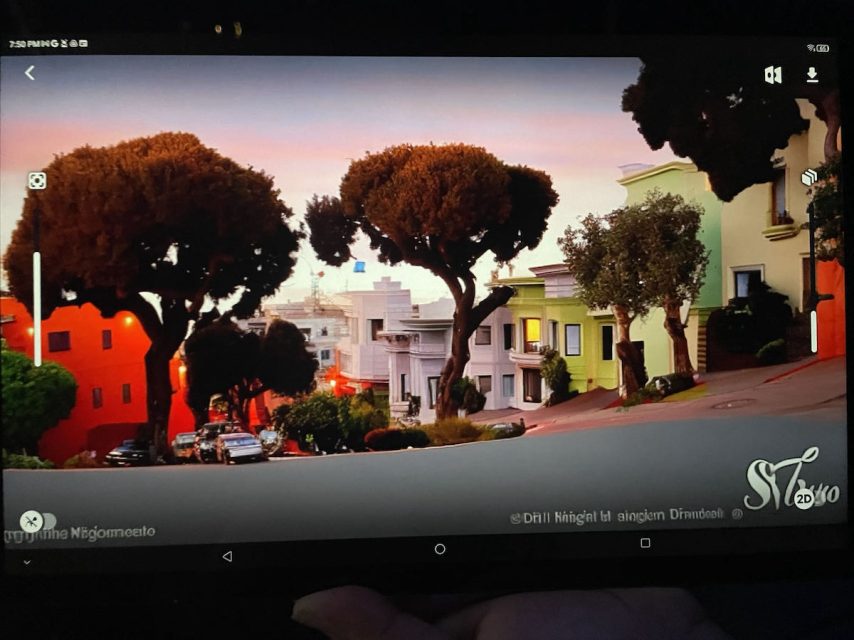
Images created by LeiaDream using prompt, “Mission District San Francisco during sunset trees.” Photo by Yujie Zhou, June 22, 2023. 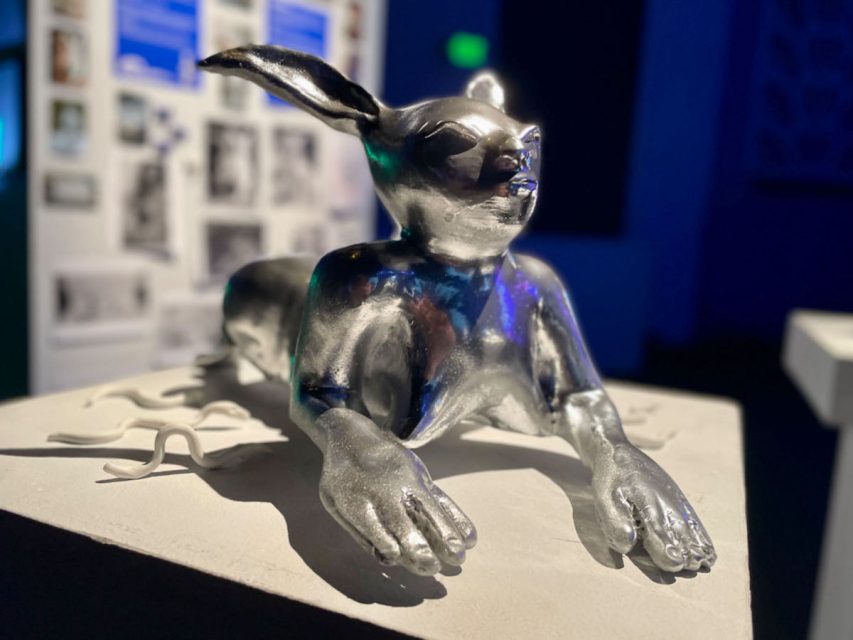
Sophi Kravitz’s latest series, “ChimerAIs,” depicts modern day mythological creatures. Photo by Yujie Zhou, June 21, 2023.
“For me, AI is just a tool like anything else, like Wi-Fi, like social media, like all these different things that we use,” said photographer Cristina Isabel Rivera, who works in digital production for tech. Her latest work combines a short film of the Amazon rainforest with images of passionflowers generated by AI to raise awareness for environmental protection.
Currently, she’s looking forward to what she will discover about her own work after training an AI model with her 15-year archive of photos.
An individual style is what most art departments hope to develop in their students, said Kurt Ralske, department chair of media arts at Tufts University’s School of the Museum of Fine Arts. “The thing that we do in art schools — students come in and four years later we want them to have their own style.”
Nat Schager, a former software engineer at TikTok whose background is in programming, enjoys the feeling of losing control and ceding part of the decision to AI, but he acknowledges how different this is from the traditional experience of making art. “I tried to embrace the chaos,” he said. Recently accepted into Parsons School of Design in New York City with a full scholarship, Schager plans to continue exploring making art with code — and he won’t be the only one.
At Tufts, according to Ralske, art professors even planned to offer a course to teach how to write prompts, as AI art is generally generated from a user’s written text. But their failed search was a clear indication of the field’s growth pangs, as they couldn’t find the right person to bridge the fields of art and technology.
Meanwhile, dramatic policy changes have taken place at Ohio’s Columbus College of Art & Design over the past few months, according to Charlotte Belland, chair of its animation program. Controversially, countless original works have been used to train the AI model without artists’ consent, but it’s become difficult to treat the resulting student work as plagiarism.
In classrooms, professors are also delving into the legal and scientific aspects of AI, but a course on how to make better use of AI in art? “It’s about time,” said Belland. “In academia, we also have that problem where we move like a turtle. We will get there eventually, but we move a little slowly.”
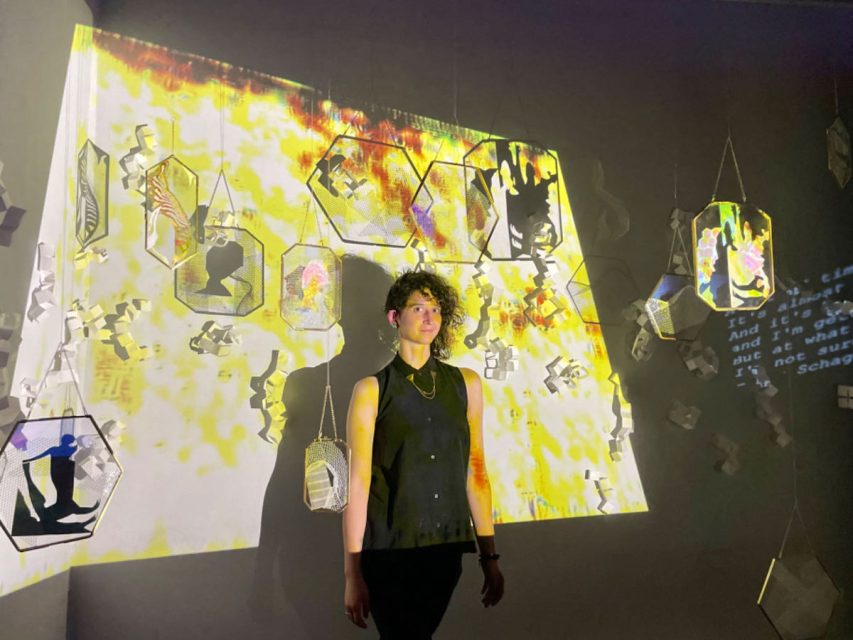
AI almost feels like a buzzword now, said Quinn Keck, a data scientist and artist, and consequently players in this new market “can get away with insane things like no other industry.” Photo by Yujie Zhou, June 21, 2023. 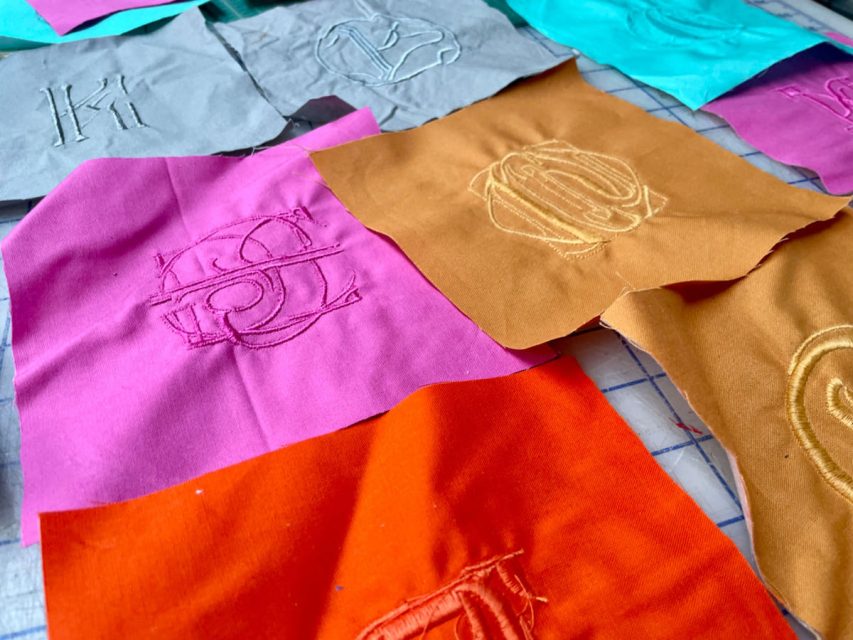
Emeline Brulé and Michelle Venetucci ask AI models to design decorative letters on fabric, and mistakes come one after another. Photo by Yujie Zhou, June 20, 2023. 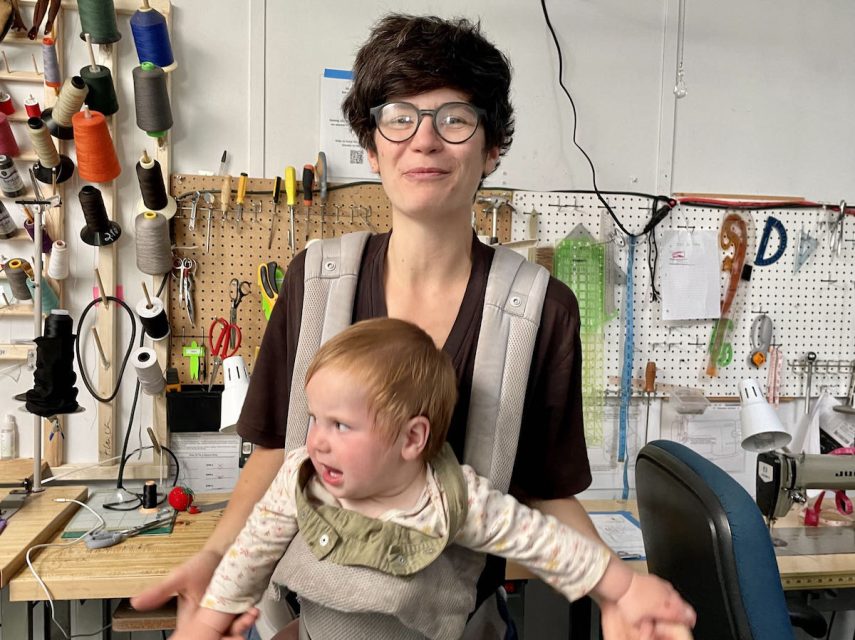
Emeline Brulé and her nine-month-son Orion at hackerspace NoiseBridge. Photo by Yujie Zhou, June 20, 2023. 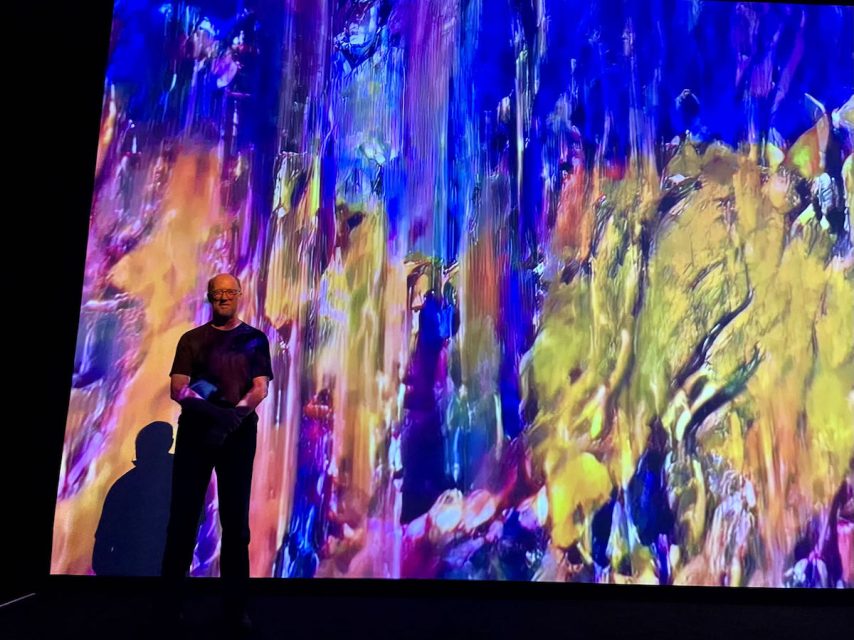
Photographer David Aughenbaugh is amazed by AI’s potential to produce photos that can be enlarged infinitely, which performs especially well on the abstract images he takes. Photo by Yujie Zhou, June 21, 2023.
Ubiquitous concerns about AI’s ethical downsides
AI almost feels like a buzzword now, said Quinn Keck, a 33-year-old data scientist and artist, and consequently players in this new market “can get away with insane things like no other industry.”
In particular, she said, many AI companies even try to make it seem like the model is alive without being under anyone’s control. She sees this as a way to avoid culpability. “Like, what if you went to a restaurant and they couldn’t tell you what was in your food?”
A couple blocks away at hackerspace Noisebridge, Emeline Brulé, who teaches human-computer interaction and design at the University of Sussex in England, and Michelle Venetucci, a Yale Ph.D student who focuses on anthropologist of technology, are figuring out the edge of AI model by using it in nontraditional ways.
Instead of making photorealistic images, they ask AI models to design decorative letters on fabric, and mistakes come one after another — the J is reversed, the E has additional loops, and the numbers are never quite right. “I’m working on how we use art to make the general public more aware of the ethical limitations of AI,” said Brulé.
For photographer David Aughenbaugh, who also works as a visual effects artist in the film industry, the ethical burden of using AI was once so unbearable that when the AI boom first came, he was even hesitant to continue using it because of fears of the backlash. “I didn’t want people to say, ‘Oh, he’s one of those AI artists,’” he said. Still, he remains amazed by AI’s potential to produce photos that can be enlarged infinitely, which performs especially well on the abstract images he takes, and the potentials of the technology remain undeniable.
So far, most say the artist remains critical. “The human element of the artist putting in there is what can make it happen. But once you pull the humans out of the equation, the computers can’t do it,” said Steve Piasecki, venue manager and program manager for artists incubator Gray Area.


There’s certainly more potential for AI-assisted art than there was for that NFT fad a few years back.
It’d be great if there were ethical alternatives to Midjourney and OpenAI. Currently, these companies are powered by data they collect and use without consent. Hopefully we’ll see some regulation in this space (similar to the GDPR or CCPA) so we can enjoy these tools and know that they aren’t powered by stolen content.