
When the Lexington Club closed in 2015 after 18 years in the Mission, it was mourned by many as the “last lesbian bar in San Francisco.”
Other lesbian bars, like El Rio and Wildside West, had come to function as queer community watering holes, as well as spaces for lesbians (and lesbian-adjacent queer folk).
But in the last six years, the number of bars with a significantly lesbian clientele has begun to rise again. There’s Jolene’s (2019), Mother (2023), Scarlet Fox (2023) and Rikki’s, a women’s sports bar which opened this past June.
It’s not just bars. Parties, raves and events like Lesbeaux (at Beaux), Out and About, Queen Out (at The Cafe) and sapphic Pride are having a resurgence too, joining long-time mainstays like Mango and UHaul.
The difference? For a start, they don’t call themselves lesbian bars anymore. The love that once dared not speak its name now has an almost endless number of I.D.s.
Jolene’s defines itself as both a “lesbian/queer bar” and “SF’s queer destination,” as a way to balance the desire for lesbian spaces with the realization that culture, and labels, don’t stay fixed.
Mother calls itself “dyke of center.” Scarlet Fox and Rikki’s describe themselves as a queer-owned wine bar and a women’s sports bar, respectively.
Lesbian bars and other lesbian spaces had been on the decline for decades across the country. In the ‘80s, there were an estimated 200 lesbian bars nationwide. By 2020, that number had dwindled to somewhere around 20, according to the Lesbian Bar Project.
Many factors contributed to the decline: Women, on average, earn less than men. They also, on average, drink less alcohol. And, while lesbian bars were one of the few places where lesbians could reliably find each other, today there are apps for that.
San Francisco saw that change play out in the Mission District.
“Valencia Street was where all the queer girls were,” said Susie Smith, a filmmaker currently working on a documentary about “the Lex.” While the neighborhood was mostly Latinx, Valencia was “really like a college campus, you would just see everyone out there on the street.”
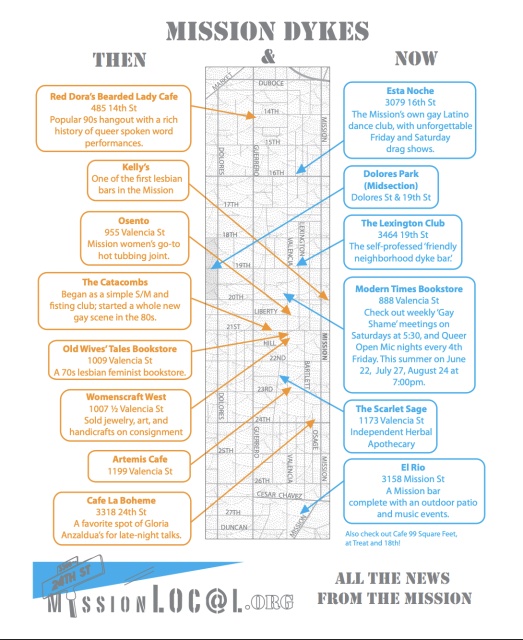
Then the lesbian bars, and other businesses, like the hot-tub spot Osento and the feminist bookstore Old Wives’ Tales, folded. Mission Local documented much of the change in 2010 with a “Then and Now” map of shuttered and new businesses.
When the trend reversed over the last 10 years, it was often because women and nonbinary people nostalgic for the lesbian bars of their youth opened up their own spots.
Jolene Linsangan led the way with her namesake bar, a splashy place distinguished by its highly Instagrammable boob-print wallpaper, neon signs and nightly go-go dancers. The bar top is probably used more for dancing, drag and burlesque than it is for slowly nursing drinks.
Then Malia Spanyol, a veteran bar owner, opened Mother at 16th and Valencia streets.
“I grew up with these places,” said Spanyol. “The younger generation didn’t have one.”
The shotgun-style storefront that houses Mother is funky, immensely purple and casual, with drinks ranging from $3 beers to $14 cocktails. There are no snobby mixologists, and like the Lex before it no cover charge.
In 2024, it was named one of the best new bars in the country by Bon Appetit, both for the “tasty, but unfancy cocktails” and for its revival of “a precious piece of community that came too close to being snuffed out.”
Keeping spaces like this “safe” is not always easy. It’s “challenging because of security, safety and politics,” Linsagan explained.
“You can’t turn away anybody at the door” she said, even though people do show up to leer or otherwise make the patrons inside feel uncomfortable.
Mother does its best to vet customers before they step inside, reminding visibly male patrons that they are entering a queer space and to be respectful — along with a hypnosis-style video of gay porn with “you are gay” flashing — before anyone starts causing problems.
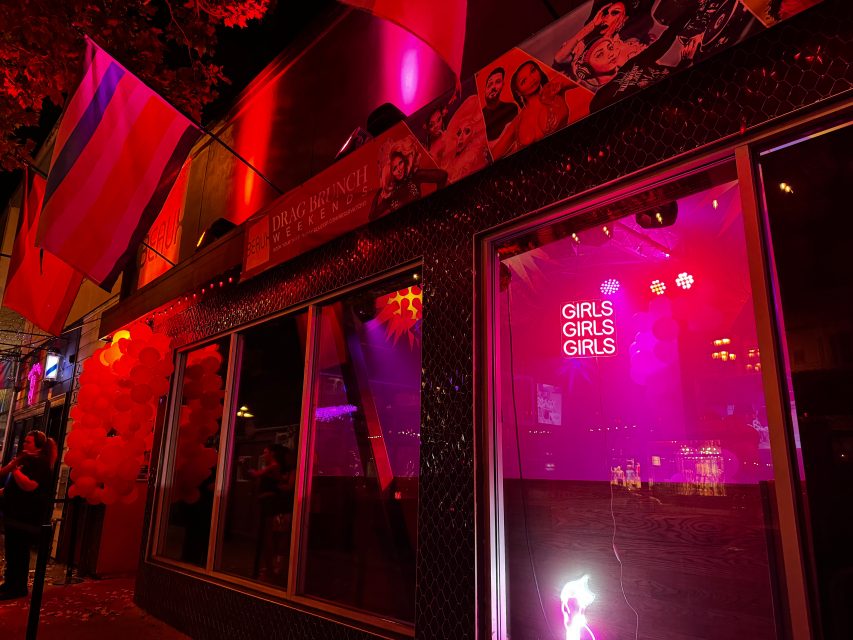
Who are these spaces for?
Apart from homophobes, the bars welcome everyone — a shifting of labels that was underway long before the Lex closed. “The Lex opened as ‘your friendly neighborhood dyke bar,’ but also called itself a queer bar as things changed,” said Smith.
Now, there’s an even friendlier acronym: FLINTA, for Femme, Lesbian, Intersex, Nonbinary, Transgender and Agender — which includes everyone, including trans men and women, who aren’t cisgender men.
“For me, it’s all about fostering community, and you can’t do that if these spaces don’t exist,” said Kaela Miller, co-owner of Scarlet Fox, a wine bar in NoPa.
Miller describes Scarlet Fox as a lesbian bar and a queer bar, meaning it doesn’t exclude or turn anyone away. But still, it’s centered around sapphics.
“For years, we’ve talked about the lack of spaces for queer women, and my wife and I are excited to be part of the community working to change that narrative in the city,” Miller continued.
Rikki’s, meanwhile, describes itself as a women’s sports bar, but could easily be mistaken for a lesbian bar at times. It’s located in the Castro, and named after Rikki Streicher, who co-founded the Gay Games and opened two legendary lesbian bars in San Francisco, Maud’s and Amelia’s.
While the bar doesn’t label itself as queer, “you show up and it’s full of multigenerational lesbians,” said a player from the Cuties, the lesbian kickball team.
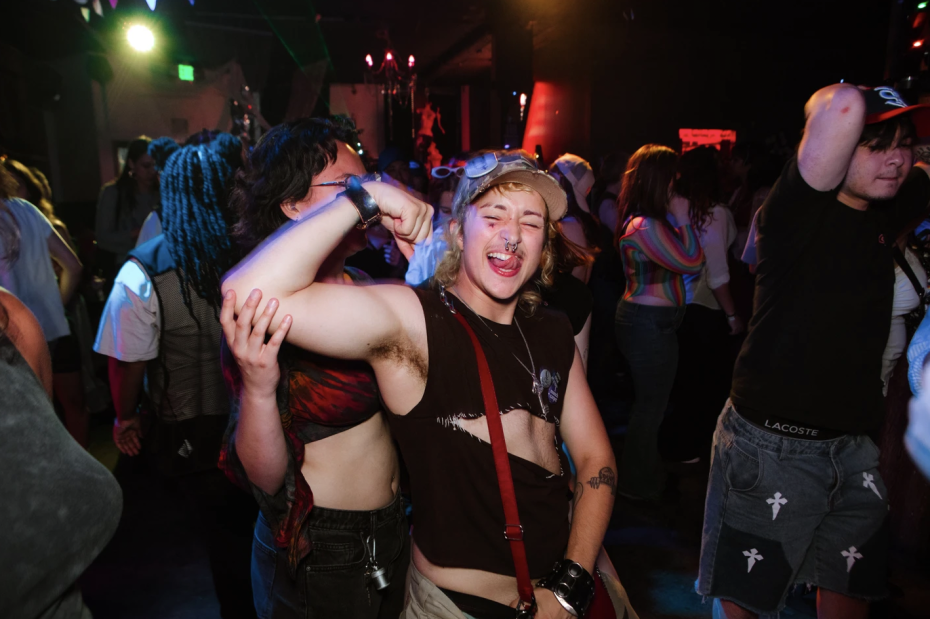
‘The Castro was pretty much just for gay men’
Abby Landis, better known as DJ Mama San in the DJ booth, started Lesbeaux and Queen Out because they saw a gap in the market. The market in question? Ironically, the Castro — the poster child “gayborhood” of America.
“I grew up thinking the Castro was the gay place where I could be gay. But then I turned 21, and realized the Castro was pretty much just for gay men,” Landis said. “There needs to be more for gay women.”
Although Landis’ goal is to eventually open up a more permanent space for sapphics and femmes, pop-up parties are an easy way to bring community into different spaces where it previously hasn’t been prioritized.
Lesbeaux is a bi-monthly “party for sapphics and those who love them,” centering queer, trans and BIPOC communities held at the Castro bar, Beaux.
“Even though Beaux is a predominantly white, cis-male space, it’s the intent behind the event,” said photographer Sammy Peace outside of Lesbeaux. “Once you find your niche, once you find those parties, you want to support them.”
For now, at least, the new bars have plenty of supporters — a market often underground or ignored by even mainstream queer culture.
“San Francisco is the best city to be a gay man. It’s one of the best to be a lesbian,” said another Cuties kickball player, reflecting on the growing number of spaces and parties geared towards queer women. But, they added, “There can always be more.”