
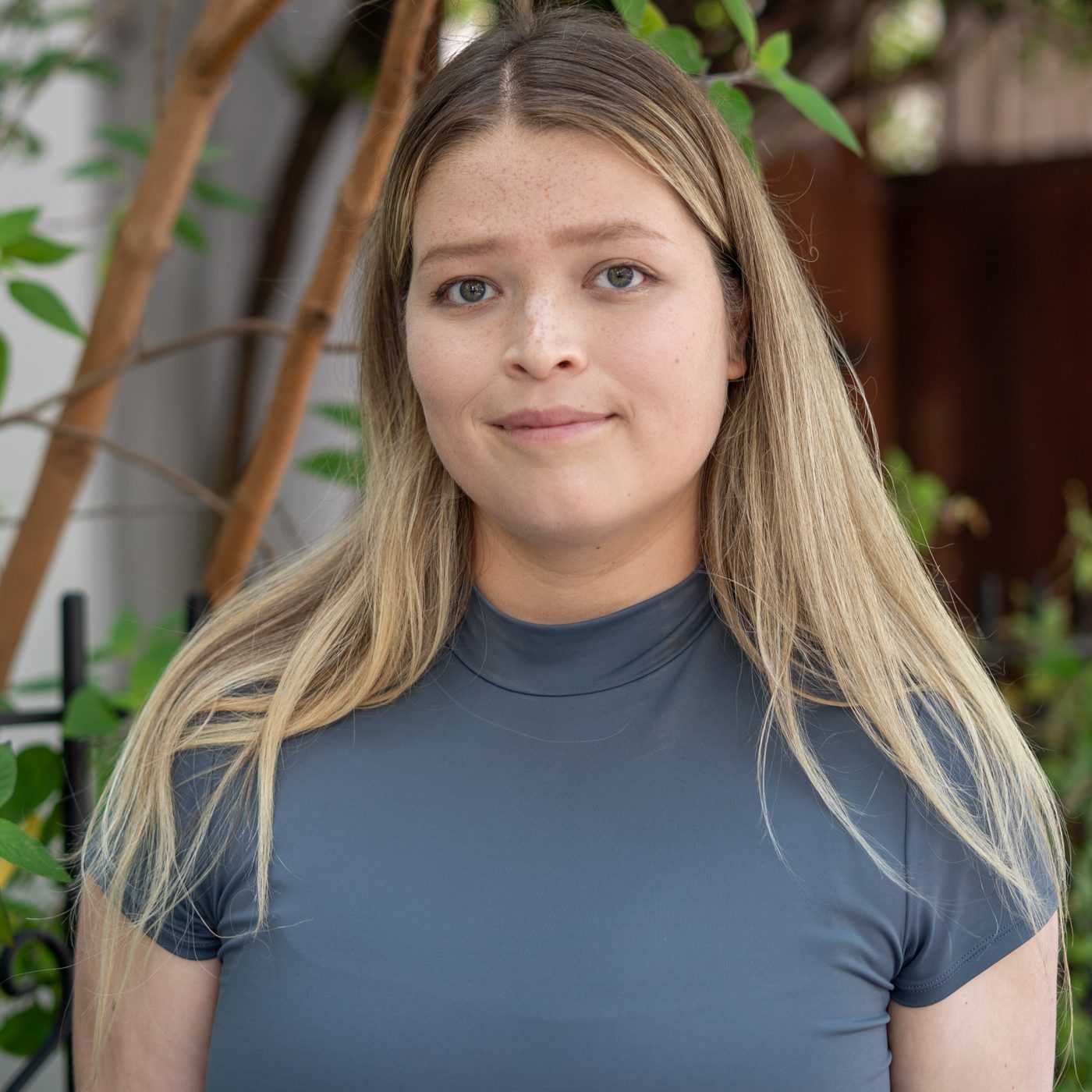

Daniel Calderon has a tough task: He’s the curator of exhibitions at the San Francisco International Airport’s museum, and every few months he has to put together a collection that prompts some of the 52.3 million travelers who pass through every year to look up from their phones and escape its constant buzz — if only for a moment.
“These galleries are little oases,” he said on a recent Tuesday afternoon, gesturing toward a brightly lit exhibition space just past the security checkpoint in Terminal 2. The clatter of rolling suitcases, tearful goodbyes, hurried phone calls, and even quarrels between TSA agents and aggrieved passengers filled the background.

The SFO Museum is not the only one located in an airport; there are more than a dozen others across the United States, including galleries at Miami International Airport and Hartsfield-Jackson Atlanta International Airport. But SFO’s museum is something special.
“We are the only museum inside an airport accredited by the American Alliance of Museums,” Calderon said. “We are held to the same standard as the Smithsonian Institution, which allows us to borrow objects from major collections locally and from all over the world.”
To wit, Calderon, 46, recently oversaw the installation of the AIDS Memorial Quilt at SFO, on view through March 22, 2026.
Originally created in 1987 to honor those lost to the AIDS epidemic, the quilt is on loan from the National AIDS Memorial Grove in San Francisco’s Golden Gate Park.
Coordinating with multiple organizations, ensuring proper conservation of the fabric panels, and adapting the airport space for such a large and emotionally resonant piece presented significant logistical and curatorial challenges, he said.

The whole project took him four years, but it was worth the wait.
“People are so happy to see this here — people who are connected to the AIDS epidemic, who lost friends and family, and even people who are learning about it for the first time,” he said.
The AIDS Memorial Quilt, widely celebrated as the world’s largest community art project, now includes nearly 50,000 panels honoring more than 110,000 people who have died of AIDS-related illnesses, and it continues to grow as new panels are added. The quilt weighs approximately 54 tons in total.
Exhibits like that have made SFO one of the few places you can walk to your flight past a Wayne Thibault cityscape or Yayoi Kusama high heels. Next to the AIDS quilt in the pre-security area, for instance, Calderon also recently curated a new exhibition on Tlingit American glass artist Preston Singletary — large Indigenous glass sculptures, including a black raven sitting atop the world.


The SFO Museum was established in 1980 with a single gallery in Terminal 3. The next year, in 1981, the San Francisco Airport Commission presented its inaugural show: “New American Glass,” a traveling exhibition of more than 200 contemporary glass works that had originally been slated for the Legion of Honor. Due to space limitations there, the exhibition was installed at SFO instead.
Today, the museum has 25 galleries and approximately 40 exhibitions annually that cover topics ranging from the history of Bay Area jazz to contemporary Indigenous art to the evolution of both pilot and flight attendant uniforms. Thirty people staff it.
Its Aviation Museum wing is easy to get to — get off at the airport’s BART station and walk through the International Terminal, just before the security gates — but its collections are spread throughout the airport.
It’s more accommodating than most museums: You can email curator@FlySFO.com to get an exclusive one-on-one tour, complete with a special pass granting access to exhibitions beyond TSA security.
“We joke sometimes that we work in a liminal space, like we’re museum ghosts floating between terminals,” Calderon said, half-laughing. “People don’t come here to see art. They’re trying to make a flight. But when they do stop, it’s really meaningful.”

Despite hosting more than 6 million travelers per month, the museum doesn’t exactly have a steady following. Calderon admits it can be hard to measure success in traditional ways; foot traffic is difficult to track in a space designed for transience, and engagement often comes down to anecdotal feedback or social media interaction.
Its Instagram account has just under 10,000 followers, compared to 58,000 for the Legion of Honor, around 180,000 for both the de Young and Cal Academy, and nearly half a million for the SFMOMA.
“It’s not like we have regulars,” Calderon said. “Sometimes it feels like we’re planting seeds in motion. You never really know what lands.”
For Calderon, one of the museum’s four curators, the job is a reflection of his lifelong passions. From a young age, he has been interested in antiques, history, and vintage music.
Born in Glendale, California, in 1978 and raised in Alhambra, California, he often visited his maternal grandparents in nearby Eagle Rock, where some of his fondest memories are of rummaging through their attic in search of hidden artifacts.
As a boy, he was a frequent visitor to the Museum of Science and Industry (now the California Science Center) at Exposition Park, the Travel Town Museum at Griffith Park, and the La Brea Tar Pits and Museum in Los Angeles. A visit to the Planes of Fame Air Museum in Chino at age 11 sparked what would become a lifelong fascination with aviation history.
He tells aspiring museum curators or young people who may not have considered a career in museums to do what his parents helped him to do as a child: “Visit as many museums as you possibly can around your city, volunteer, intern and seek out curators.”
Among his upcoming projects is an exhibition that will delve into the vibrant lowrider culture, spotlighting how it brings families together, from parents teaching their children the art of car customization to community car shows that serve as lively family reunions and celebrations of heritage.
All in all, Calderon wants visitors to know one thing: “The museum is here to educate and entertain people in the airport — to humanize the airport environment.”
SFO Museum is fantastic. Highly recommend building in an extra 15 minutes or more to take in an exhibit or two when you travel. Some past exhibits that pop to mind that I enjoyed: electric guitars, classic horror movie posters, mid-century design (maybe that one was about bakelite, a pre-cursor to plastic). But even topics I didn’t know would be interesting to me were fascinating to look at and gave me cool and often beautiful new things to think about in what would ordinarily be a dull and stressful location.