
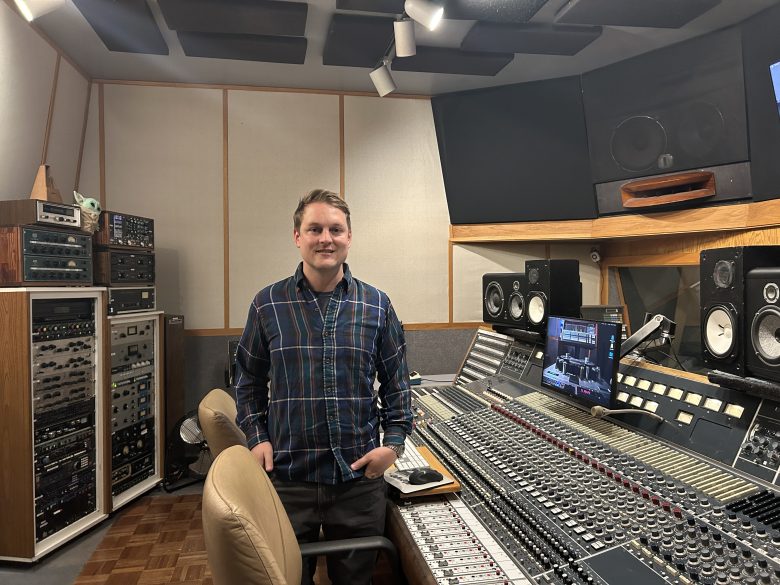

Jack Kertzman leads me up a set of stairs and deeper into the heart of an Art Deco building on Hyde Street.
We pass through one doorway, then another, then two more in succession. The last two doors are flush to their frames, for soundproofing. We enter a tiny room with high ceilings, no more than 100 square feet, empty except for microphones and cords.
Kertzman tells me to try it out myself. When I open my mouth, my voice bounces off the walls.
“We call this the echo chamber,” Kertzman says. The corners of the room are warped to never be exactly 90 degrees, so the sound reverberates, creating an effect like a cartoon character in a cave.
Later, Kertzman pulls a Dave Crosby record out and points out a song recorded in the echo chamber: 1971’s “I’d Swear There Was Somebody Here.” In it, Crosby layers vocals of himself chanting in the room. With the reverberation, it sounds like a choir.
The echo chamber is deep within Hyde Street Studios, a legacy business in the Tenderloin that hides nearly six decades of music history in a nondescript, windowless building. Closer to the entrance, in Studio A, Kertzman points out the grand piano and Neve 8038 series console once used by Tupac and 2 Chainz and, before them, Willie Nelson and the Grateful Dead.
“When this place opened, it was like other hippies recording hippies,” Kertzman said.
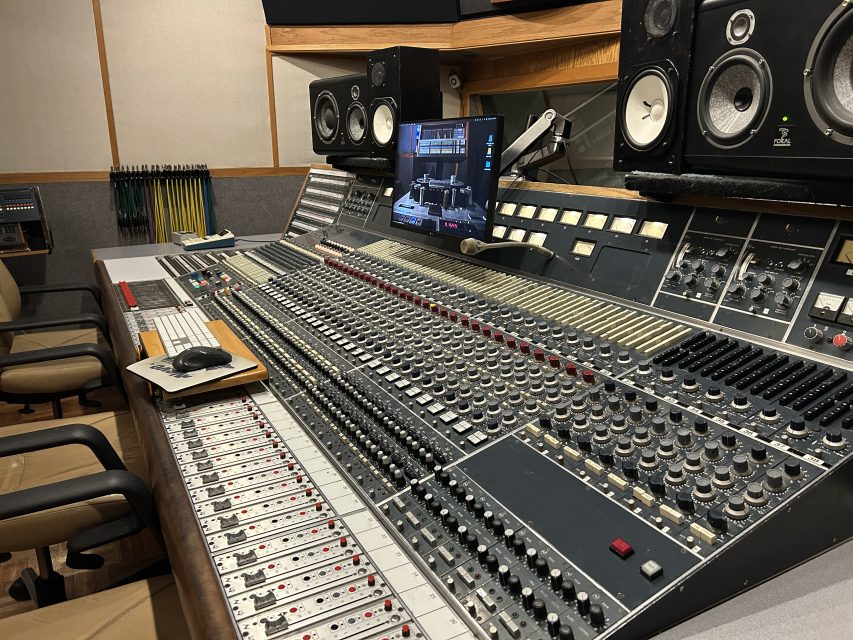
Kertzman is the manager of the studio, which is owned by Michael Ward. It opened in 1969 as Wally Heider Recording, right when artists were moving away from full orchestras and toward rock albums with just a few musicians in the booth at a time. Heider sold the place to Ward 11 years later, in 1980.
Despite its celebrity appeal and recognizable clients — Train recorded “Save Me, San Francisco” in Studio A in 2009, and J. Balvin held a session when he was in the Bay Area on his tour in May — a historical recording studio is not a big moneymaker.
The Tenderloin’s lack of appeal to many has acted as a kind of protector for the recording studio, keeping rents low enough for Hyde Street to pay its bills and keep hourly prices accessible for emerging artists, Kertzman said.
Many other studios in San Francisco were decimated by the rise of Napster and music streaming in the 2000s, and only one in five survived, Kertzman estimates. Some moved to Oakland, which now has a bigger music scene than San Francisco.
“If it was in the Marina or something, at some point there probably would have been somebody who found a more profitable use for the space, and we wouldn’t exist anymore. So the Tenderloin has really helped keep it around,” Kertzman said.
There was one close call: In 2017, Hyde Street Studios’ landlord and a developer created a proposal to build an eight-story, 94-unit apartment building and demolish the studio space in the process. The city planning department ruled that the proposed development did not meet standards for preserving its historical Art Deco facade, saving the studio.
Kertzman, who has worked at Hyde Street for 14 years, said that when he’s deep in the windowless building, he can feel removed from the neighborhood. But when he arrives and leaves work, he’s seen a dozen phases of the neighborhood, including years when it struggled and years when it thrived. The studio, over its decades of existence, has seen even more.
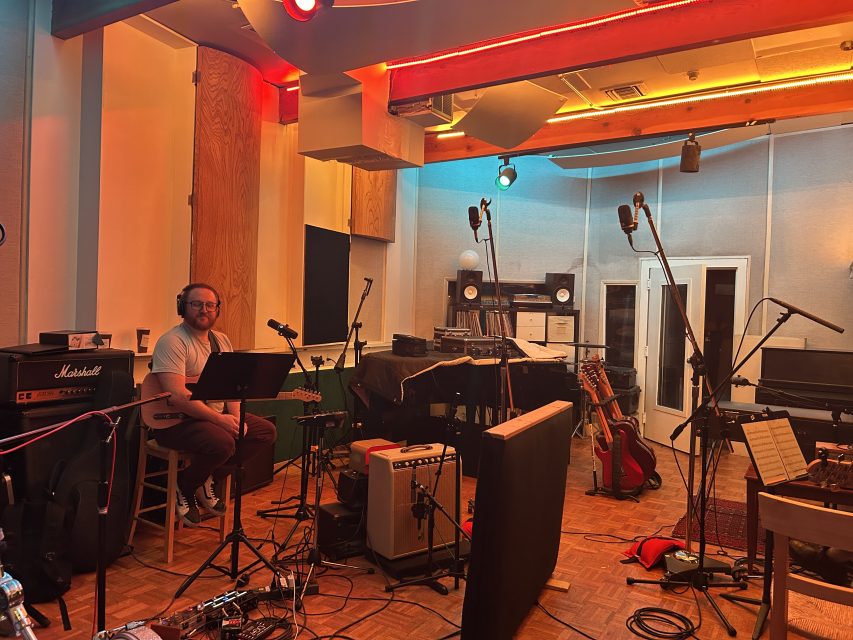
These days, Kertzman tries to keep the place busy. He books the studio spaces out for about 340 days a year, though nowadays artists prefer to schedule a day here or there, instead of reserving the spaces for weeks or months at a time, as they once did.
Rates for the space range, depending on the project and the artist, and rentals include the service of Hyde Street’s roster of sound engineers. Upstairs, he rents spaces to other recording studios. (During my tour, a crew was working on a Double Fine Productions video game soundtrack at Wally’s Hydeout.)
Despite the years and big-name artists, Kertzman won’t name a favorite musician who has worked in the space, or even a favorite genre.
“I try not to put us in a box of a particular genre. It’s really nice to work on everything,” he said. “It’s a great community in the Bay. They deserve access to this.”