

Multiple female public defenders of color accused San Francisco Superior Court Judge Braden Woods of a pattern of inappropriate comments, demeaning attitude and bias against them between 2018 and 2021, Mission Local has learned.
Following a formal 2021 complaint, the judge was quickly transferred to another court and the claims stayed out of the media. But in recent weeks, Woods’ judicial assignment to courtrooms in San Francisco Superior Court near City Hall has forced at least one of the lawyers who complained about his alleged conduct to appear before him again.
Diamond Ward, a public defender who was part of the initial complaint, has challenged Woods’ fitness to oversee her case. On Friday, Woods will rule on that challenge.
The accusations came within declarations from three attorneys attached to a 2021 complaint from Matt Gonzalez, the chief attorney of the public defender’s office.
Attorneys Kathleen Natividad, Crystal Carpino, and Ward accused Woods of criticizing their body movements or making sexualized comments, commenting on their clothing and smirking or laughing or otherwise antagonizing them in open court in front of their clients and district attorneys.
“Judge Woods’ behavior is highly inappropriate and unethical, and he creates a toxic work environment, particularly for attorneys who are women of color,” said Deputy Public Defender Elizabeth Camacho, a supervisor for some of the alleged victims.
“It makes it harder for us to do our jobs. And that can impact every aspect of a case, including our clients,” she said.
Woods, who is Black, was appointed to the bench in 2013 by then-Gov. Jerry Brown after six years at the San Francisco District Attorney’s Office, where he served as chief deputy of the criminal division, and two years at the Kern County District Attorney’s Office.
His first assignment was to act as the presiding judge of the San Francisco Community Justice Center, an alternative court in the Tenderloin.
In late 2021, when Woods was tapped to be promoted to a courtroom overseeing the master felony calendar, a group of female public defenders banded together to make an official complaint against him to the presiding judge of San Francisco Superior Court, Anne-Christine Massullo.
Some two dozen attorneys signed on, according to the public defender’s office. Soon after, Gonzalez submitted the complaint to the Commission on Judicial Performance, a state agency.
Woods had “shown disrespect to the litigants appearing before him by making sexually charged and inappropriate statements, losing his temper during pre-trial conferences, and by demeaning young women attorneys of color who appear in his courtroom,” Gonzalez wrote in that complaint letter, which included support from a male public defender who had witnessed one incident. Gonzalez called the pattern of behavior “inconsistent with his duties as a judge.”
In December 2021, members of the district attorney’s office joined in a meeting with the public defender’s office and judicial leadership to discuss the various allegations against Woods.
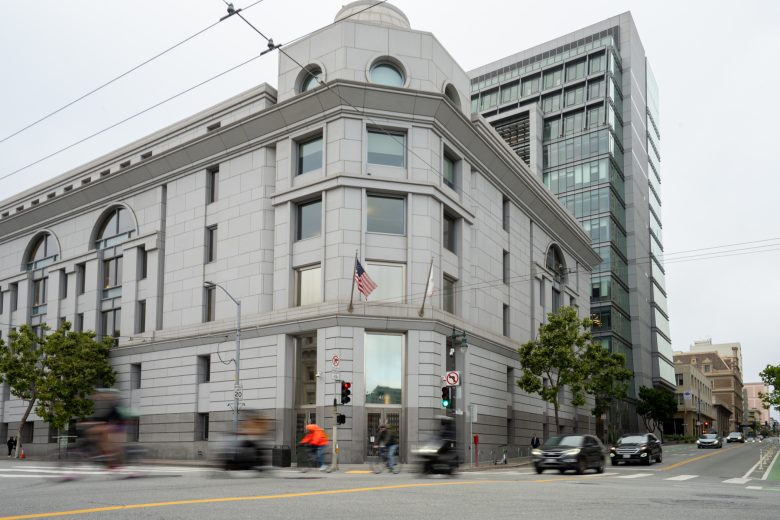
According to multiple attorneys working in the courts at the time, Woods was “immediately” removed from the Hall of Justice, where more serious criminal cases are heard, and sent to the Civic Center Courthouse, where mostly civil cases or misdemeanor criminal cases are heard.
Because the DA’s office made similar claims against Woods, “that caused this matter to stay off the media radar and kept quiet, in how [Judge] Massullo handled it,” said former public defender and prosecutor Rebecca Young, referring to the presiding judge at the time who acted swiftly to retract Woods’ promotion. “I don’t know what would’ve happened if we hadn’t had a couple of district attorneys saying ‘Me, too.’”
Regarding the case being heard on Friday, Camacho said, Woods has already indicated that he intends to strike down Ward’s challenge. It claims Woods is biased and prejudiced, and should recuse himself from hearing her case.
Ward, in a statement accompanying her challenge, said Woods “yelled and screamed” at her in court in April 2021, when she was newly promoted to handle felony cases. Ward said Woods berated her for poor time management because she had another hearing in a different courtroom, a common occurrence among attorneys who are typically juggling several cases in a given day.
“I was completely humiliated in front of my client, a courtroom of other lawyers, and the court staff,” she wrote in the statement.
Ward and her colleagues also had issues with filing challenges in Woods’ courtroom. Over the years, they have managed to have their cases sent to different courtrooms or even had substitutes fill in for them when possible.
Another public defender, Crystal Carpino, said in a November 2020 written declaration that Woods called her alone up to the judge’s bench, without calling the case’s prosecutor, and showed her a post-it note with the word “WOW” written on it. He mouthed “Wow” at her as he looked her up and down, and told her he liked her shoes.
In another instance, Carpino said Woods “verbally attacked” her during a conference in defense of a prosecutor on the same case, even though that prosecutor said he took no personal issue with Carpino’s statements. Woods jumped from his chair and with an “imposing and threatening” posture, “towered” over still-seated Carpino, and berated her.
In her 2020 statement, Carpino called the incident “intimidating and chilling,” and ended up having to leave the courtroom, in tears.
Kathleen Natividad, another public defender, said Woods “antagonized and demeaned” her and other women of color in the courtroom, often off the record before cases were officially “called” and the court reporter began taking notes.
In one incident in August 2020, Natividad had a case sent before Woods, even though she had spent two years making efforts to avoid his courtroom. Woods refused to call her case that morning, Natividad said, inaccurately saying he had a full calendar, and showed “condescending and paternalistic language, body language, and gestures.”
When she came back that afternoon, Natividad said that Woods, again off the record, criticized a settlement agreement that attorneys had reached, telling the six-year attorney that she was too inexperienced to understand.
When he called the case, and Natividad attempted to make her challenge, she wrote that Woods cut her off to deny it, then began audibly laughing out loud at her.
“Judge Woods, just as he always does, took advantage of my youth, gender, and the fact that no other attorneys were present in the courtroom, to antagonize me, to demean me, and intimidate me in open court,” Natividad wrote in her 2020 statement. She added that the treatment has sowed distrust between her clients and herself.
With her challenge rejected, Natividad began to make an argument for an appeal, Woods began telling her to “quit yelling” and commented on her physical appearance, mocking her for “jumping up and down.” Natividad made her legal argument in tears.
Camacho, Natividad’s supervisor, stepped in after witnessing the incident, one of several she has seen.
“All of the interactions, his behavior has been so abrasive, aggressive, [and] disempowering, every time,” Camacho said in an interview. “And it’s hard, because transcripts don’t always capture that. You have to be there in the moment to see the aftermath of what his words, actions, and behavior do.”
Camacho met in 2020 and again in 2021 with presiding judges about the accusations against Woods, but it is unclear whether Woods ever faced any other consequence, beyond being moved to the Civic Center Courthouse to hear lower-level cases.
The San Francisco Superior Court undertook an investigation, Camacho said, but she never learned the outcome.
The Commission on Judicial Performance confirmed in 2023 that it had received the public defender’s 2021 complaint. It did not say whether an investigation had been conducted, and the women named in the complaint were not contacted, according to the public defender’s spokesperson, Valerie Ibarra.
The court declined to comment on the claims. Woods did not answer calls to a number associated with him, but judges are typically not permitted to speak to the media.
This article was updated with a response from the San Francisco Superior Court.
Jeez, what’s up with the Commission on Judicial Performance and for that matter the entire Cal Bar? Every attorney, except for unfortunately JUDGES, are required to take mandatory continuing legal education on the elimination of bias. Those courses are really softball classes but they do remind practitioners what’s needed. This judge really needs to be taken down. What is it going to take for these stuffed shirts to force him out? The disciplinary program is not just about going after the lost solo practitioners, trust busters and paralegals impersonating attorneys. He’s also making everyone else on the bench look bad. Some judges just **don’t deserve** the robe.