

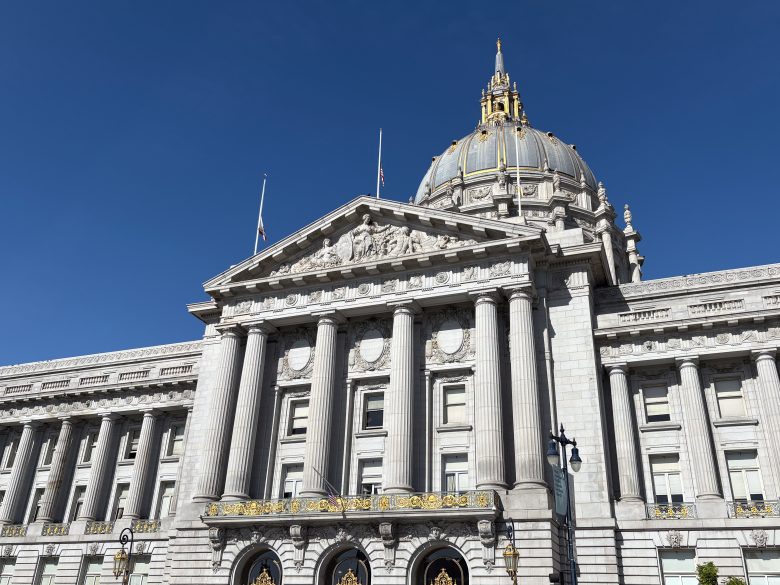

City department heads and supervisors agree that San Francisco is seeing an unprecedented level of collaboration across city departments to tackle the drug crisis. But now, District 9 Supervisor Jackie Fielder is looking for the next step: A clear way to measure how well this collaboration is working.
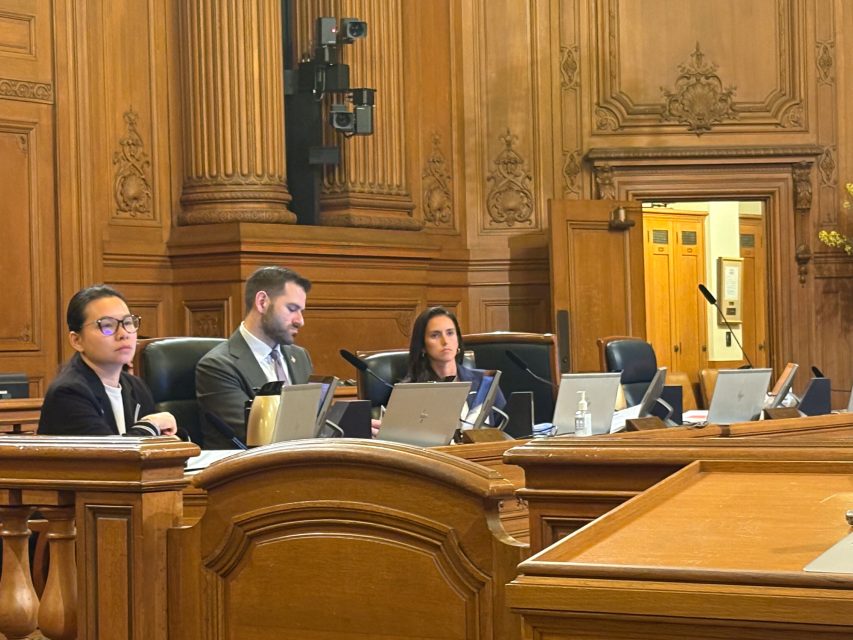
“How are we identifying metrics of success?” Fielder asked at a hearing Thursday at the Government Audit and Oversight Committee. The Police Department, the Department of Public Health, and the Department of Emergency Management had just presented their plans and actions to address the open-air drug markets, drug addiction and treatment, including the six neighborhood street teams Mayor Daniel Lurie announced in March.
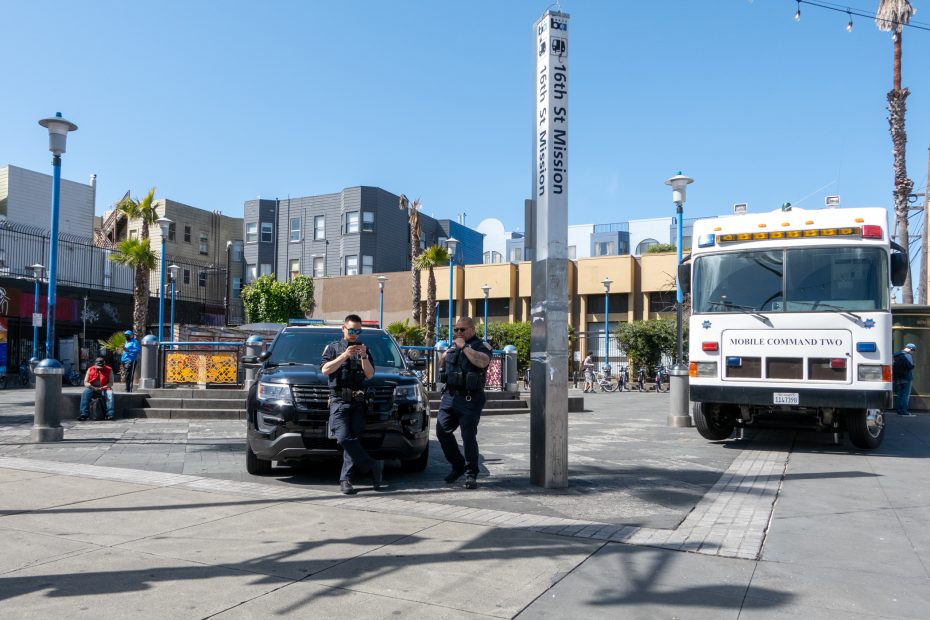
Collecting this kind of data is important, Fielder said, because so far, efforts to reduce public drug use, drug dealing, and fencing of stolen goods in Civic Center, South of Market and the Tenderloin appear to have resulted in an increase in all of these things at the 16th Street BART Plaza. Now that police have established a 24/7 presence at the plaza, at least some of that activity has dispersed into streets around the station which had been relatively quiet before.
A prominent goal of the crackdown is to help tourists and residents feel comfortable visiting (and shopping, and dining in) areas like San Francisco’s downtown. The committee’s vice chair, District 3 Supervisor Danny Sauter, left halfway through, joining one of the hearing’s co-sponsors District 5 Supervisor Bilal Mahmood to attend the opening of a Nintendo store in Union Square.
“My district is feeling the pain with the displacement,” said Fielder, who represents the Mission District, now the current hotspot for drug arrests and citations. “I don’t think I’m in a position to tell my constituents that we are, by any means, close to solving the drug crisis.”
Commander Derrick Lew from the San Francisco Police Department acknowledged that the displacement of drug users and dealers is unavoidable, based on the current strategy.
Success will clearly mean some displacement, Lew said, showing before-and-after photos of United Nations Plaza, which was an early focus of DMACC, a drug crackdown and tough-on-enforcement operation launched by former Mayor London Breed and former Police Chief Bill Scott, which coordinates resources from 13 city departments. “People will move to where the pressure is not.”
Lew also underscored “dispersion,” as an effect of DMACC. What really makes a street start to feel unsafe, he said, “is the grouping.”
“A person going down the sidewalk pushing their baby carriage can get over one person,” Lew said, as an example. “But when 20, 30, 40, 50 people are lined up, then it starts getting scary.”
Fielder said she passes the 16th Street BART Plaza on her bus ride to work everyday, pointing to another problem she sees as what she described as the city’s “catch-and-release” strategy. In March, Mission Local reported that a raid by the police department and the sheriff’s deputies led to the arrest of about 40 people at Market Street and Van Ness Avenue, but no criminal charges came out of the mass arrests.
“Do you think it’s an effective use of limited public safety resources just for people to get released and not connect to the treatment?” Fielder asked Lew about those arrested and released.
“I do,” Lew answered.
Dr. Dan Ciccarone, an addiction expert at the University of California, San Francisco, who spoke at the hearing, disagreed. “Why is there not a next step for that person?” Ciccarone said after the hearing. “Any time you do that, you lose what Daniel Tsai suggested, which is ‘stickiness.’” In an earlier presentation, Tsai, the director of the Department of Public Health, had described the city’s goal as “stickiness and flow;” helping move people quickly from the streets into treatment and recovery.
Ciccarone noted that people with drug addictions, after being arrested and spending a few days detoxing in jail, are more sensitive to drugs when they return to the streets.
“It should not be catch-and-release,” Ciccarone said. “It should be catch-and-retain.”
The Thursday hearing, called by Fielder, is based on a city report that compares DMACC’s approach to the drug crisis with the “Four Pillars” strategy developed in Zurich, Switzerland. The “Four Pillars” is a model that combines prevention, treatment, harm reduction, and law enforcement, which helped the Swiss city get through its heroin epidemic in the 1990s.
The report was commissioned by former Supervisor Dean Preston and released by the San Francisco Budget and Legislative Analyst in November 2024.
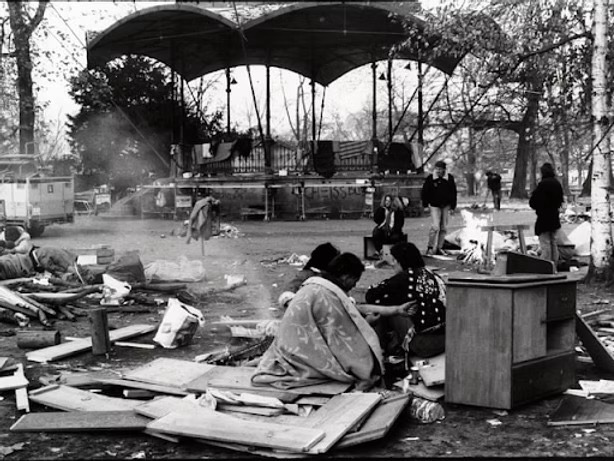
Platzpitz Park, Zurich in the 1990s. The park was known for the meeting place for drug addicts from all over the world. Photo from the Budget and Legislative Analyst presentation. 
Platzpitz Park, Zurich in 2024. The park is clean and serene. Photo from the Budget and Legislative Analyst presentation.
While Zurich and San Francisco share similarities on the drug crisis, there are major differences, according to Fred Brousseau, the Budget and Legislative Analyst who presented the finding at the meeting.
For example, Brousseau pointed out that Zurich is about half the size of San Francisco. Switzerland is also less diverse, has a public healthcare system, and doesn’t have a homelessness problem. Also, fentanyl is stronger than heroin, and was not as widely present in Zurich as it is in San Francisco now.
“Addiction is a chronic disease, not a moral failing with a quick fix,” said Dr. Ayesha Appa, an addiction medicine and infectious diseases physician at San Francisco General. On average, Appa added, most people require five to nine treatment attempts before sustained recovery. Appa also underscored that treatment requires a variety of tools, such as medication, harm reduction, housing, and mental health support.
One of the few metrics that does exist for judging the success of San Francisco’s drug-abuse-prevention efforts suggests that, collaborative or not, current efforts may be doing more harm than good.
After 14 months of declining drug overdose deaths from a record high of 88 in August 2023, the city’s fatal overdoses are increasing again. In March 2025, San Francisco reported 65 accidental overdose deaths, the second highest since it was on the rise starting in October 2024, according to the Chief Medical Examiner’s office. Fielder called it “not just a policy failure, but a public health emergency.”
“I see genuine efforts to do something different,” Fielder said. “But we have to be able to tell San Franciscans what our measures of success are.”
We definitely need better metrics for success than # of police interactions; that’s like measuring # of fire department responses when you’re trying to eliminate arson.
What numbers do we actually want to change?
What actually moves those numbers in the direction we want?
Is the fix for the problem, when we boil it down, really to solve the issue that more than half of Americans can’t afford a minimal quality of life?
See recent reporting on findings of Ludwig Institute for Shared Economic Prosperity to dig deeper, but the tl;dr is that the bottom 60% of Americans are far short of what they need to maintain a decent standard of living.
San Francisco has greater income inequality so we see that manifest here much more strongly; it’s not just can’t afford to get professional clothing and send the kids to college, it’s can’t afford housing or food. It’s can’t afford not to despair and turn to drugs.
It all a joke right, they are drug addicts and there here because they have been allowed to do drugs openly on the streets with no consequences ever. There able to get money, from the welfare system .. And the kicker is, most of them are not from San Francisco or the bay area.They’re from out of state from different states.They come here because they know it’s so easy .. And if you want to seat that there’s none , absolutely no change. Nothing’s happening.It is worse .. Go down market street at 4 o’clock 4:30 AM in the morning. And see how packed it is with drug addicts, drug dealers from Civic center down to 4th and Market St.Wall to Wall addicts It is horrifying, and the saddest thing you ever will see
It’s not.
It moves around.
Ask folk in the Mission about the Capp to Treat to Shotwell shuffle.
Unfortunately under the trump admin, funding for the non-profit (homeless industrial complex) gravy train in SF is soon coming to an end. It would behoove the adults at the Mayors office to get a grip on this situation before it gets worse— because if they can’t demonstrate any measure of success now, how will they do it when the money is gone?
Metrics are ok but not the only thing
In our neighorhood one block has over 8000 calls to police and 311 for help yet even with these metrics nothing has changed
The party is over in SF .
The drug dealers need to still be removed and given harsh penalties .
The addicts choose to ingest the poison,
Services and law enforcement help ,
The true metric will be when the city actually listens to the residents who are the true victims of the drug scene
When they can say their block and neighborhood are safe and go out without seeing yet another person openly destroying their life and being selfish , then we will know what is working.
The dealers and addicts must be removed from the public space at all cost .