



These days, news about the news is rarely fun. Tired of chasing clicks, the staff of the city’s newest online newsroom, Gazetteer, are trying to find a voice that cuts through the noise, one that is “irreverent” and “snarky,” but “human.”
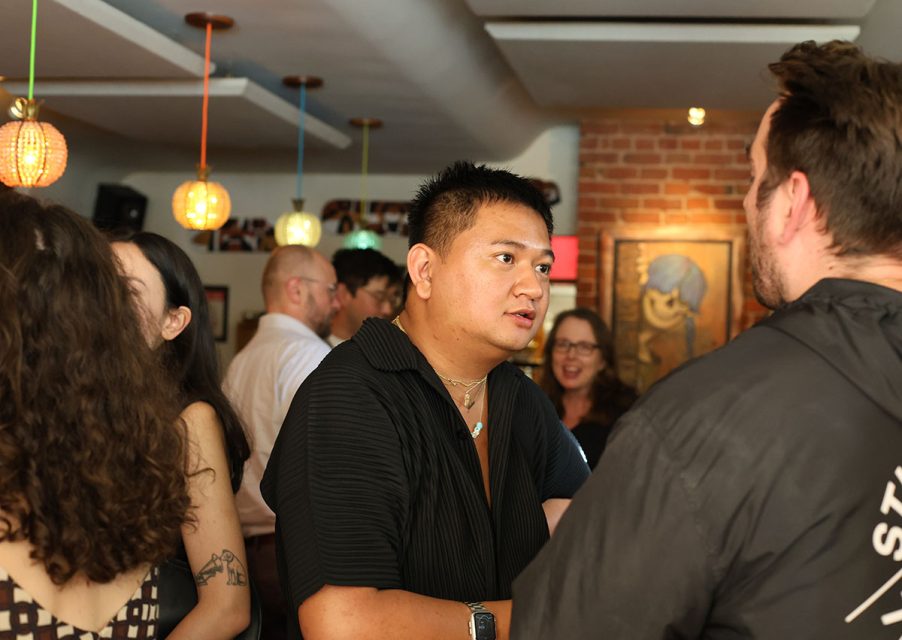
Journalists and readers packed into 20 Spot in the Mission on Aug. 1 for the six-month-old publication’s launch party. They sipped vermouth spritzes as a Donna Summer vinyl played and a photographer snapped film photos with the assistance of his friend, Geoff Kober, the owner of Young Kobras, a gluten-free sourdough company.
Gazetteer was launched in April and is the opposite of CEO Byron Perry’s previous publication, Coconuts Media, an outlet that had been dubbed the “Buzzfeed of Southeast Asia” before it shut down in December 2023.
“Everything about Coconuts that didn’t work informs Gazetteer,” he said. While Coconuts succeeded in gaining traction quickly and reaching millions of viewers, its business model was ultimately unsuccessful, Perry explained. Gazetteer aims to deliver local news with unique angles directly to subscribers via email and SMS.
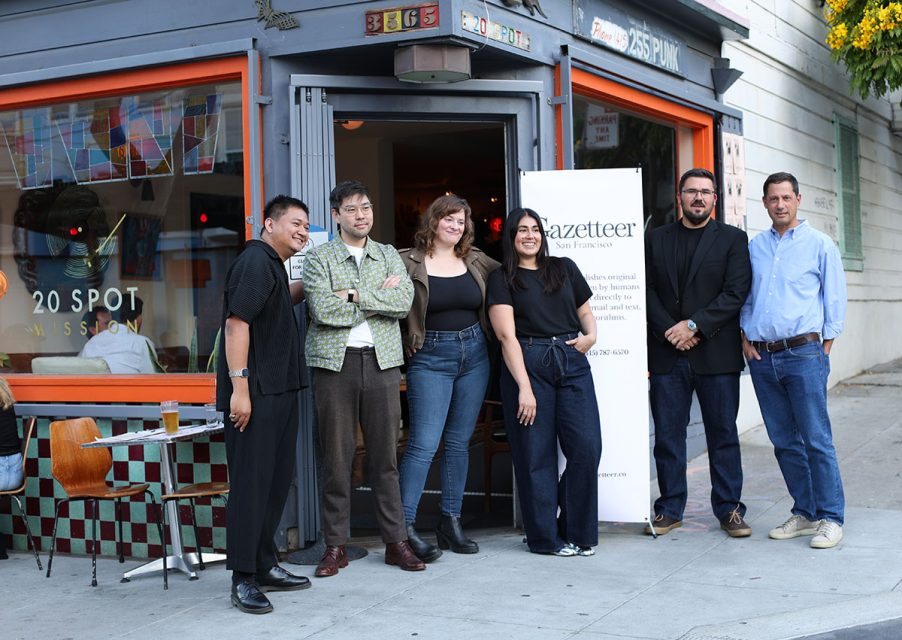
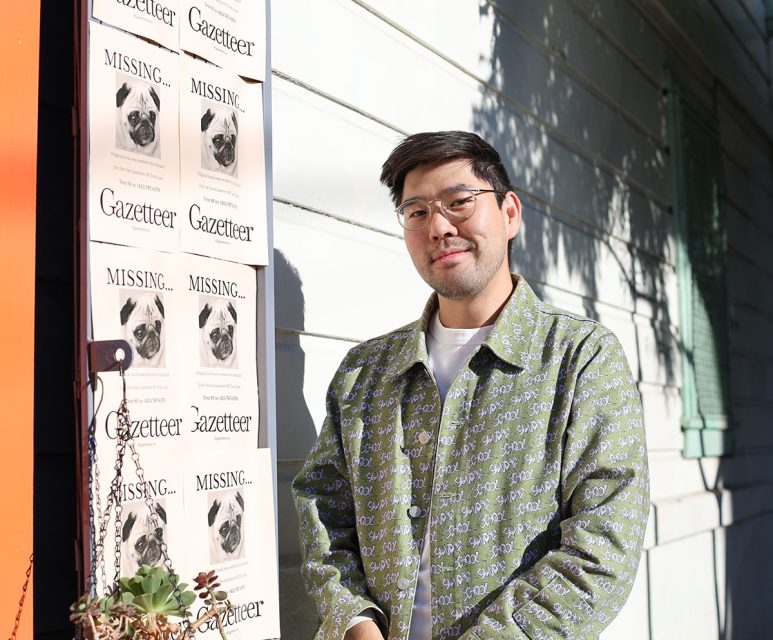
The publication makes a point of being offline. After your free taster article, its paywall of $7.77 a month is insurmountable. Its website is mostly text on a blush pink background. It has no social media handles, and hides its stories from Google search results. Reporters don’t see analytics. The team doesn’t even use Slack, instead communicating by phone and meeting up in a co-working space. Flyers mimicking missing dog posters advertising Gazetteer were taped around the neighborhood; and subscribers are gained via word of mouth.
Its three reporters and one editor — Gazetteer has plans to add one business and technology reporter — cover politics, culture and “everything in between.”

The culture reporter, Joshua Bote, for example, covered the ‘CUNTry Fair’ at Public Works,” writing: “Outside the Public Works nightclub in the Mission Sunday afternoon, a small but mighty crowd of club-goers gathered ‘round a mechanical bull in their assless best for a good new-fashioned Cuntry Fair (nope, not a typo).”
“It’s cool to cover something that literally no one else is covering in the city,” Bote laughed. In case you’re wondering, he declined an offer from the promoter to ride the mechanical bull; he was working. Besides, that’s at least a four-tequila-shots activity, he joked.
Accurate coverage of more serious events is, of course, important to Gazetteer, Bote and Ferguson said. But they aren’t trying to be as “self-serious” as other Bay Area publications: “I’ve been really trying to encourage them to write like they would talk to their friends,” the editor said.
Cat Ferguson, formerly the features editor at SFGATE, is tired of pretending to value a story based on the traffic it gets or its reception on Reddit, she said. “That was soul-crushing for me, as someone who got into this business because I was interested in holding power to account.” Now, at Gazetteer, she gets to do “penance.”
In April, Bote broke the story that neighborhood news site Hoodline was using AI to generate its articles and journalist profiles. In July, Ferguson wrote about spam texts she had received, and advised readers on how to feel less lonely.
City reporter Eddie Kim is also on board for a “radically different approach” to media. His goal is to “capture the pulse of the city with fewer stories” while giving San Franciscans a break from the technology swirling around them.
After seeing a viral video that a visitor to San Francisco filmed of the “sketchiest walk” of his life, Kim retraced the visitor’s steps. His resulting article documented the people he met along the way, concluding that the closest he felt to getting robbed was being asked to upgrade a meal with large fries.
The publication, Kim said, is working on answering the question: “How do we write about the world in a funny, provocative way, but also bring the news element?”
Reporter Joel Rosenblatt is working on shaking off the more traditional style of writing he honed over 19 years as a legal reporter for Bloomberg News. “It’s like the ultimate challenge now to totally break out of that mold. What matters now is a good story and how you tell it,” he said. “Finding that is such a relief.”
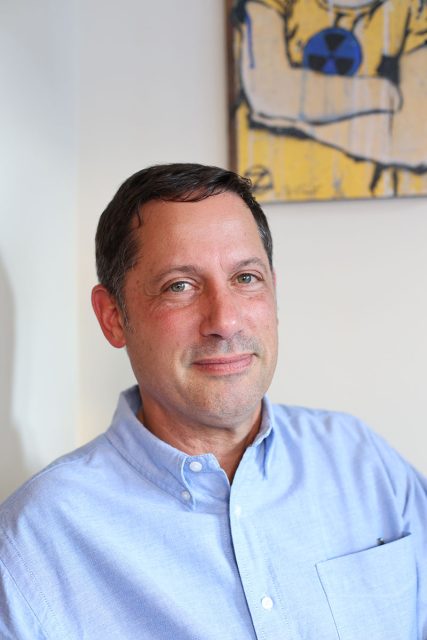
Rather than pitching stories important to the “corporate world,” Rosenblatt says he now tries to find out what’s interesting as he bikes down the street or talks to his kids. Most recently, he’s written about people living in RVs on Winston Drive being forced to move.
Instead of focusing on capturing as many “eyeballs” as possible, new media outlets like Gazetteer are trying to capture as many “whole people” as possible, explained David Cohn, a lecturer at the University of California, Berkeley Graduate School of Journalism. In recent years, it’s become clear that media outlets cannot sustain themselves on views alone; they need to build relationships with loyal subscribers by providing a personalized product, Cohn continued. Other media have long done this with events.
By texting news to subscribers directly, “Gazetteer and others are basically saying, we value this too much to just throw it on the web with all the other A.I. content that you’re coming across,” he added. If Gazetteer can find a unique audience, Cohn thinks it can thrive.
Perry won’t be sharing Gazetteer’s subscriber numbers “until they’re good.” But he isn’t in a rush, embracing what he calls “slow growth.” After all, you can’t go viral overnight when you’re not on social media.

If Perry expands, it would be by replicating the same small newsroom in different cities, he said. Gazetteer currently receives 20,000 page views a month and has two years worth of funding from private investors, including Dave Finocchio, the CEO of sports news website Bleacher Report, and Perry himself, Perry said in an interview with Nieman Lab.
When asked how he would describe Gazetteer’s voice, Perry responded, “Maybe a little bit jaded, but with a heart of gold.”
Great story! Who knows how this will turn out in the long run, but I appreciated the coverage of a bright spot in what has become a dark time for the industry.