
When Jose Sepúlveda first saw curling on television at a bar during the 2018 Winter Olympics, he was intrigued.
The sport was a far cry from the others he used to compete in — namely, fencing and gymnastics — but, at that North Beach bar, the Puerto Rican Mission resident started down a path.
He quickly took to the sport, and saw the opportunity to compete at a national level, since no one else from Puerto Rico hoped to do so. The island’s only year-round ice rink was permanently closed in 2017 after it was extensively damaged during Hurricane Maria.
Last month, his team, the Puerto Rican Curling Federation, was recognized by the World Curling Federation. The team is currently waitlisted for a world-qualifying event in Scotland in December.
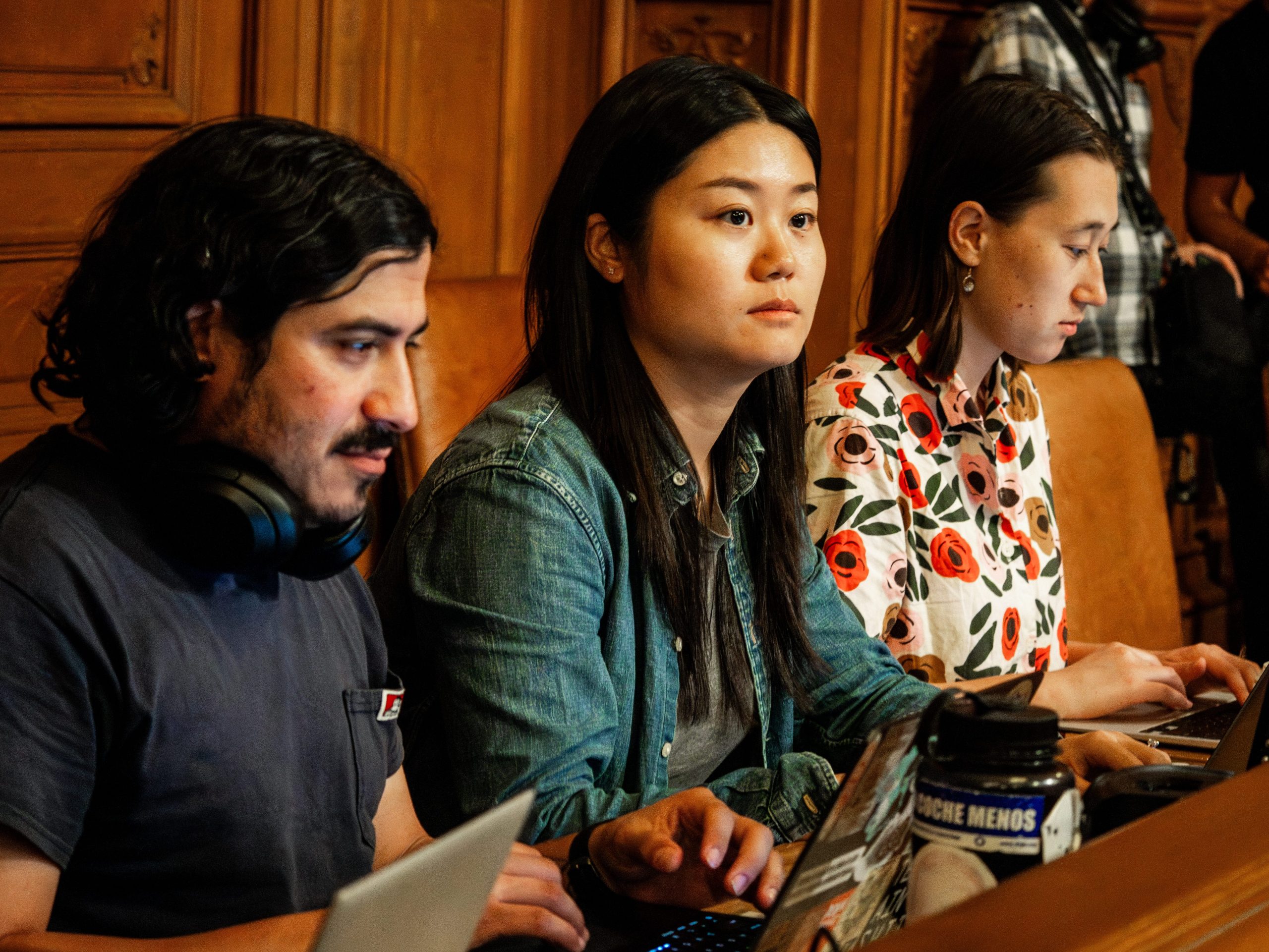
In an unlikely turn of events, Sepúlveda is just one of several Mission residents who have brought their sporting enthusiasm to curling, competing in international championships and representing countries that have no ice — and no previous connection or history to the sport.
This weekend, for instance, Adriana Camarena, a Mission resident and Mexico City native, will be flying to Kelowna, Canada, to compete for Team México in the Pan Continental Curling Championships in the A division, a direct qualifier to the world championships — the World Cup of curling.
Camarena has come a long way since Mission Local reported her team’s beginnings and first medal back in 2019.
She will be gathering in Canada at the Pan Continentals with several other members of the Bay Area Curling Club — representing the Philippines, Saudi Arabia and India — in the B Division, the minor league.
“It’s just unusual, because we are becoming a little club of emerging countries of curling,” said Camarena.

Curling, a sport that involves strategically sliding stones across ice to get close to a bullseye, originated in Scotland and became popular in colder countries, like Sweden and Canada.
“It’s very easy to learn, very hard to master,” said Camarena. “We call it ‘chess on ice.’”
Camarena is a lawyer and writer who lives in the Mission but curls in East Oakland at the Bay Area Curling Club near the Oakland Coliseum, California’s only dedicated curling facility.
Some 14 club members from the Mission make their way out there to curl, too.
On a typical day at the club, curling novices attend “learn to curl” events and share the ice with experienced members, practicing swift gliding and lunging — which, on a slippery surface, is no easy feat. Players forcefully slide “rocks” — as heavy as they sound, weighing around 40 pounds — and glide after them, quickly catching up to brush their curling brooms against the pebbled ice and adjust their trajectory.
The sport involves a unique kind of strategy and athleticism, said Will Meyers, who is also from the Mission and goes to the club five days a week. “Each game is like a mini puzzle,” he said, before practicing sliding a rock exactly between two cones on the ice.

The curlers at the Bay Area club are quick on their feet. Many are relatively new to the sport, and some only joined the team within the last five years or so, including Meyers and Sepúlveda.
But the club has quickly become a launchpad for Bay Area residents to kickstart their own national curling team, largely because the club’s members have taken it upon themselves to teach one another and share techniques during daily practice or regular “bonspiels” — friendly tournaments.
“You complement your opponent,” said Camarena, “’That’s a great shot, now it’s my turn to make a good one.’”
For those representing national teams, the support of the club is essential, particularly because, often, their team members are located elsewhere. For instance, Camarena’s teammates live in Los Angeles, San Diego and Vancouver, and she counts on fellow club members to get her practice in.
Playing in the Pan Continentals is dabbling into the top realm of curling, and a first for the Philippines. For Camarena’s team in the A Division, despite the team’s ardor, members are unlikely to take home golds this year, as they face more experienced contenders from Canada and the United States. But if they do win a couple of matches, they will stay in the A Division next year, and will have a shot at playing in an Olympic qualifier game.
And so, the stakes are high, as is the motivation to get more players involved. “If more Mexicans want to find me, I will teach you in Oakland,” said Camarena.