

In the two years since the artist Yolanda López died, a small team of archivists has been excavating her basement on San Jose Avenue. In it, they’ve found a treasure trove of paintings, drawings and sketchbooks. All of our cellars should be so bountiful.
One result of their work is a stellar exhibition, Yolanda M. López: “Women’s Work is Never Done,” which opened Friday and will be on view until Nov. 12 at the Thacher Gallery at the University of San Francisco.
At the same time, the San Jose Art Museum is showing “Yolanda López: Portrait of the Artist” through Oct. 29. The two shows are a gift to the Bay Area, an opportunity to become better acquainted with an artist who deserves attention.
At the Thacher Gallery, co-curators Angelica Rodriguez and Lopez’s son, the artist Rio Yáñez, worked together to illustrate the span of López’s creative journey over six decades, starting with the 1960s and taking us up to the years right before Lopez’s death. It’s a smart, well-curated show that does what Rodriguez advised visitors on opening night: “Let it sink in, in terms of what she’s trying to say at a certain point in time.”
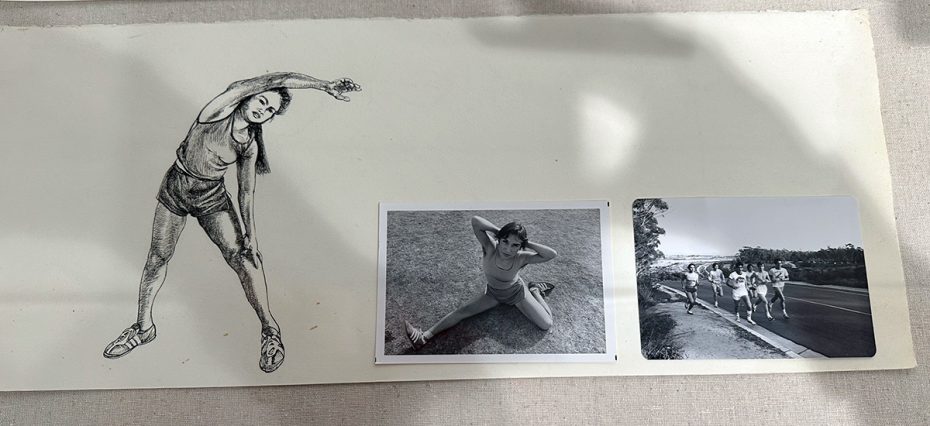
The paintings, mixed-media pieces, prints and photographs are accompanied by notes, sketches and memorabilia that offer viewers a sense of López’s evolution and process. The artist drew from disparate parts of her life: her third-generation Mexican family in San Diego, her interest in track and field at the University of California, San Diego, the fashion magazines her Uncle Mike fed her as a young high-school graduate and the ever-political Mission District she discovered in the 1960s and returned to in the 1980s to live out her life.
Yáñez said that he had never seen about a third of the work that Rodriguez and her team discovered. He sees the show as “a chance to share a part of her work, her mind and her process. … It’s just exciting to have all these pieces of the puzzle of her creative life and vision out there.”
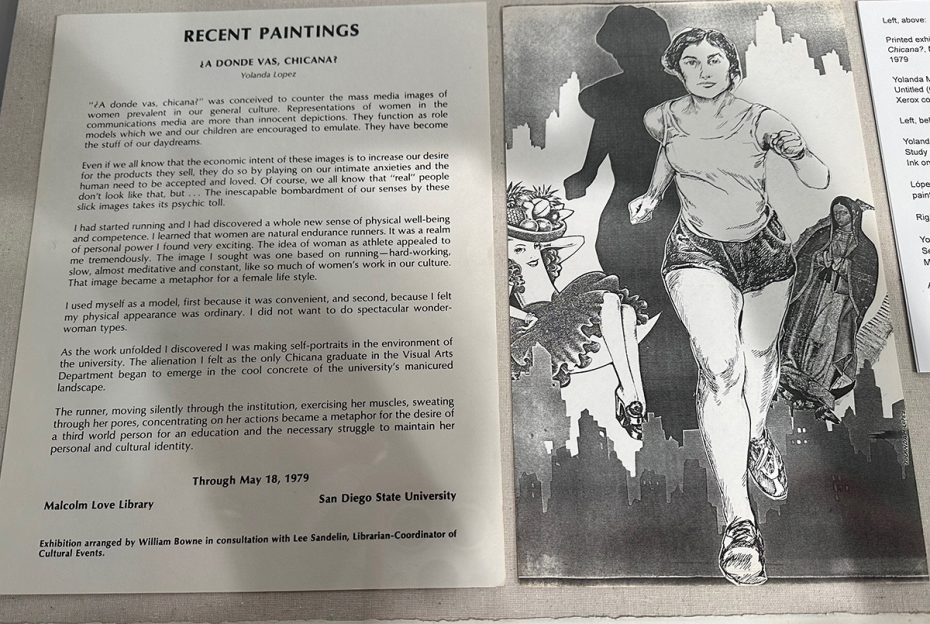
In one viewing case, the program for her 1978 master of arts show is open to a sketch of the young López, dressed in track gear, and running toward the viewer, determined and powerful. In her wake, she leaves behind a coquettish young woman wearing a Carmen Miranda-like hat of fruit, juxtaposed with an image of the Virgin of Guadalupe. The artist’s statements says the runner “became a metaphor for the desire of a third-world person for an education and the necessary struggle to maintain her personal and cultural identity.”
But the sketch also perfectly prepares the world for an artist who will challenge the status quo by upending and repurposing traditional icons.
The show includes López’s first-ever depiction of the Virgin of Guadalupe, an icon from Mexican culture that inspired the artist’s best-known series. But the image inspired other art as well, including a 1978 illustration that appeared in a 1984 edition of the Mexican magazine, fem. It showed the Virgin of Guadalupe wearing a dress and the low pumps of working-class Mexican women. The exhibit label says that “newsstands across Mexico were vandalized” and “local galleries with Lopez’s work were defaced.” Despite death threats, the artist “remained resolute in standing by her use of the saint’s iconography.”
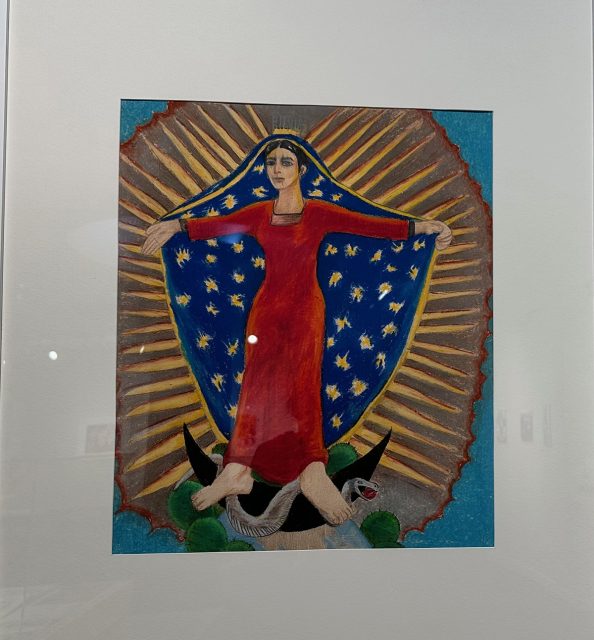
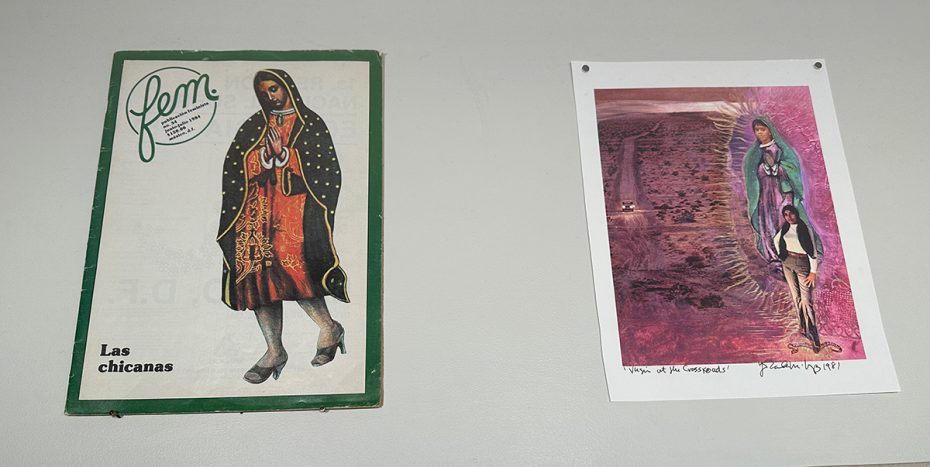
The work inspired by the Virgin of Guadalupe, however, is far from her only important work.
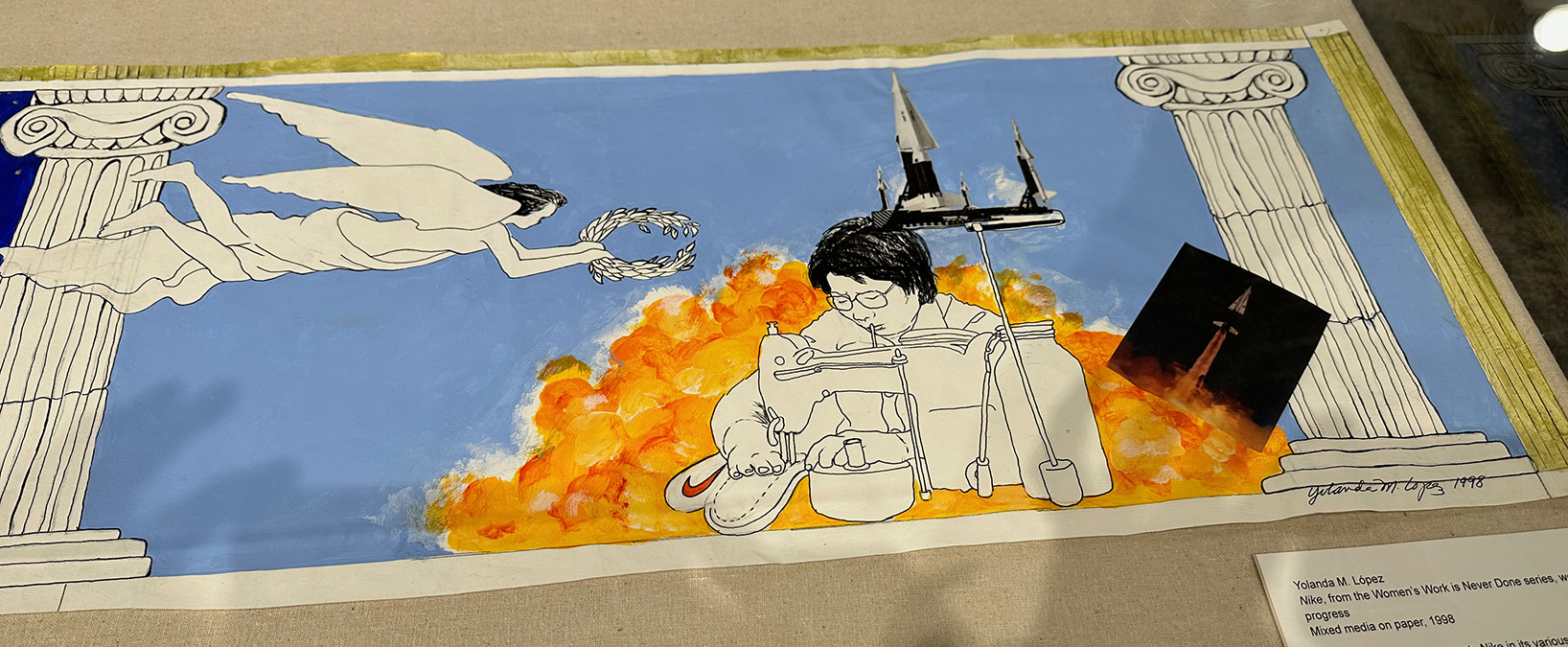
There are early drawings and paintings from the Tres Mujeres series, and iconic posters from the 1990s series, “A Woman’s Work is Never Done.” Lopez, who separated from her husband, the artist Rene Yáñez, in the 1980s, understood this well as she pursued art while trying to raise her son and make a living. She worked at a wide range of jobs, including teaching at different universities, selling Mary Kay cosmetics, and working for the U.S. Census.
The show also includes mixed-media pieces like the “Lazy Man’s Way to Riches” and “Fearful Symmetry,” the latter reflecting her interest with military technology used domestically to patrol the border, according to the curators. It recalls Vija Celmins’s fascination with World War II fighter planes. Two women artists, two different wars.
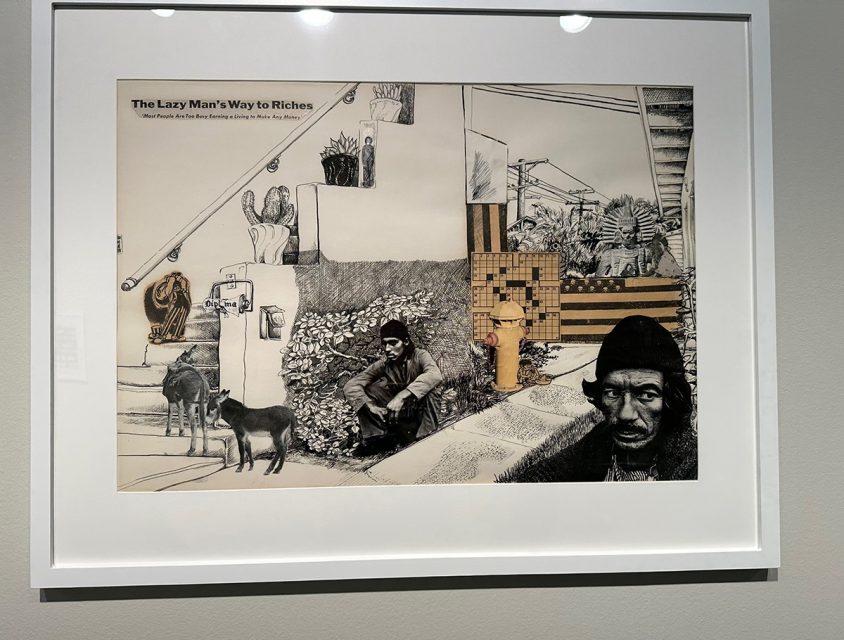
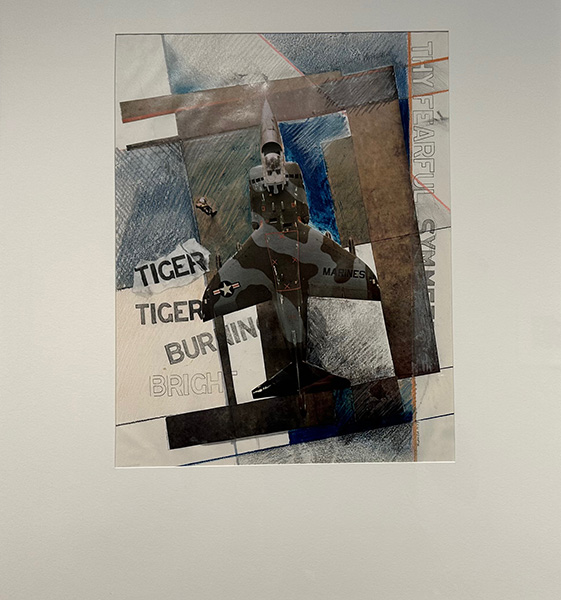
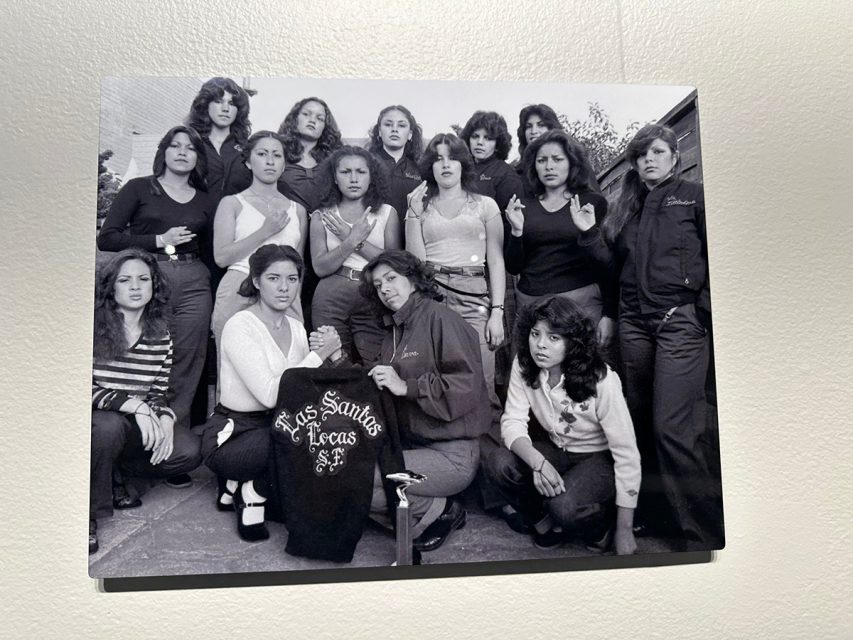
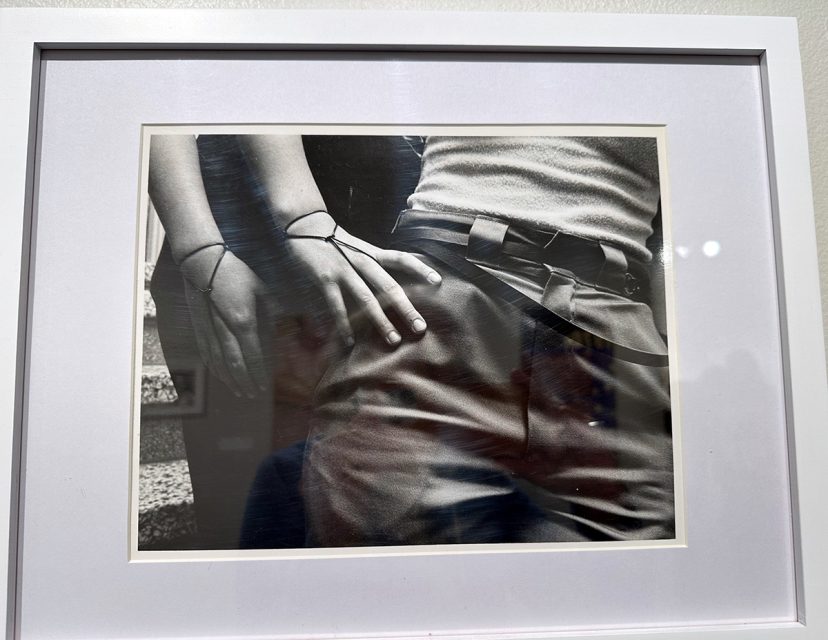
Also on view are the materials and many of Lopez’s photographs from her series, Las Santas Locas, a women’s car club based in San Francisco. Yanez said that some of the photos were shot at the 1979 24th Street fair.
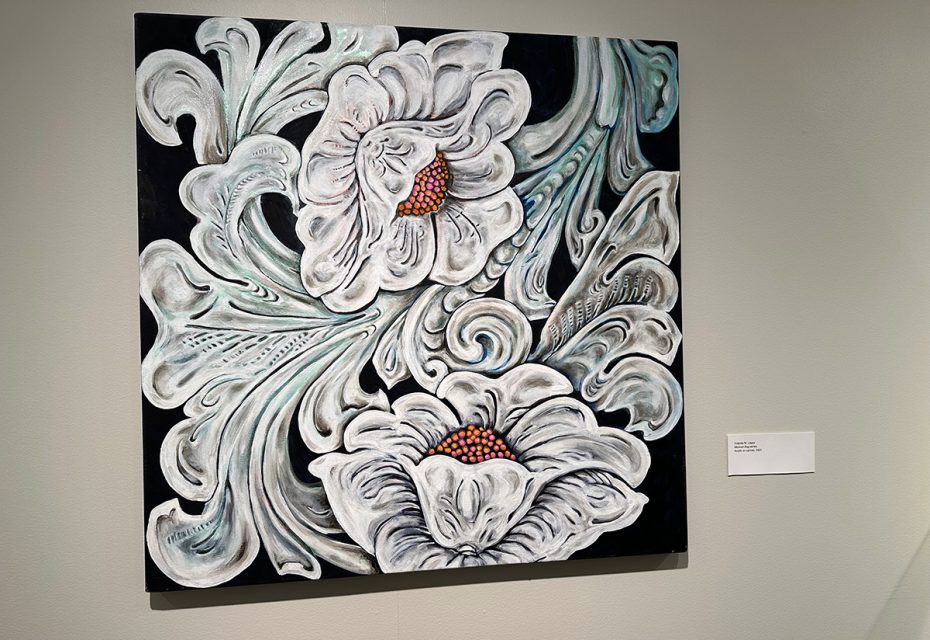
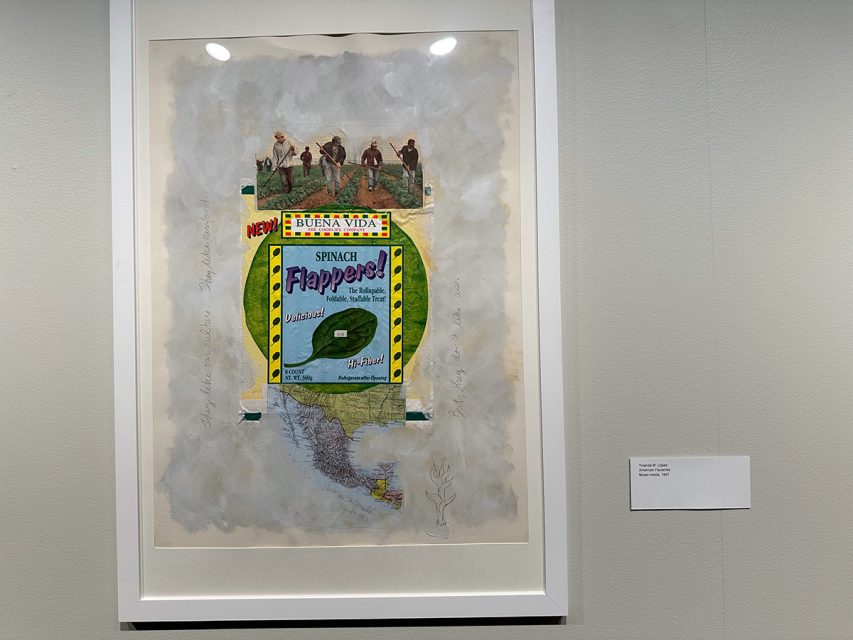
Later work includes spectacular floral paintings and collages like “Spinach Flappers,” composed of magazine clippings. López penciled along the sides of the collage, “They like our culture. They like our food. But they don’t like us.”
One of her last projects was a set of pocket posters, miniatures of earlier work. López signed each of the cards, tucked them into envelopes, and sent them to her “chosen friends and family.” She signed the letter “Continue the fight and fun. Make a Ruckus.”
López did.
The Thacher Gallery is a public art gallery in the USF Gleeson Library. It is free and open to the public daily from noon to 6 p.m. Yolanda M. López: ‘Women’s Work is Never Done’ will be on view until Nov. 12.
“Yolanda López: Portrait of the Artist,” is on view at the San José Museum of Art through Oct. 29.
Lydia Chavez!
Definitely a must see next trip to town. THANK YOU for all of this information!