
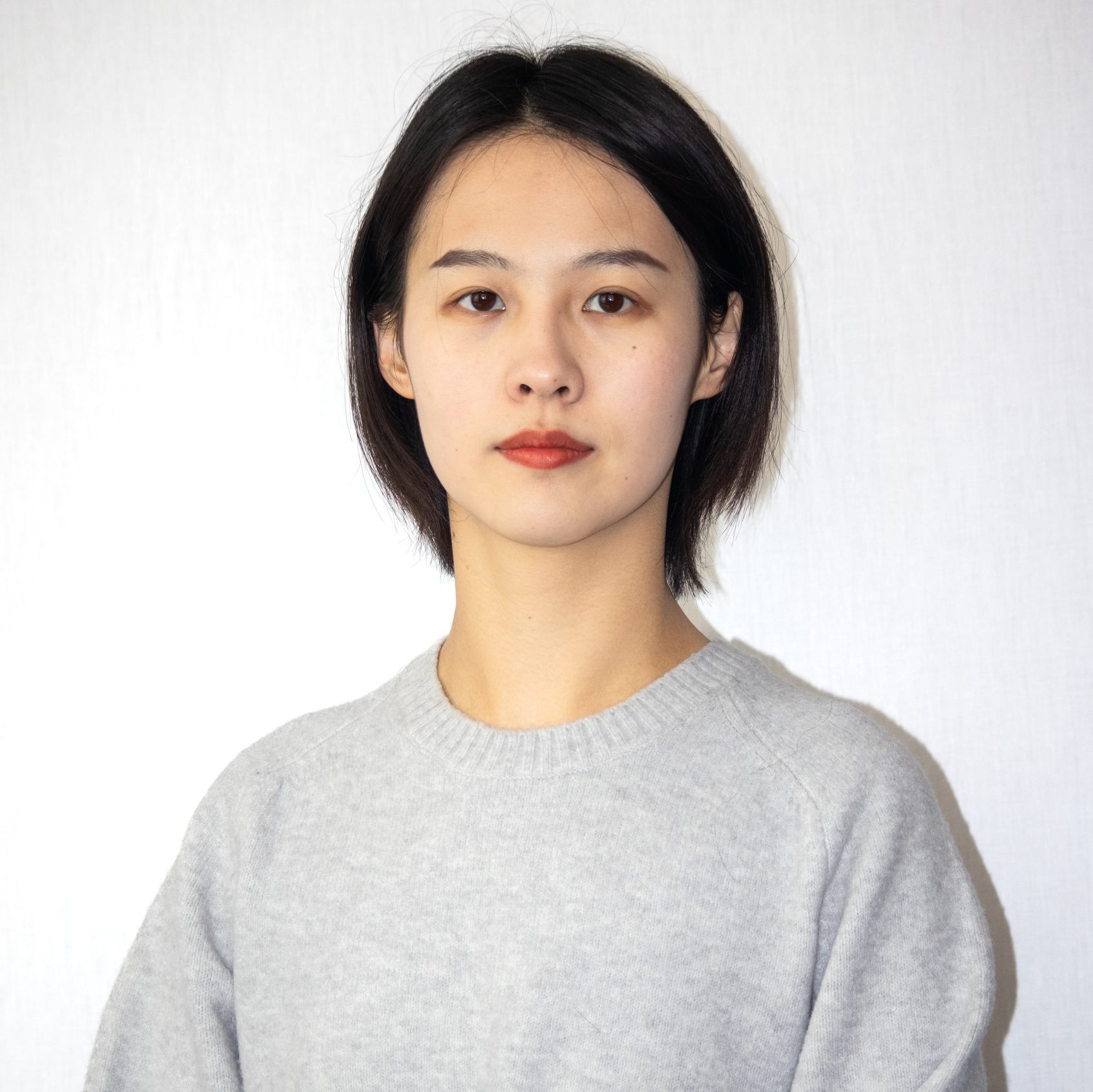

Nora Hylton served on the San Francisco Youth Commission for three years, from 2018 to 2021. The District 5 resident, who was appointed to the body by Mayor London Breed, knows the benefits private school brings: She attended Lick-Wilmerding High School, and then Yale University.
But when she heard that all of the six appointees selected by Mayor Daniel Lurie to serve on the Youth Commission attended private school like her, she balked.
“It’s important that the Youth Commission is getting as diverse an experience of being young in San Francisco as possible,” Hylton said.
The role of mayoral appointees, she said, is “to make up any deficits in representation on the commission.” The city charter, in fact, stipulates that five of the mayor’s appointees must be “from underrepresented communities.”
“Going to private high school speaks to some kind of experience of privilege, even if you’re on financial aid,” she said.
The San Francisco Youth Commission is made up of 17 members who are between the ages of 12 and 23. Each of the 11 city supervisors gets to appoint one member, and the mayor gets to appoint six.
The commission is not wholly symbolic: The Board of Supervisors is required by the city charter to seek the Youth Commission’s input on any matters that affect children and youth.
Its members helped implement the Free Muni for Youth program, which was expanded to all people 18 and under in 2021, and worked with community groups and supervisors to vote on closing juvenile hall in 2019. (Supervisors approved the closure, but juvenile hall is still open.)
Lurie’s appointees were sworn in on Sept. 9. He had a sufficient number of public school youth to pick from: Of the 12 applicants recommended by Youth Commission staff to the mayor’s office this year, three attend public high schools, seven attend private schools, and two had already graduated from SFUSD, according to Joy Zhan, the commission’s acting director.
The mayor, however, picked six from private schools. By contrast, six of the 11 members appointed by supervisors attend public schools. Overall, that means 11 of the 17 youth commissioners now attend private school.
The Youth Commission and the Office of the Clerk of the Board of Supervisors provided Mission Local with a decade of appointment records, going back to 2016-17. The present situation marks the only recorded instance that none of the mayoral appointees has been from a public school.
In a statement, Lurie’s spokesperson, Charles Lutvak, said that though the mayor’s appointees all go to private schools, they have diverse backgrounds.
“We are proud to have appointed a slate of youth commissioners who come from different backgrounds and walks of life … The Youth Commission does not oversee SFUSD.”
Joshua Rudy Ochoa, who is on staff at the Youth Commission, confirmed the mayor’s appointees come from different city districts, bring a wide range of racial representation, and include at least one who receives financial aid to go to private school.
All of the former commissioners and city officials who were part of the appointment process concur that the commission’s makeup should represent San Francisco youth — some 70 percent of whom attend public schools — if not skew more toward public-school students.
The appointment is a resume-booster for aspirational young people, after all, that should not only be awarded to those from a more privileged background, critics of Lurie said.
“It says a lot about the mayor being out of touch with those folks that are in public school,” said Sunny Angulo, a former longtime legislative aide who was previously involved in picking youth commissioners. Angulo now runs a progressive advocacy group that has been critical of the mayor.
The right thing is “to focus on those young people that are most impacted by the challenges that everyday families are facing in their communities,” she added. In the 2024-25 school year, for example, SFUSD recorded 2,794 homeless students.
“I don’t think people realize how many people under the age of 24 were literally living and doing their homework and applying for schools and college out of homeless shelters … every one of these children are our children and our responsibility.”
Apart from communicating the needs of young people to City Hall policy makers, many of the former commissioners have gone on to attend top universities, and some have embarked on political careers as city officials.
Being a commissioner “really sets up young people in San Francisco for success within politics, local government” and in community organizing, said a former youth commissioner, who went to Lowell High School. It is “a very important intentional place for young people.”
Crystal Chan, a former commissioner who went to Lowell, said that in organizing for Free Muni for Youth, for example, it was important to have more commissioners who understood transit “first-hand” rather than those who were “more well off” and did not ride public transit.
Still, the private-school trend may continue: In recent years, a position on the Youth Commission — whose members aren’t compensated and receive no stipend — seems to have become more appealing to private school students.
A lot of public school students nowadays really want a paying job, said Zhan. About 55 percent of the 156 applications received this year were from students in private schools, she said, though the commission’s staff has tried to focus more on public schools in its outreach process.
“I do applaud those who were selected and wish them and our city tremendous success,” said Vanessa Pimentel, a political strategist and former youth commissioner who went to Galileo Academy of Science and Technology.
“But we have to ask: Who precisely gets access to these opportunities? Who else gets a seat at the table?”


Thank you for reporting on this. I do not believe the mayor has no idea how a school’s special education department works, and that is 20% of many SFUSD schools. Most private school attendees lack daily interaction with Disabled students, and therefore never witness successful accommodation in action, nor what happens when students are not supported. Families are “counseled out” if their child’s Disability costs too much money to support in most private schools and charters. Personal experience matters. This is a huge gap in knowledge, for the mayor (Look at SFUSD’s budget). This is where public health meets education, it is extremely important for many aspects of the budget, but also quality of life for families in SF. This is life or death for our Disabled students, I am not exaggerating when I say that. Yes, the mayor doesn’t run the schools, but he is also not rushing to assist public schools under attack by decades of systematic defunding. He doesn’t value SFUSD, no matter what he says. He lives in a bubble, and doesn’t send his kid to our schools.
A slap in the face of SFUSD personnel, teachers, and its students. He’s telling them that they are not smart enough, good enough, or deserving enough to sit on that board. Not to mention that their parents didn’t have enough money to donate to his campaign…
I don’t think you have a very diverse background if you’re not in public school, it’s like you’ve never written the 14 mission or the 49 bus to go anywhere you’ve always been privileged
I would like to add the #15 bus route for consideration. Riders and behavior on those routes are noticeably different from, say, #1. A neighbor was afraid unless she accompanied her daughter to and from school via the #15. Inside public schools, especially post covid, less assertive teachers struggle (and may be unable) to hold the attention of rowdy students who lack supervision at home. In every classroom now, teachers must be brave and demanding which is different from the character of most people who choose the profession. In addition to harming themselves, rowdy students attract others to misbehave and disrupt the study of others. Such behavior is not tolerated in private schools. That’s why diverse participantion on the Youth Commission is necessary.
He is vetting them for future appointments as supervisors
To be fair, socialist D9 Supervisor Jackie Fielder also appointed a private school kid to this commission.
This is not accurate. The D9 Youth Commissioner this year is from public school.
The D9 Youth Commissioner is a public school student.
to be fair majority of applicants were from private schools
I guess there are no black youth in San Francisco
And no latinos either. Hmmmm. So much for “diversity” huh.
he is a rich guy nepo baby and i cannot wait o vote him out.
Government is representative…of money.
That’s an easy critique, but consider that government, like wealth, gravitates to those who are capable. If we were to overly prioritize the underperforming elements of our society, how would government look then?
Is anyone really surprised?
Of course, it would be useful to know how many public school folks applied vs. private schools.
Right there in the story, Ray.
JE
To be fair, I doubt our mayor knows anyone who ever attended a public school, and he certainly wouldn’t have anyone in his circle of friends and acquaintances who would send their child to one.
Good. Private schools have some of the most diligent and hard working students.
They also have some seriously privileged kids who skate by on little effort because they have connections already up the wazoo. Conversely, there are many public school kids who excel and will continue to excel, even though their parents aren’t shelling out tens of thousands a dollars a year for their bespoke education and small sanitized class experiences. So easy on the sweeping generalizations.
I’m generally a Lurie supporter but wow, this is one more data point that he is out of touch with much of San Francisco. Hopefully he doesn’t keep this up.
Lurie wanted (still wants to?) get rid of the Youth Commission, so what’s it to him if he just appoints kids of his friends who come from the right families?
Ensure excellence for a democratic institution.
Parents for Public Schools of San Francisco Calls on City Leadership to Restore Public School Student Representation on the Youth Commission
SAN FRANCISCO, CA — Parents for Public Schools of San Francisco (PPS-SF) is calling on Mayor Daniel Lurie and the Board of Supervisors to address a systemic breakdown in representation within the San Francisco Youth Commission. Despite the commission’s original founding by and for public school students, public school representation among commissioners has continuously declined, culminating in a complete absence of public school students among the Mayor’s latest appointments.
For nearly 27 years, PPS-SF has supported and empowered tens of thousands of local families—across African American, Latino, Chinese, Samoan, and Arabic communities—helping them navigate enrollment, engage directly with school systems, and advocate for equitable education policies. Public school students represent the majority of youth across the city and rely daily on public transit, public safety, and essential public education resources such as SF YouthWorks and Career Technical Education (CTE) pathways.
Under the San Francisco City Charter, mayoral appointments are explicitly mandated to include at least five members from underrepresented communities to ensure diverse and equitable governance. Omitting students with firsthand experience in the public education system undermines both the Charter’s intent and the core mission of the commission.
“The Youth Commission was created to give voice to the young people who rely on our city’s public systems every day,” said PPS-SF leadership. “To see a complete absence of public-school students among the Mayor’s appointments is not just a minor oversight—it is a systemic breakdown in representation.”- Dr. Vanessa D. Marrero, President
While PPS-SF values the perspectives of all San Francisco youth, the organization stresses that effective youth policy requires meaningful representation from students navigating the city’s public schools every day.
To rebuild this pipeline and guarantee equitable governance, PPS-SF calls on city leadership to commit to three immediate actions:
Immediate Mayoral Meeting: Mayor Daniel Lurie’s office must meet with PPS-SF leadership immediately to establish actionable solutions for public school student inclusion.
Institutionalized Appointments: The Mayor’s Office and Board of Supervisors must prioritize and institutionalize transparent benchmarks that guarantee proportional public school representation on future commissions.
Charter Adherence: Strictly enforce the San Francisco City Charter requirement mandating appointments from underrepresented communities to restore diverse and equitable governance.
PPS-SF welcomes the opportunity to partner with city officials to rebuild this pipeline and ensure public school students have a seat at the table
This is outrageous and sends a message to both the public school kids AND the parents who may have chosen public over private. I was a Lurie supporter, but this seriously calls my support into question.
Not a single Black student? How were we overlooked?
Daniel attended a private K-8 School in Pacific Heights. An expensive well regarded school. It’s the environment of his youth. It’s logical Daniel would people to the Youth Commission who are in synch with his background.
We need the Mayor to support public education in every way possible. This bias toward private over public is alarming from our public leader. How about making 22 nominations be by the District Supervisors, two each, to provide the opportunity for this experience to more students.
A reminder that the effort to appoint youth commissioners also rests on the youth commission staff. let’s look at how they’re doing outreach because apparently more than half of applicants came from private high schools. if your pool of students is coming from majority private schools then this doesn’t really give the mayor much choice. Youth commission staff and those involved in doing outreach for the YC need to step things up too
MAGAmayor strikes again!
it was inevitable that private schools would dominate our politics since so many young do not actually attend SFUSD schools and have the privilege of education handed to them by the same would be oligarchs that have filled the vacancies from the COVID exodus.
and free muni for youth has only resulted in our transit system being overwhelmed by thoughtless seated children addicted to their phones.