


Walter Mackins, taxi driver No. 63440, was piloting his red, white and blue Luxor Crown Vic along Potrero Avenue and there he was: a man, framed by the photogenic backdrop of Mackins’ native San Francisco, pushing a shopping cart — and, precariously balanced in that shopping cart, was a surfboard.
It was, Mackins recalls, the perfect shot. “Well,” he says all these years later while seated at his kitchen table, “there’s my Pulitzer-winner.”
Mackins remembers every last detail, including where his camera was. Namely: Not on the seat next to him, as it was most every day he drove out of the taxi lot. He shakes his head. “I will always see that guy with his surfboard, rolling up Potrero. What a shot that would’ve been.”
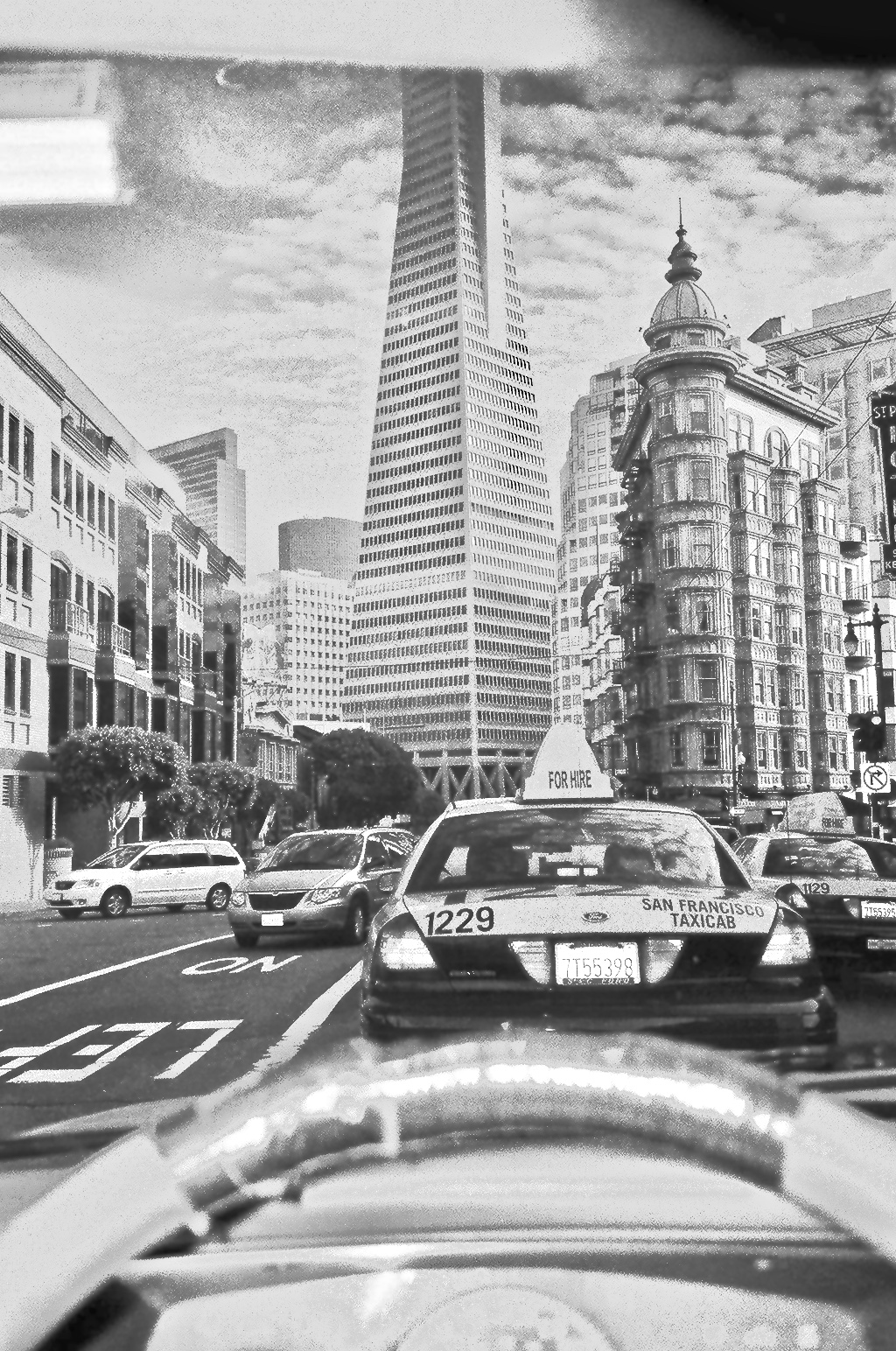
Mackins drove a cab in San Francisco for many years. But that was just a means to an end. And that end was snapping thousands upon thousands of pictures of his home city and the people within it.
“Being a cab driver,” he says with a smile, “became secondary to having a vehicle, literally and figuratively, to take me around, so I could take photographs of different parts of the city.”

Was Mackins a cab driver who took photos, or a photographer who drove a cab? The answer, of course, is yes.
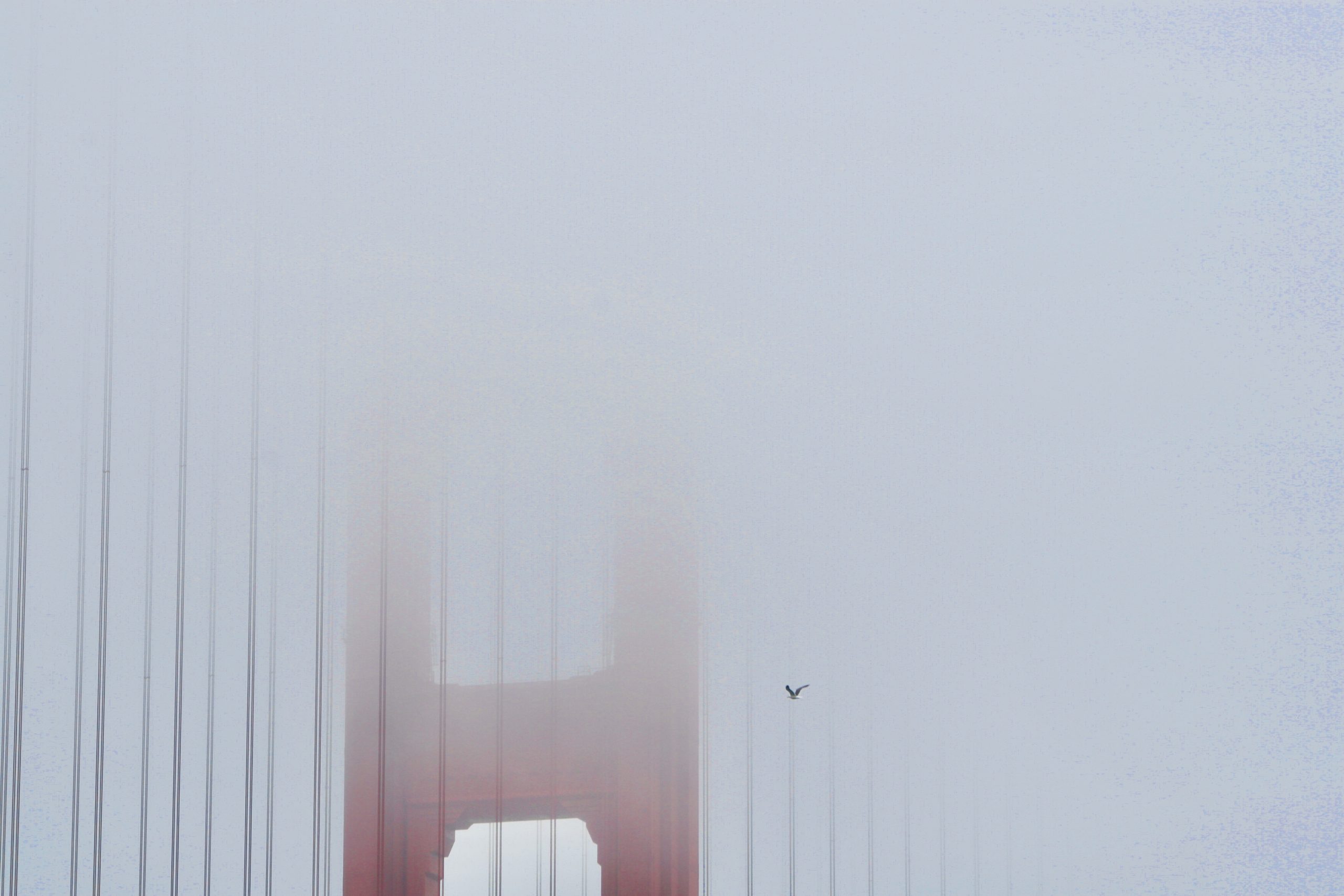
Would Mackins drive out to Fort Point or Ocean Beach for the photogenic scenery? Also yes.
“But maybe six times out of 10, I’d get a customer coming back,” he says. Cab drivers learn the tricks: “You realize people staying downtown walk to Fort Point to see the Golden Gate Bridge. And then they realize how far they are.”
Mackins, as he likes to say, “rescued” a fair few of them.
Mackins knew a camera would be part of his life ever since he sat on his grandmother’s settee and pawed through copies of Life magazine. Margaret Bourke-White stands out in his memories, but war photographer Robert Capa was his favorite.
Capa’s most famous line was, “If your photos aren’t good enough, you’re not close enough.” Capa’s photos were most certainly good enough — until he got just a bit too close to a landmine in French Indochina in 1954 at age 41.
Mackins was older than that when he came to his career as a cabbie. He obtained his first driver’s license at age 40 and didn’t slip behind the wheel of a red, white and blue Crown Vic until he was nearly 50.
His career change was necessitated by what Mackins describes as an “essential tremor,” which made working as a hospital clerk, his profession for many decades, untenable.
You can drive a car with a shaky hand. But taking pictures? How do you do that? At this, Mackins laughs. “Technique, my friend! Technique!”
Technique and a heavy camera. Mackins notes that today’s mirrorless machines weigh nothing, and nobody lacking the dexterity of a Marine Corps sniper can truly hold one steady. He prefers cameras bulky enough to double as doorstops — or, more in line with his lived experience, heavy enough to trigger the seatbelt warning when you place it in the passenger seat.
Because you never know when you’ll see the perfect shot.


Mackins’ grand little plan to photodocument San Francisco while on the day shift as a cab driver worked for many years. But that was in a San Francisco where there were cab drivers. Or, for that matter, plentiful homes for people like Walter Mackins.
“We got our official Ellis Act eviction on the day before Thanksgiving,” he says of the unwelcome present his landlord handed him last year. But now, the smile is forced. “Bless their hearts.”
For Mackins, now a 74-year-old retiree, and his wife of nearly 20 years, a public school teacher, this was not a picture-perfect development. Mackins has not wasted his crisis.
Going back to the years when Joe Alioto was mayor, Mackins has snapped tens of thousands of photos of this city. But it took an eviction notice to spur him to hold an exhibition. It was held over the weekend in the garage of his soon-to-be former apartment of 25 years on Guerrero Street, and featured his photos, mostly of this city, from 1973 to 2025.
Mackins, the former driver, loves signage. He has whole albums of stop signs and neon wording and road directions. And the first shot in his exhibit is a big picture of a sign with an arrow reading “ENTRANCE.” And the last reads “EXIT.” And the 48 in between?
Those are what you get when you spend 52 years hunting for the perfect shot.

Walter Nelson Mackins was born in San Francisco General Hospital in 1952, the son of Walter Lee Mackins and Myrtle Hooper.
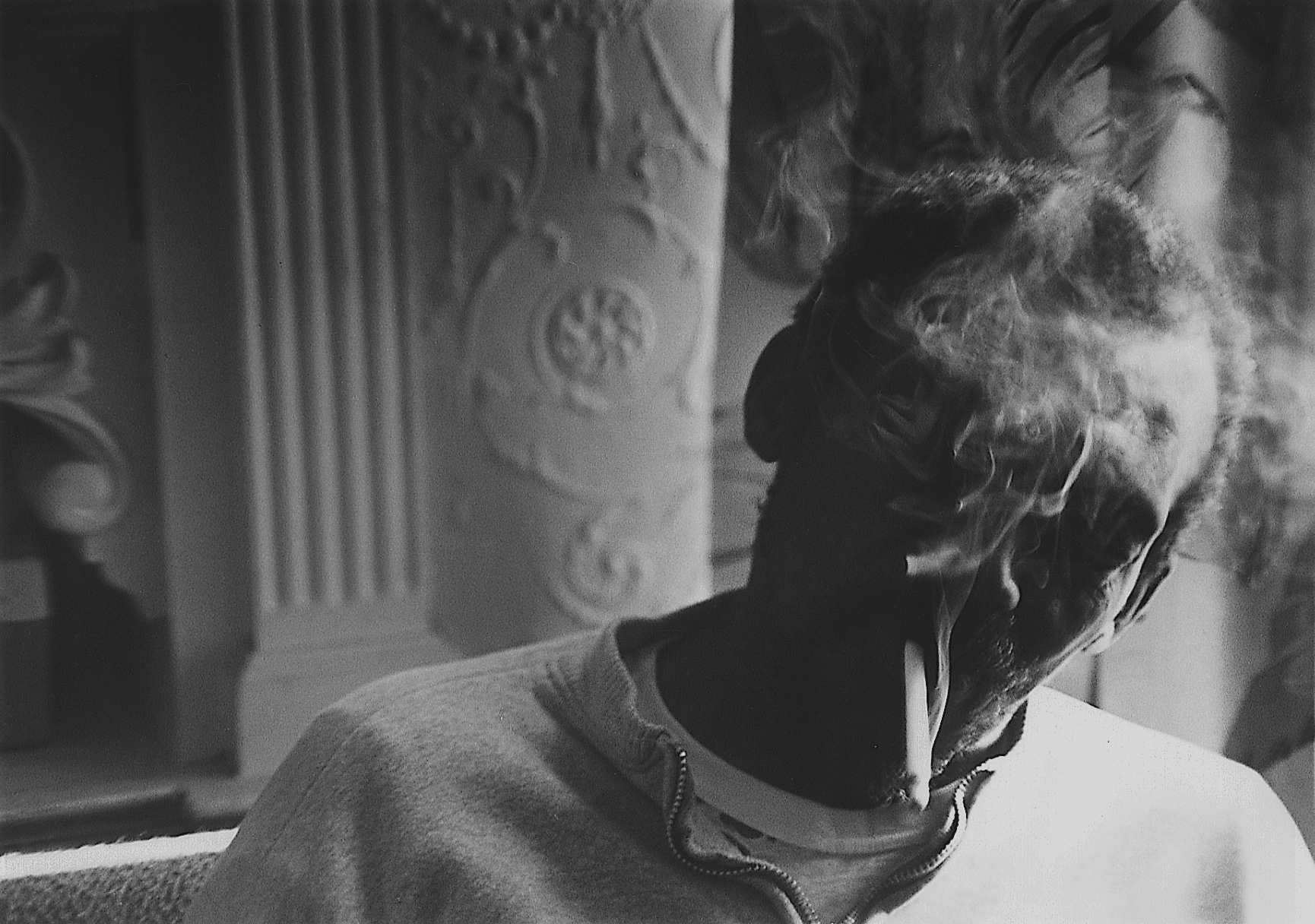
There’s “Daddy Walter,” as photographed by the younger Walter in 1972 or 1973, calmly blowing smoke after his shift as an institutional environment maintenance technician at Stanford Hospital (Mackins, with a wry smile, notes that the more quotidian term for this job is “janitor”).
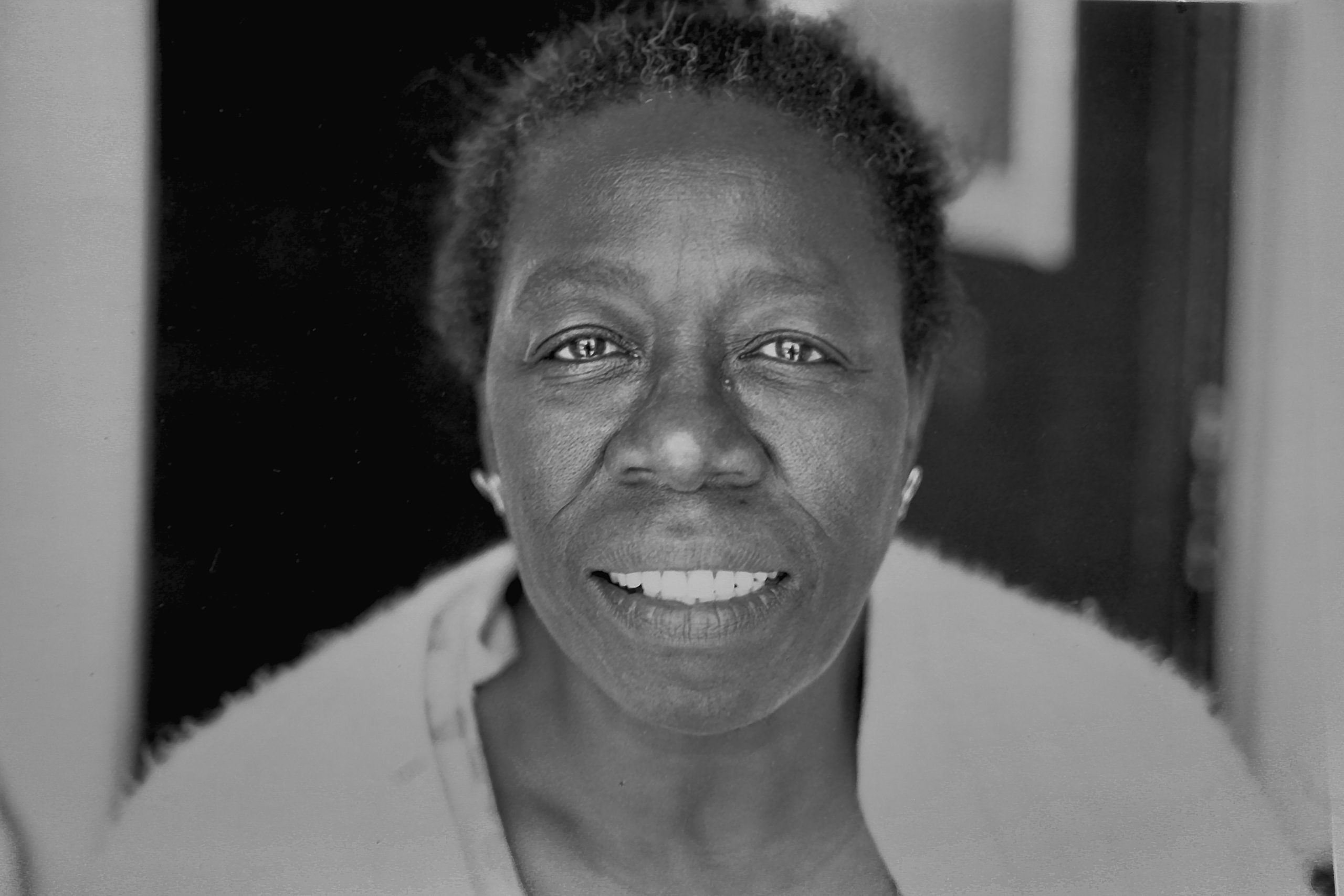
There’s Myrtle Hooper, sometime in the 1970s, when she wasn’t working as a presser at an industrial laundry servicing the city’s hospitals and hotels. If you look closely, you can see the young Mackins reflected in his mother’s eyes as he took this shot.
So, those are two of the shots between “ENTRANCE” and “EXIT.” How did he go about finding the rest? Well, as someone old enough to recall where he was when Kennedy was shot or when Neil Armstrong walked on the moon, Mackins is entitled to love puns. He does, and sometimes the opportunity to couple one with a photograph is impetus enough to take the snap.
For many years, taking the photos was enough for Mackins. There certainly was no exhibition. It was only relatively recently, in 2021, that he began submitting his delightful shots of San Francisco life to Mission Local’s SNAPs page.
Before that, he was a bit like Auggie Wren in the movie “Smoke,” who put the utmost care into the taking and keeping of photos of his corner of the world — but almost none into showing them to anyone. Not unless they asked.
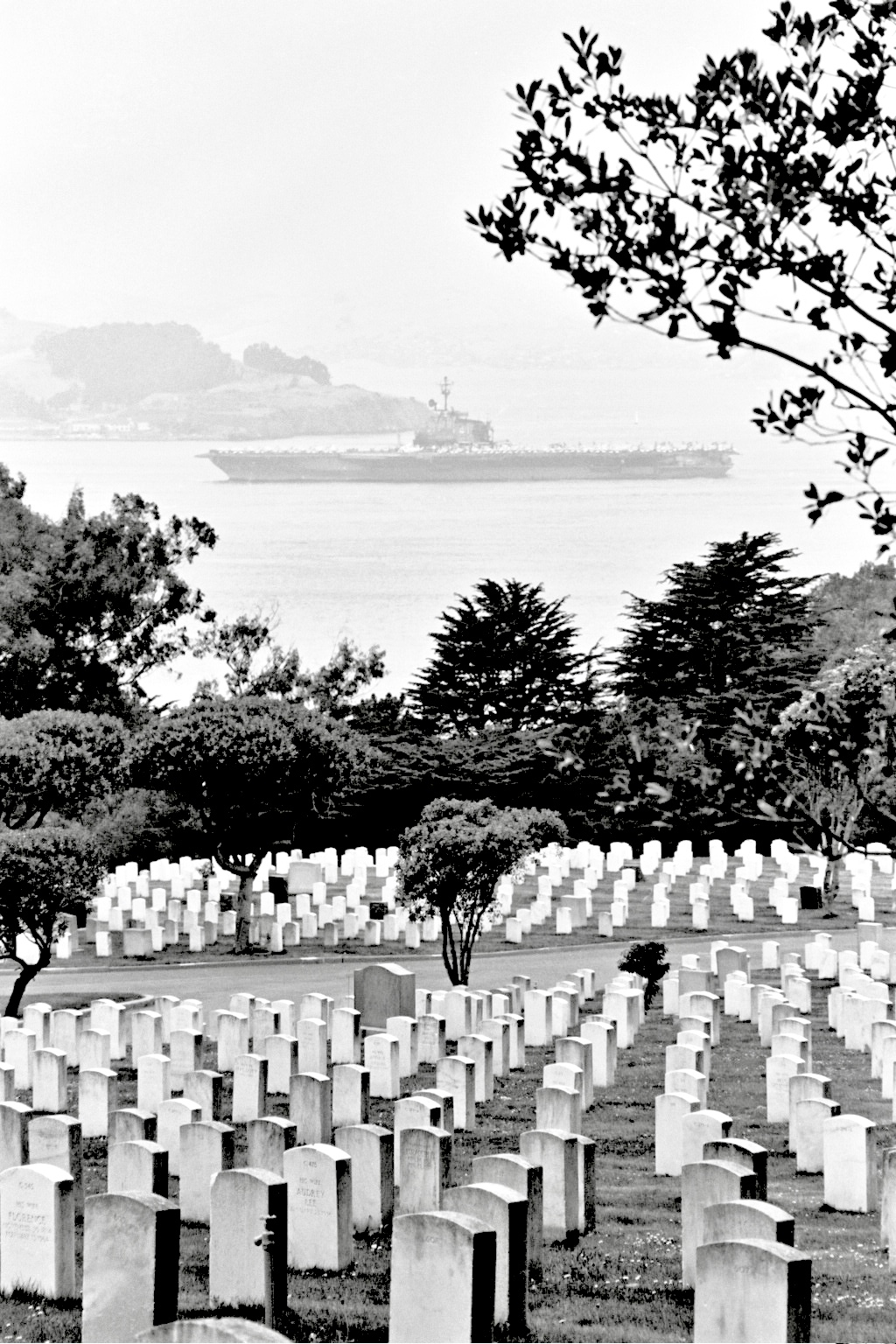
So, yes, sometimes it’s puns. But sometimes it’s something more. It’d be hard to miss the deeper meanings of this shot from 1973 of the U.S.S. Midway decamping, framed by the headstones of the honored dead.
But, most of the time, it’s nothing so choreographed. And, like Auggie Wren, the experience of Mackins’ photos is cumulative. What, after all, is a snapshot but a moment in time? When you add all of those moments together, you get San Francisco.

When Mackins was taken home from San Francisco General Hospital in ’52, his family lived in the projects on the north side of Potrero Hill, a stone’s throw from the Anchor Brewery.
They’re not there anymore. Those buildings were torn down long ago.
Another Mackins family home in the Fillmore was razed during urban renewal. Mackins remembers rats the size of cats who patrolled the carriage houses in the backyard; one even killed the neighbor’s Pomeranian.
As the Fillmore was remade from what it was to what it is, it was not unheard of to see houses literally being moved. For the less fortunate, their homes would simply be demolished, sometimes with remarkable speed.
These were the Vietnam years, and Mackins used to darkly joke that the near-overnight disappearance of homes along his bus route was hastened by a squadron of B-52 bombers.
So, more than most, Mackins is aware of how Malthusian a city this can be. Where in San Francisco should a retired hack and a public school teacher live? The answer: the past.
And yet, Mackins’ San Francisco story doesn’t end here: Improbably, the “EXIT” will come another day. Instead, Mackins and his wife took refuge in the place prior generations of San Franciscans fled to in times of trouble, as surely as they’d eventually reside in Colma.
And that, of course, is the Excelsior.
On a recent Wednesday, Mackins was clad in a sturdy photographer’s vest. It was bright and sunny in the Mission, and such outerwear would be extraneous. But in the Excelsior, it was moist and foggy.
The architectural styles of adjoining homes wending their way up and down the hills seem to have been chosen by a contentious committee of sight-challenged people digging through bags of Monopoly structures. This was the view out Mackins’ new back window.
There was an apple tree and an avocado tree; in a few short years, it might be possible for him to grab an avocado without even leaving the room.
Shrouded by the fog, McLaren Park beckoned. There were new San Francisco streets to explore between here and Mission to the west or Geneva to the south. There’s no cab anymore. But this time, Mackins’ camera is on the seat next to him.
He may never find that perfect shot. But, you never know: He may yet end up living in one.




Thank you Mr. Joe Eskenazi. Here is one of your best pieces yet. Truly. Walter Mackins is San Francisco’s cabochon.
Fantastic. I always look forward to his SNAPS. Walter has been one of ML’s best photographers. He and his comrades have given a lot to ML and even more to the CitySF has been one of the world’s greatest cities, and when we get rid of the frauds like Musk and Altman it will be great again. Then we will have the treasure Walter has graciously left us.!
I’ve always looked forward to Walter Mackins’ photos in Mission Local. He has such an eye for things we never notice. He’s quite remarkable. An excellent photographer. When is someone going to publish a book of his pix?
Thank you, Walter.
Uncle Walter is a true San Franciscan born and raised!!
I remember Walter’s photos. He’s outstanding and I miss them a lot. He may be searching for his “perfect shot” but surely there’s perfection among the thousands he has clicked already. Thanks Joe E for your outstanding piece. You’re educating the many readers about a man who’s part of the fabric of San Francisco.