
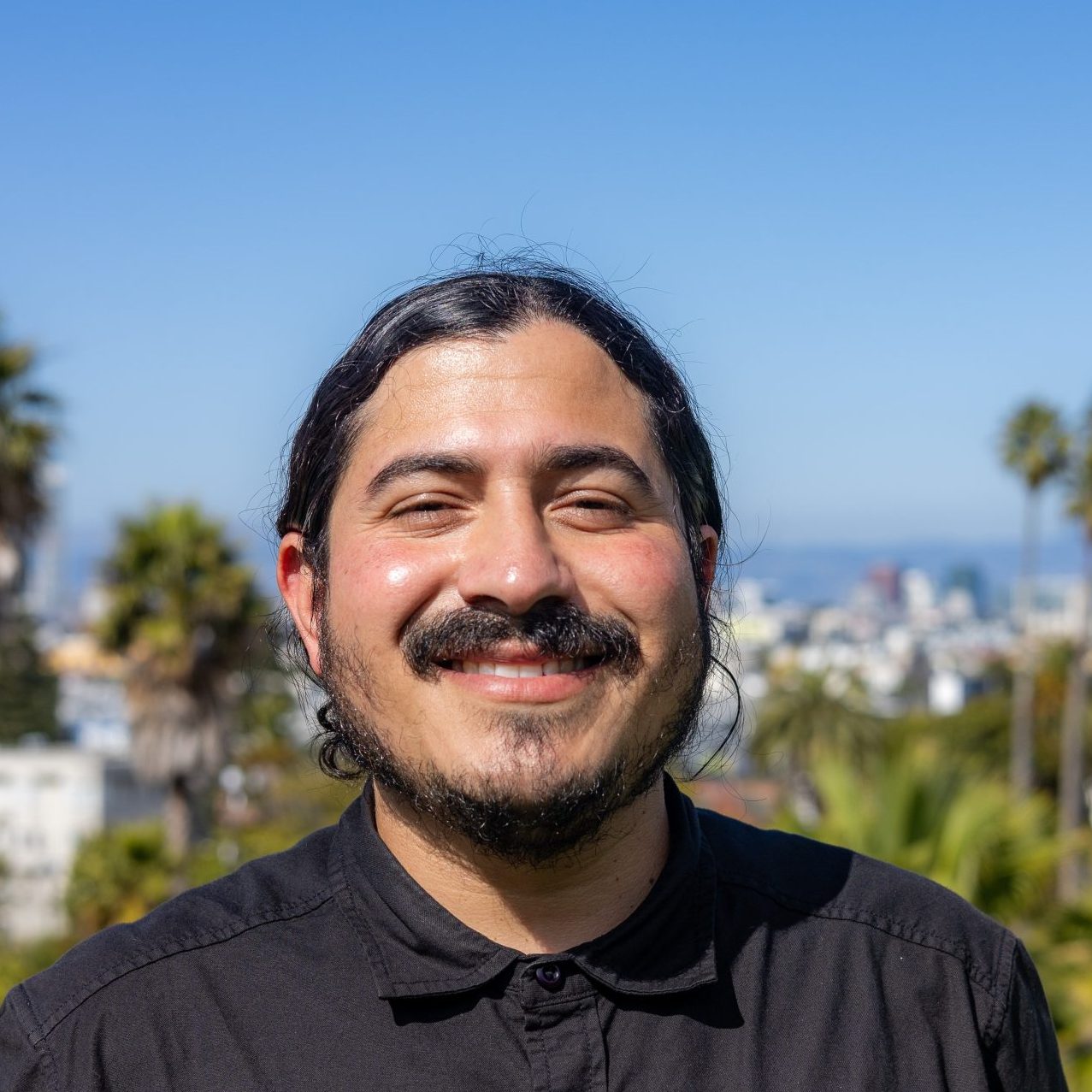

Isabel Fondevila is the Roxie Theater’s programming director. A native of the Basque country in northern Spain, she’s been working at the Mission District movie theater since 2013.
Fondevila sat down with Mission Local to talk about movies, the Mission and Roxie’s history.
This interview has been edited for clarity and length.
Mission Local: What does film mean to you?
Isabel Fondevila: Well, film is a lot of things. It’s an art form. It’s a labor of love. In general, it takes a village to make a movie. It takes so much time. Film is also a tool for the artist to share something, to send a message.
When you’re watching a film, or if you see somebody watching a movie, it feels like they are looking at a magical portal or something. It’s an art form that needs to be experienced in the movie theater.

ML: Do you remember the first movie that made you feel that magic? Like you were in a different place?
IF: I remember when I was 13 or something. I went to see “The Sheltering Sky,” a Bernardo Bertolucci film. It’s definitely not for a 13-year-old girl. I went to see it with a friend my age. That was something else. I don’t know how they let us in. But yeah, I remember that.
ML: Where did you grow up? Did you grow up watching movies?
IF: I grew up close to Bilbao, in the Basque country in Spain. I watched movies at home with my dad, mostly on public television, back in the 80s. They had the classics running, especially late at night, and I would stay up with my dad to watch those.
ML: What brought you to San Francisco?
IF: My first husband. He’s from the area, from the East Bay. I came in 2003. It was an interesting moment when we arrived in San Francisco, because people were saying that prices were going down a little bit because of the bust of one of those bubbles. There was a runoff election between Matt Gonzalez and Gavin Newsom for mayor. I still have a Matt Gonzalez little sign.
There were two video stores on Valencia Street: Lost Weekend and Leather Tongue Video. I sound like an old lady now (laughs). I lived at 23rd and Guerrero and worked in a restaurant. I had a lot of time on my hands. I passed by Artists’ Television Access and noticed they were looking for volunteers and I said, ‘This sounds interesting.’ I was there for 10 years.
To me, seeing a space where it was so open for anybody to come in and to create, to curate, to participate and contribute, it’s mind-blowing. I took that opportunity and I did all kinds of things at ATA, from little projections to curating shows and a [storefront] window. We ran a small experimental film festival for about five years. I got pregnant. We traveled with the festival to places like Russia, Los Angeles, and Spain.

ML: Was the festival mostly local filmmakers?
IF: We had some local filmmakers and some from all over, because we did a call to the experimental film community, which is tiny but mighty. I was seeing some really crazy experimental movies. The festival also showed documentaries with a lot of political angles, which opened my mind.
ML: How do you remember the Mission back then?
IF: It’s not gone. We still have a Mission, but it’s a different thing now. I remember it being super vibrant, very diverse. Meeting people from all over the world and going to MAPP, which was a really religious thing to do. People opening their garages, their homes to complete strangers. It was really cool. [MAPP still exists]
ML: What are your favorite places in the Mission?
IF: I love dive bars. I used to love The Uptown. Actually, I worked there for a little bit, but yeah, Uptown was one of my favorites. I live kind of close to the Latin American Club and the Make Out Room, so that was my hot spot. I love going to the open studios on Harrison. I don’t drink coffee, so I don’t know about coffee shops, but dive bars: Phone Booth, Doc’s Clock are kind of like from my era.

ML: How did you transition from ATA to the Roxie?
IF: I got so lucky, man. I had a kid, right? Now the kid is about a year and a half, almost two years, and I’m a stay-at-home mom. And out of the blue, the director of the Roxie calls to see if I was interested in a position that was opening up as an associate director; some people in the community had recommended me. I did an interview, got the job and here I am.
[I started in] 2013. I was the AD, then I was the ED for a little bit. Then I did the community partnerships and rentals kind of thing. Then I started doing a little bit of programming here and there. I was really eager to get some more Spanish language films in.
I programmed a few of those and it kind of worked out. That’s how we started RoxCine. I did a Japanese horror week, which was a success. Little by little, I started running the programming, not all by myself, but kind of running the whole schedule, big picture.
ML: The economic situation of The Roxie has had ups and downs. When I see the Roxie now, it’s busy, and movies are often sold out. What steps have you taken to bring the theater to the place where it is today?
IF: In terms of getting more people into the theater, my belief is that we started to expand, diversify and nurture our new audiences. We branched out with RoxCine [a year-round Spanish language program.] We branched out with animation. We branched out with Iranian cinema, with Asian cinema. With young people, older people.
And that’s not necessarily what you’re gonna like or not, it doesn’t really matter what your taste is. It’s about what others want, need, or you think they might need but don’t know it yet.
We also started doing things a little bit differently in terms of how we program. You will see that we show so many movies in a certain week, right? A lot of other theaters have just two movies if they have two screens, and they’ll be playing four shows a day of the same movie. We’re not a big market, so we had to have fewer shows to actually make it work for the movie and for the audience.
We give people a chance to see something that they wouldn’t be able to see anywhere else, because we show films that are not going to show at the AMC or the Alamo.

ML: How have you gone about diversifying?
IF:. It’s about listening and trying to see what works. Can we do more? Can we do it differently? What could work?
For example, we’re starting a Filipino film series. Both theater managers are Filipino or Filipino American, and so we’re like, “let’s build that.” We showed “Magellan” and “FiliKula,” and collaborated with an organization to co-present and help us spread the word.
You can’t just throw a title and expect people to show up. That’s just not going to happen. We’re still a scrappy nonprofit movie theater, it’s not like we have 20 people on staff. We need community partners to help us spread the word.
We also started accepting credit cards at the box office. We got a DCP projector [a projecting system that can screen high-resolution professional films.] And we are in an amazing neighborhood with amazing people that are interested in these weird things that we do.
ML: I’ve always loved the Roxie’s marquee.
IF: That neon is so cool. It’s really expensive to maintain. Every time something breaks, ‘ouch,’ but you gotta keep that up. It is beautiful.

ML: When did you get to the place where you said, “now we can be more ambitious and purchase the building?“
IF: To survive, as an institution, there was no other way. Even when we had no money in the bank, we would be thinking about this, but it was a fantasy at the time.
Coming out of the pandemic, we knew the building was really old. We needed to make improvements, but you’re going to make that investment and then get kicked out because they’re selling the property? In 2025, it looked like we could do it: We’re in a better place financially. We have a community behind us. We have a strong board of directors that are for it — and it happened.
It was a big campaign, $7 million, for the whole building — the Roxie, the “little Roxie,” and Dalva [the bar] — plus improvements that needed to be done. That was a lot of effort to raise that kind of money.
ML: Who are your favorite directors?
IF: Number one: Pedro Almodovar. Number two: Lucrecia Martel; we just had her here. Oh my God, she’s amazing.
We’ve done two [of her films] recently. The restoration of “La Mujer Sin Cabeza” and a new documentary about land-stealing in Argentina from Indigenous people. She will never sell out.

ML: What are some movies that you really like?
IF: “The Exterminating Angel,” “Grizzly Man,” “The Lure,” “La Mujer Murciélago,” “Los Nadie,” “The Untame,” “La Ciénaga,” “Misericordia,” “Fantastic Planet,” “Alphaville,” “La Libertad del Diablo,” “Me Estas Matando Susana,” “The Secret Agent,” “I Heard it Through the Grapevine,” “Chan is Missing,” “Sorry to Bother You,” “Rainbow Man.”
ML: And your message to local filmmakers?
IF: We’re here for the local filmmakers. If you’re making a movie and you need to see it on DCP, you can come in during the day and check it, because you cannot check that at home on your computer. When you have a movie out and you want to show it with us, we do everything we can. We have Mixtape, which is a yearly show for short films. All you gotta do is give us a call or send an email. We want to support local filmmakers as much as we can.
Fondevila is doing a fantastic job. It’s heartwarming to see the Roxie sell out a screening on a Tuesday or Wednesday night. Now if it only had weekday bargain matinees like the multiplexes!
Thanks for doing this interview! Isabel rules !
As a longtime Roxie attendee (live in Oakland) I appreciate the wide range even though I don’t get to as many films as I would if I lived over there. Proudly a dues paying member.
I’ve always loved the programming at Roxie. TY! It’s a real gem that we have this in the neighborhood. A place to escape the craziness outside.
Ps. Grizzly Man /Werner Hertzog is my favorite too. (I had to go to Alaska after that).