
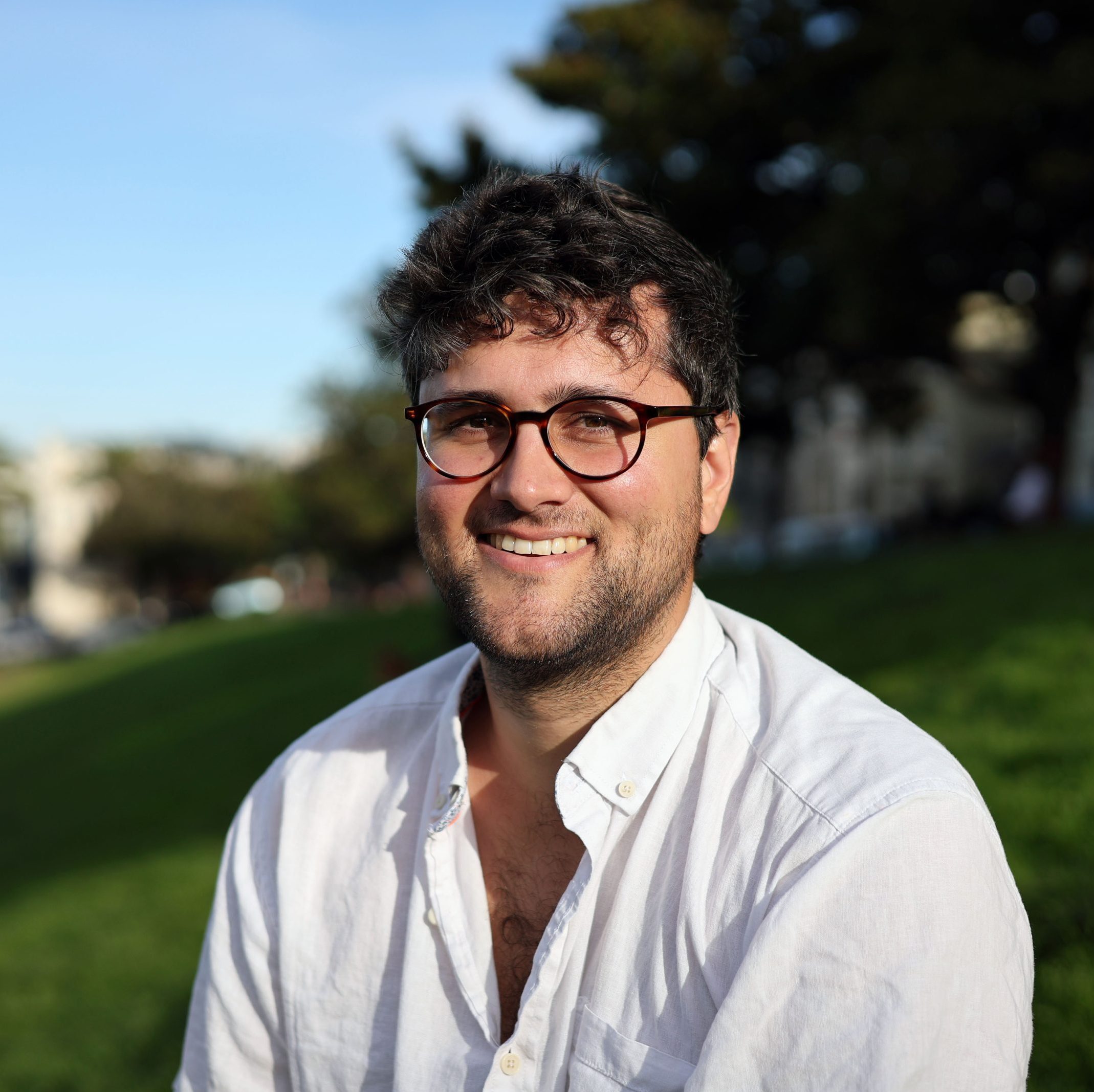

Glen Galaich came up in philanthropy, first helping to found the Global Philanthropy Forum, as a development director of Human Rights Watch, and then leading the Philanthropy Workshop, a network to advise wealthy donors on how to give.
In his new book,“Control: Why Big Giving Falls Short,” Galaich bites the hand that feeds him, arguing that modern philanthropy has become an anti-democratic process that gives too much power to the wealthy.
Businessmen and other wealthy donors may have been tremendously successful building an app or managing a stock portfolio, but they enjoy too-generous leeway when it comes to dispensing with their philanthropic funds, he argues.
The problems are structural. Wealthy donors receive large tax breaks to put their dollars in “donor advised funds” held by foundations — and there are nearly 145,000 foundations across the country with, according to various estimates, between two and four million DAFs.
Most of the money isn’t spent: The Internal Revenue Service only requires foundations to dispense with 5 percent of their holdings annually.
Donors exercise what Galaich calls a “mindset of control” on the little that is disbursed, picking and choosing the winners.
And the sums are staggering: American foundations held $1.6 trillion in assets as of 2024, according to the Nonprofit Times, and the wealth-management firm Cerulli estimates there will be $18 trillion in additional transfers into philanthropy in the next 25 years.
Galaich hasn’t left the business of philanthropy. As the president of the Stupski Foundation, a “spend down” foundation seeking to donate a total of $581 million in funds by 2029, Galaich’s day to day will eventually “cost him his job,” as TIME put it
In an hour-long conversation with Mission Local in April, Galaich spoke about his new book, the Andrew Carnegie model of giving, and how as the stockpile of trillions in charitable assets continues to grow, philanthropy risks losing its good reputation.
This interview has been edited and condensed for clarity.
Mission Local: At a bird’s-eye view level, what’s the thesis of your book? Tell me about the “Mindset of Control,” and your big critique of big giving?
Glenn Galaich: My general view is that we have a lot of money piling up in charitable accounts, and a major motivator is that the people who are making decisions about how to use that [money] very much want to control the assets — like they’ve built their businesses or controlled their investment accounts. They lean into what they know best. And as a result, we’re not getting funds out to communities in the way communities want it.
[Philanthropy] is built on what Andrew Carnegie essentially professed, which was if you are a wealthy individual, you have succeeded in an economic system in a way that most everyone else will not. And it is your obligation to provide for those who are not essentially as smart as you are. He had this patronizing view on other people in society. That in many ways is the challenge we’re dealing with.
The other part of it is as a society, all of us, we have given permission to this. We’ve leaned in to what Carnegie has said. We said, you know, you’re right. If you succeeded economically, if you’ve built an operating system that’s on everybody’s computer, then you should be able to end malaria or you should be able to save democracy. You do you and we’ll give you a lot of tax incentives to do that, and we’ll look forward to what you do.
I believe that those two things combined have given donors a mindset.
ML: You say the Carnegie model of philanthropy is no longer relevant. Why?
GG: It set the stage for what has become more of a private stewardship mindset versus a public one. These tax vehicles, which we call foundations — that’s all they are, tax vehicles — are designed to house assets. They are not actually the donor’s assets anymore. They have donated to these structures, and they come with a significant tax exemption. So on both fronts, the donor is giving money and the donor is getting a subsidy from the public. Therefore these dollars really are public dollars. But the way the mindset operates, the people who work in those foundations approach it in a private way, and therefore they want to give the money in ways that are beneficial to them, versus doing what community needs.
Where things changed in the Carnegie story: At the time that Carnegie and Rockefeller and Sloan and Sage were all walking around, there were really limited government programs and social services. Carnegie built the public library system. Once the income tax is passed, once the country dramatically expands its view of government during World War II — that’s literally a dividing line in the history of our country, where massive numbers of new social programs show up, from Social Security to the GI Bill. So what is a philanthropist to do after that? For the most part, they started to invest in things that were just really important to them. That’s really where things shift.
ML: Can you paint a picture of the most dire anti-democratic vision of big giving — what does it mean for society and our democracy?
GG: Let me try a different tack. When you think about a $15 billion election cycle in 2028 — $15 billion going in for the presidency, the Senate, and the House — what comes up for you?
ML: It’s a huge amount of money. Mostly going to consultants and ad buys. And certainly there’s a quid pro quo.
GG: So that’s a two-year cycle. In that same two-year period — 2027 and 2028 — big donors, from foundations alone, will give away $200 billion [in charitable funds]. So what is Rob Reich [Stanford University professor and author of “Just Giving: Why Philanthropy is Failing Democracy and How It Can Do Better”] concerned about? He’s concerned about — and I am too — the influence of that money.
If you didn’t have philanthropy, I don’t know if we’d have symphonies. I don’t know if we’d have operas. I don’t know if we would have big museums filled with most likely Western civilization artwork. I don’t know if we would have a particular version of history that so many people have been trying in the last 10 years alone to clarify and correct. Just from an arts and culture and historical standpoint, the influence of philanthropy to ensure that a particular narrative of America exists is interesting.
From a health perspective, those who get the benefits of health and public health — what cancers get addressed, what science is actually researched — philanthropy’s had a massive influence over that.
So to your question: if that were all just done through the democratic process the amount of influence — and the world we know around us — has been deeply impacted by the agenda of the foundation sector.
So, is it a bad thing? No, not when it’s stuff I agree with. But if I had a guy sitting here next to me who was a big Trump supporter, he would look at the stuff we do at this foundation and say, ‘You’re horrible.’ And if I saw his foundation, I would say, ‘You’re horrible.’
The Philanthropy Roundtable — on their website, for years, they had as one of the great organizations their donors have supported the Family Research Council. They believe in conversion therapy. Conversion therapy has just gotten a nice win, and I would guarantee that behind that are a number of families that go to the Philanthropy Roundtable and support that. I think that’s evil.
But they’re going to think what I do is evil. Whether you like it or not, there’s a lot of influence coming with these philanthropic dollars from the wealthiest people in our country. And I think why we don’t look at it is because it comes with good intentions. Wealthy people kind of launder this money in good intentions.
ML: You’ve said you get burned when you raise the question of influence. Why?
GG: I think it’s because we all think we’re trying to do the best we can. And in some cases, because we’re such a polarized society, we don’t want to — we want to be able to continue to push our values because the other side is pushing theirs. I just wonder: are there other ways to do this? Is there a way to democratize some of this funding so more people can be involved and we can bring about more understanding?
ML: When did your own thinking shift? Were there key moments when it clicked that the donor-control mindset wasn’t serving communities?
GG: It was a really productive period in the philanthropic story: 2017, 2018, 2019. And it really got catalyzed in 2020 with the murder of George Floyd. DEI was starting to grow as an area of focus in the corporate universe, academic world, and in the foundation sector. We were starting to talk about an equity lens — are those people who are most affected by our decisions getting any input, getting any say?
All of a sudden at philanthropy conferences, we were starting to have conversations about who’s not at the table. That evolved into bringing actual activists into the room who had not been at philanthropy conferences before, saying, ‘I don’t like you people. I don’t trust you. I don’t think you know how my life is.’ And: ‘Not only do I not think you’re ever going to give me a grant, but if you did, I think it could be harmful.’ That just kind of blew my mind. And I started to wonder: how did I miss this? Who have I missed talking to?
ML: Why did it take that long?
GG: That ultimately is the point of this book. It’s kind of the red pill/blue pill thing from The Matrix. If you buy into something — and I don’t think philanthropy is particularly unique here — if there are a set of beliefs and norms and practices that you enter into, it takes a special person to walk in and say, ‘This is a facade and something needs to change.’
When I came in in 2001, everyone was so excited about the new tech world. Those 2001 characters — Sergey Brin, Larry Page, Mark Zuckerberg, Jeff Bezos — we celebrated those guys.
Fast forward 25 years and now there’s darkness over those same people. You can’t turn on the news and hear ‘Zuckerberg’ and go, ‘Oh, how exciting, what a great culture they have.’ And that, in some ways, I think influenced many of us to think about it.
One of the foreword writers is a pretty well-known author named Ibram Kendi. He looked at the proposal I was going to send out to publishers and he said — and I’m paraphrasing because it was a long time ago — ‘You’re really yelling at people in this book. I wonder what it would be like for the reader to experience you yelling at yourself in the mirror.’ When I thought about “How to Be an Anti-Racist,” I knew exactly what he was talking about. You open right into him really thinking about his own racism and how that’s shown up over the years.
And I thought: I had that happen. I was a champion for donor-centered strategic philanthropy. I bought in completely to the idea that donors should just give according to their values and their interests. It never dawned on me that there’s a wider world out there that’s going to not benefit at all from that. Maybe even, in some ways, could be harmed by it.
ML: We’re here in San Francisco, and we have in some ways a philanthropist in chief as mayor now. How do you view Lurie’s election given your thesis about control? He came from philanthropy and is now tapping those connections for his various efforts — downtown recovery, private-public partnerships.
GG: I definitely think that we have, as a country, continually found some kind of safety and trust in people who have done well in the economic system. He’s not unusual in that he’s tapping into philanthropic dollars — every mayor I can think of has had relationships with philanthropy in some way.
Probably one of the most important donors in our country is Bloomberg, ran for president, didn’t succeed. We have had Rockefellers in office. We have had Hiltons in office. We have had, uh, we have Pritzkers all over the place in office. Newsom, while not as wealthy as some of the people we’re talking about, had a very close relationship in the Getty family. He’s documented that.
There’s wealthy people who have been philanthropists and there have been nonprofit leaders who have risen through the ranks into politics.
We trust people who have succeeded economically in this country more than we trust others to run the country, to run businesses, to run systems. We don’t seem to trust other people, whether that’s a race or class issue. We just don’t.
ML: Where will change come from? Are you confident enough wealthy donors will change their ways, or will it take legislation?
GG: My argument is: you better change your mindset, or the day is coming when people are going to start making policy changes and you might not like it. The policy changes that have come up so far have not been awesome.
There’s been a lot of effort to make donor-advised funds not anonymous anymore — you can see who the donor is. Well, I love that if it’s a right-wing donor, but I don’t love it if it’s a left-wing donor.
So do you get the intended outcomes you want from policy? I’m really torn. I’m not saying you can’t design policy to fix this, but the risk of unintended consequences are really high. To me it’s still a culture, mindset, normative review. I think you can move things faster than you think.
We changed the way the board operated with grant-making in a matter of one decision, and that can have enormous impact. But if the dollars start to grow and the mindset doesn’t shift — if our debt is up at $50, $60, $65 trillion and at the same time we’ve got $18 trillion sitting in charitable accounts, people are going to start looking at any pot of money that exists and wondering why it’s piling up.
Eventually the spotlight will turn. I do believe that.
J.B.,
My favorite piece yet by you.
Where did that 1.2 million y’all just got granted come from ?
“these dollars really are public dollars”
I pointed that out to Lurie in a comment I made here about an extravaganza (they even brought their own toilets complete with attendants in tuxedos) his ‘Tipping Point’ organization tossed at the Armory to thank their donors.
They co-opted parking for at least a couple of blocks.
Long line of limos.
High priced entertainment.
And, your tax dollars paid for it !
I suggested that the Mayor’s former organization try spreading some of that vibe one south for 2 blocks and put a Mariachi band or bands on a stage at 16th and Mission to improve the energy at that controversial intersection.
Haven’t heard back from him.
Now, let me tell you something.
That boy’s completely silo’d when it comes to that intersection and the claim that spending what has to be combined millions on cop overtime and DPW still keeps a contingent there who could be picking up trash with me and my dog, Skippy (he likes it when I mention him in posts) …
There’s also a contingent of ex-cons both picking up trash with regular DPW and, don’t forget the BART cops.
Mostly, they just stand around talking to each other.
Couple of days ago, coming back from Mi Tiera’s with a couple of heavy sacks of lowest priced fruit in town I passed 4 large cops standing abreast on the NE corner and I stopped to chat.
“Y’all be in favor of an elected police chief ?”
I open all my conversations with cops thataway.
One of them replied that he would get me a toy badge or something and send me over to someplace or other.
I turned to the only female officer …
“Is he trying to insult me ?”
She half smiled and nodded in the affirmative.
I tore him a new you know what and turned and made my way through the hundred or so addicts leaning against the old Walgreen walls twenty feet from them.
Your chosen way isn’t working, Mr. Mayor.
How about trying my way cause it’s much cheaper.
Take a bucket of black paint, a tape measure and a set of number stencils over there and paint out clear lines and numerals for licensed vendors and invite them to set up on the 4th of July (hey, that’s next week) and you’ll also pay for some Mariachi band music.
go Niners !!
h.