

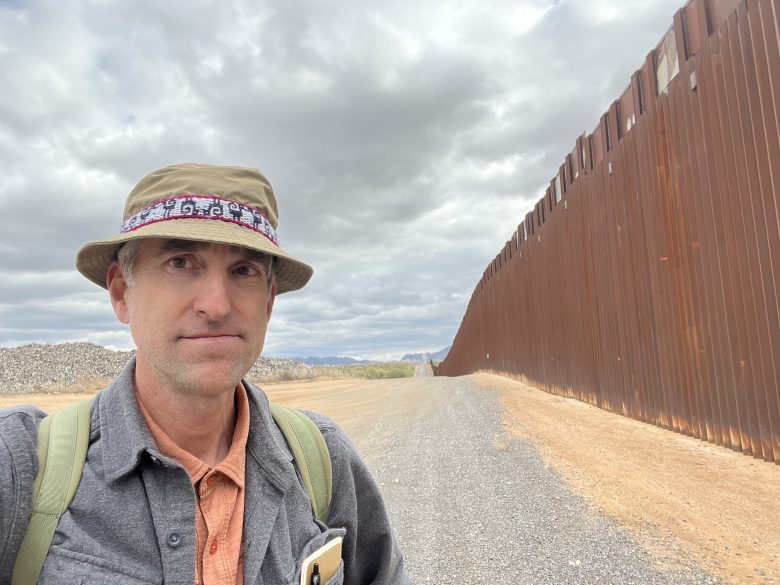

San Francisco Immigration judge Jeremiah Johnson, 52, learned that he had been fired when he got an email from Attorney General Pam Bondi one Friday in November. Thirty seconds later, administrators locked his email. He became one of the 104 judges fired by the Trump Administration. There was no reason given, though immigration attorneys and advocates hypothesize that the administration targeted judges for firing because of “perceived bias.”
“It was surreal and also made me feel disappointed in the immigration system,” said the 52-year-old judge who had been working at the downtown San Francisco Immigration Court for eight years, and practicing immigration law for over 20.
But instead of feeling debilitated, he felt free to do something he had long wanted to do: To travel to the U.S.-Mexico border to see what it is like for immigrants coming into the United States — the very people who would stand before him in court to plead their case for why they should be allowed to stay in America.
Johnson was also interested in the impact of border crossings on the local communities. So in late January, he flew to Tucson, Arizona, rented a car and over the next 10 days, he hiked trails along the border, visited shelters and churches, and chatted up local residents and border patrol agents.
“People agree a lot more than they disagree,” said Johnson, reflecting on his trip. And he found the border itself to be “kind of beautiful and quiet,” even as “people are continuing to die” crossing it. For Johnson, his trip reinforced his legal philosophy that immigrants applying for asylum are not numbers or forms, but human beings, each with a unique story.
At a shelter in Nogales, Mexico, near the border wall which separates Nogales and Arizona, he sat in a cafeteria and shared pork, peppers and warm tortillas with a Mexican migrant named Jaime. Just three days earlier, Jaime had been deported after being detained in the Alligator Alcatraz detention center in the Everglades National Park outside of Miami, Florida.
For the first time, Johnson was able to talk to the migrant not as a respondent in his courtroom, but as a peer.
“He was quite intelligent about economics and the housing market,” said Johnson.
During another moment on his trip, Johnson participated in a prayer vigil at the border between Arizona and Mexico to honor those who had died trying to cross into the United States.
Along the smog-filled roadway at the entrance to the border, he and other participants held white wooden crosses for the migrants who had died, many from starvation or dehydration. Some of the dead are never identified, but their bodies are recovered and when possible, repatriated.
For those with names, Johnson and others said “Presente!” after each name.
“It was powerful, it was part of that humanity, it can be uncomfortable, but it is incredibly powerful to allow yourself to feel and think about the person and the family who may or may not know what happened to the person,” he said.
For many of the ten days, Johnson would hike the trails around the border, taking in the flora and fauna. He saw not only the beauty of the desert, but also signs of those trying to cross: empty water bottles, discarded backpacks and clothes.
And then there were the walls that now line around 650 miles of the 1,954-mile border. At first sight, he had a hard time imagining that anyone could actually scale it.
They do, a border control agent later told him.
The quiet of the desert also surprised him – especially in contrast to the underlying violence and contention there.
Each day, he wrote in a journal, reflecting on what it means to have borders.
“Where nature has made whole, man has put asunder. In our scientific efforts to understand and categorize the world we inhabit; we have created differences where we should have been fostering similarities,” he wrote in an essay published in The Border Chronicle.
“Here, a slip can end dreams and hopes with a sudden fall.”
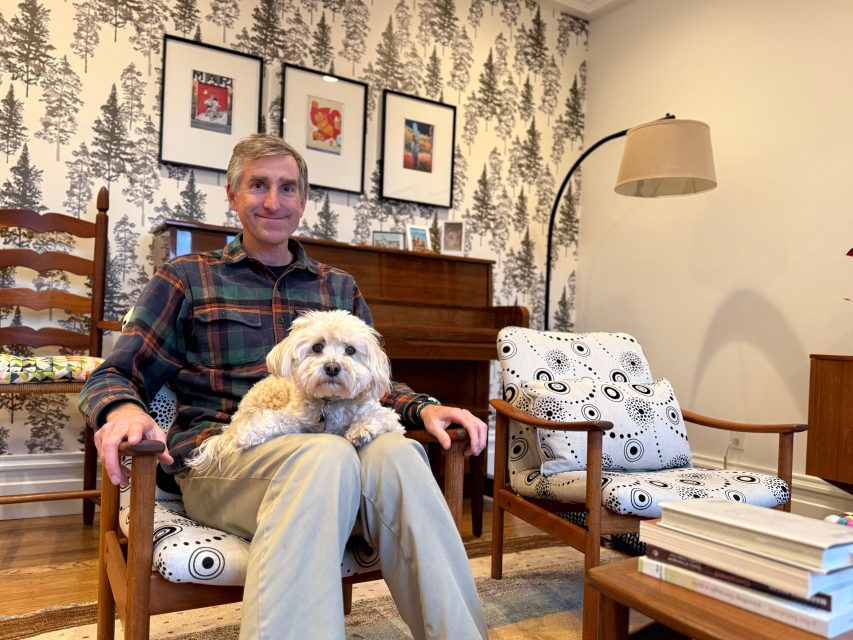
Credit: Clara-Sophia Daly
One day after hiking the trails, Johnson returned to his hotel, looked at himself in the mirror, and found a thorn sticking out of his cheek.
“I had a little thorn sticking out of my cheek, but imagine if you were out there for two, three, four days….” he said.
At dive bars along the border, he talked to long-time residents.
“People in the towns were not anti-immigrant,” he said. Instead, their complaints were more pedestrian: traffic at border checkpoints, cuts in fences that let cattle out.
In Douglas, Arizona, he had coffee with a retired border patrol officer.
“[The former border patrol agent] shared stories about how he, you know, stopped criminals from coming into the United States,” said Johnson.
“Would you just look the other way if someone committed fraud?” he recalled the border patrol agent asking.
“No,” replied Johnson.
The agent had preconceived notions that immigration judges are people who look away and tend to grant asylum. Johnson granted 90.4 percent of the asylum cases that came before him.
But they each talked about their careers working within the immigration system, and they each felt heard, even meeting up a second time for breakfast at the former border patrol agent’s home.
“When people sit down for coffee or sit down or go out for a hike… there’s a respect for each other,” he said.
Now, back in San Francisco — and without a job — Johnson will return south in April – but this time to the border between Mexico and Guatemala, where the United States has encouraged the Mexican government to stop migrants before they reach the U.S. border.