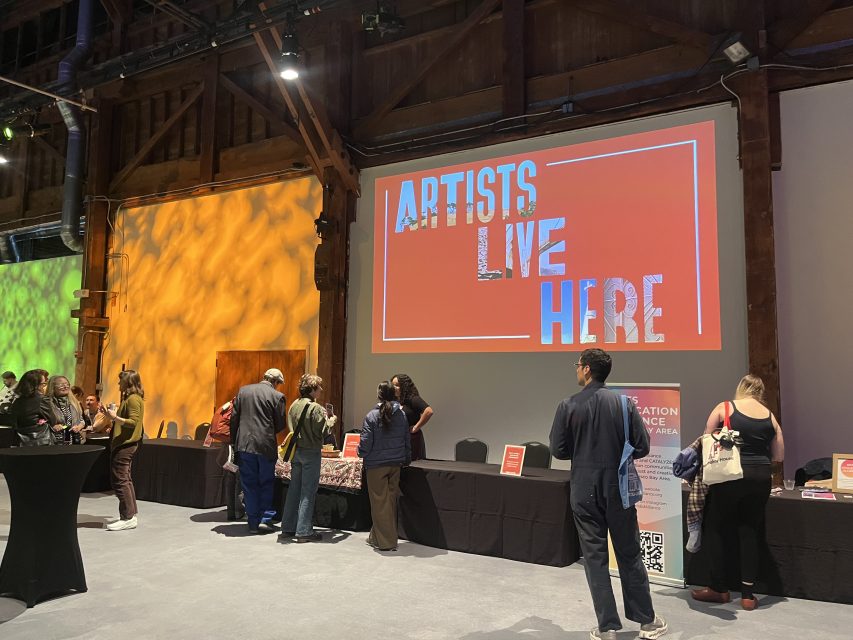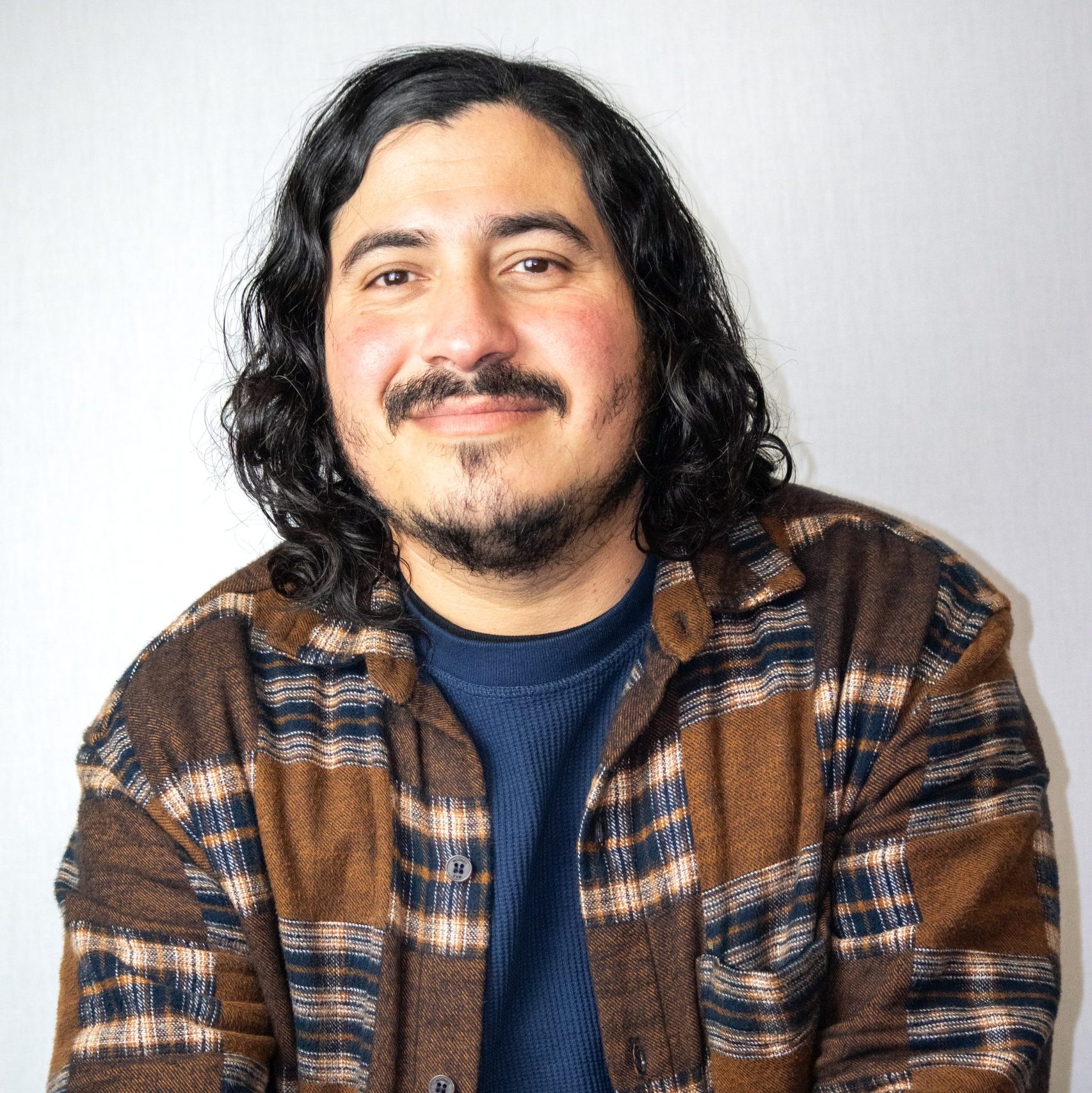
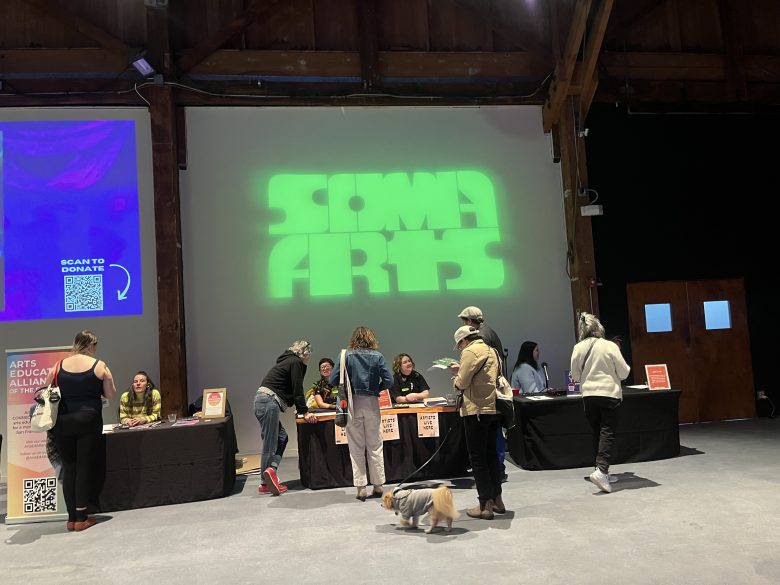

Maria Jenson, executive director of SOMArts, one of San Francisco’s storied arts and cultural centers, walked out of a City Hall meeting on March 11 feeling something she hadn’t felt in years: hope.
Or, more precisely, a cautious optimism.
Jenson’s tenure at SOMArts, one of several city-funded arts groups designed to support local artists and the city’s grassroots arts culture at large, has been defined by a commitment to the kind of fiscal stability that doesn’t make headlines. SOMArts runs such a tight ship financially that it just got the highest rating from the city’s budget office.
And yet, Jenson has spent the last several months worrying about the future of SOMArts, and the city’s other cultural centers.
Over the last fiscal year, city funding for the arts has become even more erratic than usual, exposing the cultural centers, which operate on a shoestring, to sudden budget cuts, volatile cash flow and a heavy administrative burden to prove the legitimacy of every dollar spent, according to several directors of city cultural centers.
Over the last fiscal year, the city hit SOMArts and six other city-funded arts and cultural organizations with a 10-percent funding cut — a loss of around $90,000, in the case of SOMArts. The news was delivered so late, Jenson said, that her team barely managed to rewrite their budget to avoid cuts to staff and programming.
Not all cultural centers managed to sail through. In January, the 50-year-old Mission Cultural Center for Latino Arts abruptly shut down after attempting to overcome a fiscal crisis.
To Jenson, the closure felt like a warning. The city’s cultural institutions had been built over decades to support community arts programming, preserve archives and keep local art accessible to San Francisco’s neighborhoods.
But the city’s arts funding system had become so unpredictable that even more fiscally stable centers began to worry that their days were numbered. The cultural centers’ city funding depends on programming for communities, like holding classes or putting on events.
An unexpected gap or drop in city funding could mean failing to follow through on those obligations, which could lead to losing city funding entirely.
She loved art, so she learned accounting
When Jenson took over SOMArts in 2016, she thought she would walk into the 46-year-old cultural institution with a plan for arts programming. Instead, she had to start with spreadsheets.
“The first two years of my life here were spent with an accounting consultant and financial administrator,” Jenson said.
She tightened internal controls, pushed transparency into department-level budgets and pursued clean audits and clean reporting.
“We just received another compliance pass,” she said. “This means that our records and our compliance reports have zero marks on them.”
She also worked to diversify revenue beyond city funding.
Originally, city funding was enough to pay for most of the expenses at cultural centers, but that funding wasn’t keeping up with inflation.
When she arrived in 2016, she said, city funding accounted for roughly 63 percent of SOMArts’ revenue. So SOMArts expanded rentals, some of it to corporate clients like Google, which rented out SOMArts for diversity, equity, and inclusion training.
It was a textbook approach: tighten the books, reduce dependence, build reserves. But it wasn’t enough. The pandemic devoured SOMArts’ reserves, and then came the 10 percent cut.
SOMArts wasn’t the only cultural center caught by surprise. Theo Ellingon, interim executive director of the Ruth Williams Opera House in Bayview, described the sudden cut as a “huge disappointment” that required the Opera House to make “a huge organizational shift.”
To keep the lights on, it had to start turning down requests to host free community events, and started charging people “a little bit more to reserve our space,” he said.
The Mission Cultural Center for Latino Arts, known as MCCLA, was not so lucky.
Arts Commission staff, speaking on condition of anonymity, said the abrupt 10 percent cut was caused by a gap between the projected budget and the actual revenue created by the city’s hotel tax, which has been the historic funding source for the city’s arts and cultural institutions.
In the past, when such gaps emerged, the city drew from other sources. For example, in the 2022-2023 fiscal year, the Arts Commission budgeted about $15.6 million in hotel-tax support but only realized about $12.7 million — a roughly $3 million gap.
In that year, they said, the Arts Commission was able to find one-time money to keep grant levels steady. But over the last fiscal year, those one-time sources were no longer available.
The reimbursement trap
San Francisco’s hotel tax has historically served as the backbone of arts funding.
After World War II, as San Francisco leaders sought to transform the city from a manufacturing town into a tourist destination, former Mayor George Christopher created a novel policy: the San Francisco Hotel Tax of 1961, which taxed hotel rooms at 6 percent and funneled a portion of the revenue toward arts and culture, on the grounds that art is good for tourism.
The Mission’s Day of the Dead, for example, pulls in tourists from all over the Bay Area, and has been hosted by MCCLA.
The hotel tax quickly generated revenue, reaching $19 million by 1978. In its heyday, it not only subsidized the cultural centers, but employed artists and musicians across San Francisco through the now-defunct Neighborhood Arts Program.
With each financial crisis — the dot-com bust of 2001-2002 and the subsequent 2008 mortgage crisis — the city’s revenue from the hotel tax diminished, and the city used more of it elsewhere. It became a less reliable revenue stream for arts and culture.
In 2013, the Board of Supervisors voted to redirect all hotel-tax revenue into the general fund.
In 2018, arts advocates, including Jenson, pushed back. They got Proposition E, a measure that would allocate 1.5 percent of the city’s 14-percent hotel tax for arts and cultural programming onto the ballot. It passed by a 75 percent majority.
Then, history repeated itself: The pandemic came, and hotel-tax funding plummeted.
Tourism has increased in San Francisco since then, lifting hotel tax revenue from a low of $33.2 million in 2020-2021 to $283 million in 2023-2024.
But, Jenson said, that hasn’t translated into a commensurate increase in funding for the cultural centers.
According to the legislation’s language, hotel tax funding under Prop. E does not just go to cultural centers; it is divided between several other arts endowments. It allows for a baseline allocation of $3.8 million to cultural centers, for example, and $8.9 million for two endowments that fund arts programs in the city.
But those numbers are not hard-set, the Arts Commission acknowledged. They can fluctuate depending on what hotel-tax revenue actually generates, and tourism has not yet recovered to pre-pandemic levels.
Arts Commission staff said that since 2019, when Prop. E went into effect, the city has awarded about $22.7 million in Prop. E funding, which represents roughly 88 percent of available Prop. E funds over that period.
Jenson and Ellington, of the Ruth Williams Opera House, said that the hotel tax has now become an unreliable funding source.
“We need other dedicated monies to make sure that we’re fully functional,” said Ellington. “There’s other things that it goes to,” he said, referring to Prop. E funding. “So we want to maximize the amount that goes to the actual cultural centers themselves.”
Jenson and Ellington also pointed to the city’s use of reimbursements as a strain on their organizations’ stability.
Organizations that receive reimbursable grants must front costs, document eligibility, submit receipts and wait to be paid back. Reimbursements, Jenson said, can create the very noncompliance they are meant to prevent.
When budgets tighten at arts organizations, often the first things they lose are the administrative employees who handle the paperwork, which makes it more challenging to file the paperwork necessary to keep the lights on.
“If the policy is so stringent that they don’t have the admin staff to keep pace with all the demands for receipts and documentation,” Jenson said, “they’ll fall out of compliance very easily.”
Martina Ayala, former executive director of the MCCLA, told Mission Local last year that she had to lay off the majority of her staff after the city delayed disbursing funds.
The Arts Commission told Mission Local that it has never delayed disbursements without cause. Delays only occur, they said, when paperwork hasn’t been submitted properly.
A chance to build something new
“When cultural institutions are successful in neighborhoods, then it trickles to their surroundings,” said Ellington. “Businesses do better.” He dreams of the day the Ruth Williams Opera House becomes “a hub for the entire southeast side of San Francisco.”
Ellington and Jenson want their organizations to be recognized as neighborhood hubs central to the revitalization of San Francisco’s economy. That harkens back to how they came to exist in the first place, Jenson said.
“I think the cultural centers initially were on a particular path. And then I just think that the path seemed to have been broken for a while,” she said. “The work we’re engaged in now is repairing and rebuilding so we can move into the future.”
That future, though, is difficult to predict. The city’s arts governance is shifting. In January, Mayor Daniel Lurie announced that he had launched a search for a new leader of a reimagined city agency that would merge the city’s three arts commissions into one.
Deborah Cullinan, vice president for the arts at Stanford University and a longtime leader in San Francisco’s arts ecosystem, said she hoped that the new structure and leadership will bring San Francisco back to a lineage of investment in the arts that began in the 1960s.
Artists are “the original gig workers,” Cullinan said. Jenson has feared cultural centers would slide into disrepair until they were deemed obsolete. “I don’t feel that way in this moment,” she said.
At the March 11 City Hall meeting, Jenson said, she and other cultural center leaders held what she described as an unusually open conversation with city partners and Arts Commission leadership.
The discussion touched on what have historically been politically fraught subjects: the sudden cuts, volatile cash flow and the administrative burden of proving the legitimacy of every dollar spent.
Though the future of the MCCLA remains uncertain, Rob Sanchez, the organization’s board president and treasurer, said the meeting “reaffirmed that the mayor’s office, through the Arts Commission, is supportive of the arts at the cultural-center level.”
“They want to know a little more intimately what goes on in the operations of the Mission Cultural Center,” he said, speaking of the Arts Commission. “They never asked us that before. It shows they want to be more involved, and want to have a closer relationship.”
An Arts Commission staff member said the meeting was inspired by a period of “reasoning” internally about the same concerns: Why have cultural centers had to endure funding cuts — including the 10 percent funding cut over the last fiscal year? How can the city ensure more predictable grant cycles?
The Arts Commission, the staffer continued, is working on more favorable grant terms for cultural centers and artists, including an advance-payment policy beginning July 1, 2026, and a new funding documentation policy that is being developed in consultation with the San Francisco Controller’s Office.
Only time will tell how much this helps, but Jenson hopes that it’s the dawn of a new era, where the city views local organizations as partners instead of plaintiffs.
“This was an opportunity for us to reestablish ourselves as true partners to the city and the Arts Commission, as leaders and contributors to arts and culture and the recovery of the city or the revitalization of the city,” she said.
A “groundswell of support” for cultural centers in their hour of need has created a rare opening, she said — not to rebuild the same system, but to change it.
“In some ways, we can say that this is a broken moment,” she said. “And the most interesting thing we can do when a plate shatters is not to pick it up and glue it back together the same way, but to create a different mosaic.”