


A report on the bodies buried under the Asian Art Museum, tales of the pestilent quarantine cottages of Potrero Hill, a fifth-generation Mission District funeral director on the quality of the pope’s embalming (dubious).
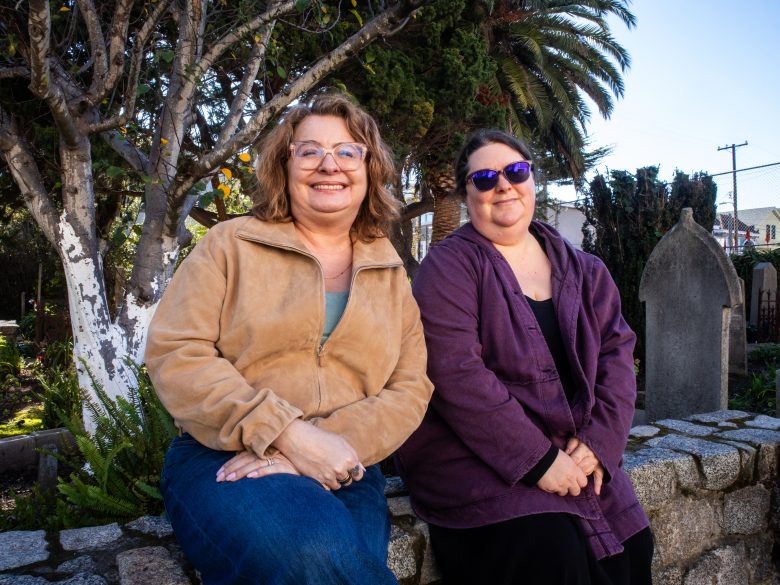
When journalist and Mission Local copyeditor Beth Winegarner and writer Courtney Minick decided to collaborate on a podcast, they thought “Why not death?”
With the help of Minick’s friend Carolyn Kissick as producer and editor, “Dead Reckoning” was born.
“We have so much fun talking about this stuff,” said Winegarner.
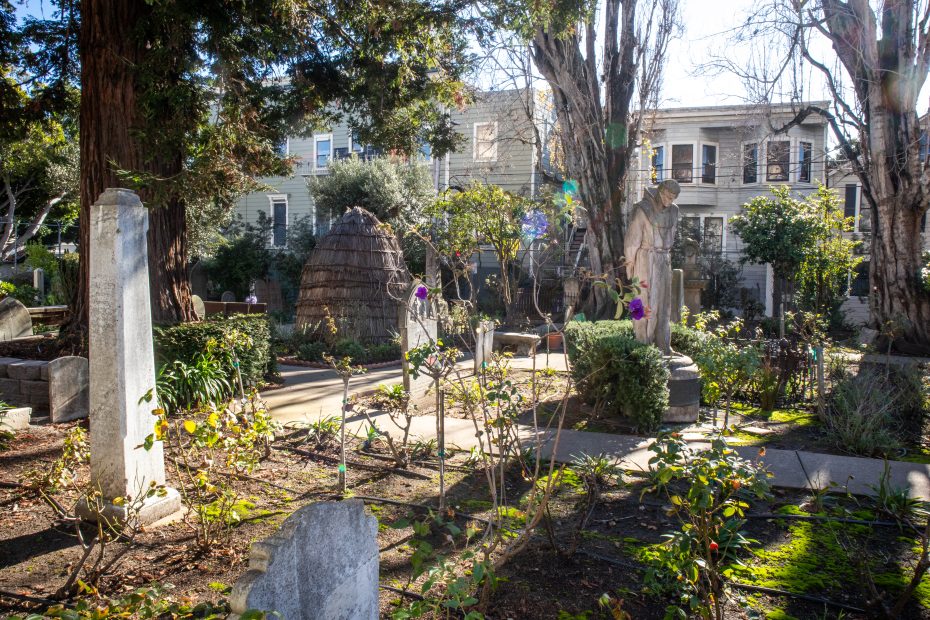
Both came to the project with significant expertise in the subject. Winegarner wrote a book called “San Francisco’s Forgotten Cemeteries,” and Minick has spent years collecting tales of “ghosts, San Francisco hauntings and macabre history, on her website “Here Lies a Story,” (among that site’s revelations: in the days after burials in the city were banned, and before private cars became common, there was a funeral streetcar that used to run down Valencia Street and took coffins and mourners directly to Colma).
It was the bone pit under Fort Mason that finally persuaded the two long-time friends to take their shared interests to the next level.
In 2024, Minick saw a story announcing that the mystery of the pit — specifically how the remains of at least 25 people came to be jumbled together underground, with saw marks but without a single full skeleton among them — had been solved.
At that moment, Minick realized that there was no one she would rather talk to about this.
She immediately called Winegarner, who had also seen the news, and was dying to talk about it. The two realized they had a lot to say.
The two spent nearly a year planning the logistics of their show, which they wanted to be both conversational and informative. “It’s actually way more work than we realized,” said Minick. “It takes me a couple weeks to do research for just this one hour episode because I really want to do it right,” said Minick.
So far, Winegarner and Minick have produced seven episodes, featuring both their own research, and in-depth interviews with experts like Amy Shea, author of Too Poor to Die, and fifth-generation funeral director and embalmer Steven Welch, of Duggan’s Funeral Home. Minick said that the podcast is so conversational that listeners may not realize that she and Winegarner had to read “some pretty heavy duty books” in order to produce the show.
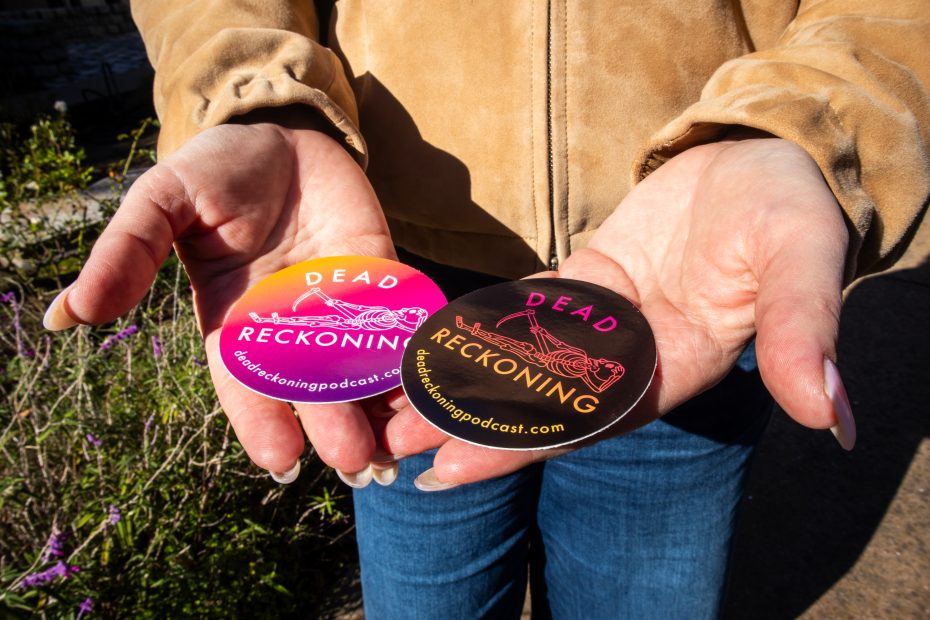
The pair will release five more episodes in early spring, including an upcoming two-part series on the history of abortions, based on the experiences of real people who lived and died in San Francisco.
The research process for that was “exhausting” and “heartbreaking,” says Winegarner, but the two pride themselves on taking on difficult subjects.
After the Dead Reckoning episode with Shea, for example, which covers what happens to people who die in poverty, one listener reached out to Winegarner and Minick thanking the two for the episode. The listener’s father had died unidentified on the streets, she told them, and the episode helped her process her grief.
The work of the podcast is hard, but constantly talking about death with each other does not dampen Winegarner and Minick’s spirits as much as one may think. “We don’t have the same TMI threshold as other people,” said Winegarner. Though, she added, occasionally, she needs to stop and pick something “less horrible to look at.”
Spending so much time with death, Minick added, has forced her to confront her own, and changed the way she thinks about grief. For those who think an entire podcast about death might be “too much,” Winegarner encourages skeptics to give “Dead Reckoning” a listen. It’s “a lot more fun” she said, than people may think.
Beg for ye downloads while ye may