

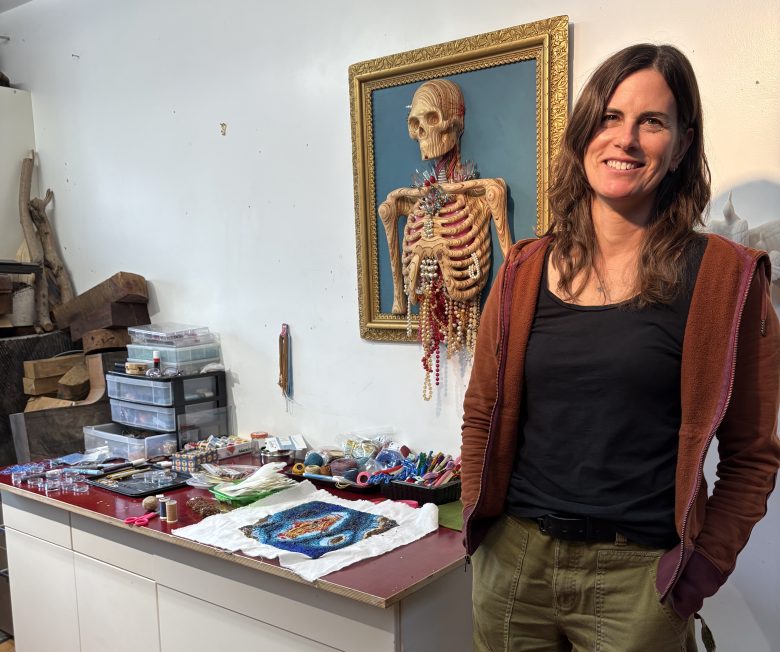

When Laurel Roth Hope left the quiet stretches of rural Sonoma County for San Francisco more than two decades ago, she felt disoriented by the maze of noise and concrete.
That is, until she noticed the birds thriving in the urban environment, building their nests with whatever they could forage from the city streets.
Hope, a former park ranger, took a note from the birds. She began collecting salvaged materials — things like yarn, wood and industrial acrylic paint that she found in scrapyards — and transforming the discarded items into art.
This spring, Hope hit the scrapyard jackpot as one of six of San Francisco’s Recology Artists in Residence. She spent four months making art in a studio at the Recology grounds, working with materials sourced from the public dump.
Going through the dump yielded some interesting salvage: A usable drum set, a perfectly intact stand-up mixer, and a full set of scuba gear were among Hope’s discoveries.
Sometimes, Hope said, “somebody’s whole house is dumped after an estate sale.”
While Hope worked in her studio, trucks backed up to a loading dock at the Recology transfer station, and pushing out piles of possessions. The resident artists, clad in hazmat suits, picked through the objects, loading up their carts and dousing their found treasures with alcohol spray, before a tractor comes to smash up everything that remains.
During her time at Recology, Hope found the death certificate of a decorated war veteran who died of a drug overdose in a hotel on Lombard Street. “It feels weird to hold that in your hands and then throw it back in,” she said.
Hope has lived in the Mission since 1998 with her partner and fellow artist Andy Diaz Hope, in an old carriage house repurposed into an artists’ compound. Their home is itself a model of survival and change: The cabinets are made from a downed oak tree, the sinks from Victorian-era foraged marble.
“Construction is part of the art process,” Hope said. “There used to be ancient forests here, and now we are living in their bones.”
Inside Hope’s home studio, wildlife abounds: Peacocks fashioned from fake fingernails, wooden coyote skulls, and a series of pigeon statues wearing crocheted outfits. Porcelain sculptures of starlings line the walls, and live hummingbirds circle the skylight in what was once a hayloft.
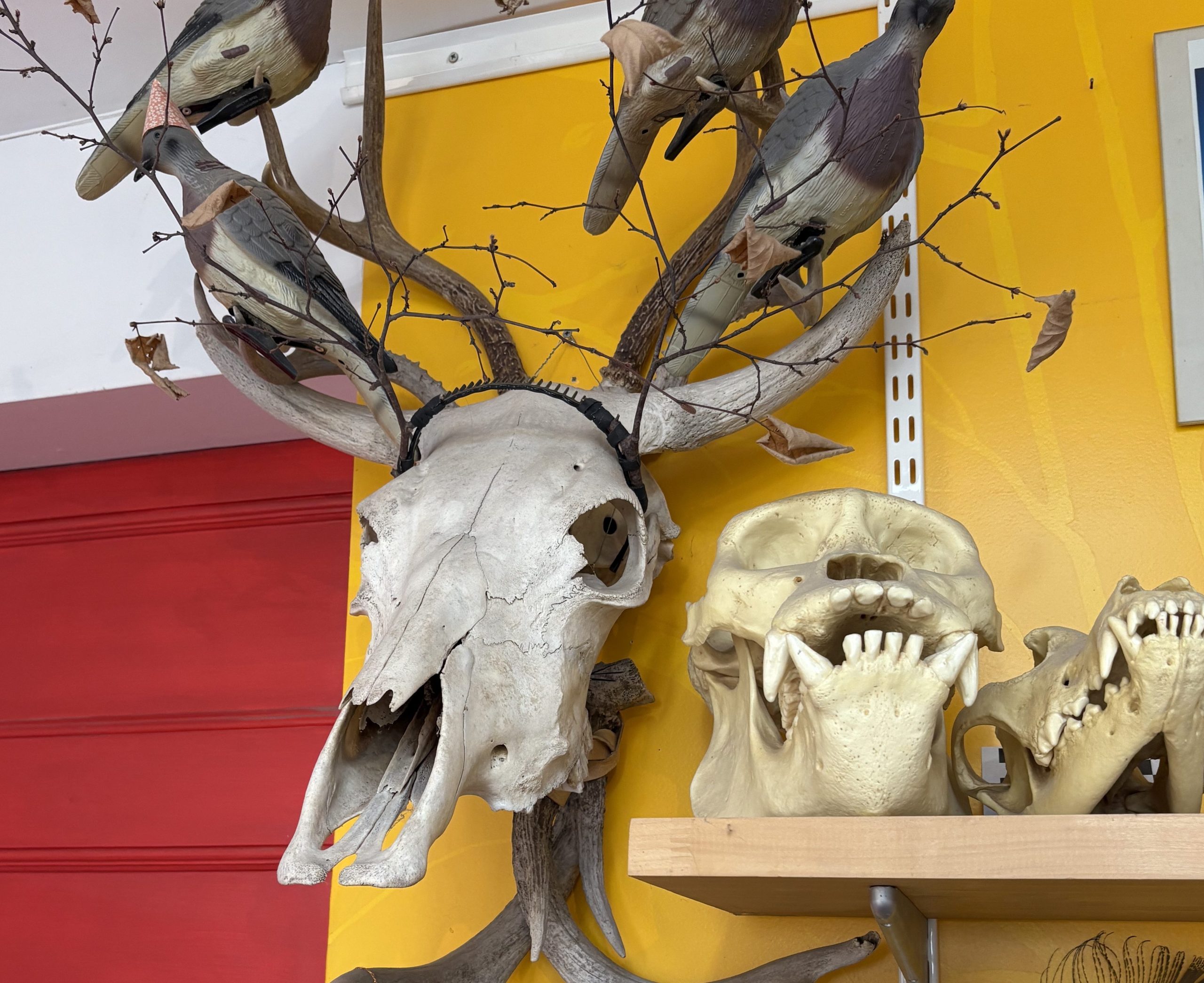
“I’ve ended up working with birds a lot, because birds are the animals that you see in cities the most,” Hope said. “I ended up sort of becoming like a bird lady, which was irritating! But it was like, if birds can adapt, I can adapt.”
Hope’s latest body of work focuses on ecosystems and how things adapt and work together. Her Recology exhibition in May, “Body of Land, Body of Water,” made use of broken costume jewelry, plywood scraps, and tangles of old wires to create sculptural wooden skeletons of human torsos.
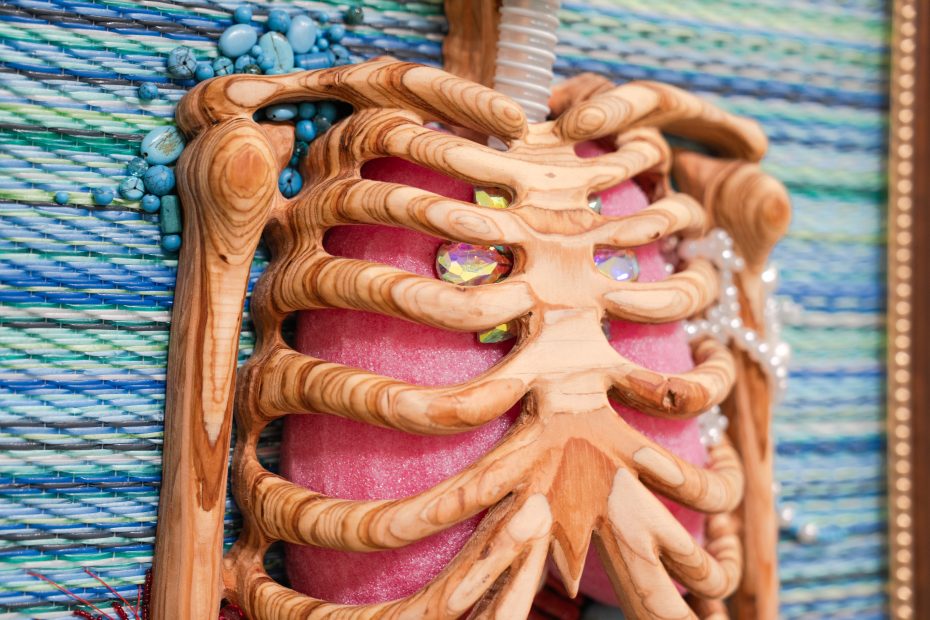
“In nature, a leaf falls and decomposes, and its nutrients are taken up by a plant that’s eaten by an animal, “ Hope said, “whereas in the city, garbage hits the ground and doesn’t have a chance to decompose. I’m playing with the idea of speeding up that cycle and creating animals out of the garbage before it decomposes.”
Her use of skeletons was intentional. “The skeleton is the part that lasts longer than the flesh,” said Hope, “so it’s almost more representational of the spirit.”
As she talked, garbage trucks rumbled by on their way to gather what the city has cast off.
“You don’t find the same peace here as in nature,” Hope said, “but there’s beauty all the same.”
The so-called “organic compost” they sell is riddled with microplastics.
No testing is being done that I am aware of. The advertising is suspect.
And it’s going right into gardens and farmlands, isn’t it. How pretty.
Reporting on the “beauty of landfills” is very something, but I’d rather have that light shining on the places Recology (a source of local corruption under Breed/Lee) have spent so many Millions in PR to keep us from looking into.