


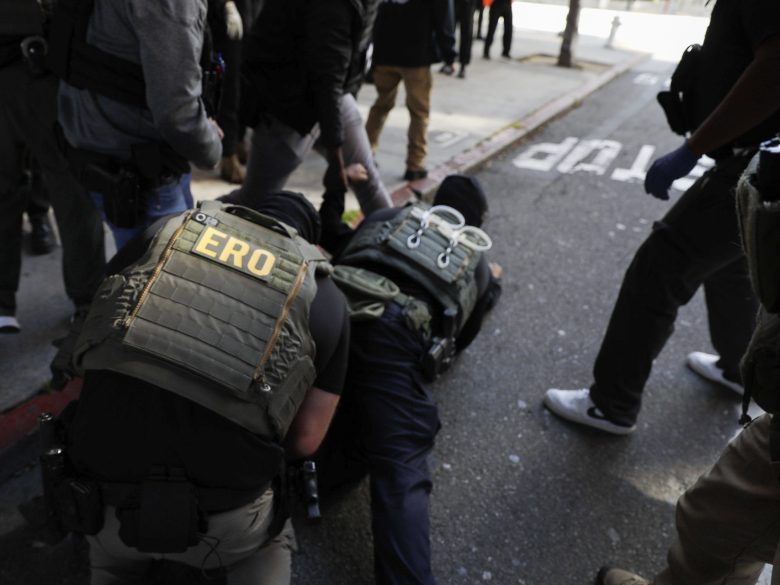

A 2-1 ruling by a federal judicial panel on Monday approved President Donald Trump’s contentious order to send National Guard troops to “war-ravaged” Portland — and may ease the White House’s efforts to do the same in San Francisco, experts said.
The move from the Ninth Circuit Court of Appeals comes as Trump has repeatedly talked of sending the National Guard to San Francisco.
Legal experts say today’s ruling is highly tailored to Portland. But the rationale used by two Trump-appointed judges to greenlight federal military intervention in the Pacific Northwest could potentially apply to any city under the aegis of the Ninth Circuit, which covers the west coast.
City officials already have a panoply of worries regarding federal intervention, of which National Guard deployment is, arguably, not even the most severe. Federalizing the National Guard is a relatively complicated process that both the city and state can attack in the courts.
But there is far less that could be done to stave off the president sending FBI, Drug Enforcement or, most notably, Customs and Border Patrol and Immigration and Customs Enforcement agents San Francisco’s way.
“Broadly speaking, the Supremacy Clause permits the federal government to carry out federal law enforcement,” says Aaron Reichlin-Melnick, a senior fellow at the American Immigration Council. This applies “even in places where local government does not want them.”
Today’s order is “Portland-specific,” Reichlin-Melnick continued, as “it is closely bound up in the facts on the ground before Trump federalized the National Guard on September 28.”
But the legal rationales undergirding today’s ruling are not limited to Portland, he said, and could potentially allow Trump to deploy federal troops to any city where people protest the actions of federal agencies.
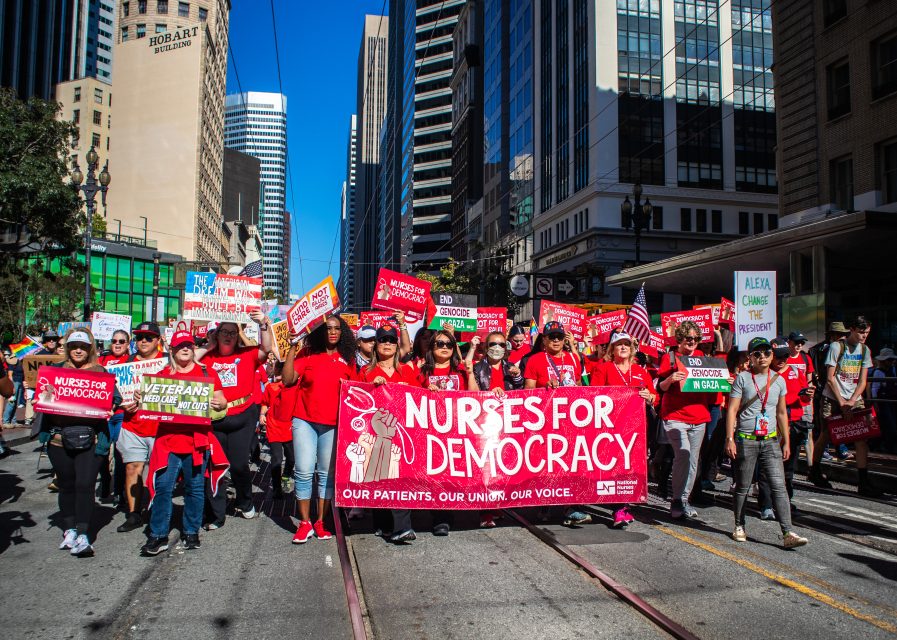
Ninth Circuit ruling backs National Guard deployment to Oregon
Today’s 2-1 decision — with two Trump-appointed judges outvoting a Clinton appointee — overruled a prior ruling by U.S. District Court Judge Karin Immergut, a Trump appointee.
One of her rationales for barring the president’s deployment of National Guard troops to Portland was that, by the time Trump moved to federalize the National Guard on Sept. 28, the anti-ICE protests in Portland had simmered down.
Ninth Circuit judges Ryan D. Nelson and Bridget S. Bade disagreed. Rather, they ruled, the president was entitled to send the troops to Portland based upon the totality of anti-ICE activity in Portland in 2025.
The Ninth Circuit panel also took issue with Immergut’s critique of Trump’s bombastic language on social media — e.g. “War-ravaged Portland.”
“Even if the President may exaggerate the extent of the problem on social media,” reads the ruling, “this does not change that other facts provide a colorable basis to support the statutory requirements.”
Finally, the panel today ruled that Trump had authority to send the Guard to Portland because the feds had previously deployed a quarter of all Federal Protective Services officers — the law enforcement wing of the United States Department of Homeland Security — to counter anti-ICE protests, and that was an untenable resource drain.
This, the panel found, left the president unable to “execute the laws of the United States.”
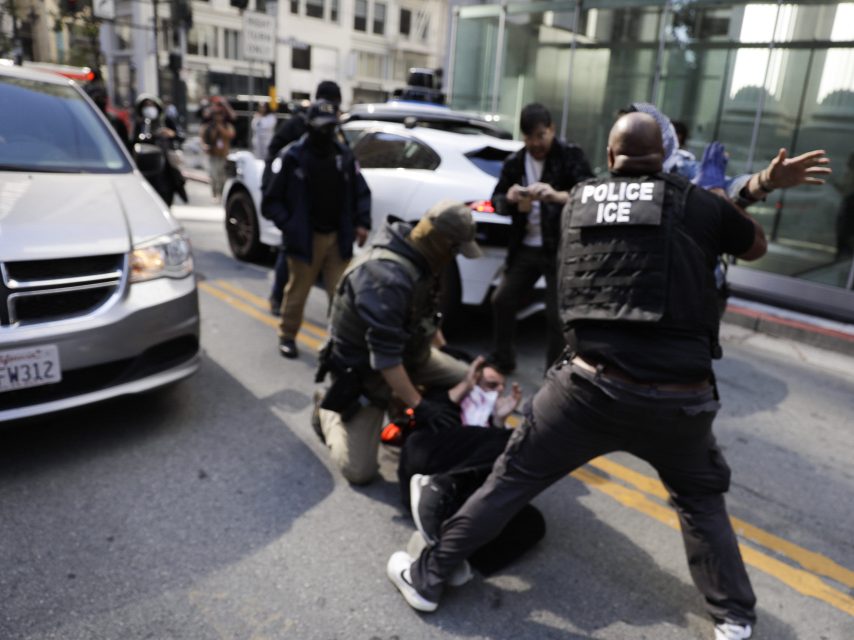
ICE more concerning than National Guard
California Attorney General Rob Bonta today said that if Trump deploys the National Guard to San Francisco, “We will be in court within hours, if not minutes.”
While the San Francisco City attorney’s office declined to discuss its legal strategy, it has been proactive against federal intervention in the past, and presumably would be again.
“Thanks to local law enforcement and city workers, San Francisco is one of the safest cities in the country,” said City Attorney David Chiu in a statement. “Crime is at its lowest point in decades. Our local law enforcement are more than capable of keeping our city safe.”
Statements like this have emanated from many city officials intent on keeping armed federal troops off of San Francisco streets. The city’s reported crime and overdose numbers are down, and homicides are on pace for the lowest yearly total since 1954.
“I am deeply grateful to the members of our military for their service to our country, but the National Guard does not have the authority to arrest drug dealers,” wrote Mayor Daniel Lurie on Monday. “Sending them to San Francisco will do nothing to get fentanyl off the streets or make our city safer.”
The city and state can contest the deployment of National Guard troops as unserious and unnecessary with statistics about plummeting crime and reduced drug deaths. But there’s little San Francisco can do regarding the movement of federal law-enforcement — most notably, ICE agents.
Immigration officers have been aggressively making arrests in other American cities, including an operation earlier this month in which immigration agents rappelled into a Chicago apartment building out of Black Hawk helicopters, set off flash-bang grenades and rounded up largely Black and Latino tenants, holding many in zip-tie cuffs for hours.
Dozens of those detained were U.S. citizens, including children.
National Guard troops can provide a “cover” for these other federal entities to make arrests, said Kate Chatfield, executive director of the California Public Defenders Association.
Though ICE has been granted a massive budget spike and efforts are afoot to expedite hiring, there are still a limited number of agents.
“As of October 2025, they do not have enough ICE agents to terrorize every blue city,” said Angela Chan, the chief assistant attorney at the San Francisco Public Defender’s office and a specialist in sanctuary law.
“The theory behind sanctuary law is that when you prevent local and state law-enforcement from being co-opted, you severely limit how many people can be harmed by ICE,” Chan said.
Shilpi Agarwal, the legal director of the American Civil Liberties Union of Northern California, said that city and state officials should continue to push back against federal efforts to commingle ICE and the military.
“They can enforce immigration laws,” she said, of the feds. “That doesn’t mean they can willy-nilly call up the military and militarize the effort to do immigration enforcement.”
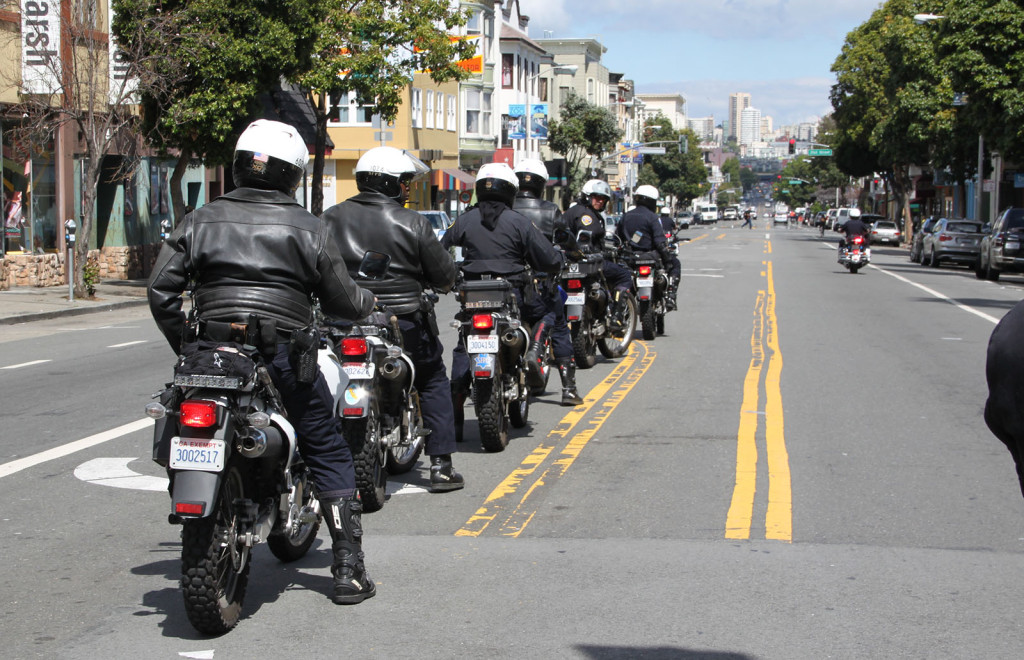
A challenging role for local police
It remains to be seen how local police would behave if the city were occupied by a significant deployment of federal law enforcement officials.
While District Attorney Brooke Jenkins has vowed to prosecute federal law-enforcement for any on-the-job misconduct, local police sources questioned who would be arresting those federal officers.
The department is limited by both Sanctuary City laws and the 10th Amendment in how it can work with federal officials. SFPD officers may step in during an enforcement action to ensure federal agents are not assaulted. But local police are reminded during briefings not to assist with arrests for immigration purposes.
The SFPD and other city authorities have often collaborated with federal agencies like the FBI, DEA, and U.S. Attorney when it comes to targeted drug enforcement operations. But that is not similar to interfacing with armed federal soldiers on city streets.
If it comes down to that, a police source said, officers unsure of their role will try to remain hands-off. They likely would not prevent people from protesting, but they also would not prevent an arrest.
It’s “no moral prerogative,” the veteran officer said. “More a protect-my-ass prerogative.”
Good luck on the hills part-time soldiers.
I wasn’t aware that sfpd dirt bike officers got such nice mx boots, those things are like 350/pair retail at least.
What do we want, as a city? I wish our leaders would allow us to vote on it.
Is it important to :
1) Protect all illegal immigrants, including convicted felons, from deportation?
2) Protect only illegal immigrants who have not been convicted of a crime?
3) Allow enforcement of the country’s immigration laws inside the city?
I wish we would be offered this choice before the Trump administration imposes C.
Candy, you won’t get to vote on that because those are matters for the Federal government. What you personally think about the issue is immaterial because the City is bound by the need to not impede the Feds.
YOU DO NOT UNDERSTAND THE LAW.
It means San Francisco is next
It is in our hands whether or not it happens. The proximate cause of all these interventions is local residents trying to impede ICE officers from doing their job. Ultimately that can never succeed and will only invite a crackdown. The key for SF is to make its point but also ensure that we are not as aggressive as some other US cities.
We can avoid the threat by not being the worst house on the block. Let other cities take the heat.
Wrong and clueless again David.
Thanks for reporting.
Sf citizens and government are to blame if the national
Guard comes .
This city has done nothing to cure the ills and address the crime,
Im sick of it .
I will not lose sleep if they come and may finally get some and be able to go out my door and not be in the middle of a crack house on my block and be walking over bodies rotting away and getting high .
Unless the city gets control now and cleans this lawlessness up now , then get people who will .
Tired of the babysitting and room service at my expense to pay for and allow persons to engage in illegal activity and destroy my lfe and wellbeing as well .
Clean it up
.
Mature a little .
Game over
Please start with Oakland first then welcome to the tenderloin! Many of us would love to see them here. Clean up the mess
Mile, Oakland is so mismanaged that it has already had either the State or the Feds come in and run some of its key functions, including law enforcement and education.
Being better than Oakland is a low bar.
SF had the same once, clueless David.
Yess, please bring them. So sick of the drug dealers and BS that I have to wade through to get to my home.