

Taki and Molly Kitamura have been getting tattooed since they were 17 and 19, respectively.
Taki’s first was a tribal design on his forearm and head that has “since been covered, because it was terribly done.” Molly’s were two Korean symbols on her upper back.
That was decades — and a lot of ink — ago. Since then, the couple have covered themselves from head to toe, literally, in tattoos.
Their journeys, and the questions of identity they have navigated along the way, inform “Living Tattoo Traditions: American Irezumi and Beyond,” an exhibition opening at the San Francisco Public Library Main Branch on Thursday.
As a Japanese man born and raised in the United States, Kitamura said he struggled with imposter syndrome. Though he was part of a Japanese tattoo family, apprenticed to a Japanese tattoo master, and works with primarily Japanese-American clients, he worried that his own style was Americanized compared to the traditions he was studying.
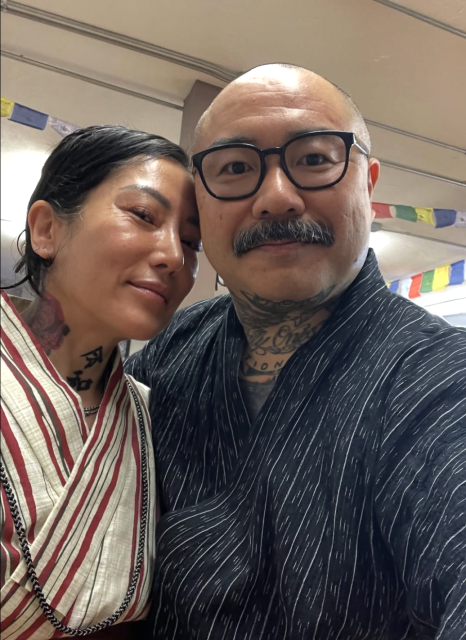
Now, nearly 29 years into his practice (Kitamura opened his own studio, State of Grace Tattoo, in 2002 in San Jose) he feels “this is me accepting who I am and being proud of that,” he said.
Molly Kitamura, a Korean adoptee raised in the suburbs of Minneapolis, Minnesota, grappled with identity in a different way. Raised by two white parents, her knowledge of Korean culture was based on the Korean summer camp that the adoption agency would host every summer, she said.
Tattooing has made her feel more at home and connected, she said. Most of her clients are Asian women, and she’s learned more about her culture through her tattoo practice.
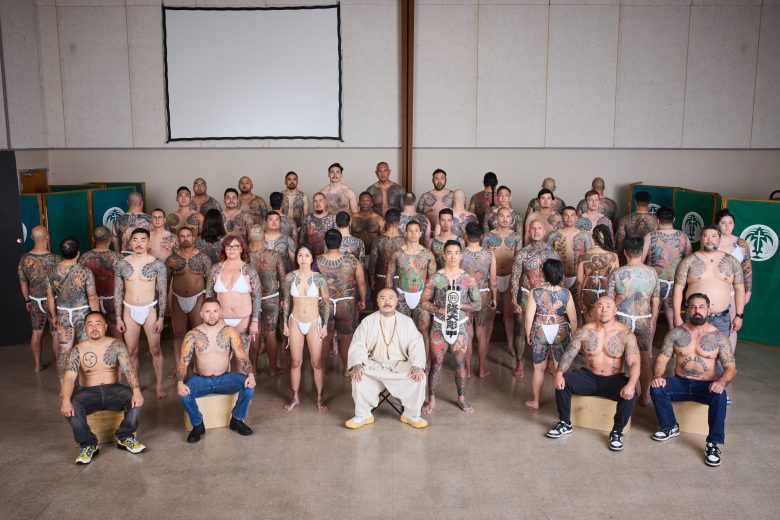
For the show, the Kitamuras filmed interviews with tattoo artists from a wide range of cultures: Japanese, Cherokee, Mexican, queer and trans, among others.
Alison Wyckoff, director of exhibitions at the library and long-time collaborator with the Kitamuras, helped the couple “shape the stories and themes so they are accessible to a wide range of audiences.”
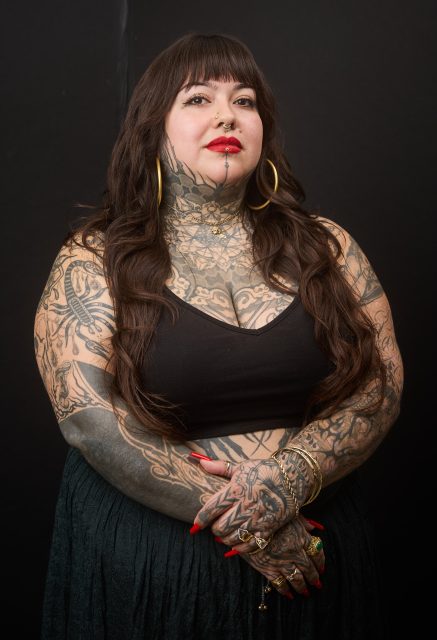
Photographer John Agcaoili created portraits of 24 tattoo artists and their clients.
Traditional museums have become prohibitively expensive, says Wyckoff, which makes free exhibitions like the ones that the library is able to put on even more critical than they have been.
The exhibit kicks off with a 5:30 p.m. opening reception on Thursday featuring taiko drumming in the library atrium, punk DJs, food from Outta Sight Pizza and wine from Blade and Talon.
Also on display will be a skateboard painted by Leo Zulueta, “the father of modern tribal tattooing,” and a 9-by-13-foot mural of a snake and a horse, painted by the Kitamuras and inspired by the Chinese zodiac.
An interactive part of the exhibit features a sculpture of a Japanese temple where attendees can write wishes to the “tattoo gods.”
The co-curators have scheduled an array of programming, including a panel on Friday about the themes of the show: tattoos as cultural appropriation, tattoos as a means of connecting to heritage, and tattoos as an archive of stories.
In the meantime, the Kitamuras anxiously await opening night. “I have butterflies in my stomach,” said Molly Kitamura.
“Living Tattoo Traditions” will have its opening reception at the main library’s Jewett Gallery on Oct. 2 from 5 p.m. to 7:30 p.m. at 100 Larkin. The exhibition will be free to the public during library hours until March 1, 2026.