

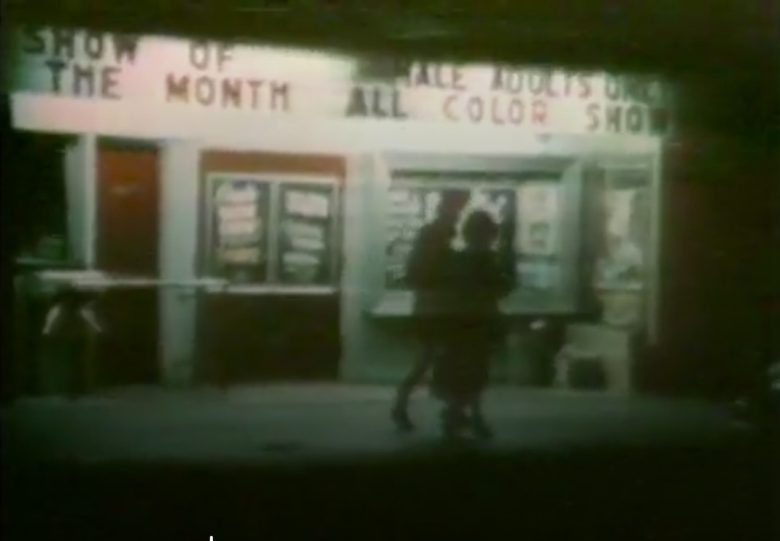
Before today’s Twitter users began filming poverty, drug abuse and mental illness on the streets of San Francisco’s Tenderloin, there was Robert Zagone.
The young filmmaker, working as a producer-director at KQED in the 1960s, picked up a camera and started shooting the streets.
“There was very little or nothing done about disenfranchised people in our society,” Zagone said, reflecting on the abused and spurned youth running away to San Francisco in large numbers at the time. “I just thought it was time to present young people without treating them as being freaks, or weird people.”
Zagone first made an in-studio show for KQED called “Youth in the Tenderloin,” and then, deciding a studio wasn’t strong enough to tell the neighborhood’s story, decided to go deeper with a “guerrilla”-style documentary he called “Drugs in the Tenderloin.”
He went out with a hand-held camera, no tripod or lights, and began interviewing people: A young lesbian couple, a drug dealer, drug users who had found a safe haven of sorts in the Tenderloin.
The title is perhaps a tongue-in-cheek jab at the “lurid headlines” Zagone said were the norm in the Tenderloin at the time. The film starts in a similar tone: A deep newscaster-like voice spits off statistics: “124 prostitutes arrested. 119 heroin addicts uncovered. 18 teenagers arrested in an orgy. 366 male prostitutes … ”
But what follows is not a typical news segment.
Zagone’s goal, he says, was to uplift, not exploit, the often-ignored voices and subcultures of the Tenderloin during an important time in San Francisco — the intersection of the “hippie invasion,” anti-war activity and the civil rights movement.
Four young people talk about their lives in a series of interviews, punctuated by grainy street scenes illuminated only by neon signs, police car headlights, or the glow from inside late-night businesses.
Drug use is part of their story — one scene shows the slow process of mixing a white powder on a spoon, suctioning it into a needle, finding a vein — but so are the subjects’ humanity, their struggles with sexuality, mental health and employment.
One clean-cut man with a button-down shirt reflects on camera: “Why do I take meth? I guess because it’s sort of an escape.”
The “groovy” new drug helped with his art, the man adds. When he found himself doing too much of the drug, he realized he needs to be careful with it.
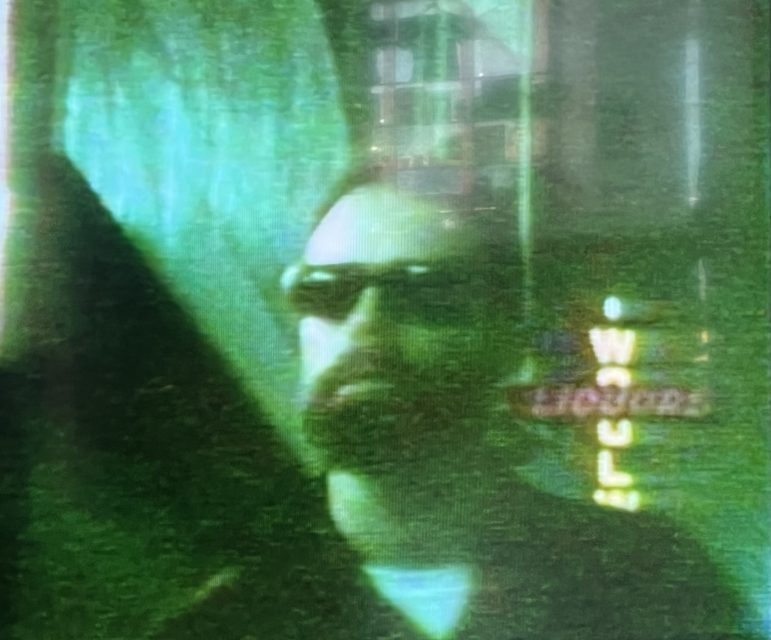
Another man, whose drug of choice is heroin, lays back on a bed in sunglasses, petting a cat. He would like to get clean, he says, and eventually out of the Tenderloin.
“I don’t see no old people in the streets who are trying to make it,” he muses. “Either they finally get out … or you know, they just stay down there and die.”
The film aired once on national television on the Eastern Educational Network and even won a couple awards, then seemed to disappear for 50 years.
“When I left KQED years later, they were getting rid of all of their videotapes. They were going to throw them in the ocean,” said Zagone, who grabbed the “Drugs in the Tenderloin” tape, among others, and tossed it in a closet in his East Bay home instead. “This film was dead and buried.”
Zagone held onto what he believes was the only copy of the film, until 10 years ago, when his wife had an offhand conversation about it with the wife of the Tenderloin Museum’s founder.
The museum screened the film in 2016. “It was our second-ever public program. It completely sold out,” said museum director Katie Conry. Subsequent screenings were also a hit. “People’s desire for this movie is incredible.”
On Wednesday, the Roxie Theater and the Tenderloin Museum will co-host another screening of “Drugs in the Tenderloin,” along with a Q&A with Zagone, who is now 87.
“Don’t expect a Hollywood film,” Zagone warns. The audio, he said, is raw and noisy, much like the actual streets.
The film remains a rarely seen slice of life, a time capsule that is still applicable today.
The Tenderloin is rarely seen on television or mainstream news beyond occasional shootings, stabbings and police raids.
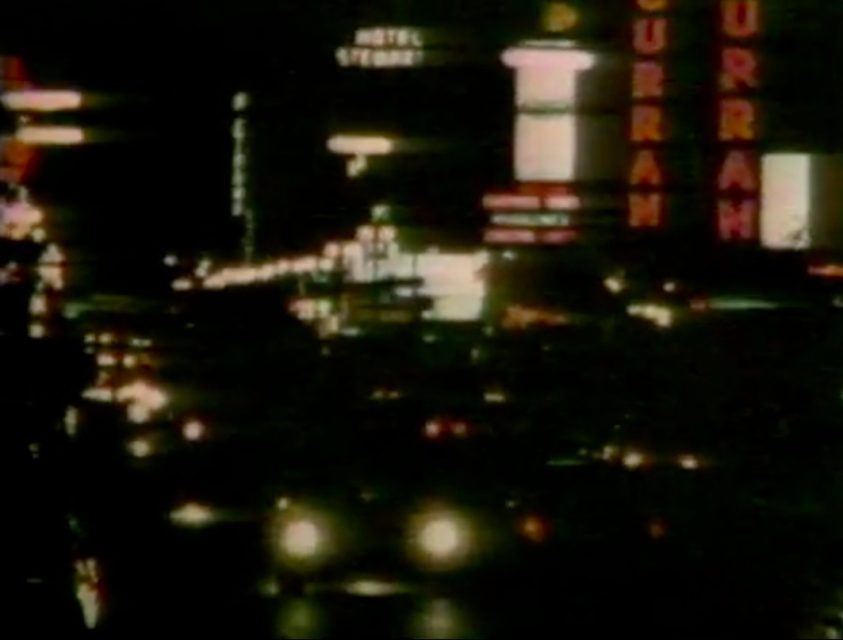
“It’s become apparent that homeless people, people in the Tenderloin, are invisible,” Zagone said. “No one wants to really look at them or touch the issues.”
So-called citizen journalists, meanwhile, have stepped in in recent years to post and monetize voyeuristic “poverty porn.”
Through the film, Zagone’s narrator, activist Mark Forrester, cuts from the people who are struggling to live their lives in the Tenderloin to men in suits who walk through the neighborhood.
“In the Tenderloin, he can survive. He can exist. He can cope,” Forrester says of a hypothetical young runaway, or gay teen thrown out of their home. “Because there are ways of surviving down here. There are modes of acceptance down here.”
To one of the main interviewees, a young lesbian who has recently decided to quit drugs, Forrester asks: “Are you happy?”
“Happy? When?” The soft-spoken young woman was dishonorably discharged from the Army for being gay, and wound up pressured into prostitution at her job. Crystal meth, she said, made her brave.
“Just, you know, with your life,” he responds. “If you had an opportunity for a heterosexual relationship and a good job, a good family life, would you take it?”
“I could be happy in gay life, and a good job,” she reflects after explaining her experience coming out. “If you want to be a certain way, I suppose society should accept you.”
Zagone said he never again heard from the woman, or any of the other people he interviewed, though they are often top of mind. He has come to be protective of his immortal film, much as he was with its subjects.
And on Wednesday, for one night, they will all come back to life.
“Drugs in the Tenderloin” will be shown at the Roxie Theater on August 20. Click here for more information.
At least in the 1960s there were cheap hotels in the Tenderloin, whereas these days it’s as unaffordable as every other place in The City.
If you want to hear from junkies, there are plenty of opportunities right here today.
You, for example, are clearly addicted to huffing your own farts, and you have a platform here on the internet!
Back when things were pure. The way life should have been lived. CREEPMOB BABY
Cool story.