

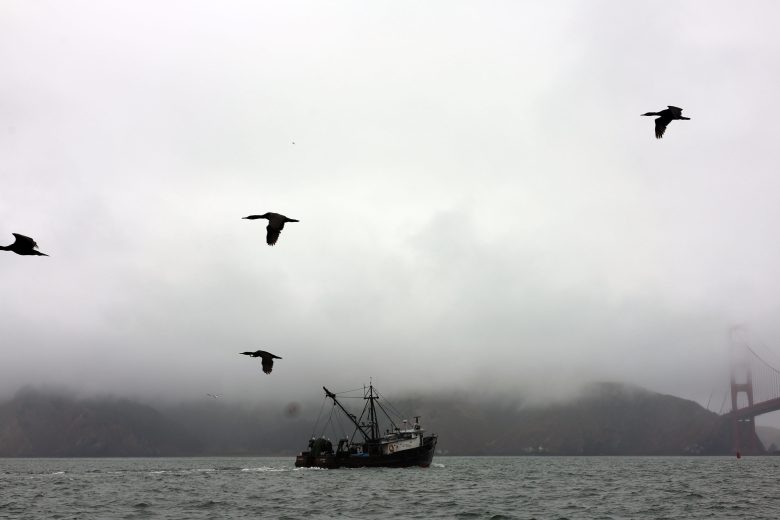

It was the morning Attorney General Pam Bondi visited Alcatraz, and most eyes were on the crumbling prison President Donald Trump wants to reopen.
U.S. Coast Guard boats bobbed in the waves, news helicopters circled overhead, and tourists squinted from Pier 39. The four-person crew of the RV Mike Reigle sailed right on by. They were more interested in life underwater.
Since June, the team of researchers aboard the Reigle have been studying how interactions with boats affect the behavior of whales off the San Francisco coast. Bondi’s visit happened to coincide with their fifth outing.
This early into the project, data collection is the researchers’ primary goal. On each expedition, they stop at one of five sites in the bay to record a 30 minute underwater acoustic sample while observing passing boats and wildlife above. Analyzing these samples over time will help them identify any differences in the behavior of whales migrating through the heavily-trafficked area.
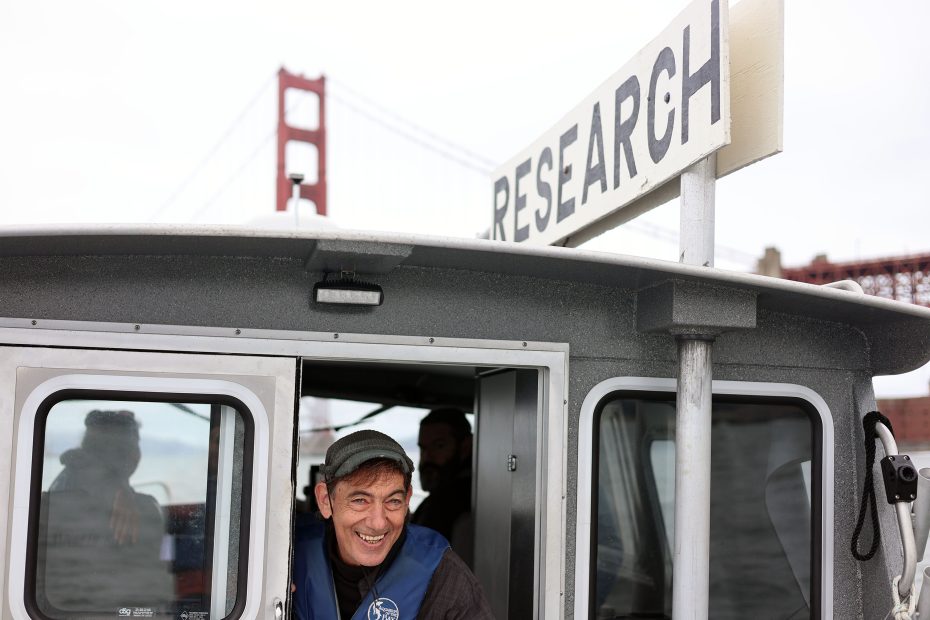
Any sense of summertime was obscured by fog on this July day, but the eclectic team had the good nature of tropical cruisers. Ray Duran, an effervescent veteran mariner who founded BayQuest, the local conservation nonprofit behind the research project, directed and filmed the operation on his iPhone with the vigor of Bondi’s camera crew.
Melissa Schouest and Kevin McEligot, the director and assistant director of animal care at the Aquarium of the Bay, a collaborator on the project, rode in the Reigle’s snug cabin. They’d recently scraped barnacles off its hull and had small cuts along their hands to show for it.
Unbothered, Schouest sipped coffee from a Thermos, gazed at the white blankets of clouds swallowing the Marin hills, and remarked: “There are so many awesome things here.” Hawaiian beaches may be more palatable, she said, but if tourists look deeper at San Francisco’s cold and murky waters they won’t be disappointed.
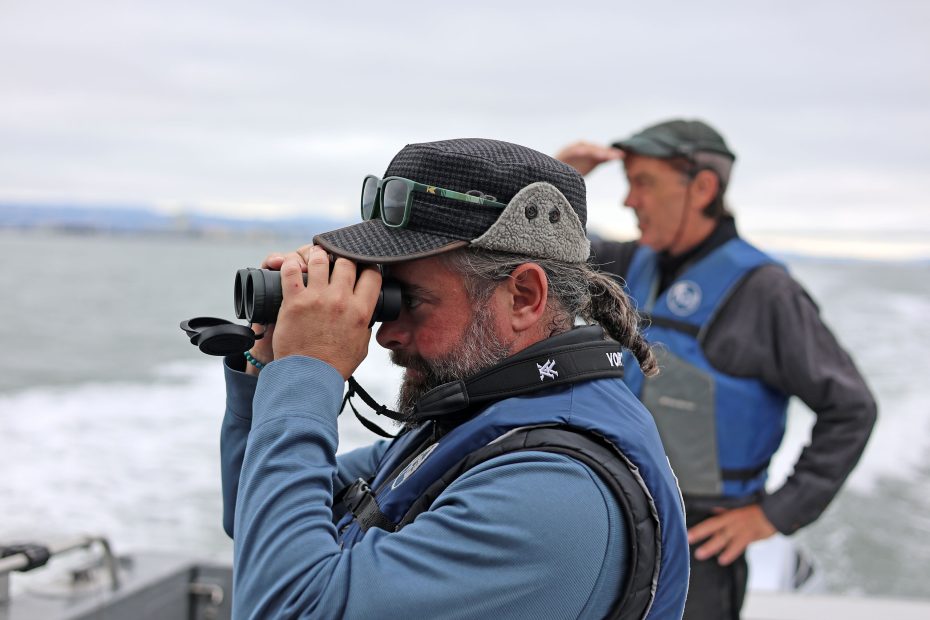
Jason Blair, a National Geographic naturalist and the director of BayQuest, stood on the deck with his back to the city’s buildings, ferris wheel, and Ghirardelli sign fading out of view. He supplied an easy flow of information over the spray of waves breaking against the stern, letting the answers to my questions give way his own tangents of marine musings.
Why were there gulls hovering so close behind the Reigle? To ride the air current created in its wake, Blair responded. Similarly, dolphins have learned to swim in slipstreams created by boats, he continued.
But scientists aren’t sure what whales, who don’t naturally encounter large solid objects in the deep sea, make of ships. Do they think it’s another whale? Blair wondered. Do they retreat? Where?
What happened to the last Bay Area whale who was intentionally killed by humans? “Dogfood,” he said. That, however, was decades ago. Now, Blair said, getting struck by a large cargo or fishing vessel is the greatest threat to whales passing through one the West Coast’s busiest ports. At least eight of the nearly two dozen whale deaths that have been reported in the bay area this year are suspected to be caused by vessel strikes.
Spring through fall, whales migrate to the Greater Farallones marine sanctuary off the coast to feed. More whales have been observed around the bay in recent years, and scientists are still trying to figure out if it’s the sign of a healthy ecosystem or the result of whales being pushed out of other habitats.
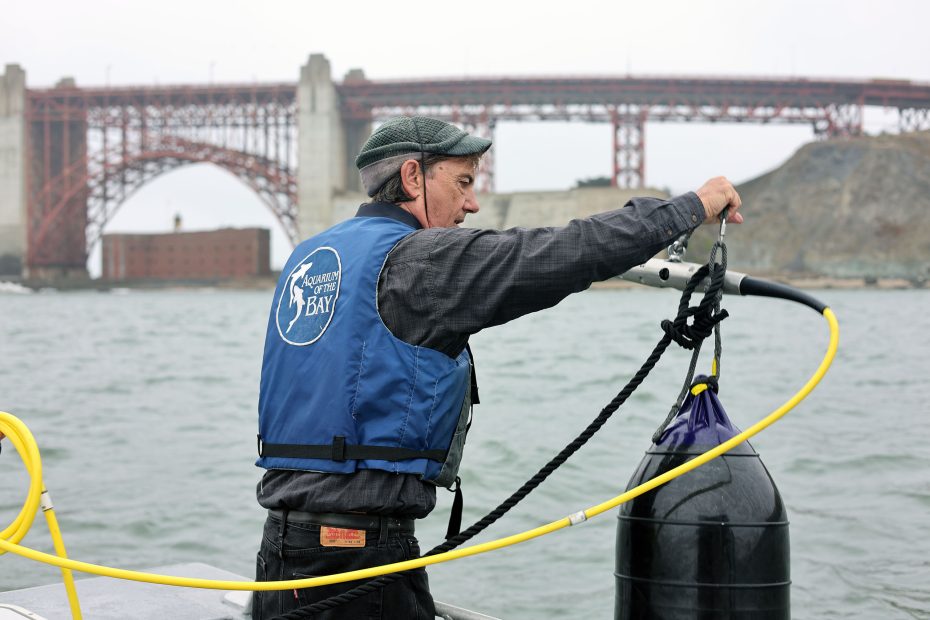
These puzzles were considered as the Reigle sailed beneath the Golden Gate Bridge, where deep water allows sea sounds to travel further than in other parts of the bay. The crew dropped anchor between Marshall’s Beach and Kirby Cove. Duran tossed a marine sensing system overboard and unspooled the cord.
Whales, like other marine animals, rely on sound to hunt, communicate and navigate. Human noise can interfere with this activity, changing whales’ demeanor and migratory paths in ways that can’t be observed on deck. So the researchers use a device with underwater microphones and machine learning capabilities to detect and record noise beneath the waves.
While the tool worked below, the Reigle’s crew quietly took down observations above deck, noting passing boats and seabirds.
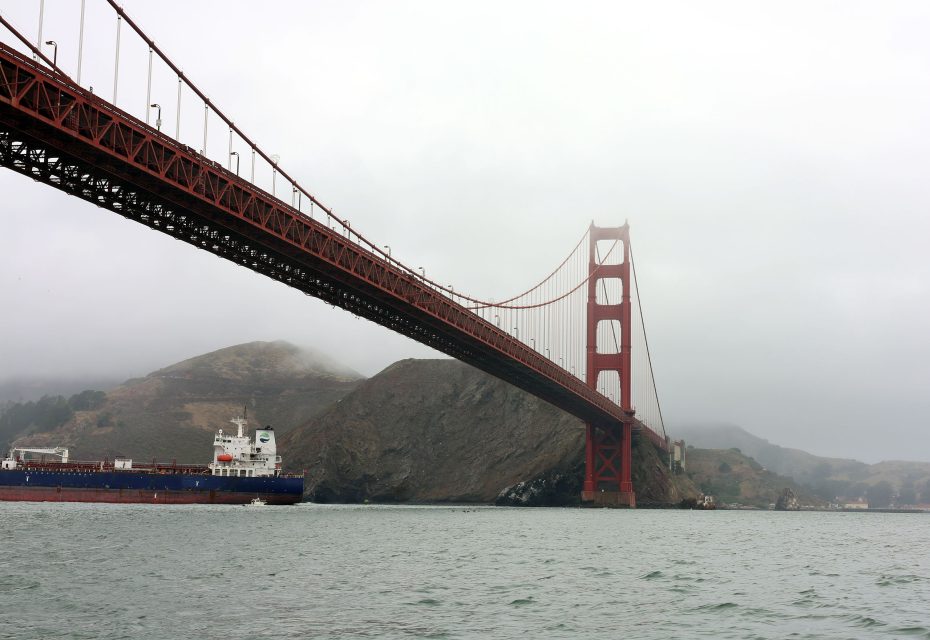
Flocks of cormorants, crooked-necked black seabirds as plentiful in the water as pigeons are on land, glided under the bridge in flocks numbering 15, 30, even 70. The researchers counted them dutifully. In half an hour, they’d seen no whales, but tallied more than 500 birds.
“Cormorants aren’t super hugely exciting, but they’re important all the same,” grinned Duran. Though their conservation focus is on whales, Duran says getting a quantitative sense of the overall ecosystem can also yield valuable data.
It’s not yet clear what will become of their findings, which will be shared with a larger team that includes advisors from Cornell University, the University of Washington, and CalMaritime Academy.
“What it will do and where it will go, I don’t know,” Schouest said of the research project. “But I’m happy to be a part of it.”
How do we stay informed about this study?
Beautiful writing